






Where Do Barasingha Live? Habitat, Diet, Behavior, and Conservation Explained
The Barasingha is a rare and beautiful deer found mainly in India and Nepal. Its name means “twelve-tined,” referring to its large and branched antlers. Known as the swamp deer, it loves grassy wetlands and marshy areas. These graceful animals are an important part of India’s wildlife heritage. Learning about Barasingha facts, habitat, diet, and characteristics helps us understand why protecting them is so important.
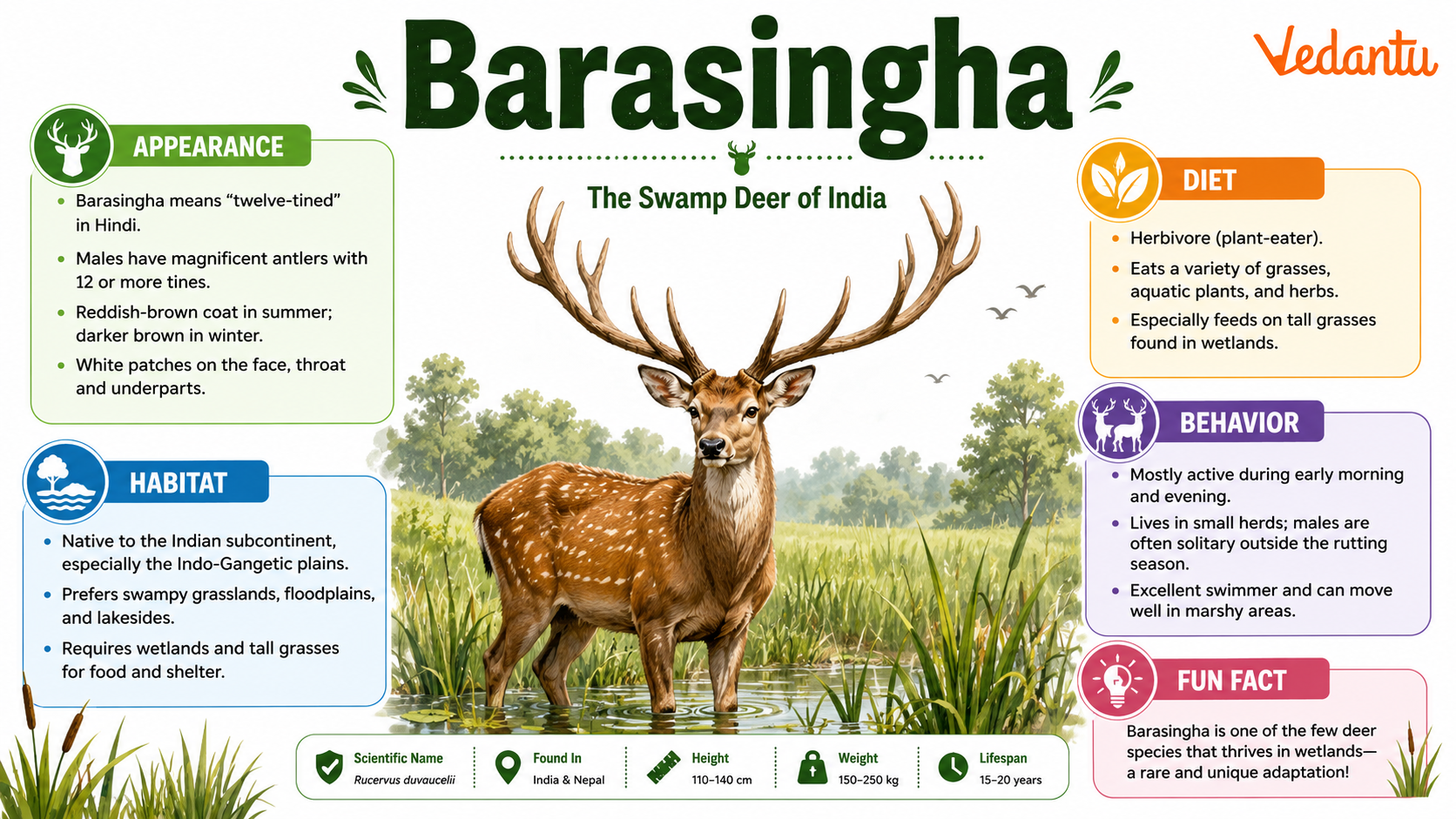
Quick Facts About Barasingha
| Feature | Details |
|---|---|
| Common Name | Barasingha (Swamp Deer) |
| Scientific Name | Rucervus duvaucelii |
| Animal Group | Mammal |
| Average Weight | 170–280 kg (males heavier) |
| Length | Up to 1.8–2 meters |
| Diet | Grass, aquatic plants, leaves |
| Habitat | Grasslands, swamps, wetlands |
| Lifespan | 18–20 years (in the wild) |
| Conservation Status | Vulnerable |
Appearance and Physical Characteristics
- Large and strong body with long legs.
- Golden-brown coat that becomes darker in winter.
- Males have magnificent antlers with 10–14 points.
- Broad hooves specially adapted for walking in marshy land.
- White patch under the tail and lighter inner legs.
Barasingha Habitat and Distribution
- Mainly found in India and Nepal.
- Prefers tall grasslands and swampy wetlands.
- Famous populations live in Kanha National Park (Madhya Pradesh).
- Needs open grasslands near water bodies.
- Avoids dense forests compared to other deer species.
The Barasingha habitat is very specific. It depends on healthy wetlands and grasslands. If these areas shrink due to farming or construction, the deer population also decreases.
Diet and Feeding Habits
- Strictly herbivorous (plant-eating animal).
- Feeds mainly on grasses.
- Eats aquatic plants in swampy areas.
- Also consumes leaves and shoots.
- Spends many hours grazing peacefully.
The Barasingha diet plays an important role in maintaining grassland balance. By grazing regularly, it helps control plant growth and supports ecosystem health.
Behaviour and Lifestyle
Life Cycle of Barasingha
- Mating Season: Usually during winter.
- Gestation Period: Around 7–8 months.
- Young One: Usually a single fawn is born.
- Mother’s Care: The mother hides and protects the fawn in tall grass.
- Adult Stage: Males grow large antlers after maturity.
What Makes Barasingha Special?
Importance and Role in Nature
Amazing Barasingha Facts
- The name “Barasingha” means “twelve-horned.”
- Only males grow antlers.
- Antlers fall off and regrow every year.
- They can run fast to escape predators.
- Once found across northern India in large numbers.
- Now protected in several national parks.
- Excellent swimmers when needed.
Fun Facts for Kids
FAQs on Barasingha (Swamp Deer): Complete Guide to Habitat, Diet, and Facts
1. What is a Barasingha?
Barasingha is a large deer species found in India and Nepal, famous for its many-branched antlers.
- The name Barasingha means “twelve-tined deer.”
- Its scientific name is Rucervus duvaucelii.
- It is also called the Swamp Deer.
- It is one of the most beautiful and rare deer species in Asia.
2. Why is the Barasingha called the Swamp Deer?
Barasingha is called the Swamp Deer because it prefers living in wetlands and marshy areas.
- It is commonly found in swamps, grasslands, and floodplains.
- It has wide hooves that help it walk on soft, muddy land.
- It depends on water-rich habitats for food and safety.
3. Where are Barasingha found in India?
Barasingha in India are mainly found in protected national parks and wildlife reserves.
- Kanha National Park (Madhya Pradesh)
- Dudhwa National Park (Uttar Pradesh)
- Kaziranga National Park (Assam)
- Some parts of Nepal
4. What do Barasingha eat?
Barasingha are herbivores, which means they eat only plants.
- They feed on grass and aquatic plants.
- They also eat leaves, shoots, and crops.
- They graze mostly in the early morning and evening.
5. How many antlers does a Barasingha have?
Male Barasingha usually have antlers with twelve or more points.
- The word “Bara” means twelve.
- The word “Singha” means horn.
- Some males can have up to 20 tines on their antlers.
- Only males grow and shed antlers every year.
6. Is the Barasingha an endangered species?
Barasingha is considered a vulnerable and protected deer species due to habitat loss.
- It is listed as Vulnerable on the IUCN Red List.
- Main threats include poaching and destruction of wetlands.
- Conservation efforts in parks like Kanha National Park have helped increase its population.
7. What are the types of Barasingha?
There are three main subspecies of Barasingha based on their habitat and region.
- Western Swamp Deer
- Eastern Swamp Deer
- Hard-ground Barasingha (found in Kanha)
- Each type adapts to different environments like swamps or dry grasslands.
8. How is the Hard-ground Barasingha different?
Hard-ground Barasingha live on dry grasslands instead of marshy swamps.
- Found mainly in Kanha National Park.
- They have adapted to survive on firm soil.
- This subspecies was once near extinction but has recovered through conservation.
9. What animals prey on Barasingha?
Barasingha face danger from large wild predators in their habitat.
- Tigers
- Leopards
- Wild dogs (Dholes)
- Young fawns are more vulnerable to attacks.
10. Why is the Barasingha important for the ecosystem?
Barasingha play an important role in maintaining a healthy grassland ecosystem.
- They help control grass growth by grazing.
- They serve as prey for large predators like tigers.
- Their conservation supports overall biodiversity in wetlands and national parks.
