






What Do Anole Lizards Eat and How Do They Live in the Wild?
Anoles are small, active lizards famous for their bright colours and clever camouflage skills. Found mainly in the Americas and Caribbean islands, these reptiles are expert climbers that live on trees, bushes, and even garden walls. With their ability to change shades and show off colourful throat fans, anoles are full of surprises. Let’s explore interesting Anole facts, their habitat, diet, life cycle, and why these tiny reptiles are important in nature.
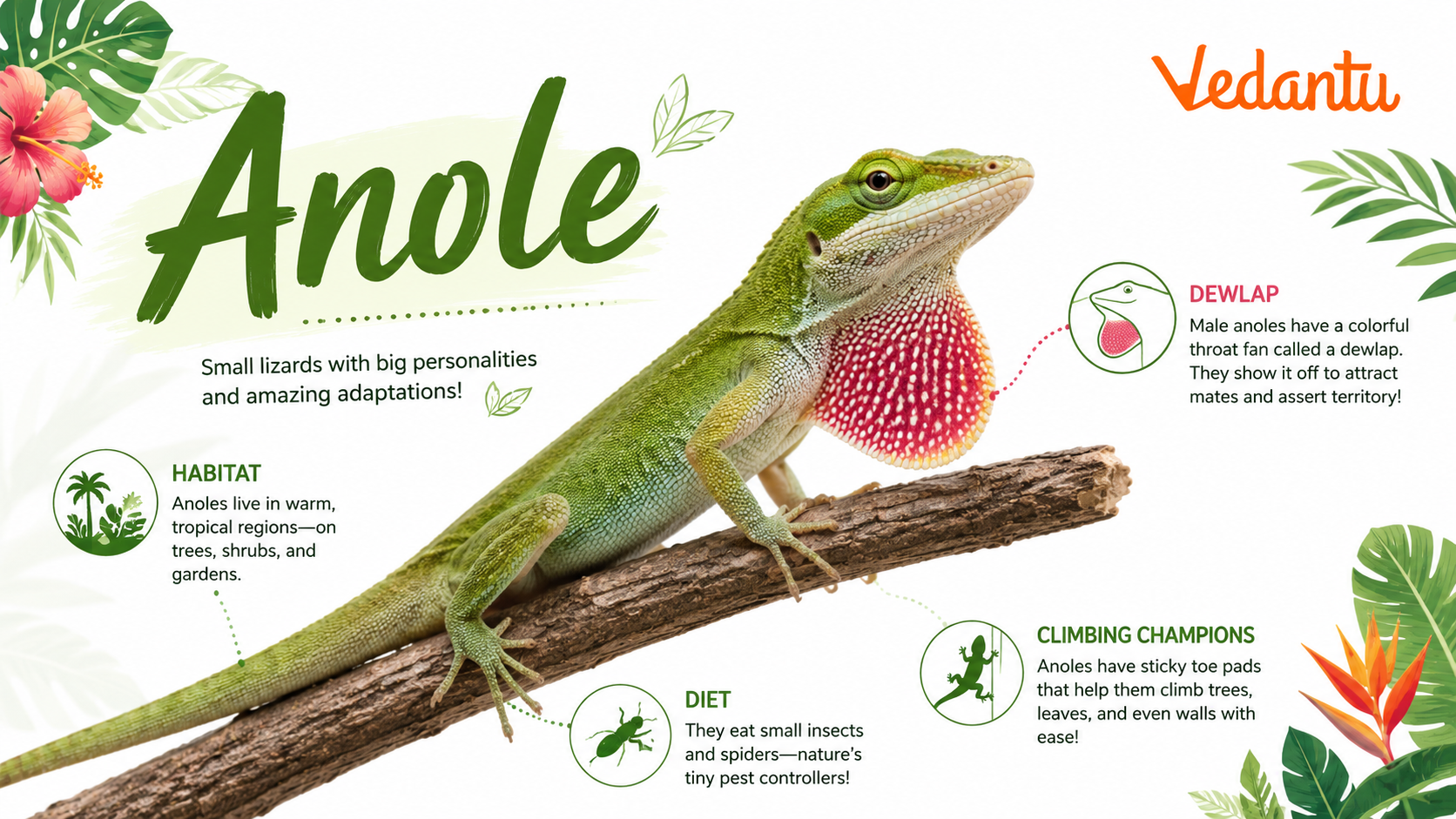
Quick Facts About Anole
| Feature | Details |
|---|---|
| Common Name | Anole |
| Scientific Genus | Anolis |
| Animal Group | Reptile |
| Size | 10–20 cm (including tail) |
| Diet | Insects and small invertebrates |
| Habitat | Trees, forests, gardens, shrubs |
| Lifespan | 4–8 years (in the wild) |
| Special Feature | Colour change and throat fan (dewlap) |
| Found In | North America, Central America, Caribbean |
Appearance and Physical Characteristics
- Body Shape: Slender body with a long tail.
- Size: Usually small, about the size of a pencil.
- Skin: Covered with tiny scales.
- Colours: Green, brown, grey, or even bright shades.
- Toes: Sticky toe pads that help them climb smooth surfaces.
- Dewlap: A colourful throat flap used for communication.
Anole Habitat and Distribution
- Mostly found in warm tropical and subtropical regions.
- Common in forests, rainforests, and coastal areas.
- Also seen in parks, gardens, and city walls.
- Prefer warm climates with plenty of sunlight.
- Spend most of their time on trees and bushes.
The Anole habitat usually includes places with lots of insects and hiding spots. Some species live high in tree canopies, while others prefer grass or ground-level shrubs.
Diet and Feeding Habits
Type: Carnivore (Insectivore)
- Eat ants, beetles, flies, spiders, and crickets.
- Use sharp eyesight to spot moving prey.
- Quickly snap up insects with fast reflexes.
Anole diet mainly includes small insects, making them helpful in controlling pest populations. They are active hunters and rely on speed and surprise.
Behaviour and Lifestyle
Anole Life Cycle
- Egg Stage: Female lays one or two eggs at a time in moist soil or leaf litter.
- Hatching: Eggs hatch in about 5–7 weeks.
- Young Anole: Baby anoles look like tiny adults and can hunt small insects.
- Adult Stage: Grow to full size within a year.
The Anole life cycle is simple because they do not go through metamorphosis like frogs or insects.
What Makes Anole Special?
Importance and Role in Nature
- Control insect populations.
- Serve as food for birds and snakes.
- Help maintain balance in forest ecosystems.
The Anole importance in nature is mainly linked to pest control and maintaining the food chain.
Amazing Anole Facts
Fun Facts for Kids
- Anoles love sunbathing on leaves.
- They do tiny “push-ups” to show dominance.
- Some anoles can jump several times their body length.
- Baby anoles are fully independent.
- They are harmless to humans.
FAQs on Anole Lizard: Fascinating Facts, Behavior, and Natural Habitat
1. What is an anole?
An anole is a small, colorful lizard that belongs to the genus Anolis and is commonly found in warm climates.
- Anoles are reptiles and part of the Iguanidae family.
- They are often called Anolis lizards or American chameleons (though they are not true chameleons).
- They are known for their bright colors and throat fan called a dewlap.
- Most species live in trees, bushes, and gardens.
2. Where do anoles live?
Anoles live mainly in warm tropical and subtropical regions around the world.
- They are commonly found in the Caribbean Islands.
- Many species live in Central and South America.
- The Green Anole lives in the southeastern United States.
- They prefer habitats like forests, trees, shrubs, and gardens.
3. What do anoles eat?
Anoles are insectivores, which means they mainly eat insects and small invertebrates.
- They eat crickets, flies, ants, and beetles.
- Some larger anoles may eat spiders or small worms.
- They use their quick reflexes and sticky tongues to catch prey.
4. Why do anoles change color?
Anoles change color to communicate, control body temperature, and respond to mood.
- The Green Anole can turn from bright green to brown.
- Color changes help with camouflage and protection.
- They may darken when they are stressed, cold, or threatened.
5. What is a dewlap on an anole?
A dewlap is a colorful flap of skin under an anole’s throat used for communication.
- Mostly seen in male anoles.
- Used to attract females during mating.
- Helps scare away rival males.
- Comes in bright colors like red, pink, orange, or yellow.
6. How big do anoles grow?
Most anoles are small lizards that grow between 5 to 8 inches long, including their tail.
- The Green Anole is about 5–8 inches long.
- Some larger species can grow up to 12 inches.
- The tail makes up more than half of their body length.
7. Are anoles good pets for kids?
Anoles can be beginner reptiles, but they require proper care and supervision.
- They need a warm terrarium with heat and UVB light.
- They eat live insects regularly.
- They are better for watching than handling.
- They require daily care and a clean habitat.
8. How do anoles reproduce?
Anoles reproduce by laying eggs after mating.
- Female anoles lay one egg at a time.
- Eggs are hidden in soil or leaf litter.
- Baby anoles hatch in about 4–7 weeks.
- Young anoles are independent from birth.
9. How long do anoles live?
Anoles usually live 3 to 7 years depending on their environment and care.
- Wild anoles face dangers from predators like birds and snakes.
- Pet anoles may live longer with proper nutrition and habitat care.
- Good lighting and temperature control improve lifespan.
10. What are the predators of anoles?
Anoles have many natural predators in the wild.
- Birds such as hawks and herons.
- Snakes and larger lizards.
- Cats and other small mammals.
- Sometimes even other anoles.
