






Types of Animal Diversity: Classification, Habitats, and Real-World Examples
Animal diversity means the wide variety of animals found on Earth. Animals live in oceans, forests, deserts, mountains, rivers, and even underground. They come in different shapes, sizes, colours, and behaviours. Studying animal diversity helps us understand how life evolved, how ecosystems work, and why every species is important. From simple sponges to complex mammals, the animal kingdom is full of fascinating characteristics, habitats, diets, and life cycles.
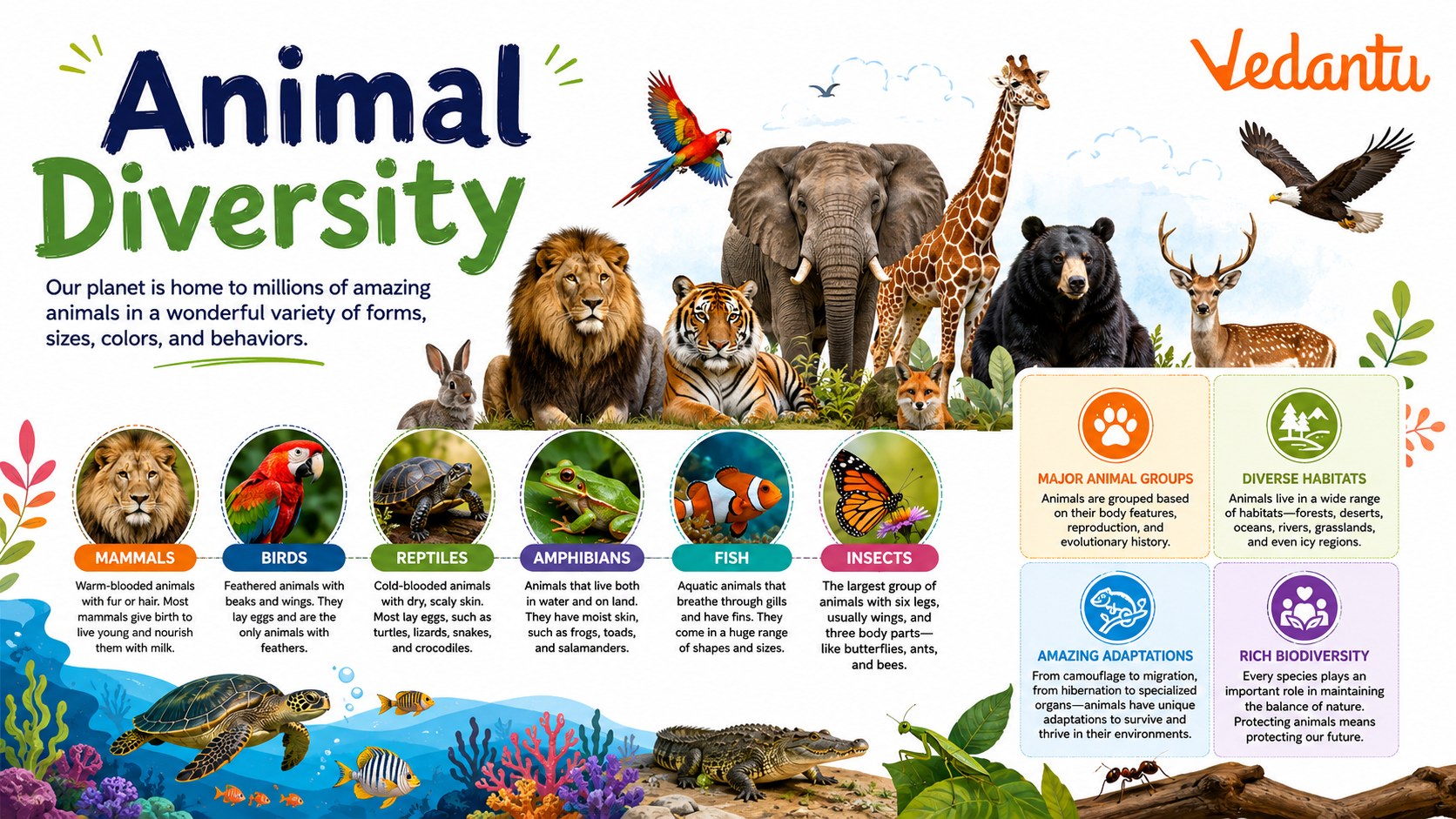
Quick Facts and Statistics About Animal Diversity
| Feature | Details |
|---|---|
| Total Described Species | More than 1.5 million animal species identified |
| Largest Animal Group | Insects (over 1 million species) |
| Main Animal Groups | Invertebrates and Vertebrates |
| Habitats | Oceans, forests, grasslands, deserts, polar regions, freshwater |
| Largest Animal | Blue Whale |
| Smallest Animals | Microscopic animals like rotifers |
Types and Classification of Animals
1. Invertebrates (Animals Without Backbone)
- Insects (butterflies, ants, beetles)
- Spiders and scorpions
- Worms
- Jellyfish and corals
- Snails and octopuses
2. Vertebrates (Animals With Backbone)
- Fish
- Amphibians (frogs, salamanders)
- Reptiles (snakes, lizards)
- Birds
- Mammals (humans, elephants, whales)
Animal Characteristics
Habitat and Distribution
Animal diversity is found across all parts of the Earth. Different animals adapt to different habitats based on climate, food availability, and safety.
Diet and Feeding Habits
- Herbivores: Eat plants (cow, deer)
- Carnivores: Eat other animals (lion, tiger)
- Omnivores: Eat both plants and animals (bear, human)
- Scavengers: Feed on dead animals (vulture)
Life Cycle of Animals
Importance of Animal Diversity
Amazing Animal Diversity Facts
- Insects alone make up more than half of all known living organisms.
- The blue whale is the largest animal ever known to exist.
- Some frogs can freeze during winter and survive.
- Octopuses have three hearts.
- Cheetahs are the fastest land animals.
- Antarctica has unique animals found nowhere else.
- Some fish can produce their own light.
Fun Facts for Kids
FAQs on Animal Diversity Explained: The Variety of Animal Life on Earth
1. What is animal diversity?
Animal diversity means the wide variety of animals living on Earth in different habitats and ecosystems.
- Animal diversity includes differences in size, shape, color, and behavior.
- It covers animals from microscopic organisms to large mammals like elephants and whales.
- It is part of biodiversity, which includes plants, animals, and microorganisms.
- Animals live in forests, oceans, deserts, grasslands, and polar regions.
2. Why is animal diversity important?
Animal diversity is important because it keeps ecosystems balanced and healthy.
- Different species play special roles in the food chain and food web.
- Animals help in pollination, seed dispersal, and soil protection.
- High biodiversity increases ecosystem stability.
- Humans depend on animals for food, clothing, and medicine.
3. What are the main types of animals?
Animals are mainly grouped into vertebrates and invertebrates based on their body structure.
- Vertebrates have a backbone (mammals, birds, reptiles, amphibians, fish).
- Invertebrates do not have a backbone (insects, worms, mollusks).
- Scientists use animal classification to group similar species.
- These groups help us study animal characteristics and habitats.
4. How many animal species are there on Earth?
Scientists estimate that millions of animal species live on Earth, though many are still undiscovered.
- Over 1.5 million animal species have been identified.
- Many species live in rainforests and deep oceans.
- New species are discovered every year.
- Animal species richness is highest in tropical regions.
5. What causes animal diversity?
Animal diversity is caused by evolution, adaptation, and environmental differences.
- Evolution allows species to change over time.
- Adaptation helps animals survive in different climates.
- Geographical changes create new habitats and ecosystems.
- Natural selection increases survival of the fittest species.
6. What are examples of animal diversity in different habitats?
Different habitats support different kinds of animals based on climate and resources.
- Rainforests: monkeys, parrots, jaguars.
- Deserts: camels, lizards, snakes.
- Oceans: whales, sharks, coral reef fish.
- Polar regions: polar bears, penguins, seals.
7. How do scientists classify animals?
Scientists classify animals using a system called taxonomy based on shared characteristics.
- The system is called biological classification.
- Main levels include kingdom, phylum, class, order, family, genus, species.
- Animals with similar traits are grouped together.
- This system helps in studying animal evolution and relationships.
8. What is the difference between biodiversity and animal diversity?
Biodiversity includes all living organisms, while animal diversity focuses only on animals.
- Biodiversity includes plants, animals, fungi, and microorganisms.
- Animal diversity is a part of biodiversity.
- Both are important for healthy ecosystems.
- Loss of biodiversity affects animal species survival.
9. What are endangered animals?
Endangered animals are species that are at risk of becoming extinct.
- Caused by habitat loss, pollution, and climate change.
- Examples include tigers, rhinos, and sea turtles.
- Conservation programs help protect these species.
- Wildlife protection laws support endangered species.
10. How can we protect animal diversity?
We can protect animal diversity by conserving habitats and reducing pollution.
- Support wildlife conservation projects.
- Reduce plastic use and environmental pollution.
- Protect forests, oceans, and natural habitats.
- Spread awareness about biodiversity protection.
