






Where Do Alpacas Live, What Do They Eat, and How Are They Cared For?
Alpacas are adorable, fluffy mammals known for their soft wool and calm nature. Native to South America, these animals are closely related to llamas and camels. Alpaca facts reveal that they have been domesticated for thousands of years and are mainly raised for their high-quality fiber. With their long necks, big eyes, and friendly faces, alpacas are not just useful farm animals but also fascinating creatures to learn about.
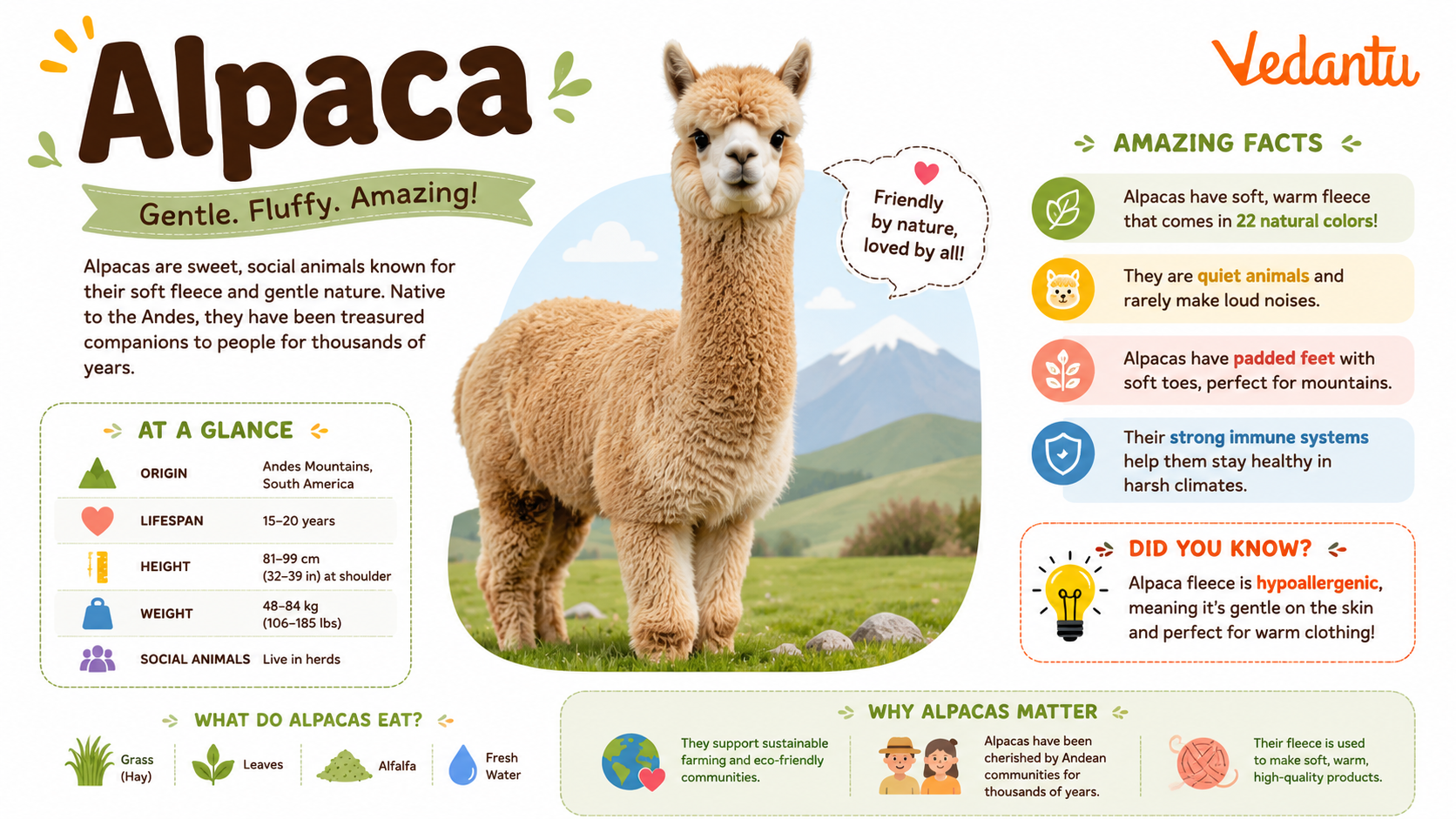
Quick Facts About Alpaca
| Feature | Details |
|---|---|
| Common Name | Alpaca |
| Scientific Name | Vicugna pacos |
| Animal Group | Mammal |
| Average Height | 81–99 cm (at the shoulder) |
| Weight | 45–90 kg |
| Lifespan | 15–20 years |
| Alpaca Habitat | High-altitude grasslands of the Andes |
| Alpaca Diet | Grass, hay, and plants |
| Young One | Cria |
| Conservation Status | Domesticated (Not endangered) |
Appearance and Physical Characteristics
- Long neck and slender body
- Large, expressive eyes
- Small, pointed ears
- Soft, thick wool covering the body
- Split upper lip to help in grazing
Alpaca Habitat and Distribution
The natural alpaca habitat is found in the high mountains of the Andes in countries like Peru, Bolivia, Chile, and Ecuador. They live at heights of 3,500 to 5,000 meters above sea level.
- Prefer cool climates
- Live in open grasslands
- Adapted to thin mountain air
- Now also raised on farms worldwide
Alpaca Diet and Feeding Habits
The alpaca diet mainly includes plants. They are herbivores and spend many hours grazing.
Behaviour and Lifestyle
- Very social animals that live in herds
- Communicate using soft humming sounds
- Spit when annoyed or fighting for food
- Active during the day
- Gentle and calm temperament
Life Cycle of an Alpaca
- Birth: Baby alpacas are called crias and usually weigh about 6–8 kg.
- Early Stage: Crias can stand and walk within an hour of birth.
- Growth: They drink their mother’s milk for several months.
- Adult Stage: Become fully grown at around 2–3 years of age.
- Lifespan: Live up to 20 years with proper care.
What Makes Alpaca Special?
Temperament and Domestic Life
Alpacas are domesticated animals and are mainly raised on farms.
- Friendly but shy around strangers
- Easy to handle with gentle training
- Do not have sharp hooves or horns
- Often used for wool production and eco-farming
Importance and Role in Nature
Amazing Alpaca Facts
- There are over 3 million alpacas in Peru alone.
- Alpacas were domesticated more than 6,000 years ago.
- They are smaller than llamas.
- Each alpaca produces 2–4 kg of fleece per year.
- Their wool is water-resistant.
- Alpacas hum to express different emotions.
Interesting Facts About Alpaca
Fun Facts for Kids
- Alpacas look like fluffy teddy bears!
- They can spit to show they are upset.
- They love living with their herd friends.
- Their wool is used to make sweaters and scarves.
- They can live up to 20 years.
FAQs on Alpaca: Fascinating Facts About This Gentle Farm Animal
1. What is an alpaca?
An alpaca is a gentle, fluffy farm animal known for its soft wool and friendly nature.
- Scientific name: Vicugna pacos
- Native to the Andes Mountains of South America
- Related to llamas, camels, and vicuñas
- Raised for their soft and warm alpaca fiber
- Popular on farms and ranches around the world
2. Where do alpacas live?
Alpacas mostly live in the high mountains of South America but are now found worldwide.
- Originally from Peru, Bolivia, Chile, and Ecuador
- Live in cool, high-altitude areas like the Andes Mountains
- Raised on alpaca farms in North America, Europe, and Australia
- Prefer open grasslands with fresh air and space
3. What do alpacas eat?
Alpacas are herbivores, which means they eat plants.
- Main diet includes grass and hay
- Sometimes eat leaves, shrubs, and plant stems
- Need fresh water every day
- Have a special three-chambered stomach to digest tough plants
4. How are alpacas different from llamas?
Alpacas and llamas are related but look and behave differently.
- Alpacas are smaller than llamas
- Alpacas have short, spear-shaped ears; llamas have long, banana-shaped ears
- Alpacas are raised for soft fiber; llamas are often used as pack animals
- Alpacas are usually more shy and gentle
5. Why is alpaca wool so special?
Alpaca wool is special because it is soft, warm, and hypoallergenic.
- Called alpaca fiber instead of wool
- Very soft and lightweight
- Warmer than sheep’s wool
- Contains little to no lanolin, making it less itchy
- Used to make sweaters, scarves, blankets, and socks
6. Do alpacas spit?
Yes, alpacas can spit, but they usually do it to communicate or protect themselves.
- Spit to show annoyance or dominance
- Mostly spit at other alpacas, not people
- Spitting is part of their natural behavior
- Well-treated alpacas are usually calm and friendly
7. How long do alpacas live?
Alpacas can live a long and healthy life with proper care.
- Average lifespan is 15 to 20 years
- Need regular veterinary care
- Require proper nutrition and shelter
- Healthy alpacas stay active and social
8. Are alpacas friendly animals?
Alpacas are generally gentle and social animals.
- Live in herds and enjoy company
- Can be shy but curious around humans
- Known for their calm temperament
- Often used in petting zoos and therapy farms
9. What are baby alpacas called?
A baby alpaca is called a cria.
- Weigh about 15 to 20 pounds at birth
- Can stand and walk within an hour
- Drink milk from their mother
- Stay close to the herd for protection
10. How are alpacas cared for on farms?
Alpacas need daily care to stay healthy and happy on farms.
- Fed fresh hay and grass
- Sheared once a year for alpaca fiber
- Given clean shelter and fencing
- Receive regular health check-ups and vaccinations
- Kept in herds because they are social animals
