






What Do Addax Eat? Habitat, Adaptations, and Conservation Facts
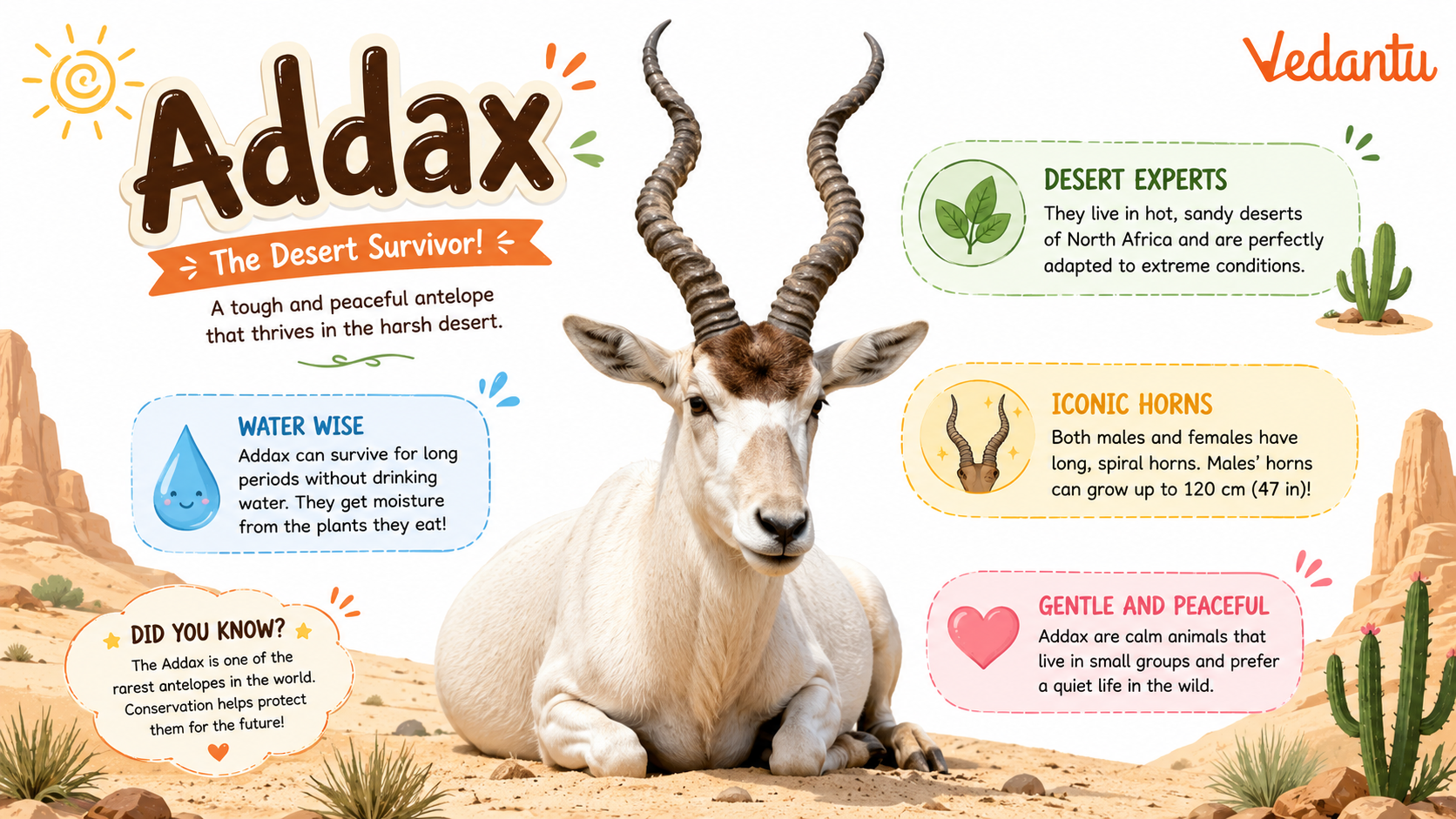
The Addax is one of the rarest antelopes in the world. Known for its long spiral horns and pale sandy coat, this amazing animal is specially adapted to survive in the harsh Sahara Desert. Addax facts reveal that it can live in extremely hot and dry conditions with very little water. Sadly, it is now critically endangered. Let’s explore the Addax habitat, diet, characteristics, life cycle, and why this desert antelope is so important.
Quick Facts About Addax
| Feature | Details |
|---|---|
| Common Name | Addax |
| Scientific Name | Addax nasomaculatus |
| Animal Group | Mammal |
| Type | Antelope |
| Habitat | Sahara Desert and arid regions |
| Diet | Herbivore (grasses and desert plants) |
| Lifespan | Up to 19 years (in captivity) |
| Conservation Status | Critically Endangered |
Appearance and Physical Characteristics
- Body Colour: Pale white or sandy coat that reflects sunlight.
- Horns: Long, twisted spiral horns in both males and females.
- Size: About 95–115 cm tall at the shoulder.
- Weight: Around 60–125 kg.
- Face Markings: Brown patch on forehead and nose.
- Hooves: Broad and flat, perfect for walking on soft sand.
Habitat and Distribution
The Addax habitat is mainly the hot and dry Sahara Desert in North Africa. It prefers:
- Sand dunes and gravel plains
- Dry desert grasslands
- Regions with very little rainfall
- Remote areas away from human disturbance
Today, wild Addax populations are found in small numbers in countries like Niger and Chad. Many are protected in wildlife reserves and zoos.
Addax Diet and Feeding Habits
- The Addax diet mainly includes desert grasses.
- It also eats leaves, shrubs, and herbs.
- Can survive without drinking water for long periods.
- Gets moisture from the plants it eats.
As a herbivore, the Addax plays an important role in the desert food chain by controlling plant growth and supporting the ecosystem.
Behaviour and Lifestyle
Addax Life Cycle
- Mating: Can occur throughout the year.
- Gestation: Lasts about 8–9 months.
- Birth: Usually one calf is born.
- Young Stage: Calf stands and walks shortly after birth.
- Adulthood: Reaches maturity at around 2–3 years.
What Makes Addax Special?
Importance and Role in Nature
- Helps maintain balance in desert vegetation.
- Serves as prey for large predators.
- Indicates the health of desert ecosystems.
- Important for conservation and biodiversity.
Amazing Addax Facts
Fun Facts for Kids
- Addax horns look like giant twisted ribbons!
- It can live where almost no other animals survive.
- Its wide hooves act like natural sand shoes.
- It rests in the shade during very hot days.
- Baby Addax are called calves.
FAQs on Addax Antelope: The Sahara’s Rare Desert Survivor
1. What is an Addax?
The Addax is a rare desert antelope that lives in the hot sands of the Sahara Desert.
- It is also called the screwhorn antelope because of its twisted horns.
- The scientific name is Addax nasomaculatus.
- It belongs to the antelope and bovid family.
- It is one of the most endangered desert animals in the world.
2. Where does the Addax live?
The Addax lives mainly in the Sahara Desert of North Africa.
- It is found in countries like Niger and Chad.
- It survives in dry, sandy, and rocky desert areas.
- It can live where there is very little water.
- It prefers remote desert regions away from people.
3. Why is the Addax endangered?
The Addax is critically endangered mainly because of human activities.
- Overhunting for meat and horns has reduced its numbers.
- Habitat loss from oil exploration and roads affects its home.
- Climate change makes desert survival even harder.
- There are fewer than a few hundred left in the wild.
4. What does an Addax eat?
The Addax is a plant-eating animal that feeds on desert vegetation.
- It eats grasses, shrubs, and desert herbs.
- It digs for roots and dry plants in the sand.
- It gets most of its water from plants instead of drinking.
- This helps it survive in extreme desert heat.
5. How does the Addax survive in the desert?
The Addax antelope has special adaptations that help it live in harsh desert conditions.
- Its light-colored coat reflects sunlight.
- It can go long periods without drinking water.
- Its wide hooves help it walk on soft sand.
- It rests during the day and is more active at night.
6. What does an Addax look like?
The Addax is a medium-sized white antelope with long twisted horns.
- Both males and females have spiral-shaped horns.
- It has a pale coat that may turn almost white in summer.
- There are brown markings on its face and forehead.
- It has strong legs built for desert travel.
7. How big is an Addax?
An adult Addax is about the size of a small cow.
- It can weigh between 60–125 kg (132–275 pounds).
- It stands about 1 meter (3 feet) tall at the shoulder.
- Its horns can grow up to 80 cm (31 inches) long.
- Males are usually slightly larger than females.
8. Are Addax horns used for defense?
Yes, the Addax uses its long spiral horns for protection and fighting.
- Both males and females have horns.
- They use them to defend against predators.
- Males may fight each other during mating season.
- The horns make them easy to recognize among desert antelopes.
9. What animals hunt the Addax?
The Addax has a few natural predators, but humans are the biggest threat.
- Wild predators may include lions and hyenas.
- Young calves are more at risk.
- Today, human hunters are the main danger.
- Protection programs are helping reduce illegal hunting.
10. How are people helping to save the Addax?
Conservation groups are working hard to protect the Addax from extinction.
- They create protected reserves in the Sahara.
- Breeding programs in zoos help increase numbers.
- Scientists track wild populations to keep them safe.
- Education programs teach people about endangered species conservation.
