








List of Top Famous Scientists and Their Inventions with Easy Revision Tips
The concept of Top Most Famous Scientists and Their Contribution is essential in biology and helps explain real-world biological processes and exam-level questions effectively. For NEET and competitive exams, knowing the discoveries of famous scientists and their inventions is crucial for scoring well in assertion-reason and direct MCQs. This page offers a student-friendly summary, meaningful tables, and visual aids to make memorization and last-minute revision seamless.
Understanding Top Most Famous Scientists and Their Contribution
Top Most Famous Scientists and Their Contribution refers to a structured overview of key scientists, their groundbreaking discoveries or theories, and their lasting impact on biological and medical sciences. This concept is important in areas like genetics, evolution, cell biology, and microbiology. Many NEET Biology questions directly test this knowledge, sometimes in the form of “match the following” or assertion-reason MCQs, making these facts essential for aspirants.
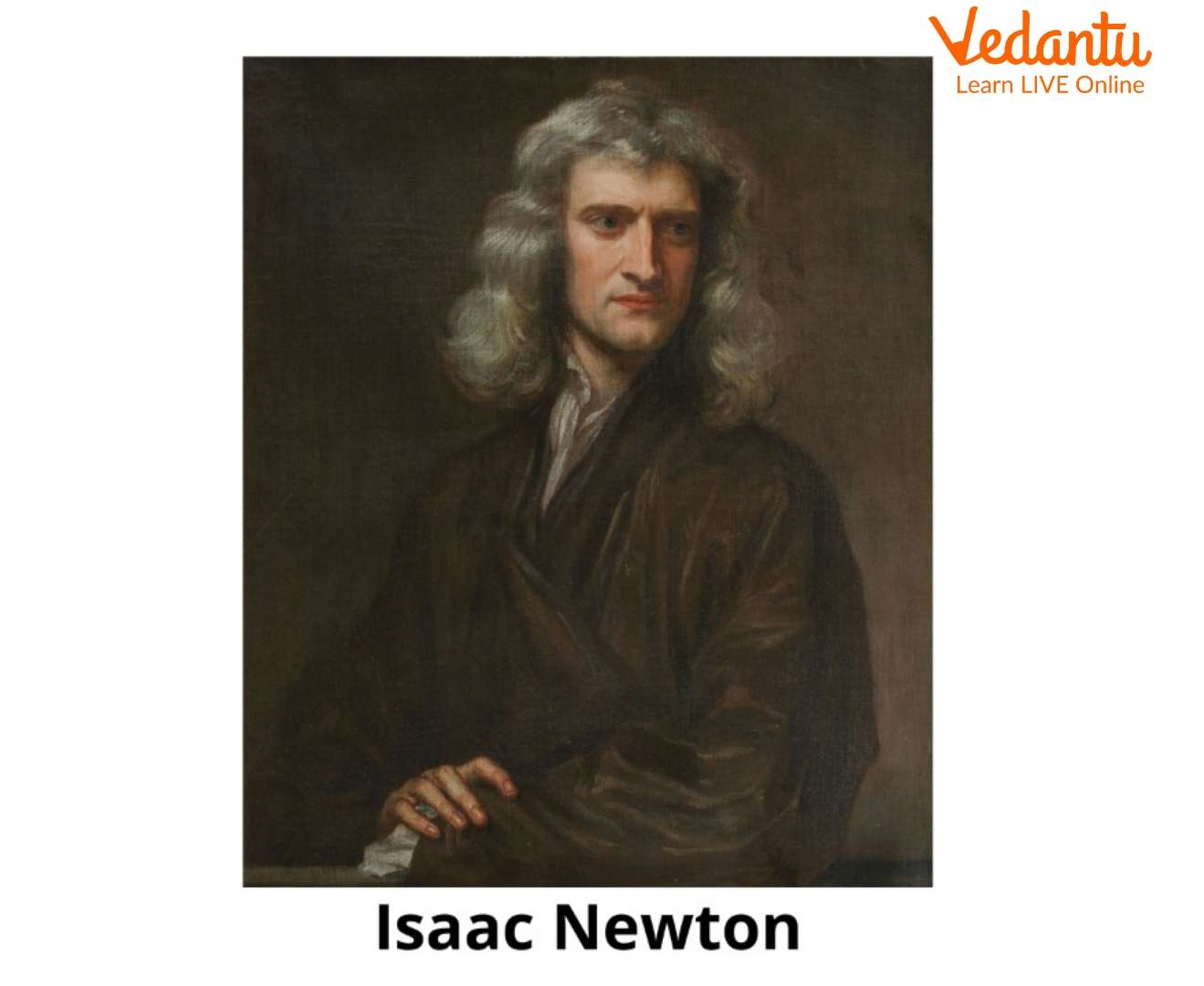
Here’s a helpful table to understand Top Most Famous Scientists and Their Contribution better:
Top Most Famous Scientists and Their Contribution Table
| Scientist | Main Contribution | Field | NEET Application |
|---|---|---|---|
| Charles Darwin | Theory of Evolution by Natural Selection | Evolutionary Biology | Basis for NEET evolution questions |
| Louis Pasteur | Vaccination, Germ Theory of Disease | Microbiology | Diseases & immunity MCQs |
| Marie Curie | Discovery of Polonium and Radium; Radioactivity | Chemistry, Physics | Radioisotopes in biology |
| Gregor Mendel | Laws of Inheritance in Pea Plants | Genetics | Principles of inheritance questions |
| Isaac Newton | Laws of Motion and Gravitation | Physics | NEET conceptual physics |
| Rosalind Franklin | X-ray diffraction images of DNA structure | Molecular Biology | DNA structure MCQs |
| Alexander Fleming | Discovery of Penicillin (Antibiotic) | Microbiology | Antibiotics origin in NEET |
| James Watson & Francis Crick | Model of DNA Double Helix | Genetics | DNA structure and replication |
| Robert Hooke | Discovery of Cell (Cork Cells) | Cell Biology | Cell theory origin |
| Kary Mullis | Invention of Polymerase Chain Reaction (PCR) | Biotechnology | Molecular techniques in NEET |
Typical NEET Practice Questions – Famous Scientists
- Which scientist is known as the father of genetics?
- Who proposed the theory of natural selection?
- Whose experiment led to the discovery of penicillin?
- What was the primary contribution of Rosalind Franklin in genetics?
- Name the scientist who invented PCR technology.
- How did Louis Pasteur disprove spontaneous generation?
Common Mistakes to Avoid
- Confusing discoveries between similar-sounding names (e.g., Mendel vs. Darwin).
- Attributing the discovery of DNA structure to only Watson and Crick, ignoring Rosalind Franklin’s role.
- Mixing up roles in cell theory (Hooke, Schleiden, Schwann, and Virchow).
Real-World Applications
The concept of Top Most Famous Scientists and Their Contribution is used in fields like medicine, agriculture, genetics, and biotechnology. For example, discoveries by Pasteur and Fleming are the backbone of vaccine and antibiotic development. Mendel’s findings power plant breeding programs, while PCR (Kary Mullis) is used for forensic studies, diagnostics, and research. With Vedantu's structured NEET preparation, students develop a lasting understanding of these landmark contributions and their practical impact.
Page Summary
In this article, we explored Top Most Famous Scientists and Their Contribution, their historical background, and how their work directly connects to NEET Biology topics. To boost your memory and exam confidence, always revise these facts using summary tables and real-world context. For further clarity, refer to Vedantu’s detailed NEET study materials and topic explanations.
Further Learning: Related Topics
FAQs on Famous Scientists and Their Key Contributions for NEET Exam
1. What are the top most famous scientists and their contribution for NEET?
The top most famous scientists and their key contributions for NEET Biology include:
- Charles Darwin: Theory of Evolution by Natural Selection.
- Gregor Mendel: Laws of Inheritance.
- Louis Pasteur: Germ Theory and Vaccines.
- Marie Curie: Discovery of Radioactive Elements.
- Robert Hooke: First observation of Cells.
- James Watson & Francis Crick: Double Helix Model of DNA.
This knowledge helps in scoring in assertion-reason and MCQ questions.
2. How to remember the key discoveries of scientists for NEET Biology?
To effectively memorize scientists and their discoveries for NEET Biology, students should:
1. Use mnemonic devices linking scientist names with their discoveries.
2. Create visual charts or tables grouping scientists by their fields.
3. Practice assertion-reason questions to reinforce connections.
4. Review frequently cited scientists in past year questions.
5. Use active recall and spaced repetition methods for better retention.
3. Who is called the father of genetics?
Gregor Mendel is known as the father of genetics due to his pioneering work on the laws of inheritance based on his pea plant hybridisation experiments. His principles form the foundation of modern genetics and are crucial for understanding inheritance patterns in NEET.
4. Can NEET ask about Indian scientists’ contributions?
Yes, NEET includes questions on contributions of Indian scientists such as:
- C.V. Raman: Raman Effect.
- Homi J. Bhabha: Nuclear Physics.
- S. Ramanujan: Mathematics contributions impacting scientific studies.
- Birbal Sahni: Paleobotany.
Knowing these enhances topic coverage and caters to autocomplete queries like “top 10 Indian scientists”.
5. Where do most NEET scientist questions come from (biology/chemistry/physics)?
Most scientist-related questions in NEET are predominantly from biology, particularly genetics, evolution, cell biology, and human health. However, relevant contributions also appear in chemistry (e.g., Marie Curie, Miescher) and physics (e.g., Newton, Einstein) as interdisciplinary topics.
6. Why do I confuse Mendel and Darwin in MCQs?
Confusion between Mendel’s genetics and Darwin’s evolution often arises because both address biological diversity and inheritance. To avoid this:
- Remember Mendel’s work focuses on inheritance laws and traits.
- Darwin’s theory explains natural selection and species evolution.
- Use keyword associations like “genes” for Mendel and “survival & adaptation” for Darwin.
7. What is a common exam myth about remembering scientist names?
A common myth is that remembering scientist names alone is sufficient. In reality, NEET tests both the scientist and their specific contribution or discovery. Simply memorizing names without understanding their discoveries or applications leads to confusion and loss of marks in match-the-pairs or assertion-reason questions.
8. How to handle trick questions where two scientists made related discoveries?
To manage tricky questions involving overlapping discoveries:
1. Distinguish based on discovery timeline and specific experiment.
2. Note differences in scientific methods or organisms used.
3. Focus on key terms unique to each scientist.
4. Practice with past NEET questions to understand typical traps involving Hooke vs. Hooker or Franklin vs. Watson & Crick.
9. How to avoid missing one-letter differences (e.g., Hooke vs. Hooker)?
To avoid confusion between similarly spelled names:
- Use visual mnemonic techniques associating the scientist with their discovery (e.g., Hooke—cork cells, Hooker—botanist).
- Write down the full names and contributions repeatedly.
- Practice spelling differences while linking the scientist to their field.
- Group such similar names separately to prevent mix-ups during revision.
10. What are some examples of assertion-reason questions involving famous scientists for NEET?
Typical assertion-reason questions involve:
• Assertion: Gregor Mendel’s laws explain inheritance patterns.
• Reason: Mendel performed hybridization experiments on pea plants.
• Correct answer: Both assertion and reason are true, and reason is the correct explanation.
Other examples include questions on DNA structure by Watson & Crick, germ theory by Pasteur, and evolution by Darwin. Practising these enhances understanding and exam performance.
