








Key Events and Diagram of Metaphase for NEET Biology Revision
The concept of Short Notes of Biology for NEET Metaphase is essential in biology and helps explain real-world biological processes and exam-level questions effectively. Metaphase is a crucial stage of mitosis and meiosis, playing a key role in ensuring accurate chromosome separation during cell division. Understanding this stage helps students master NEET Biology MCQs and diagram-based questions.
Understanding Short Notes of Biology for NEET Metaphase
Short Notes of Biology for NEET Metaphase refers to the summarized concepts about metaphase for efficient NEET exam preparation. Metaphase is the stage in cell division where all chromosomes align at the cell's equatorial plane, called the metaphase plate. This alignment ensures that, when the cell divides, each daughter cell receives an identical set of chromosomes. This concept is important in areas like cell cycle, mitosis, chromosome structure, and is directly applicable in karyotyping and genetic analysis.
Key Features of Metaphase (Short Notes for NEET)
- Metaphase is the second stage of mitosis and meiosis.
- Chromosomes become highly condensed and visible as distinct structures.
- All chromosomes align themselves along the equatorial (metaphase) plate of the cell.
- Sister chromatids are attached to each other at the centromere by cohesin proteins.
- Each chromosome's kinetochore attaches to spindle fibers coming from opposite poles.
- Spindle fibers help align the chromosomes for accurate segregation.
- Nuclear envelope is completely dissolved.
- Equal separation of genetic material is ensured.
- Karyotyping analysis and chromosomal studies are frequently performed during this stage.
- Mitotic poisons like colchicine arrest cell division at metaphase, which is useful for metaphase chromosome spreads.
Mechanism of Metaphase (Cell Division Steps)
The basic mechanism involves:
- Chromosomes condense and become visible under the microscope.
- Kinetochore proteins assemble at each centromere.
- Spindle fibers from opposite poles attach to each chromosome’s kinetochore.
- Chromosomes are pulled by spindle fibers, aligning them at the metaphase plate.
- Alignment ensures that sister chromatids are oriented toward opposite poles, preparing for equal distribution during anaphase.
Here’s a helpful table to understand Short Notes of Biology for NEET Metaphase better and compare it with other stages:
Mitosis Stages Comparison Table
| Stage | Key Feature | Chromosome State |
|---|---|---|
| Prophase | Chromosomes condense, spindle forms, nuclear envelope starts disappearing | Condensed & visible, but scattered |
| Metaphase | Chromosomes align at metaphase plate; fully attached to spindle fibers | Maximum condensation, aligned centrally |
| Anaphase | Sister chromatids separate and move to opposite poles | Separated chromatids moving apart |
| Telophase | Nuclear envelope reforms around sets; chromosomes decondense | Chromosomes decondense at poles |
Worked Example – Metaphase Process Step by Step
1. Prophase prepares the cell; chromosomes condense and organize.
2. In metaphase, the nuclear envelope is dissolved and mitotic spindle forms.
3. Chromosomes line up precisely at the metaphase plate.
4. Each chromosome’s sister chromatids are pulled from opposite poles but remain attached.
Final Understanding: Metaphase ensures each daughter cell will receive equal genetic content during division.
Practice Questions
- What is metaphase and why is it important in the cell cycle?
- List the main events that occur during metaphase.
- How would you identify metaphase in a cell diagram?
- What is the significance of the metaphase plate?
- What is the role of spindle fibers in metaphase?
Common Mistakes to Avoid
- Confusing metaphase (alignment) with anaphase (chromatid separation).
- Not labeling the metaphase plate and spindle fibers correctly in diagrams.
- Assuming metaphase is unique to mitosis – it also occurs twice in meiosis!
Real-World Applications
The concept of Short Notes of Biology for NEET Metaphase is used in fields like genetic diagnostics, cancer research, plant breeding, and cytogenetics. Karyotyping for chromosomal abnormalities is performed on cells arrested at metaphase. Vedantu helps students relate such fundamental biology concepts to real-life scenarios and scientific research.
In this article, we explored Short Notes of Biology for NEET Metaphase, its key events, differences with adjacent stages, diagram features, and significance in genetics and diagnostics. To continue learning and boost your NEET preparation, keep practicing with Vedantu and explore related topics using structured revision notes.
Related Internal Links for NEET Cell Division
- Cell Cycle and Cell Division – Full process breakdown and context for metaphase.
- Mitosis – Detailed explanation of all mitotic stages for NEET.
- Anaphase – Understand the stage immediately after metaphase.
- Metaphase Diagram – Clear labelled diagram for NEET diagrams and MCQs.
- Cell Structure and Function – Basics of cells and chromosomes in the cycle context.
- Cell – Fundamental concepts and structures relevant for metaphase and cell division.
- Cell Cycle – Overview of all stages including metaphase.
- NEET Biology MCQs – Practice metaphase and cell division multiple-choice questions.
- Chromosome – Structure, role in metaphase, and inheritance basics.
- Cell Division – Broader conceptual coverage for NEET.
- Differences Between Mitosis and Meiosis – Highlight metaphase events in both processes.
FAQs on Short Notes of Biology for NEET: Metaphase (Cell Division)
1. What is metaphase in NEET?
In NEET syllabus, metaphase is the stage of mitosis and meiosis where chromosomes align at the cell's equatorial plane called the metaphase plate, attached to spindle fibres. This ensures accurate separation of sister chromatids into daughter cells.
2. How to memorise metaphase events quickly for NEET?
To memorise metaphase events effectively for NEET:
- Focus on the alignment of chromosomes at the metaphase plate.
- Remember that spindle fibres attach to the kinetochore at chromosome centromeres.
- Use mnemonics linking microtubule attachment and chromosome alignment.
- Practice drawing and labelling the metaphase diagram for visual memory.
3. What is the metaphase diagram and how to label it?
The metaphase diagram shows chromosomes lined at the cell's equatorial plane, connected to spindle fibres from opposite poles. Key labels include:
- Chromosomes (condensed, attached at centromeres)
- Metaphase plate (equatorial plane)
- Spindle fibres (microtubules)
- Kinetochore (attachment site on centromere)
This diagram is critical for NEET MCQs and diagram-based questions.
4. List two main features of metaphase.
Two main features of metaphase are:
1. Chromosomes are fully condensed and aligned along the metaphase plate.
2. Spindle fibres are attached to kinetochores on sister chromatids from opposite poles, preparing for equal segregation.
5. Is metaphase present in meiosis as well as mitosis?
Yes, metaphase occurs in both mitosis and meiosis. In meiosis, there are two metaphase stages:
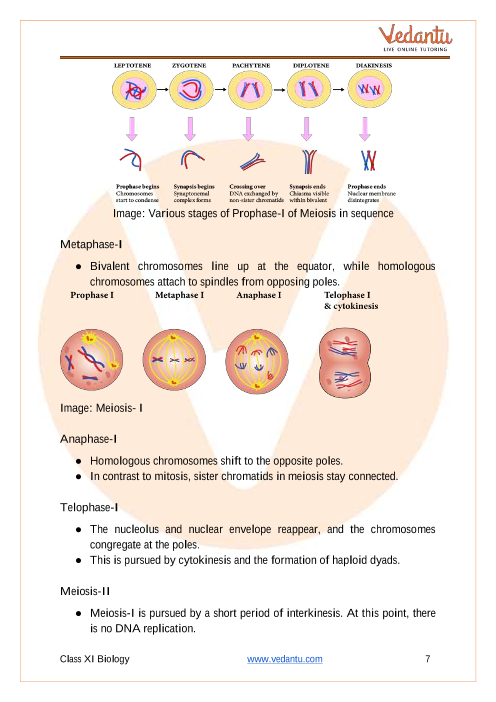
- Metaphase I: Homologous chromosome pairs align at the metaphase plate.
- Metaphase II: Sister chromatids align similar to mitosis.
Understanding these stages is vital for NEET's cell division questions.
6. What is a short note on metaphase?
Metaphase is a crucial stage in the cell cycle where chromosomes align at the cell's center (metaphase plate), attached to spindle fibres. It ensures accurate segregation of genetic material into daughter cells, making it important for NEET preparations.
7. How to avoid confusion between metaphase and anaphase in exam?
To avoid confusion:
- Remember metaphase features chromosomes aligned at the equatorial plate, whereas anaphase shows chromatids being pulled apart.
- Look for spindle fibre attachment status.
- Practice diagram labelling.
- Recall metaphase precedes anaphase in the sequence.
8. Why is metaphase often misread in diagram-based MCQs?
Metaphase is frequently misread due to:
- Confusing chromosome alignment with separation phases.
- Overlapping features with prometaphase and anaphase.
- Lack of attention to spindle fibre attachments.
Careful observation and memorization of metaphase specifics reduces errors.
9. What is the importance of colchicine in metaphase?
Colchicine is a chemical that arrests cell division at metaphase by inhibiting spindle fibre formation. This property is exploited in karyotyping to analyze chromosomes properly, a concept relevant for NEET cell division topics.
10. Does NEET ask metaphase diagram-based questions every year?
While not every year, NEET commonly includes metaphase diagram-based questions due to their significance in understanding cell division. Regular practice improves speed and accuracy in answering such diagram-related MCQs.
11. Can metaphase errors affect karyotyping?
Yes, errors in metaphase such as improper chromosome alignment or spindle attachment can impact the accuracy of karyotyping, which relies on chromosomes being well-condensed and aligned at metaphase for clear visualization.
12. What is the difference between metaphase and prometaphase?
Prometaphase precedes metaphase and involves the breakdown of the nuclear envelope and attachment of spindle fibres to kinetochores. Metaphase follows, where chromosomes are fully aligned at the metaphase plate. Distinguishing these helps clarify cell division stages in NEET.
