




Exercise-wise NCERT Answers & Key Explanations for Santoor The Rainbow
Let us Think (Page 28)
A. Answer the following
Question 1. Explain the meaning of the word ‘bow’ used in the poem.
Answer: In the poem, the word “bow” describes the rainbow, which appears in the sky as a curved, arch-like shape.
Question 2. Which bridge does the poet like more and why?
Answer: The poet prefers the rainbow to the bridges over rivers because it looks far more lovely and magical, rising gracefully between the earth and the sky.
Question 3. The word ‘these’ is used for different things in stanzas one and two. What are the things for which ‘these’ has been used in each stanza?
Answer: In the first stanza, the word “these” points to boats and ships. In the second stanza, it refers to the bridges that cross over rivers.
Question 4. State whether the following are True or False.
a. Ships sail on the river.
b. Boats sail on the sea.
c. Bridges are built on the river.
d. A road is built from earth to the sky.
Answer:
a. False
b. False
c. True
d. False
B. Think and discuss
Question 1. What are the ways in which you can cross a river?
Answer: A river can be crossed in different ways—by taking a boat, using a bridge, and in some cases by swimming or travelling on a ferry.
Question 2. Have you ever seen a rainbow, in real life or in pictures? How did you feel?
Answer: Yes, I have spotted a rainbow in the sky. Seeing all those colours shining together made me feel delighted and wonderfully surprised.
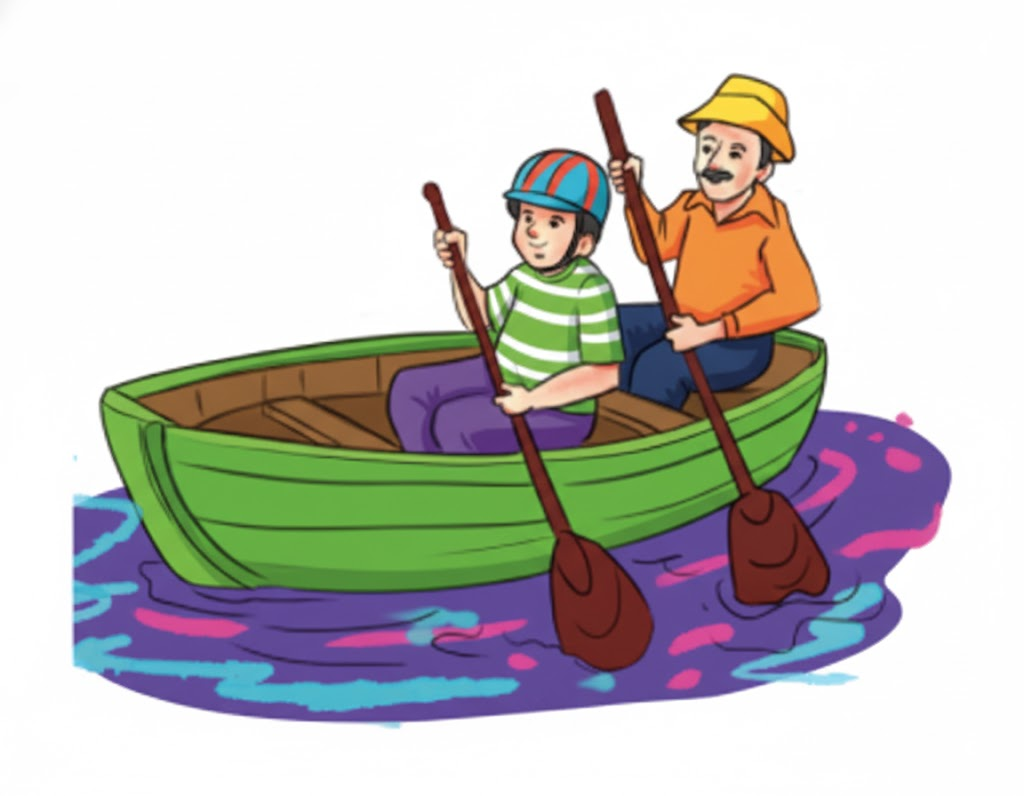
Question 3. If you could walk on a rainbow, where do you think it would take you?
Answer: If I were able to step onto a rainbow, I imagine it would lift me high into the sky.
Let us Learn (Page 29)
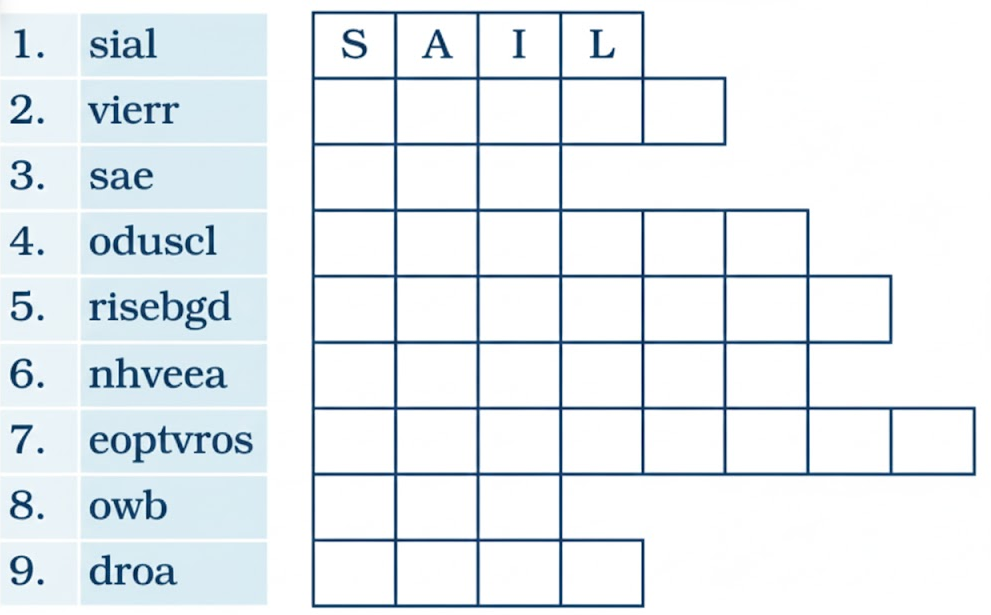
A. Rearrange the letters of each word to form a meaningful word from the poem. Write them in the space provided.
Answer:
1. sail
2. river
3. sea
4. clouds
5. bridges
6. heaven
7. overtops
8. bow
9. road
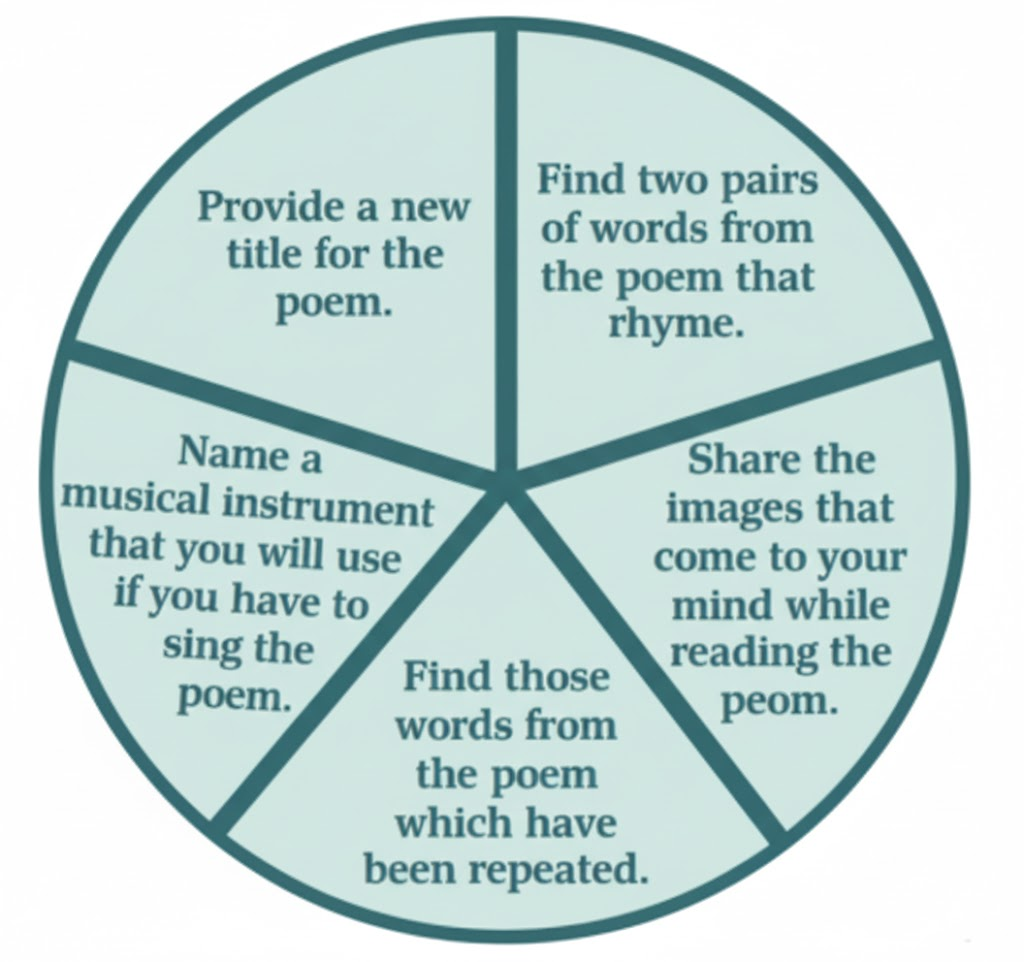
B. Work in pairs. One of you moves a finger around in the circle. When your partner says ‘Stop’, perform the action indicated by the segment that the finger lands on.
Answer:
New poem title: The Enchanted Bridge
Rhyming words: seas – these, please – trees
Pictures that come to mind: boats, ships, rainbows, clouds, bridges, trees, roads, rivers, and the sky
Frequently used words: sail, rivers, sky, prettier, these bridges
Instrument to sing with: Flute
Let us Listen (Page 30)
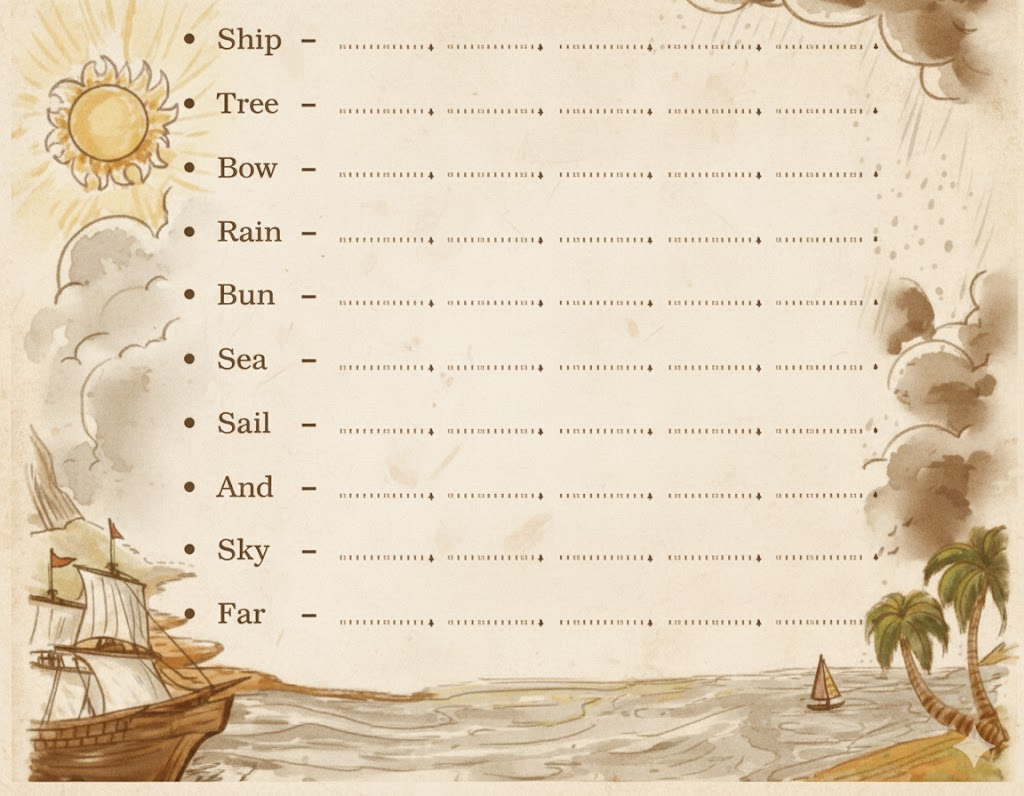
Sit in a circle and listen to the words read aloud by your teacher. Give five rhyming words for each word as indicated.
Answer:
Ship: tip, dip, lip, rip, flip
Tree: bee, free, see, three, spree
Bow: how, now, cow, meow, allow
Rain: pain, gain, main, train, plain
Sun: fun, run, bun, done, none
Sea: bee, tea, knee, plea, spree
Sail: mail, pail, nail, tail, fail
And: sand, band, hand, land, stand
Sky: fly, my, by, tie, try
Far: car, star, bar, jar, guitar
Note for the Teacher
Guide learners to concentrate on how the words sound rather than how they are spelled. Choose additional words based on the learners’ proficiency level.
Let us Speak (Page 31-32)
Recite the poem given below in three ways:
a. In a happy voice
b. In an angry voice
c. In a surprised voice
Answer: Students should do it by themselves.
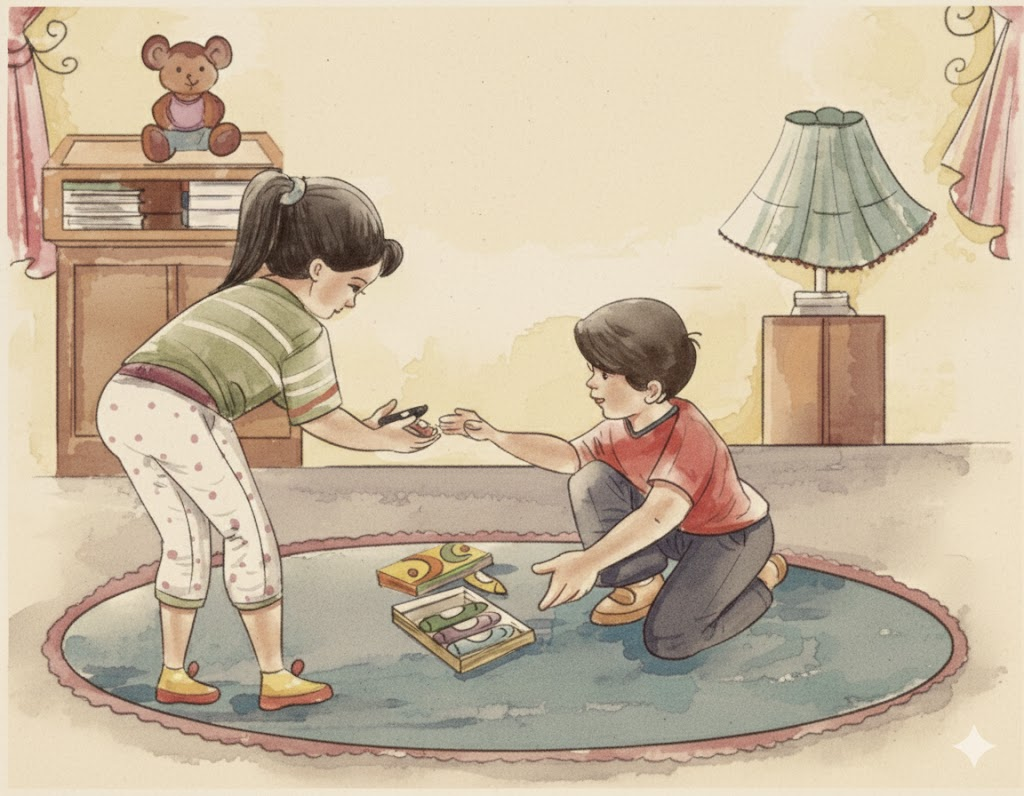
1. Colours
You have a few crayons,
Red, yellow and blue.
Green, purple and black,
I have some too
I need the red
and you need the black.
If we share our crayons,
we have a full pack!
— Santoor, Grade 3
2. Aachoo!
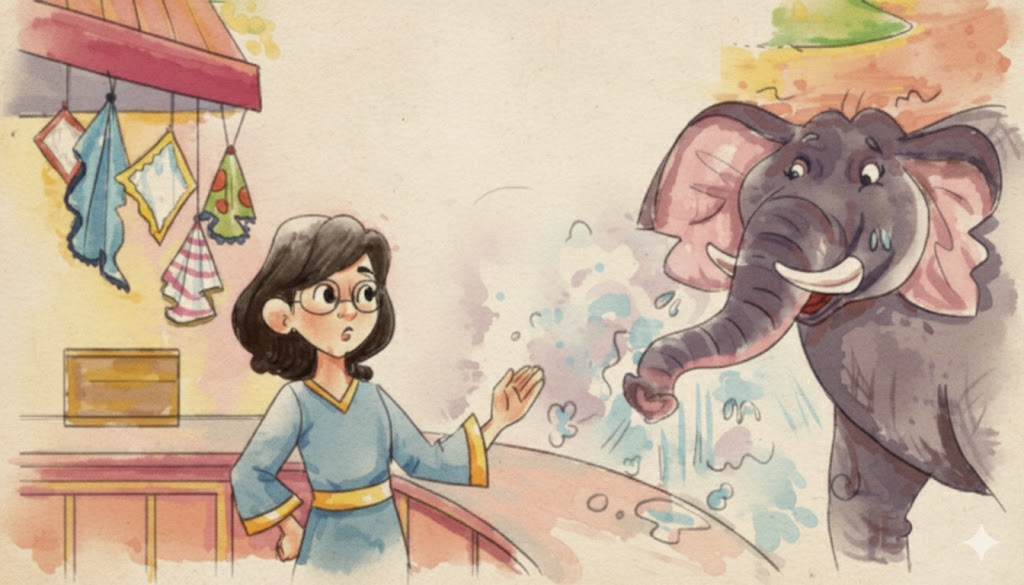
Once a mighty elephant,
Got a mighty cold.
It went to buy a handkerchief
Where handkerchiefs were sold.
“A hanky for an elephant?”
The sales girl was surprised.
“Sorry sir but we don’t have
A handkerchief that size.”
“AACHOO! said the elephant.
And shook its mighty head,
“Forget about the handkerchief
Give me a sheet Instead.”
— Santoor. Grade 3
Note for the Teacher
You may read another poem using varied voices to show different emotions. Ask learners to identify the feelings the speaker is expressing. Help them notice the accompanying gestures and facial expressions. Learners can practise reciting the poems on their own or with a partner.
Let Us Write (Page 33-38)
A. The poem The Rainbow mentions boats and ships and their journey across the water bodies. You too may have travelled to different places. Share your experience of travelling to any one place with your class.
Write a short paragraph of 80-100 words about your journey to a place you visited recently.
You may include the following points in your paragraph:
Time of journey and destination
Purpose of travel
Whom you travelled with
Things you liked or disliked during your travel
Local dishes and snacks
Monument, landmark or scenery
Answer:
Sample Answer
Last summer, my family and I went on a trip to Jaipur. We took a train and arrived early in the morning. Our main plan was to explore the well-known forts and palaces. I had a great time travelling with my parents and my younger sister. I enjoyed seeing the amazing palaces and tasting the local treats like kachori and jalebi. We also went to Hawa Mahal, which looked stunning. The entire trip was unforgettable, and I loved every part of it.
Note to the Teacher
Encourage learners to focus on describing their travel experience rather than the destination itself.
They may talk about journeys taken to visit relatives as well.
Review the past-tense rules before beginning this task.
Teachers can also share their own travel stories to help learners understand the activity better.
B. A word joins a ‘friend word’ to make new words, as shown below. Complete the table.
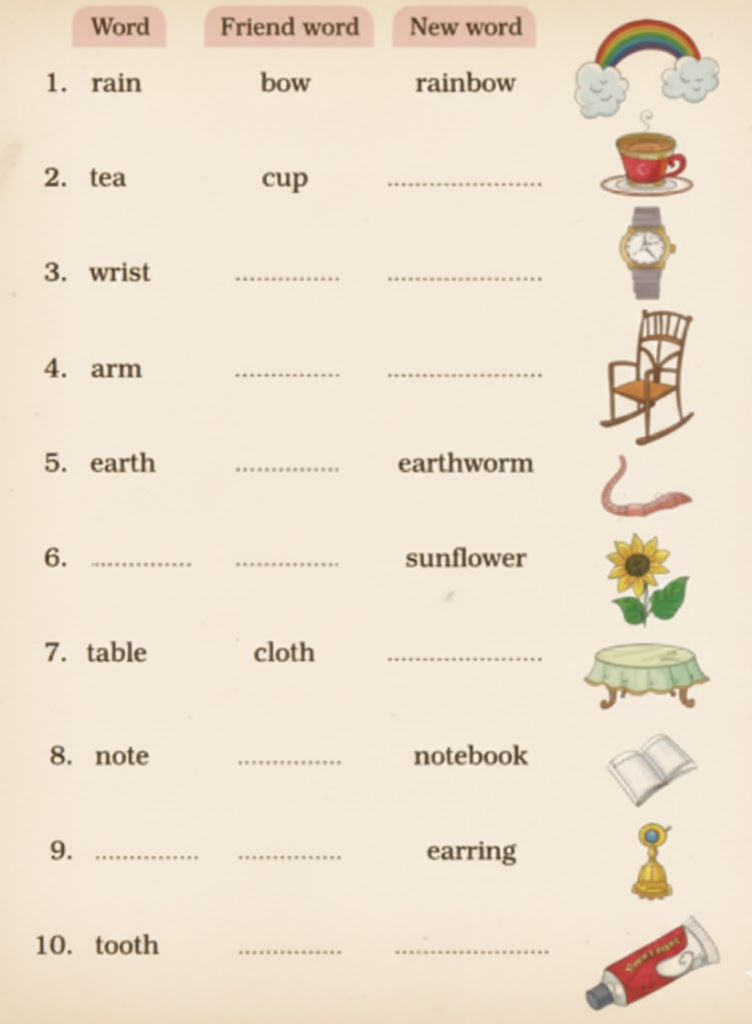
Answer:
Read the following sentences.
a) I have seen a bridge made of roots in Meghalaya. In the above sentence, the word ‘bridge’ is a noun.
b) Some planks of woods were used to bridge the stream.
In the above sentence, the word ‘bridge’ is a verb.
C. The following words are both nouns and verbs. Create two sentences for each word, once as a noun and then as a verb and write them in your notebook.
1. cut
2. bat
3. picture
4. cry
5. filter
6. dance
7. plant
8. paint
9. fly
10. face
Answer:
1. cut
Noun: The cut on my finger is small but painful.
Verb: Please cut the paper into two pieces.
2. bat
Noun: He bought a new cricket bat yesterday.
Verb: Bats fly out at night to look for food.
3. picture
Noun: The picture on the wall is very colourful.
Verb: I can picture the scene clearly in my mind.
4. cry
Noun: Her cry for help was very loud.
Verb: Babies cry when they are hungry.
5. filter
Noun: The water filter keeps our drinking water clean.
Verb: Please filter the juice to remove the seeds.
6. dance
Noun: The dance was performed beautifully on stage.
Verb: They dance together at every celebration.
7. plant
Noun: This plant needs sunlight and water to grow.
Verb: We will plant a tree in the school garden.
8. paint
Noun: The wall needs a fresh coat of paint.
Verb: She will paint the picture after school.
9. fly
Noun: The fly buzzed around the kitchen.
Verb: Birds fly high in the sky.
10. face
Noun: His face lit up with a big smile.
Verb: We must face our challenges bravely.
D. 1. Write the opposites of the following words in the space provided. All your answers must begin with an ‘S’.
Answer:
(a) small
(b) strong
(c) slow
(d) smooth
(e) sharp
(f) straight
(g) start
(h) subtraction
(i) simple
(j) severe
(k) sharp
Now, make sentences using the words that you have written in the blanks. Write them in your notebook.
Answer:
(a) small: My schoolbag is tiny in size.
(b) strong: Eating healthy food helps us grow fit and strong.
(c) slow: My watch is running behind time.
(d) smooth: The classroom floor feels very smooth to walk on.
(e) sharp: Ananya has a very sharp and quick-thinking mind.
(f) straight: Please draw a straight line on this sheet.
(g) start: You should begin your studies early in the morning.
(h) subtraction: In Class 1, we learned how to do both addition and subtraction.
(i) simple: This question is extremely easy to understand.
(j) severe: He is experiencing severe pain in his chest.
(k) sharp: We must avoid touching or playing with sharp objects.
Question 2. In small groups, choose a letter of the English alphabet and create an exercise similar to the one above.
Answer: Students should do it by themselves.
Note to the Teacher
Learners may require support with vocabulary, which can be provided during the activity.
A dictionary may be brought to the class for reference.
E. VIBGYOR—The colours of the rainbow.
VIBGYOR is an easy way to remember the seven colours of the rainbow in order.
V — Violet
I — Indigo
B – Blue
G — Green
Y – Yellow
o – Orange
R- Red
When sunlight passes through rain droplets, it splits into these seven beautiful colours forming a rainbow in the sky.
Answer: For self-reading.
F. The following items, generally found in kitchens, add colour and taste to the food. What colours are they? Write them in the column. What do you call them in your mother tongue?
Answer:
G. Welcome to the land of flowerpots! Design and colour a Flowerpot Friend!
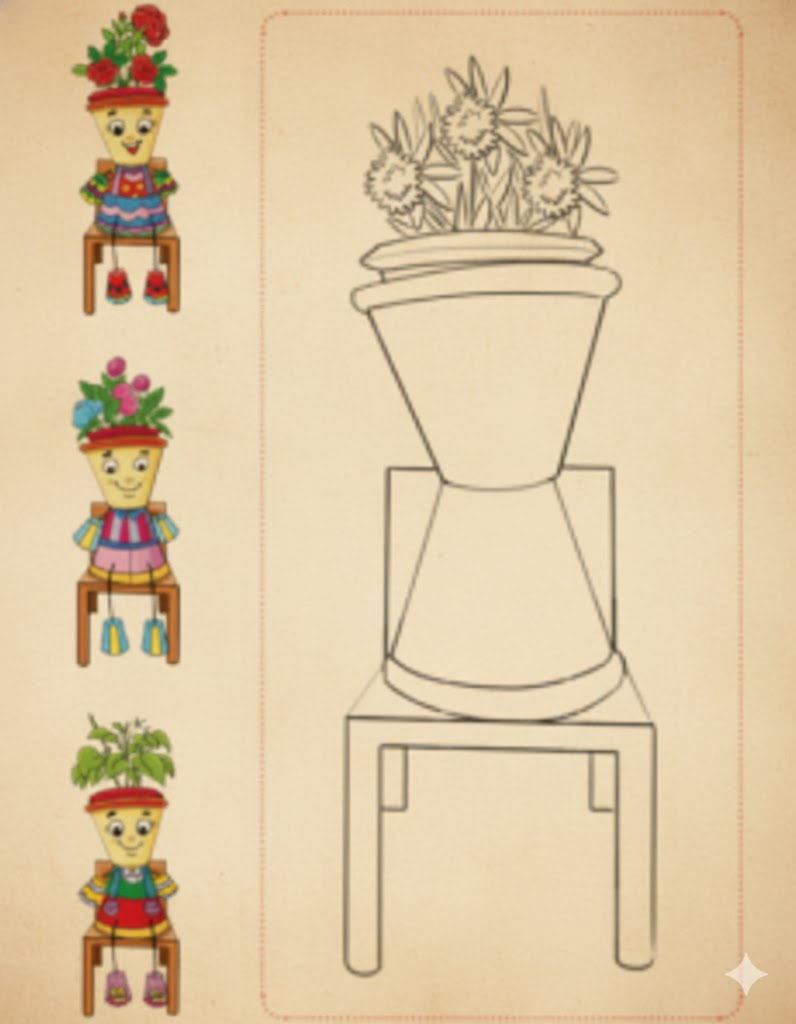
Answer: Students should do it by themselves.
Let Us Do (Page 39)
Do you know these colour combinations? Colour within the outline and write the name of the new colour.
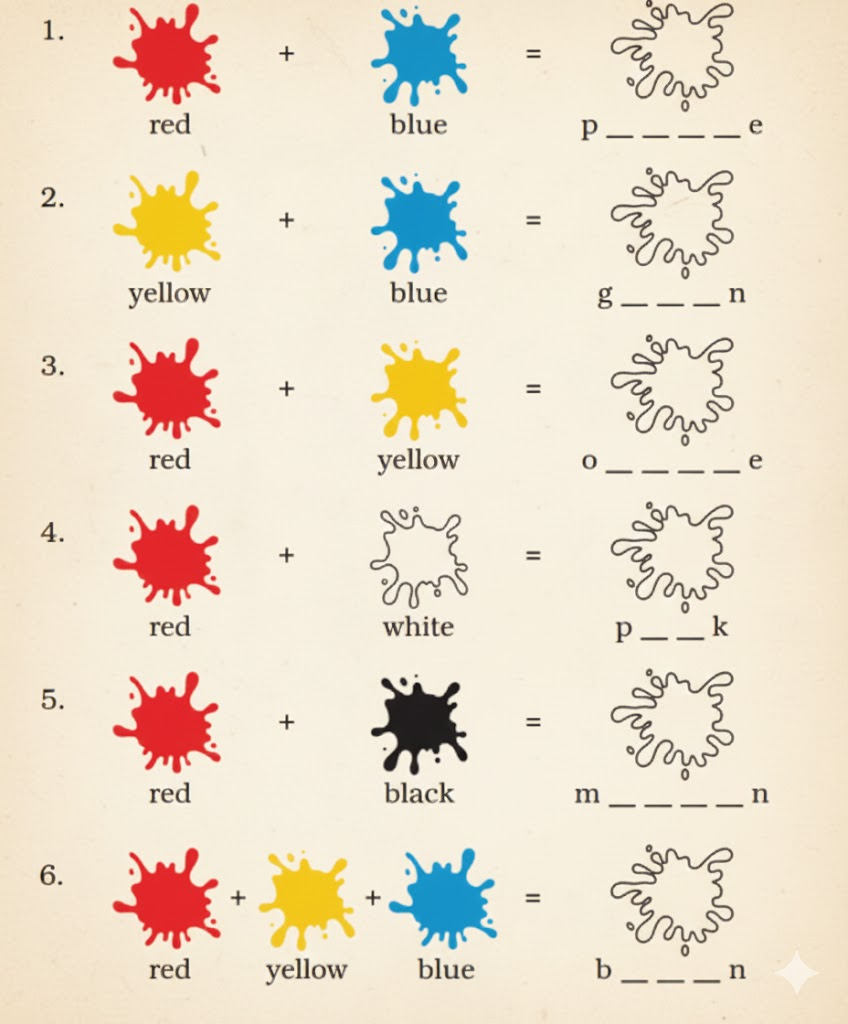
Answer:
1. purple
4. pink
2. green
5. maroon
3. orange
6. brown
Let Us Explore (Page 40)
A. Make a list of different types of boats. Collect pictures and information about the listed types of boats. Make a presentation to depict the differences among them.
Answer:
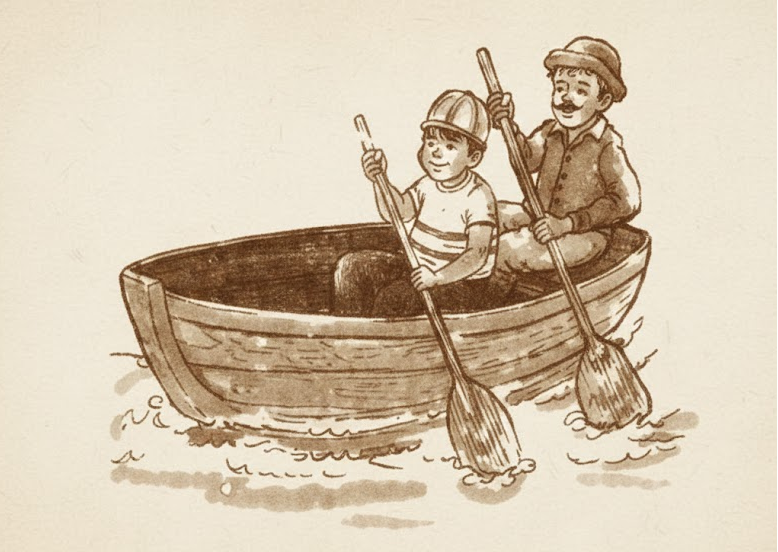
Rowboat
A rowboat is a small boat that moves with the help of oars and human effort. It is usually used for leisure activities or short trips on peaceful waters. These boats are often made from wood, fiberglass, or other light materials. Designed to carry one or two people, rowboats are commonly seen on lakes, rivers, and quiet coastal regions.
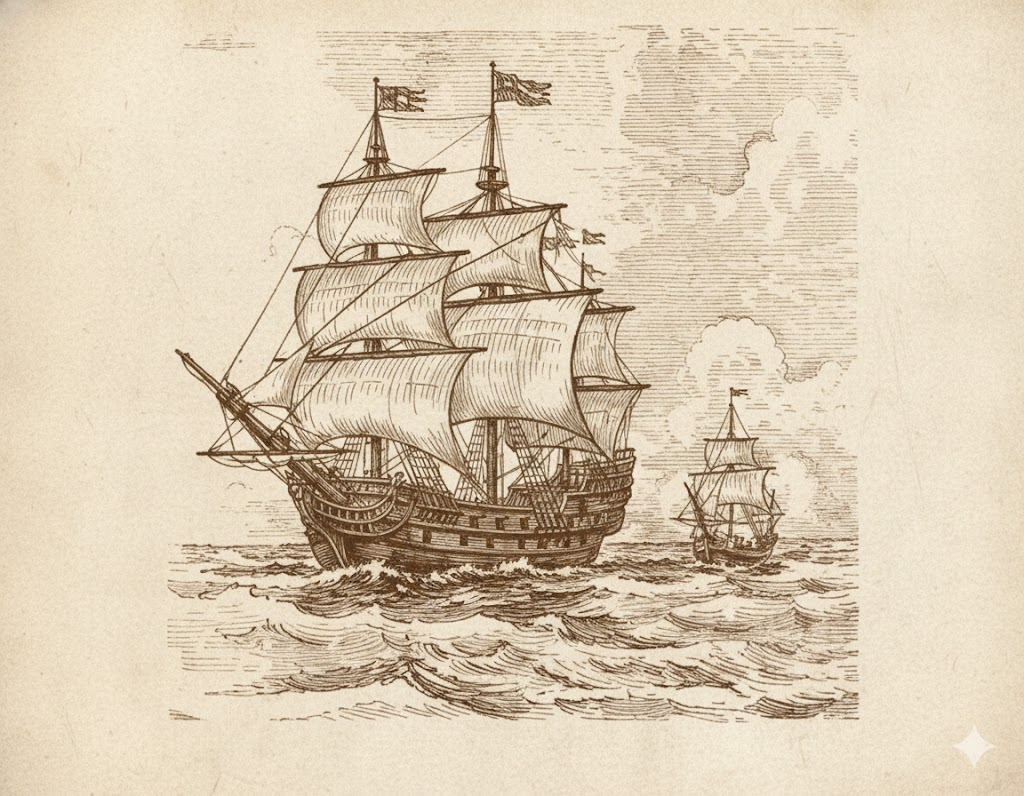
Sailboat
A sailboat moves by capturing wind in its sails, which pushes it forward. These boats can be as small as dinghies or as large as yachts and are used for fun sailing as well as racing. A typical sailboat includes a hull, a mast, and various sails such as the mainsail, jib, or spinnaker, and it is guided using a helm.
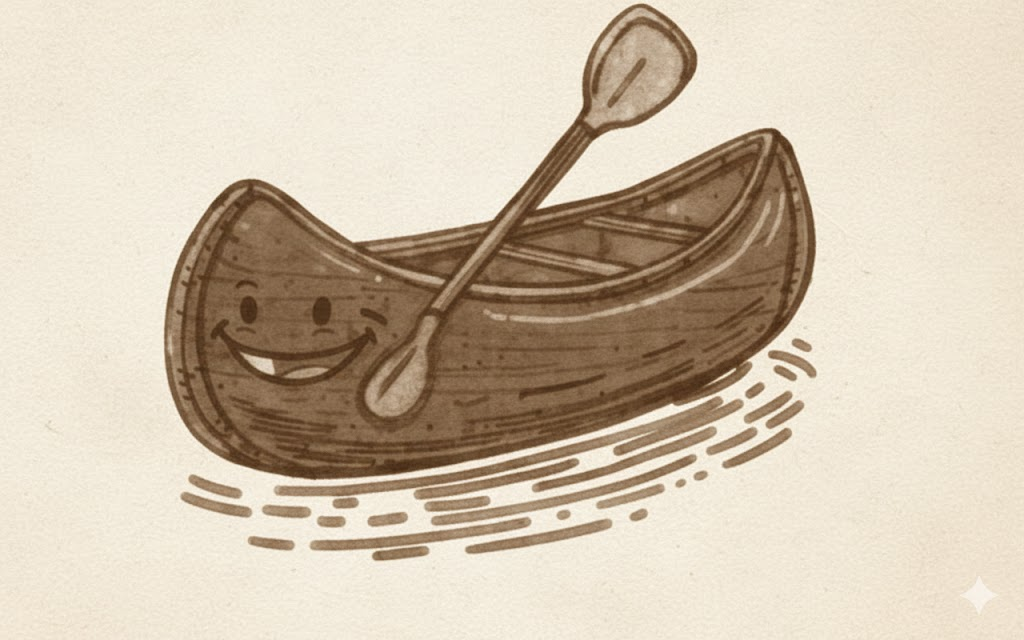
Canoe
A canoe is a slim, light boat with pointed ends, moved forward using paddles. It is a versatile craft used for activities like leisure trips, fishing, and travel, especially on lakes and rivers. Canoes are made from different materials, including wood, aluminum, and fiberglass.
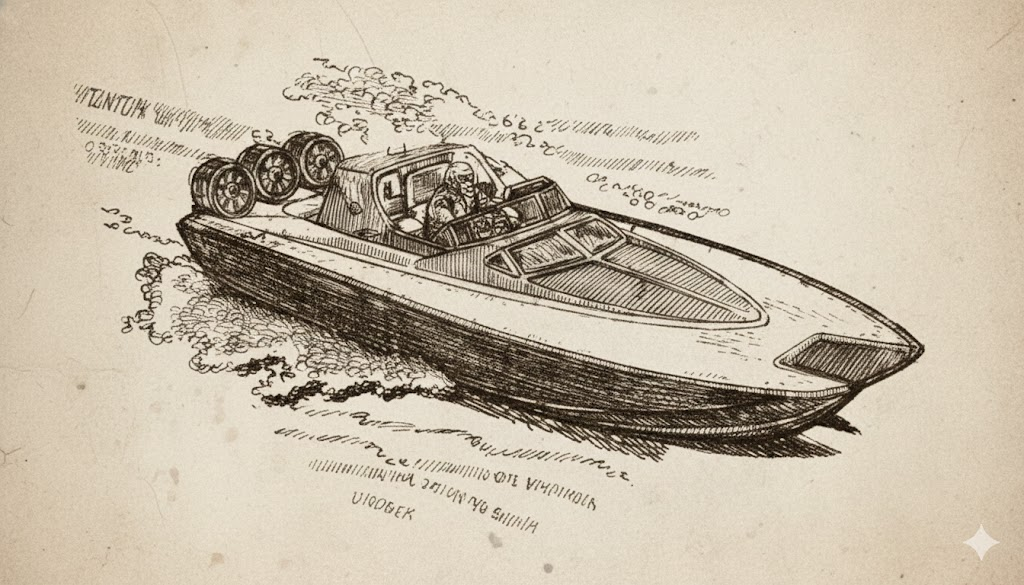
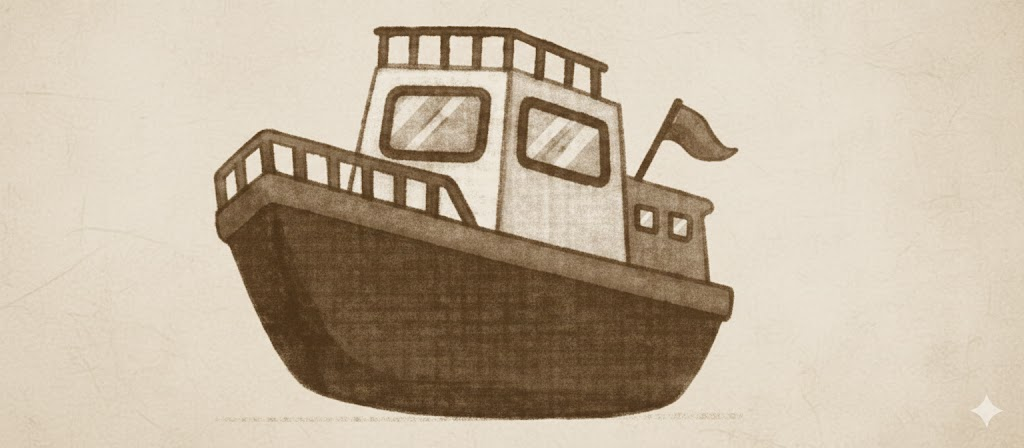
Motorboat
A motorboat is powered by an engine, either a fuel-based engine or an electric motor. These boats come in many sizes, from small ones used for fun outings to larger vessels meant for fishing, cruising, or racing. Motorboats are often known as powerboats or speedboats.
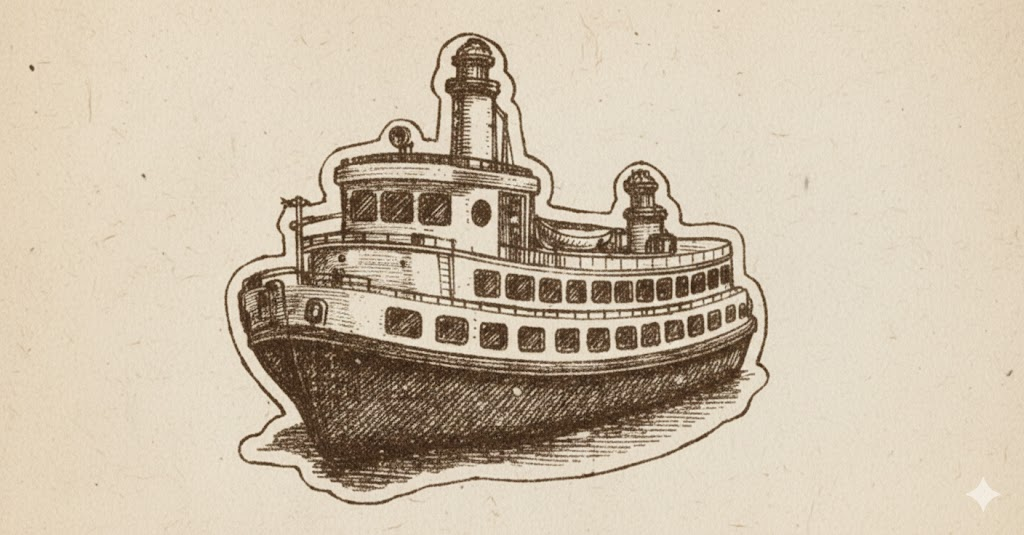
Ferry
A ferry is a vessel—either a boat or a ship—used to carry people and sometimes vehicles across water on a fixed, regular schedule. Ferries commonly link islands with the mainland or help travellers cross rivers and lakes. They vary in size, from small passenger boats to large ships that can hold hundreds of people along with cars and other vehicles.
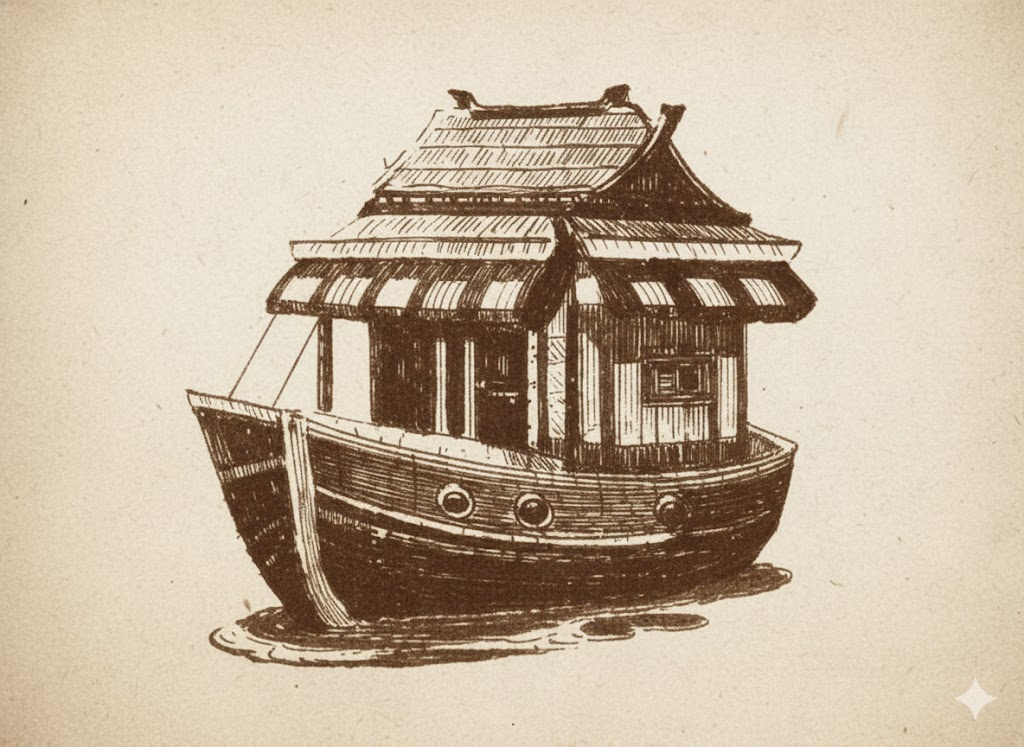
Houseboat
A houseboat is a type of boat built or modified to function as a home, complete with living areas and household facilities. Some remain anchored in one place, while others can move with the help of motors. Found on rivers, lakes, and canals, houseboats provide a special way of living on the water and can vary from simple, modest designs to lavish, hotel-like floating homes.
Yacht
A yacht is a pleasure vessel that is usually bigger and more luxurious than ordinary boats, meant for leisure cruising, racing, or long voyages. Most yachts offer space for overnight stays and come with features such as cabins, kitchens, and entertainment facilities.
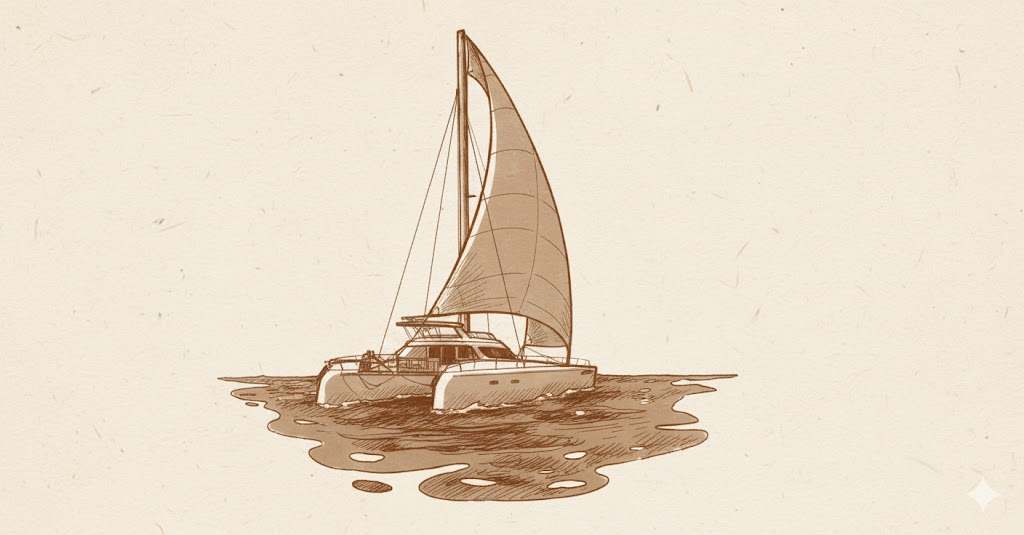
Catamaram
A catamaran is a boat or ship built with two equal-sized hulls arranged side by side. This twin-hull structure provides greater stability, less tilting, and faster movement than single-hull boats. Catamarans are commonly used for leisure sailing as well as for commercial services such as ferry transport.
B. Split the class into two groups. One group can talk about human-made things like ships and bridges. While the other discusses natural things like clouds and rainbows. Let them share their thoughts!
Answer: A part of group discussion
Did you know?
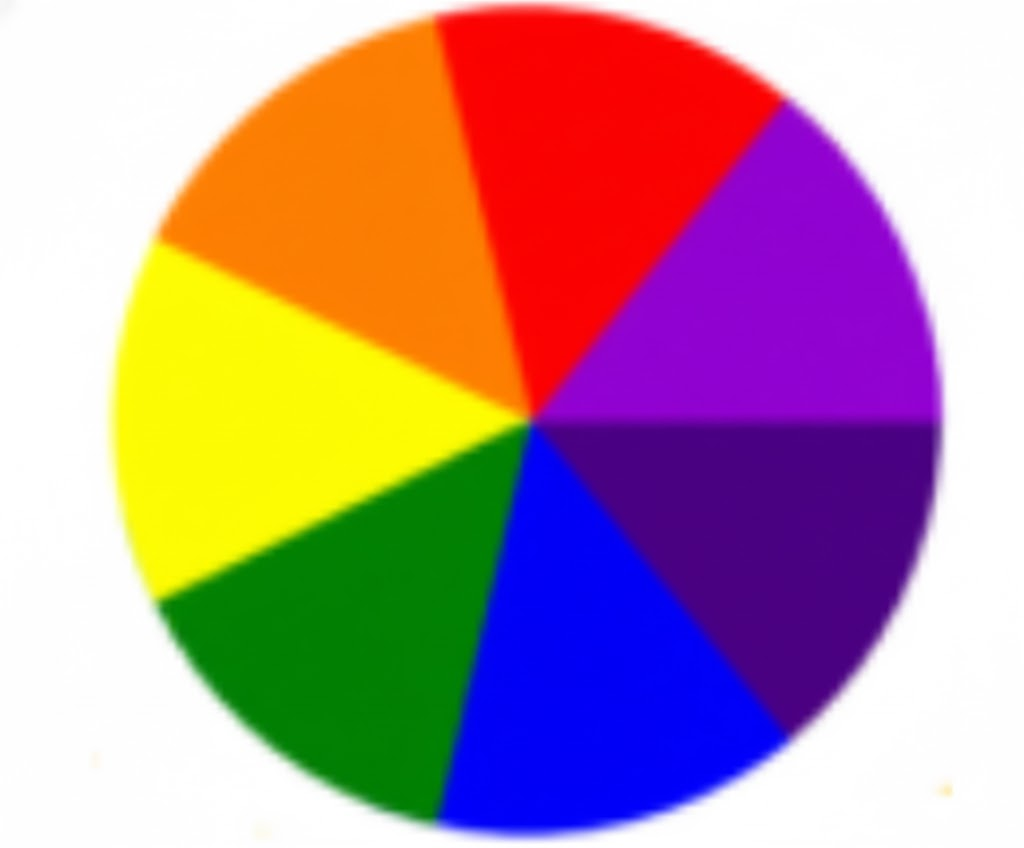
Isaac Newton created a spinning disc painted with the seven colours of the rainbow to show that white light is actually made of many colours! When the disc spins very fast, your eyes see white instead of all the colours.
NCERT Solutions Class 5 English Chapter 3 Santoor The Rainbow 2026-27 – Key Concepts Simplified
Learning about rainbows and natural wonders through Chapter 3 of Class 5 English makes studies exciting! The poem teaches us to appreciate the beauty of nature and helps students build strong language skills for their exams.
By practising with NCERT solutions for Santoor The Rainbow, students understand the meaning behind the lines and the importance of vivid imagery. This chapter helps boost creativity and improves reading comprehension for young learners.
Regular revision of Class 5 English Chapter 3 will help you remember poem details and key concepts easily. Practice writing about your travel experiences and use new words to score better in exams and express yourself confidently!
FAQs on NCERT Solutions For Class 5 English Chapter 3 The Rainbow - 2026-27 Free PDF Download (Sign-in Required)
1. What are the NCERT Solutions for Class 5 English Chapter 3 Santoor The Rainbow?
NCERT Solutions for Class 5 English Chapter 3 Santoor The Rainbow are comprehensive, stepwise answers to all textbook questions following the latest CBSE 2026–27 syllabus. These solutions include:
- Exercise-wise answers matching the NCERT format
- Definitions and key terms explained
- Sample diagrams or illustrations if required
- Tips for scoring full marks in CBSE exams
- Downloadable PDF version for offline study
2. How to write step-by-step NCERT answers for Class 5 English Chapter 3 to score full marks?
To score full marks in Class 5 English Chapter 3, follow these guidelines:
- Begin with a direct and clear opening sentence
- Use points, numbering, or short paragraphs to explain each step
- Include key words from the question and textbook
- Refer to definitions or explain terms wherever asked
- Maintain neat handwriting and correct spelling
- Where needed, add diagrams or headings for clarity
3. Which questions from Ncert Solutions Class 5 English Chapter 3 Santoor The Rainbow are likely to come in school exams?
Exam questions often include:
- Short answer type (based on the poem or story facts)
- Long answer type (explanation, moral, or summary)
- Word meanings or key definitions
- Fill in the blanks or MCQs
- Simple diagram or illustration based questions
Focus on textbook exercises and back questions for best results.
4. Are diagrams or definitions mandatory in Class 5 English Chapter 3 answers?
Including definitions is mandatory when the question asks for them. Diagrams are only needed if the exercise or the question specifically mentions to draw or label.
- Definitions help in getting full marks
- Neat diagrams can earn you extra points if relevant
- Always follow instructions on diagrams and definitions to match CBSE marking scheme
5. How should I structure long answers in Class 5 English Chapter 3 for better marks?
For long answers in Class 5 English Chapter 3:
- Start with a brief introduction sentence
- Present main points in paragraphs or bullets
- Include keywords and examples from the chapter
- Conclude with a summary or moral if needed
- Keep your answer neat and within the word limit given by CBSE
6. Where can I download the solutions PDF for Class 5 English Chapter 3 Santoor The Rainbow?
You can download the chapter's solutions PDF from trusted educational sites offering CBSE Class 5 English NCERT Solutions. Look for the official download link or button provided on the solutions page for free access and offline study.
7. Are NCERT Solutions enough for Class 5 English exams?
Yes, NCERT Solutions are sufficient for Class 5 English exams if you:
- Practice all exercise-wise questions
- Revise key definitions and summaries
- Attempt extra worksheets or sample papers when possible
They cover all concepts and formats required by the CBSE syllabus.
8. How should diagrams or maps be learned for Class 5 English Chapter 3?
To learn diagrams or maps for Class 5 English Chapter 3:
- Practice labeling important parts clearly and neatly
- Follow textbook conventions and instructions
- Use simple, clean lines and avoid overcrowding
- Revise with flash cards or quick notes for recall during exams
9. What are the most important topics in Ncert Solutions Class 5 English Chapter 3 Santoor The Rainbow?
The most important topics include:
- Summary and theme of Santoor The Rainbow
- Key word meanings and definitions
- Exercise questions (short and long answers)
- Any diagram or illustration questions
- Learning outcomes and message from the story/poem
10. Do examiners award partial marks for correct steps even if the final answer is wrong?
Yes, CBSE examiners often give step marks for each correct part of your answer. Even if your final answer is incorrect:
- Each correct step can earn marks
- Using proper definitions, keywords, or diagrams may get you partial credit
- Always show your steps and reasoning clearly
11. Is referencing textbook page numbers useful during revision for Class 5 English?
Referencing textbook page numbers is helpful during revision as it:
- Helps you locate answers quickly
- Makes cross-checking easier
- Ensures you study the exact NCERT content required for your exam
- Reduces confusion during last-minute revisions
