






World Blood Donor Day 2026: Theme, History, Significance and Quotes
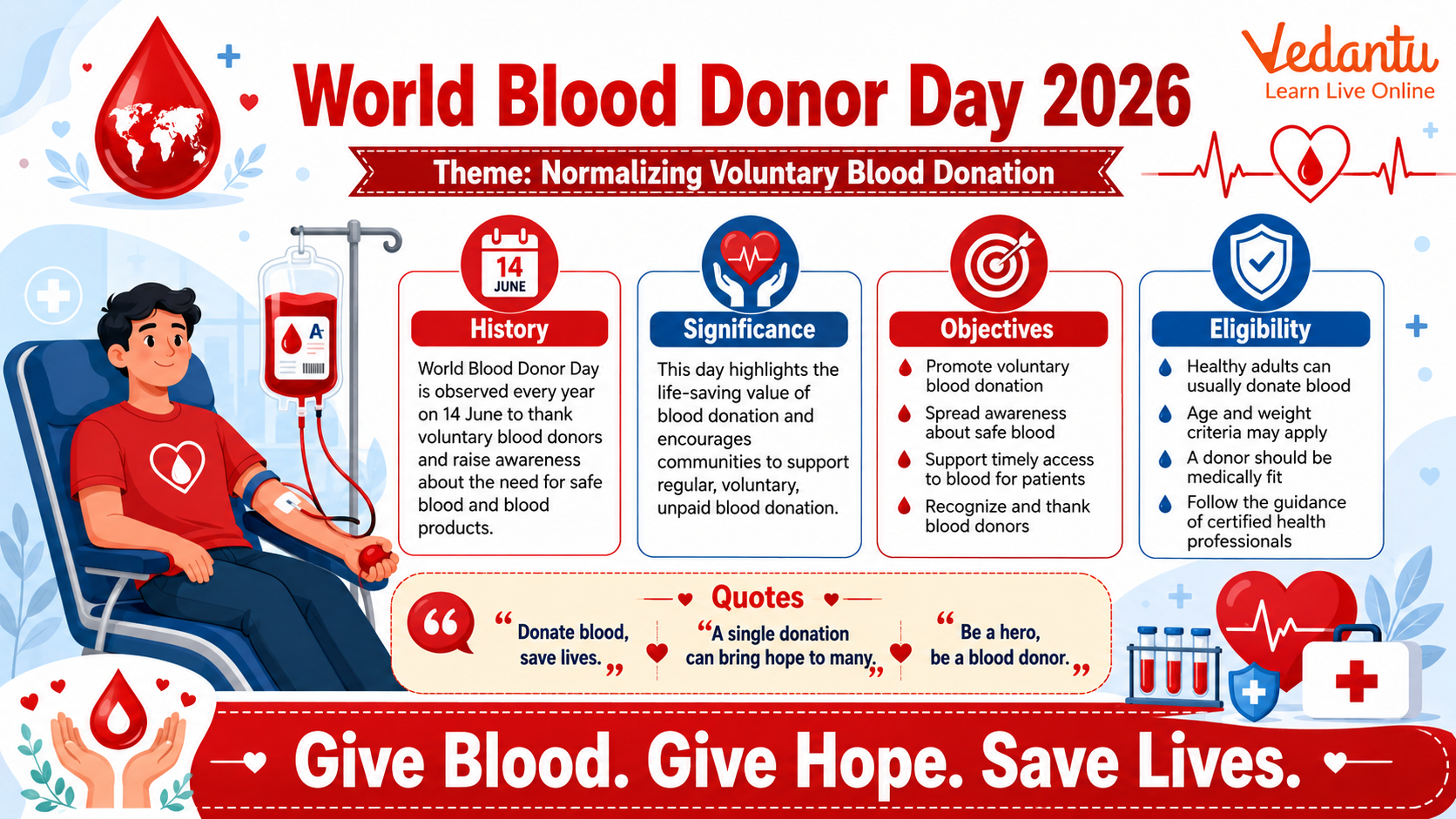
World Blood Donor Day 2026 is observed annually on 14 June to raise awareness about the importance of voluntary blood donation and to honor the selfless contributions of blood donors. This year, the campaign theme is "Normalizing Voluntary Blood Donation", emphasizing regular, routine donation rather than emergency-driven contributions. Italy will host the global celebrations through its National Blood Centre in Rome.
Blood donation is vital for daily healthcare operations, from surgeries and childbirth to cancer treatments and trauma care. By participating in World Blood Donor Day 2026, individuals contribute directly to saving lives and strengthening healthcare systems globally.
History of World Blood Donor Day
World Blood Donor Day was established to commemorate Karl Landsteiner, who discovered the ABO blood group system, revolutionizing blood transfusion science. Observed every year on 14 June, this day brings attention to the critical need for safe, voluntary, and regular blood donation.
The World Health Organization (WHO) and partners organize campaigns worldwide to encourage blood donation awareness, recognize donors, and highlight the lifesaving impact of blood donation.
Significance of World Blood Donor Day 2026
Ensures safe and adequate blood supply for medical emergencies.
Encourages routine blood donation to reduce dependency on last-minute, emergency donations.
Honors regular voluntary donors for their contributions to society.
Educates communities on the importance of blood safety and accessibility.
Objectives of World Blood Donor Day
Raise awareness about the critical need for safe blood and blood products.
Encourage voluntary, regular, and unpaid blood donations.
Build sustainable blood systems worldwide.
Thank donors for their life-saving contributions.
Promote global participation in safe blood donation practices.
Eligibility Criteria for Blood Donation
Age: 18-65 years.
Weight: Minimum 45-50 kg as per guidelines.
Healthy at the time of donation.
Hemoglobin level within acceptable limits.
Blood Donation Process
Registration & Health Check - Basic screening including blood pressure and hemoglobin.
Blood Collection - Approximately 350-450 ml of blood is collected safely.
Post-Donation Care - Rest period with refreshments.
Documentation - Receive donation certificate or acknowledgment.
Theme of World Blood Donor Day 2026
The official World Blood Donor Day theme 2026 is:
"Normalizing Voluntary Blood Donation"
This theme encourages everyone to make blood donation a routine part of life, rather than an emergency-only activity. It highlights the role of regular donors in strengthening healthcare systems, saving lives, and promoting community welfare.
Importance of Voluntary Blood Donation
Every unit of donated blood can save up to three lives.
Blood supports surgical procedures, trauma care, cancer treatment, and childbirth complications.
Encourages community responsibility and social solidarity.
World Blood Donor Day 2026 Quotes
"Donate blood, save life, be a hero every day."
"Voluntary blood donation is the gift of life."
"Every drop counts - give blood and spread hope."
"Normalizing voluntary blood donation ensures life for many."
"Safe blood for all, today and tomorrow."
How to Participate in World Blood Donor Day 2026
Locate a blood donation camp near you.
Register with local blood banks or hospitals.
Share World Blood Donor Day 2026 quotes and campaign awareness on social media.
Encourage family and friends to donate blood regularly.
For local donors in India, visit the Indian Red Cross Society portal to find camps and register.
Conclusion
World Blood Donor Day 2026 is more than just a day of recognition; it is a call to action. By normalizing voluntary blood donation, we strengthen healthcare systems, save countless lives, and foster a culture of community service. Everyone - from first-time donors to regular contributors - plays a vital role in making safe blood available everywhere. Share inspiring World Blood Donor Day 2026 quotes, participate in campaigns, and make voluntary blood donation a routine, life-saving habit.
FAQs on World Blood Donor Day 2026: Normalizing Voluntary Blood Donation
1. When is World Blood Donor Day 2026?
World Blood Donor Day 2026 will be observed on 14 June 2026 globally.
2. What is the theme of World Blood Donor Day 2026?
The official theme is "Normalizing Voluntary Blood Donation", encouraging routine, safe blood donation.
3. Why is voluntary blood donation important?
Voluntary donation ensures safe, adequate, and sustainable blood supply for surgeries, trauma care, childbirth, and other medical emergencies.
4. Who is eligible to donate blood?
Donors must be aged 18-65 years, weigh at least 45-50 kg, be healthy, and meet hemoglobin requirements.
5. How can I participate in World Blood Donor Day 2026?
Find a nearby donation center, register to donate, and share awareness using World Blood Donor Day quotes and educational campaigns.
6. Who hosts World Blood Donor Day 2026 globally?
The official global celebrations will be hosted by Italy through its National Blood Centre in Rome, in collaboration with WHO.
