






Major Schools and Key Features of Indian Miniature Art
 Table of Content
Miniature Painting of India is one of the most refined and detailed forms of traditional Indian art. These paintings are known for their small size, intricate brushwork, vibrant colors, and delicate depiction of themes such as religion, court life, nature, and romance. Developed across different regions and periods, miniature paintings reflect the cultural diversity and artistic excellence of India. They are an important topic in General Knowledge, Art and Culture, and competitive examinations due to their historical and aesthetic significance.
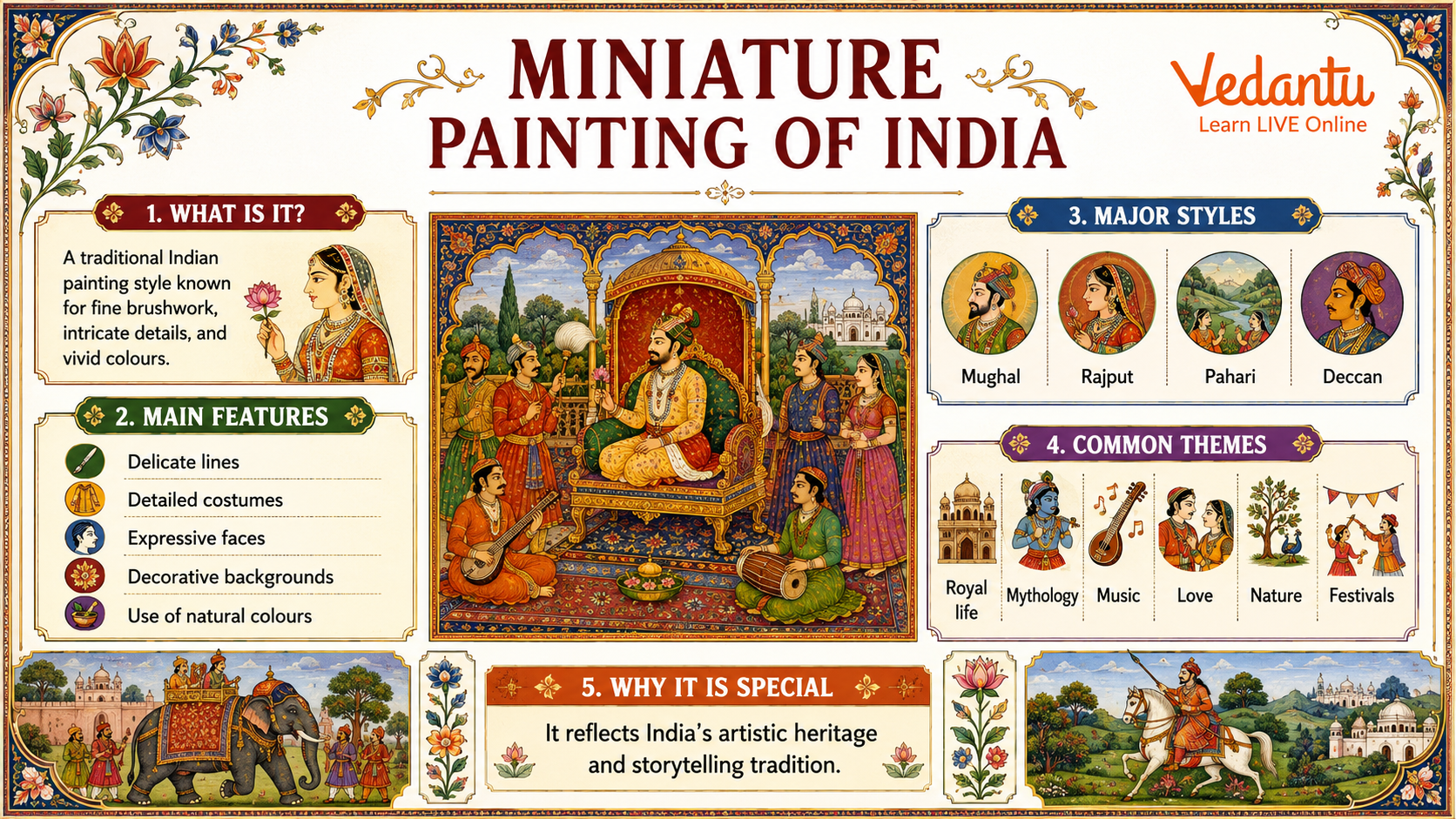
What is Miniature Painting?
Miniature paintings are small sized artworks, often created on paper, cloth, or palm leaves. Despite their small size, they display fine details, expressive characters, and rich decorative elements. The word miniature is derived from the Latin word minium, which means red lead, a pigment used in early manuscripts.
Indian miniature paintings flourished between the 16th and 19th centuries under the patronage of various royal courts including the Mughals, Rajputs, and Deccan rulers.
Historical Development of Miniature Painting in India
1. Early Miniature Traditions
The earliest examples of miniature paintings in India can be traced to the Pala dynasty of eastern India around the 8th to 12th centuries. These paintings were mainly religious and illustrated Buddhist texts on palm leaves.
2. Mughal Miniature Painting
Mughal miniature painting developed during the reign of Emperor Akbar in the 16th century. It was influenced by Persian art and later incorporated Indian themes and styles. Mughal paintings often depicted court scenes, portraits, battles, and hunting expeditions.
3. Rajput Miniature Painting
Rajput paintings developed in Rajasthan and central India. These paintings mainly focused on Hindu mythology, especially stories of Krishna, Ramayana, and Mahabharata. They were more symbolic and emotional compared to Mughal paintings.
4. Deccan Miniature Painting
Deccan miniature painting emerged in the Deccan Sultanates. It is known for rich colors, decorative backgrounds, and a blend of Persian and Indian elements.
5. Pahari Miniature Painting
Pahari painting developed in the Himalayan hill kingdoms such as Kangra, Basohli, and Guler. These paintings are famous for romantic themes and depictions of Radha and Krishna.
Major Schools of Indian Miniature Painting
| School | Region | Main Features |
|---|---|---|
| Mughal School | Delhi, Agra | Realistic portraits, court scenes, Persian influence |
| Rajput School | Rajasthan | Mythological themes, bold colors, emotional expression |
| Pahari School | Himalayan Hills | Romantic themes, soft colors, nature depiction |
Each school of miniature painting developed its own distinct style based on regional culture, patronage, and religious influences. These variations make Indian miniature painting highly diverse and artistically rich.
Characteristics of Miniature Paintings
- Small size but highly detailed artwork
- Use of natural colors made from minerals, vegetables, gold, and silver
- Fine brushwork often done with squirrel hair brushes
- Depiction of religious, courtly, and romantic themes
- Decorative borders and intricate patterns
Themes Depicted in Miniature Paintings
Miniature paintings covered a wide range of subjects depending on the region and patronage.
- Scenes from Ramayana and Mahabharata
- Stories of Krishna and Radha
- Royal court life and portraits of kings
- Battle scenes and hunting expeditions
- Nature, seasons, and musical modes known as Ragamala
Materials and Techniques Used
Artists used handmade paper, cloth, or palm leaves as the base. Colors were prepared from natural sources such as stones, plants, and precious metals. The process required patience and skill.
- Preparation of surface with smooth finishing
- Drawing of outlines with fine brush
- Application of base colors
- Addition of intricate details and decorative elements
- Burnishing to give shine and smoothness
Importance of Miniature Painting in Indian Art
Miniature paintings are valuable sources of historical and cultural information. They provide insight into clothing, architecture, customs, and social life of different periods. They also demonstrate the synthesis of Indian and Persian artistic traditions, especially during the Mughal period.
Today, miniature painting continues as a traditional art form practiced in Rajasthan and other parts of India, preserving centuries old techniques.
Miniature Painting of India for Competitive Exams
Miniature Painting of India is frequently asked in exams related to Art and Culture. Students should focus on major schools, characteristics, patron rulers, and differences between Mughal and Rajput styles.
- Know the features of Mughal, Rajput, Pahari, and Deccan schools
- Understand themes such as Ragamala and mythological stories
- Remember key rulers like Akbar who promoted this art
- Focus on differences in style and subject matter
Conclusion
Miniature Painting of India represents the artistic brilliance and cultural richness of the country. From the royal courts of the Mughals to the devotional expressions of Rajput and Pahari artists, this art form showcases diversity in style and theme. Understanding miniature painting helps students appreciate India’s artistic heritage and prepares them well for General Knowledge and competitive examinations.
FAQs on Miniature Paintings of India: Complete Student Guide
1. What is Miniature Painting of India?
Miniature Painting of India refers to small, detailed paintings known for their intricate designs and vibrant colors.
• The term ‘miniature’ comes from the Latin word ‘minium’ (red lead).
• These paintings were created on paper, palm leaves, or cloth.
• They flourished between the 16th and 19th centuries.
• Major styles include Mughal, Rajput, Pahari, and Deccan miniature paintings.
• They depict themes like royal life, mythology, court scenes, and nature.
2. What are the main schools of Indian Miniature Painting?
The main schools of Indian Miniature Painting developed under different regional rulers and cultural influences.
• Mughal School – Realistic portraits and court scenes.
• Rajput School – Religious themes and bold colors.
• Pahari School – Romantic and devotional themes (Krishna-Radha).
• Deccan School – Persian influence with rich colors.
• Jain School – Early miniature style on palm leaves.
3. Who introduced Mughal Miniature Painting in India?
Mughal Miniature Painting was introduced during the reign of Emperor Humayun and flourished under Akbar.
• Humayun invited Persian artists like Mir Sayyid Ali and Abd-us-Samad.
• Akbar established a royal atelier (workshop).
• Jahangir promoted realistic portraiture and nature studies.
• Themes included court life, hunting scenes, and historical events.
4. What are the main features of Mughal Miniature Painting?
Mughal Miniature Painting is known for its realism, fine detailing, and Persian influence.
• Use of natural colors and gold.
• Detailed facial expressions and portraits.
• Influence of Persian and European art.
• Depictions of royal courts, battles, flora and fauna.
• Strong emphasis on symmetry and perspective.
5. How is Rajput Miniature Painting different from Mughal Painting?
Rajput Miniature Painting differs from Mughal art in themes and artistic style.
• Rajput School focuses on mythology and devotion (Ramayana, Krishna Leela).
• Uses bright colors and symbolic backgrounds.
• Mughal School emphasizes realism and court life.
• Rajput paintings show emotional and spiritual themes rather than historical documentation.
6. What materials were used in Indian Miniature Paintings?
Indian Miniature Paintings were created using natural and handmade materials.
• Base materials: handmade paper, palm leaves, cloth.
• Colors derived from minerals, vegetables, precious stones.
• Use of gold and silver foil for decoration.
• Fine brushes made from squirrel or camel hair.
7. What themes are commonly depicted in Miniature Paintings of India?
Miniature Paintings of India commonly depict religious, royal, and romantic themes.
• Hindu epics – Ramayana and Mahabharata.
• Krishna-Radha and Bhakti themes.
• Royal court scenes and hunting expeditions.
• Nature, seasons (Baramasa), and ragas (Ragamala).
• Portraits of kings and nobles.
8. What is Pahari Miniature Painting?
Pahari Miniature Painting is a style that developed in the Himalayan hill kingdoms of North India.
• Flourished during the 17th–19th centuries.
• Centers: Kangra, Basohli, Guler.
• Known for soft colors and romantic expressions.
• Popular themes include Krishna Leela and love stories.
9. Why are Miniature Paintings important in Indian art history?
Miniature Paintings are important because they reflect India’s rich cultural and artistic heritage.
• Document historical events and royal lifestyles.
• Preserve religious and literary traditions.
• Show fusion of Indian, Persian, and European styles.
• Represent excellence in fine detailing and craftsmanship.
10. In which competitive exams is Miniature Painting of India an important topic?
Miniature Painting of India is frequently asked in competitive exams under Art and Culture.
• UPSC Civil Services Examination.
• State PSC exams.
• SSC, NDA, CDS.
• Questions focus on schools, features, rulers, and themes.
• Important for General Knowledge (GK) and Indian Art & Culture sections.
