






How Do Silkworms Make Silk? From Cocoon Formation to Silk Fiber Extraction
Silk is a natural protein fiber obtained from the cocoon of the silkworm. The process of producing silk from silkworms is called sericulture. It involves several carefully controlled steps starting from rearing silkworms to extracting and processing silk threads. Silk is valued for its smooth texture, natural shine, strength, and softness. Understanding how silk is produced from silkworm is important for students, competitive exam aspirants, and general readers as it explains an important biological and industrial process.
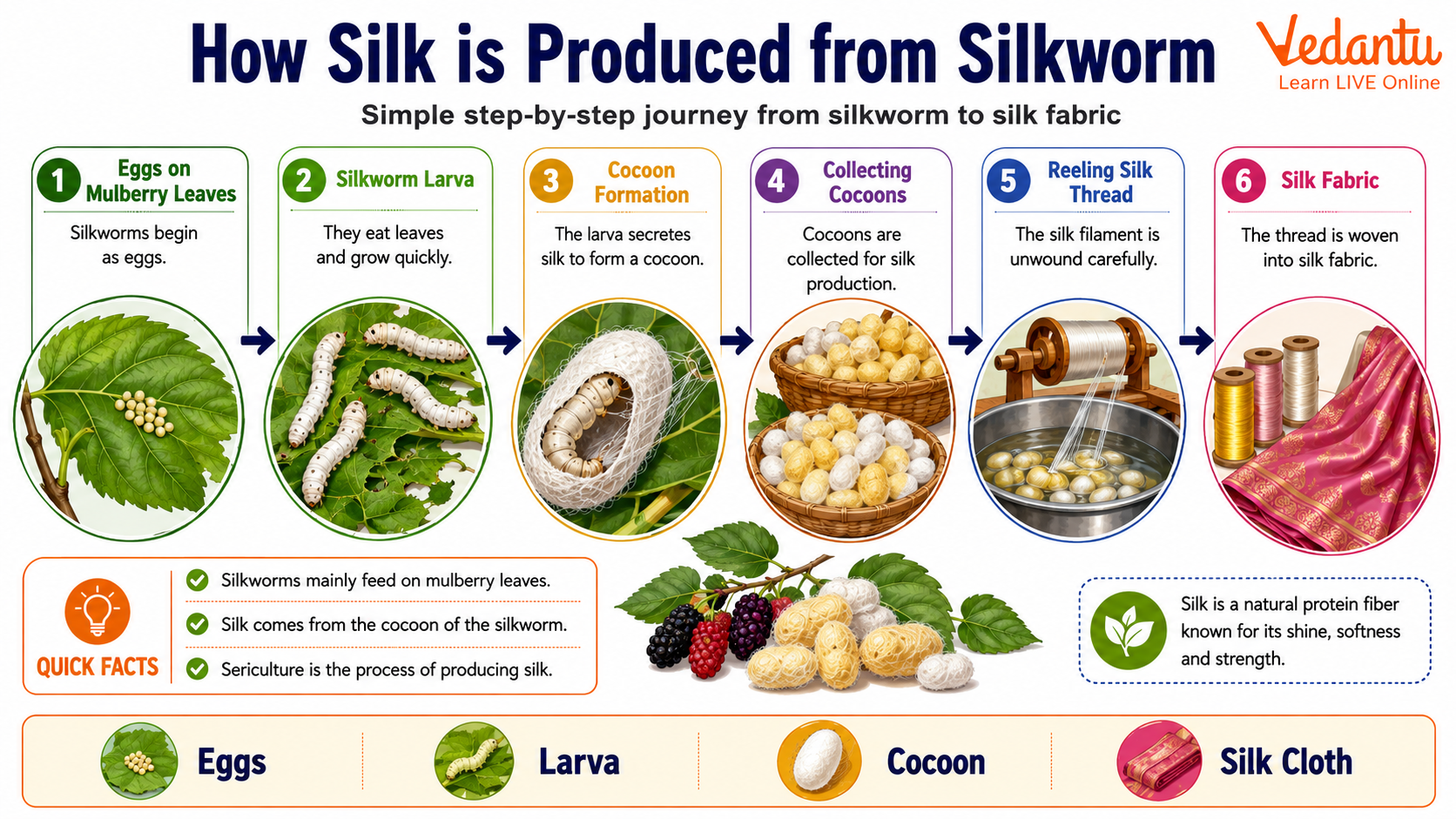
What Is Sericulture?
Sericulture is the practice of rearing silkworms for the production of silk. It combines agriculture and industry, as it involves growing mulberry plants and processing silk fibers. The most common silkworm used for silk production is Bombyx mori, which feeds mainly on mulberry leaves.
Life Cycle of Silkworm
The production of silk is closely connected to the life cycle of the silkworm. The silkworm undergoes complete metamorphosis, which includes four stages.
- Egg - The female moth lays hundreds of eggs.
- Larva - The egg hatches into a caterpillar or larva, which feeds on mulberry leaves.
- Pupa - The larva spins a cocoon around itself and becomes a pupa.
- Adult Moth - The pupa develops into a moth.
Silk is obtained from the cocoon stage before the adult moth emerges.
Step By Step Process Of Silk Production
1. Rearing Of Silkworms
Healthy silkworm eggs are kept under controlled temperature and humidity conditions. After hatching, the larvae are fed fresh mulberry leaves several times a day. They grow rapidly and molt several times.
2. Formation Of Cocoon
When the larva is fully grown, it stops feeding and begins to spin a cocoon. It secretes a protein fiber made of fibroin and sericin from its salivary glands. The larva moves its head in a figure eight pattern to form a continuous silk thread around itself.
3. Harvesting The Cocoons
The cocoons are collected before the moth comes out. If the moth emerges, it breaks the silk thread, reducing its quality. Therefore, the pupae inside the cocoon are killed by steaming or heating. This process is called stifling.
4. Reeling The Silk
The cocoons are boiled in hot water to soften the sericin. The silk fibers are then unwound carefully. This process is known as reeling. Several silk threads are combined to form a strong yarn.
5. Throwing And Weaving
The reeled silk is twisted into yarn, dyed if required, and woven into fabric. The final silk fabric is used to make garments, sarees, scarves, and other textiles.
Stages Of Silk Production From Silkworm
| Stage | Process | Purpose |
|---|---|---|
| Rearing | Feeding larvae with mulberry leaves | Healthy growth of silkworm |
| Cocoon Formation | Spinning of silk fiber around body | Protection during pupa stage |
| Reeling | Unwinding silk threads from cocoon | Obtaining raw silk fiber |
Each stage plays an important role in ensuring the quality and strength of the final silk product. Proper care during rearing and careful reeling are essential for producing fine silk.
Types Of Silk
Different varieties of silk are produced depending on the species of silkworm and the type of leaves they consume.
- Mulberry Silk - Obtained from Bombyx mori and most commonly used.
- Tasar Silk - Produced by wild silkworms feeding on forest leaves.
- Eri Silk - Known for its soft texture.
- Muga Silk - Famous for its natural golden color.
Importance Of Silk Production
Silk production is economically and culturally important in many countries. It provides employment to rural communities and supports the textile industry. Silk is also used in medical sutures and other specialized products because of its strength and biocompatibility.
- Provides livelihood to farmers and workers.
- Contributes to export earnings.
- Used in fashion and textile industries.
- Has medical and industrial applications.
Key Points To Remember
- Silk is a natural protein fiber obtained from the cocoon of silkworm.
- The process of producing silk is called sericulture.
- Bombyx mori is the most commonly used silkworm species.
- Cocoons are boiled to soften sericin and unwind silk threads.
- Silk is strong, shiny, smooth, and widely used in textiles.
In conclusion, silk production from silkworm is a fascinating biological and industrial process. From the tiny egg to the beautiful silk fabric, each step requires careful handling and scientific knowledge. Learning about how silk is produced helps students understand natural fibers, insect life cycles, and the importance of traditional industries in modern economies.
FAQs on How Silk Is Produced from Silkworms in Simple Steps
1. How is silk produced from silkworm?
Silk is produced from silkworms through a natural process called sericulture, where cocoons are processed to obtain silk fibers.
• Silkworm eggs hatch into larvae and feed on mulberry leaves.
• The larvae spin a cocoon made of a single silk filament.
• Cocoons are collected and boiled to soften the silk gum (sericin).
• The silk thread is carefully reeled and woven into fabric.
This process explains how natural silk fiber is obtained from the silkworm life cycle.
2. What is sericulture?
Sericulture is the scientific method of rearing silkworms for silk production.
• It involves cultivating mulberry plants for feeding silkworms.
• Raising and caring for Bombyx mori (mulberry silkworm).
• Harvesting and processing silk cocoons.
Sericulture is an important cottage industry and a major source of natural silk worldwide.
3. What are the stages in the life cycle of a silkworm?
The silkworm undergoes four main stages in its life cycle known as complete metamorphosis.
• Egg – Laid by the adult moth.
• Larva (Caterpillar) – Feeds on mulberry leaves and grows rapidly.
• Pupa – Develops inside the silk cocoon.
• Adult Moth – Emerges to reproduce.
This life cycle is crucial in understanding silk production from silkworms.
4. Which type of silkworm is mainly used for silk production?
The most commonly used silkworm for silk production is Bombyx mori.
• It feeds mainly on mulberry leaves.
• Produces high-quality mulberry silk.
• Domesticated for commercial sericulture.
Other varieties include Tasar, Eri, and Muga silkworms, which produce different types of natural silk.
5. Why are cocoons boiled during silk production?
Cocoons are boiled to soften the silk gum called sericin and to extract continuous silk threads.
• Boiling kills the pupa inside the cocoon.
• It loosens the silk fibers for easy reeling.
• Helps in obtaining a long, unbroken silk filament.
This step is essential in converting raw cocoons into usable silk yarn.
6. What do silkworms eat?
Silkworms mainly feed on fresh mulberry leaves, which help them produce quality silk.
• Mulberry leaves provide essential nutrients.
• Proper feeding increases cocoon size and silk yield.
• Some wild silkworms feed on other plant leaves like oak.
The diet of silkworms directly affects the texture and quality of silk fiber.
7. How long does it take for a silkworm to produce silk?
A silkworm takes about 3–4 weeks to grow and start spinning silk.
• The larva feeds for around 20–25 days.
• It spins a cocoon in 2–3 days.
• The silk filament may measure up to 800–1000 meters long.
This short life cycle makes silkworm farming efficient for commercial silk production.
8. What is raw silk?
Raw silk is the untreated silk thread obtained directly from processed cocoons.
• It is reeled from softened cocoons.
• Contains natural proteins like fibroin and sericin.
• Later dyed and woven into silk fabric.
Raw silk is the primary material used in textile and garment industries.
9. Which countries are major producers of silk?
The major silk-producing countries are China and India.
• China is the largest producer of natural silk.
• India is known for Mulberry, Tasar, Eri, and Muga silk.
• Other producers include Uzbekistan and Thailand.
These countries lead in global sericulture and silk export markets.
10. Why is silk considered a natural fiber?
Silk is considered a natural fiber because it is obtained from living organisms, specifically silkworms.
• Produced by the larva of Bombyx mori.
• Made of natural protein called fibroin.
• Biodegradable and eco-friendly compared to synthetic fibers.
Silk is therefore classified as a natural protein fiber in textile science.
