






Important COVID-19 General Knowledge Questions and Answers
Coronavirus became one of the most discussed global topics after the outbreak of COVID-19 in 2019. A General Knowledge (GK) quiz on Coronavirus helps students, competitive exam aspirants, and general readers understand important facts about the virus, its origin, spread, prevention, vaccines, and global impact. Questions related to Coronavirus are frequently asked in school exams, government exams, and awareness tests. This page provides essential information along with practice questions to strengthen your preparation.
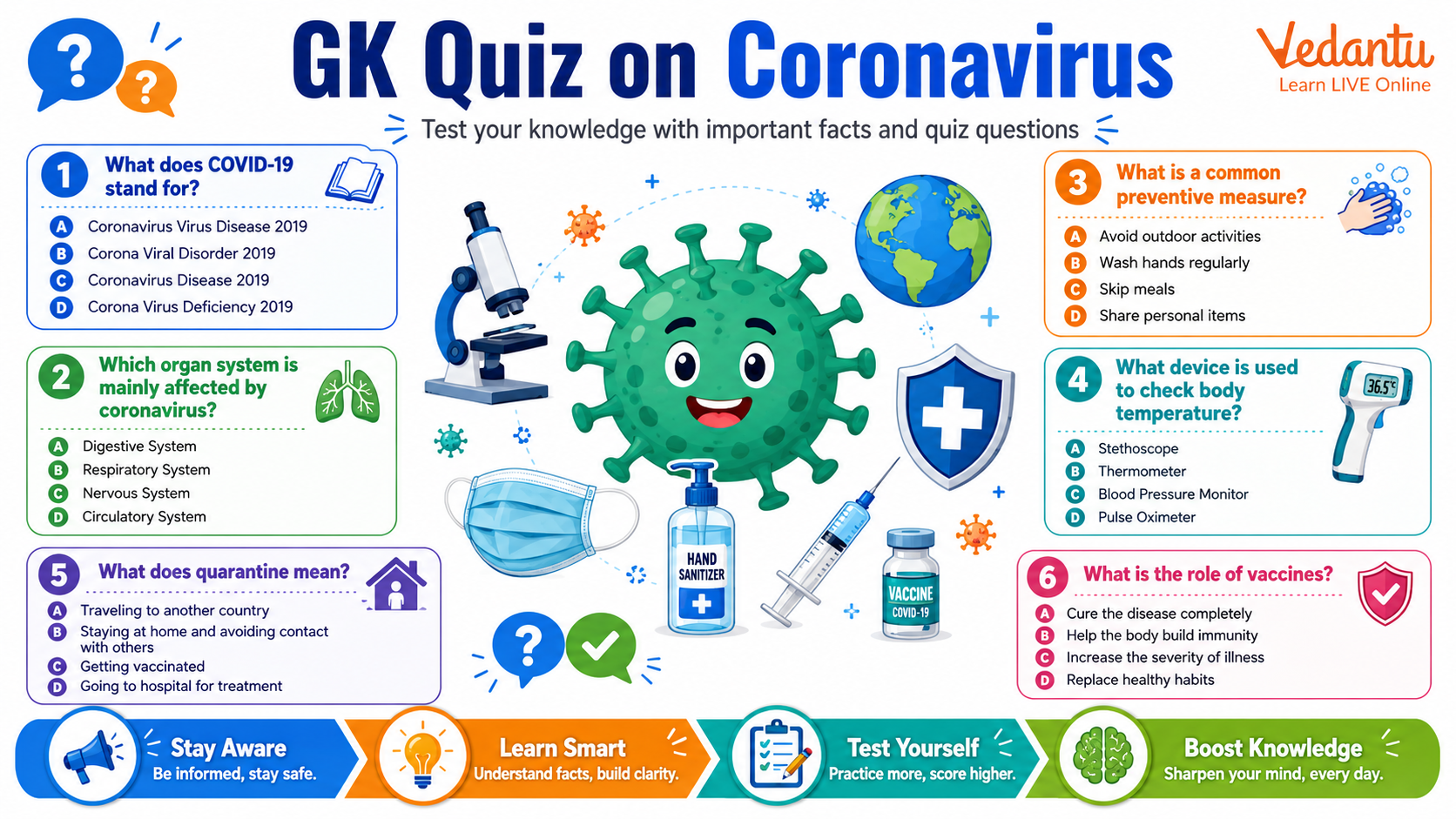
What is Coronavirus?
Coronavirus is a large family of viruses that can cause illnesses ranging from the common cold to severe respiratory diseases. The virus that caused the global pandemic in 2019 is known as SARS-CoV-2, and the disease caused by it is called COVID-19. Coronaviruses are zoonotic, which means they can spread between animals and humans.
Key Features of Coronavirus
- Belongs to the Coronaviridae family
- Named coronavirus due to crown-like spikes on its surface
- Primarily affects the respiratory system
- Spreads through respiratory droplets and close contact
- Can cause mild to severe illness
History and Origin of COVID-19
The first cases of COVID-19 were reported in Wuhan, China, in December 2019. The World Health Organization declared it a Public Health Emergency of International Concern in January 2020 and later declared it a pandemic on 11 March 2020. Since then, the virus has spread globally, affecting millions of people.
Important Facts About Coronavirus
| Particular | Details | Year |
|---|---|---|
| First Reported Case | Wuhan, China | 2019 |
| Pandemic Declaration | By World Health Organization | 2020 |
| Virus Name | SARS-CoV-2 | 2019 |
These facts are frequently asked in GK quizzes and competitive examinations. Knowing the timeline and official terminology is important for scoring well in exams.
Symptoms of COVID-19
Symptoms of COVID-19 can vary from mild to severe. Some individuals may remain asymptomatic while still spreading the virus.
- Fever
- Dry cough
- Shortness of breath
- Loss of taste or smell
- Fatigue and body aches
Prevention and Safety Measures
Preventive measures played a crucial role in controlling the spread of the virus. Governments and health organizations promoted safety guidelines worldwide.
- Washing hands regularly with soap or sanitizer
- Wearing masks in public places
- Maintaining social distancing
- Avoiding crowded areas
- Getting vaccinated
COVID-19 Vaccines
Vaccination campaigns were launched worldwide to reduce severe illness and deaths. Several vaccines were developed and approved for emergency use by health authorities.
Examples of COVID-19 Vaccines
- Pfizer-BioNTech
- Moderna
- Covishield
- Covaxin
- Sputnik V
GK Quiz Questions on Coronavirus
Below are some important multiple choice questions for practice. These questions are helpful for school exams, quizzes, and competitive examinations.
Multiple Choice Questions
- In which city was COVID-19 first reported?
a) Beijing
b) Wuhan
c) Shanghai
d) Tokyo - What is the official name of the virus that causes COVID-19?
a) MERS-CoV
b) H1N1
c) SARS-CoV-2
d) Ebola - Which organization declared COVID-19 a pandemic?
a) UNICEF
b) WHO
c) IMF
d) UNESCO - Which of the following is a common symptom of COVID-19?
a) Fever
b) Rash
c) Hair loss
d) Toothache
Answers
- 1 - b) Wuhan
- 2 - c) SARS-CoV-2
- 3 - b) WHO
- 4 - a) Fever
Why Coronavirus GK is Important for Exams
Coronavirus related questions are important for competitive exams such as SSC, UPSC, banking exams, railways, and state level examinations. Current affairs and health awareness topics often include questions about pandemics, vaccines, and global organizations. Preparing this topic improves both static GK and current affairs knowledge.
Preparation Tips for GK Quiz on Coronavirus
- Focus on important dates and timelines
- Remember official names like SARS-CoV-2 and COVID-19
- Study major vaccines and health organizations
- Practice multiple choice questions regularly
- Revise global and national responses to the pandemic
A GK Quiz on Coronavirus not only enhances general awareness but also strengthens exam preparation. Understanding the origin, symptoms, prevention, and global impact of COVID-19 helps students stay informed and perform better in competitive examinations. Regular revision and practice will ensure better retention of facts related to this important global event.
FAQs on GK Quiz on Coronavirus (COVID-19) for Students
1. What is Coronavirus?
Coronavirus is a family of viruses that can cause illnesses ranging from the common cold to severe respiratory diseases like COVID-19.
• It belongs to the Coronaviridae family.
• The virus responsible for COVID-19 is called SARS-CoV-2.
• It mainly affects the respiratory system.
• It spreads through droplets from coughing, sneezing, or talking.
Commonly searched terms include COVID-19 meaning, coronavirus definition, and types of coronavirus.
2. When and where did COVID-19 first emerge?
COVID-19 first emerged in December 2019 in Wuhan, China.
• Reported initially in Hubei Province.
• Linked to a seafood and live animal market.
• Declared a global pandemic by the World Health Organization (WHO) on March 11, 2020.
People also ask about origin of coronavirus, first COVID case, and pandemic declaration date.
3. What are the common symptoms of COVID-19?
The common symptoms of COVID-19 include fever, cough, and breathing difficulties.
• Fever and chills
• Dry cough
• Shortness of breath
• Loss of taste or smell
• Fatigue and body aches
Severe cases may lead to pneumonia or acute respiratory distress syndrome (ARDS). Related searches include COVID symptoms list and early signs of coronavirus.
4. How does Coronavirus spread?
Coronavirus spreads mainly through respiratory droplets and close contact.
• Droplets from coughing or sneezing
• Close physical contact
• Touching contaminated surfaces and then the face
• Airborne transmission in closed spaces
Keywords often searched are how COVID spreads, airborne transmission, and virus infection methods.
5. What precautions can prevent COVID-19 infection?
Preventive measures like vaccination and hygiene practices reduce the risk of COVID-19 infection.
• Getting COVID-19 vaccination
• Wearing face masks
• Frequent hand washing with soap
• Maintaining social distancing
• Avoiding crowded places
People also search for COVID safety measures, pandemic precautions, and how to avoid coronavirus.
6. What is a pandemic?
A pandemic is a global outbreak of a disease that spreads across countries or continents.
• Affects a large number of people worldwide
• Declared by the World Health Organization (WHO)
• Example: COVID-19 pandemic (2020)
Related terms include epidemic vs pandemic, global outbreak, and public health emergency.
7. What are COVID-19 vaccines?
COVID-19 vaccines are medical preparations that help the immune system fight the SARS-CoV-2 virus.
• Examples: Covishield, Covaxin, Pfizer-BioNTech, Moderna
• Stimulate antibody production
• Reduce severity of illness and hospitalization
Common searches include types of COVID vaccines, vaccine benefits, and coronavirus immunization.
8. What is quarantine and isolation?
Quarantine and isolation are public health measures to prevent the spread of infectious diseases like COVID-19.
• Quarantine: Separating people exposed to the virus
• Isolation: Separating infected individuals from healthy people
• Helps control community transmission
People also ask about difference between quarantine and isolation and COVID containment measures.
9. Why was lockdown imposed during the COVID-19 pandemic?
Lockdown was imposed to control the rapid spread of COVID-19 and reduce infections.
• Restricted movement of people
• Closed schools, offices, and public places
• Reduced community transmission
• Helped healthcare systems prepare
Related searches include COVID lockdown rules, impact of lockdown, and pandemic restrictions.
10. What is herd immunity in the context of COVID-19?
Herd immunity occurs when a large portion of the population becomes immune to COVID-19, reducing virus spread.
• Achieved through vaccination or prior infection
• Protects vulnerable groups indirectly
• Lowers overall transmission rate
Commonly searched terms include herd immunity meaning, community immunity, and COVID immunity protection.
