






How the Asian Games evolved: key events, hosts and major milestones
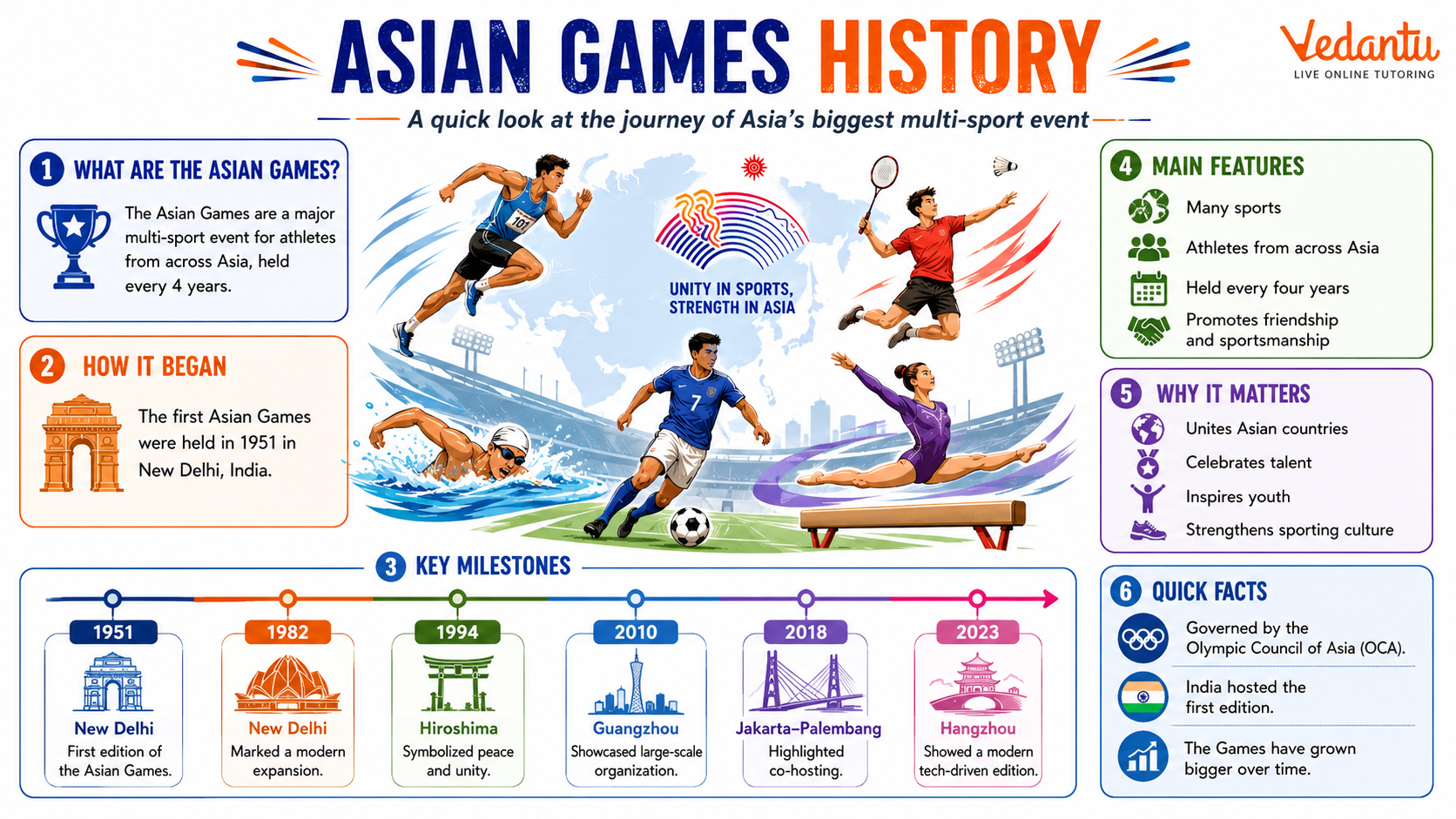
The Asian Games, also known as Asiad, is the largest multi-sport event in Asia. It is held every four years and features athletes from countries across the Asian continent. Organized by the Olympic Council of Asia - OCA, the Asian Games promote unity, sportsmanship, and cultural exchange among Asian nations. The event is second only to the Olympic Games in terms of the number of participating athletes and sports. The history of the Asian Games reflects the growth of sports culture in Asia and the rising global importance of Asian nations in international competitions.
Origin and Background of Asian Games
The idea of organizing a continental sports event for Asian countries was inspired by the Olympic movement. Before the Asian Games, a multi-sport event called the Far Eastern Championship Games was held between 1913 and 1934 among Japan, the Philippines, and China. However, due to political conflicts, the event was discontinued.
After World War II, Asian leaders felt the need to promote peace and cooperation through sports. During the 1948 London Olympics, Indian representative Guru Dutt Sondhi proposed the idea of the Asian Games. As a result, the Asian Athletic Federation was formed in 1949, and the first Asian Games were held in 1951 in New Delhi, India.
First Asian Games 1951
- Host City - New Delhi, India
- Participating Nations - 11
- Number of Athletes - Around 489
- Sports Included - 6 sports
- Main Venue - National Stadium, New Delhi
The first edition marked the beginning of a new era in Asian sports cooperation. Since then, the event has expanded significantly in scale and participation.
Growth and Expansion of the Asian Games
Over the decades, the Asian Games have witnessed tremendous growth. The number of participating countries, athletes, and sports disciplines has steadily increased. New sports such as kabaddi, cricket, and esports have been introduced to reflect regional interests and global trends.
- 1951 - 11 nations participated
- 1982 - Introduction of modern infrastructure in New Delhi Games
- 1990s - Inclusion of Central Asian republics after the breakup of the Soviet Union
- 21st century - Participation expanded to 45 nations
Today, almost all recognized Asian countries participate in the event, making it one of the largest sporting platforms in the world.
Major Milestones in Asian Games History
Formation of Olympic Council of Asia
In 1982, the Olympic Council of Asia replaced the Asian Games Federation. The OCA became the governing body responsible for organizing and regulating the Asian Games.
Introduction of New Sports
The Asian Games have introduced several indigenous and modern sports such as kabaddi, sepak takraw, wushu, and more recently esports. This reflects Asia's cultural diversity and innovation in sports.
Women Participation
Women have been participating since the first edition in 1951. Over time, the number of women athletes and events for women has increased significantly, promoting gender equality in sports.
Selected Asian Games Host Cities
| Year | Host City | Country |
|---|---|---|
| 1951 | New Delhi | India |
| 1962 | Jakarta | Indonesia |
| 1982 | New Delhi | India |
| 2002 | Busan | South Korea |
| 2018 | Jakarta and Palembang | Indonesia |
| 2023 | Hangzhou | China |
The table above highlights some important host cities that played a significant role in shaping the Asian Games. Several countries such as India, China, Japan, and South Korea have hosted the Games multiple times.
Top Performing Nations in Asian Games History
Over the years, certain countries have dominated the medal tally due to strong sports infrastructure and training systems.
- China - Leading nation in overall medal tally since 1982
- Japan - Strong performance in early editions
- South Korea - Consistent top three performer
- India - Strong in hockey, kabaddi, wrestling, and athletics
China has remained the most dominant nation in recent decades, often finishing at the top of the medal standings.
Symbols and Motto of the Asian Games
Emblem
The official emblem of the Asian Games features a bright red sun with 16 rays and a white circle in the center. It symbolizes energy and unity among Asian nations.
Motto
The motto of the Asian Games is "Ever Onward," which reflects continuous progress and development in sports and cooperation.
Importance of Asian Games
- Promotes unity and friendship among Asian countries
- Provides a platform for emerging athletes
- Encourages cultural exchange and mutual respect
- Boosts sports infrastructure in host nations
- Acts as preparation for the Olympic Games
The Asian Games play a crucial role in strengthening diplomatic and sporting ties across Asia.
Key Facts About Asian Games
- Held every four years
- Organized by the Olympic Council of Asia
- First held in 1951
- Second largest multi-sport event after the Olympics
- Includes both Olympic and non-Olympic sports
Understanding the history of the Asian Games is important for general knowledge, competitive exams, and awareness of Asia's sporting heritage. The event not only highlights athletic excellence but also represents cooperation, unity, and progress among Asian nations.
FAQs on Asian Games: Complete Background and Development Guide
1. What are the Asian Games?
The Asian Games are a major multi-sport event held every four years for athletes from across Asia.
• Organized by the Olympic Council of Asia (OCA)
• Feature competitions in athletics, swimming, football, cricket, and more
• Second-largest multi-sport event after the Olympic Games
• Promote sportsmanship, unity, and cultural exchange among Asian nations
People also ask: What is Asiad? How are Asian Games different from Olympics? The Asian Games, also known as Asiad, focus only on Asian countries.
2. When and where were the first Asian Games held?
The first Asian Games were held in 1951 in New Delhi, India.
• Held from March 4 to March 11, 1951
• Participated by 11 countries
• Featured 6 sports disciplines
• Opened by Dr. Rajendra Prasad, the first President of India
This historic event marked the beginning of the modern Asiad Games history in Asia.
3. Why were the Asian Games started?
The Asian Games were started to promote peace, cooperation, and unity among Asian nations after World War II.
• Inspired by the success of the Olympic Games
• Aimed to strengthen regional solidarity
• Encouraged athletic excellence in Asia
• Proposed by Guru Dutt Sondhi during the 1948 London Olympics
People also search: Purpose of Asiad, origin of Asian Games, history of Asian sports events.
4. Who organizes the Asian Games?
The Olympic Council of Asia (OCA) is responsible for organizing the Asian Games.
• Founded in 1982
• Headquarters in Kuwait
• Oversees Asian sporting events including Asian Indoor Games and Asian Beach Games
• Works under the guidance of the International Olympic Committee (IOC)
The OCA ensures fair competition and smooth organization of the Asiad.
5. How often are the Asian Games held?
The Asian Games are held every four years.
• Follow a cycle similar to the Olympic Games
• Hosted by different Asian countries each edition
• Include summer sports events (Asian Summer Games)
• Example: 2018 Jakarta-Palembang, 2022 Hangzhou
This four-year cycle maintains continuity in Asian sports history.
6. Which country has won the most medals in Asian Games history?
China has won the highest number of medals in Asian Games history.
• Dominates the medal tally since 1974
• Strong performance in gymnastics, table tennis, badminton, and athletics
• Frequently tops the Asian Games medal table
• Followed by countries like Japan and South Korea
People also ask: Which nation leads the Asiad medal tally? China remains the most successful nation.
7. What is the symbol and motto of the Asian Games?
The symbol of the Asian Games is a bright red sun with 16 rays and a white circle at the center.
• Represents the everlasting energy of Asia
• Official motto: "Ever Onward"
• Emphasizes progress, unity, and sports spirit
• Each host city also introduces a unique mascot and emblem
These symbols reflect the identity and values of the Asiad Games.
8. What are some major milestones in Asian Games history?
Several key milestones have shaped the history of the Asian Games.
• 1951: First Asian Games in New Delhi
• 1962: Introduction of new sports in Jakarta
• 1982: Formation of the Olympic Council of Asia
• 2010: Guangzhou hosted the largest edition at that time
• 2022: Hangzhou edition featured advanced digital technology
These milestones highlight the growth of the Asiad movement in Asia.
9. How are the Asian Games different from the Olympic Games?
The main difference is that the Asian Games include only Asian countries, while the Olympic Games are global.
• Asian Games are limited to Asian nations
• Olympics include athletes from around the world
• Some regional sports like Kabaddi and Sepak Takraw are featured in Asiad
• Both follow international sports rules and standards
People also search: Difference between Asiad and Olympics, regional vs global sports events.
10. Why are the Asian Games important for students and competitive exams?
The Asian Games history is important for General Knowledge (GK) and competitive exams.
• Frequently asked in SSC, UPSC, Banking, Railways, and State PSC exams
• Covers topics like first host city, medal tally, organizers, and milestones
• Helps in essays and sports-related current affairs preparation
• Enhances understanding of Asian sports history and international events
Students preparing for exams often study key facts about the Asiad Games for scoring better marks.
