







What Is Yoga For Kids Definition Benefits and How It Works
Children live in a fast-paced environment with busy families, demanding teachers, endless lessons, video games, shopping malls, and competitive sports. Typically, we don't consider these factors to be stressful for our children, although they frequently are. The hectic pace of our children's lives can have a significant impact on their intrinsic joy—often not in a good way.
Yoga has been demonstrated to be effective at reducing these stresses. Children who learn relaxation, self-care, and inner fulfilment skills are better equipped to deal with the difficulties of life.
Further, in this article about yoga, we would be discussing what is yoga for kids, yoga facts for kids, what language is yoga and its other important aspects.
Simple Definition of Yoga
Originating in ancient India, yoga is a physical, intellectual, and spiritual discipline. The technique was in reality passed down from teacher to student long before this text existed. Patanjali, a sage, first formalised it in his Yoga Sutras around 400 C.E.
The Sanskrit root yuj, which means "to yoke" or "to combine," is where the word yoga originated. The simple definition of yoga reveals the goal of this practice which is to unite the physical, mental, and spiritual selves as well as human awareness as a whole. A sense of spiritual awakening is often brought on by such a union, which tends to balance ego-driven ideas and actions. This also states the answer to the question ‘what language is yoga’, that is ‘Sanskrit’.
(Image will be uploaded soon)
Yoga for Kids
As soon as a child can follow directions, they can begin practising yoga. Yoga kids should be able to understand and follow directions when they are at least 4 years old. However, we must be cautious not to teach certain behaviours to children. Consider Padmasana.
Yoga with Kids
Yoga encourages enjoyable, safe exploration and learning. Yoga with kids can turn out to be something beautiful. Not only adults may practise yoga! In fact, it may teach kids vital life lessons that will help them succeed in the real world. Nowadays modern yoda techniques are used by kids. These have new techniques in easy postures.
Here are some lessons for kids (and adults!) can pick up through yoga:
We learn about our bodies through yoga.
Yoga shows us how to breathe more effectively.
Yoga teaches us how to make better use of our energy.
Yoga teaches us how to control our thoughts.
We learn about equilibrium through yoga.
We learn to be the "boss" of our bodies through yoga.
We learn about self-care through yoga.
Kids can manage their anxiety by practising yoga.
Children who practise yoga have better emotional control.
Children's self-esteem is raised by yoga.
Children who practise yoga gain strength and flexibility.
Yoga instils self-control and curbs impulsivity.
Yoga improves children's attentiveness and body awareness.
Children's memory and concentration are improved by yoga.
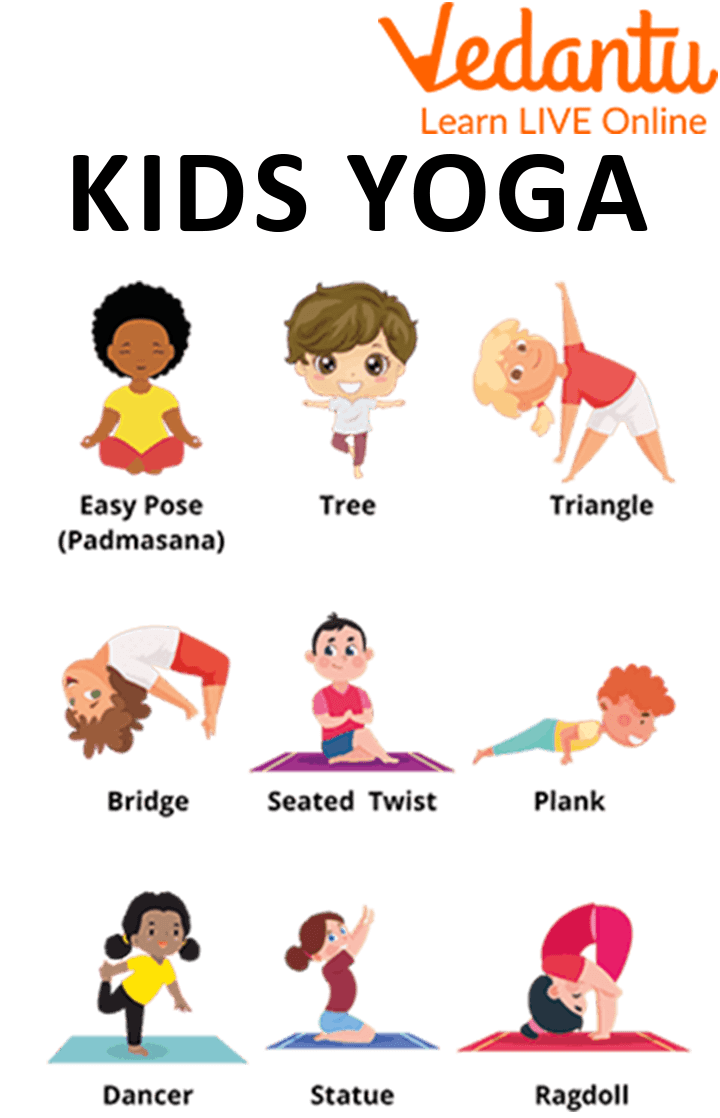
Different Yoga Poses for Kids
Yoga Facts for Kids
Below stated are some yoga facts for kids which can help students in understanding the history and the presence of yoga.
Over 5000 years have passed since the birth of yoga.
In the 18th century, yoga was brought to the United States.
There are almost 100 different types of yoga!
Over 52,000 yoga instructors were registered in 2016.
There are already more than 18,000 accredited yoga schools.
According to research, doing yoga can prevent ageing.
Until 1937, only men were allowed to attend yoga lessons; women were then invited.
Nowadays, yoga is being marketed as a sport.
Every year, Americans spend $16 billion on yoga instruction and supplies.
A growing number of people are choosing to pursue careers in yoga teaching.
For certain postures, yoga practitioners used to place grass or animal skin as a mat.
Your entire body may be worked out with yoga.
International Yoga Day
Each year on June 21, International Yoga Day is observed to raise awareness of the unique advantages of yoga. Yoga may appear to be only stretching, but it may improve your body's function, appearance, and overall well-being. You can even increase your flexibility, muscle strength, and body tone with its aid. It enhances vitality, energy, and respiration.
Each year on International Yoga Day, groups of people or Yoga kids practise yoga together in settings like yoga classes or other public areas. Yoga is thought to have its roots in India thousands of years ago, and the Rig Veda and other ancient mythical works make reference to it.
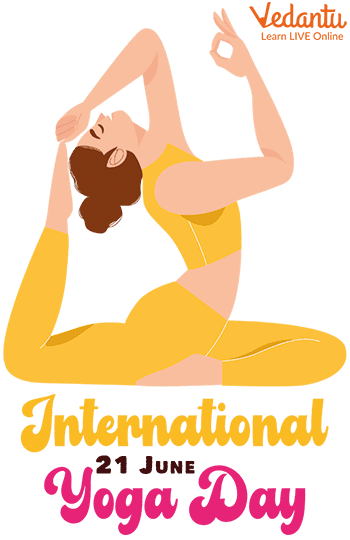
International Yoga Day
Summary
Yoga is a technique that promotes control, improves attention and concentration, fosters flexibility and balance, tones internal glands and organs, encourages relaxation and reduces stress. Additionally, it strengthens children's fine and gross motor coordination, enhances their visual-motor and auditory processing, supports remembering and sequencing in the brain, and intensifies body self-regulation and awareness.
FAQs on What Is Yoga For Kids A Complete Guide for Parents and Teachers
1. What is yoga for kids?
Yoga for kids is a fun and age-appropriate practice of yoga poses, breathing exercises, and relaxation techniques designed especially for children. It combines movement, balance, and mindfulness in a playful way.
- Includes simple poses (asanas) like tree or cat pose
- Teaches basic breathing techniques for calmness
- Encourages focus, creativity, and body awareness
- Often uses games, stories, and music to engage children
2. What are the benefits of yoga for kids?
The benefits of yoga for kids include improved flexibility, concentration, emotional control, and physical strength. Regular practice supports both mental and physical development.
- Builds balance and coordination
- Reduces stress and anxiety
- Improves posture and body awareness
- Boosts confidence and self-esteem
3. At what age can children start yoga?
Children can start yoga as early as age 3 or 4 with simple and playful movements. At this stage, sessions should be short and interactive.
- Ages 3–5: Fun poses and storytelling
- Ages 6–9: Structured sequences and breathing
- Ages 10+: More focused practice and relaxation
4. Is yoga safe for kids?
Yes, yoga is generally safe for kids when taught by a trained instructor and practiced correctly. Safety depends on proper guidance and age-appropriate poses.
- Avoid advanced or intense poses
- Encourage gentle stretching, not force
- Supervise young children during practice
5. What are some simple yoga poses for kids?
Some simple yoga poses for kids include easy and playful beginner-friendly poses that improve balance and flexibility. These poses are safe and enjoyable for most children.
- Tree Pose – improves balance
- Cat-Cow Pose – stretches the spine
- Butterfly Pose – opens the hips
- Child’s Pose – promotes relaxation
6. How long should a yoga session be for kids?
A yoga session for kids should typically last between 15 to 30 minutes, depending on their age and attention span. Shorter sessions help maintain focus and enjoyment.
- Preschoolers: 10–15 minutes
- Elementary age: 20–30 minutes
- Teens: Up to 45 minutes
7. How does yoga help children with focus and concentration?
Yoga helps children improve focus and concentration through breathing exercises and mindful movement. These techniques train the brain to stay present.
- Deep breathing calms the nervous system
- Holding poses builds mental discipline
- Relaxation time improves attention span
8. Can yoga help kids with anxiety or stress?
Yes, yoga can help kids manage anxiety and stress by promoting relaxation and emotional regulation. Gentle movements and breathing reduce tension in the body.
- Slow breathing lowers heart rate
- Relaxation poses calm the mind
- Mindfulness techniques increase emotional awareness
9. What is the difference between yoga for kids and yoga for adults?
The main difference between yoga for kids and yoga for adults is that children’s yoga is more playful, creative, and interactive. It focuses on fun rather than strict technique.
- Uses games, music, and storytelling
- Shorter sessions with varied activities
- Less emphasis on complex poses
10. Can kids practice yoga at home?
Yes, kids can practice yoga at home with simple guidance and a safe space to move. Home practice should be supervised and age-appropriate.
- Follow short online or guided sessions
- Practice basic poses and breathing
- Use a mat and clear area for safety
