







Fun Ways to Teach the Months of the Year with Games and Worksheets
There are 12 months in a year. The sense of months and the names of months are important for kids to learn as it would help them in their schools. Apart from the obvious curriculum benefit, the names of moths can help kids to develop a sense of time that can lead them to develop a healthy habit of planning and time management. Learning the names of months can also help kids memorise their birthdays and other important events.
Parents and teachers can teach months of the year using a variety of songs, games, and basic memorization techniques. As the year progresses and the months become more prominent, kids will develop a greater understanding of how they function and how everything fits together. The article is focused on providing some months of the year activity that can help in memorising the names of months for kids.
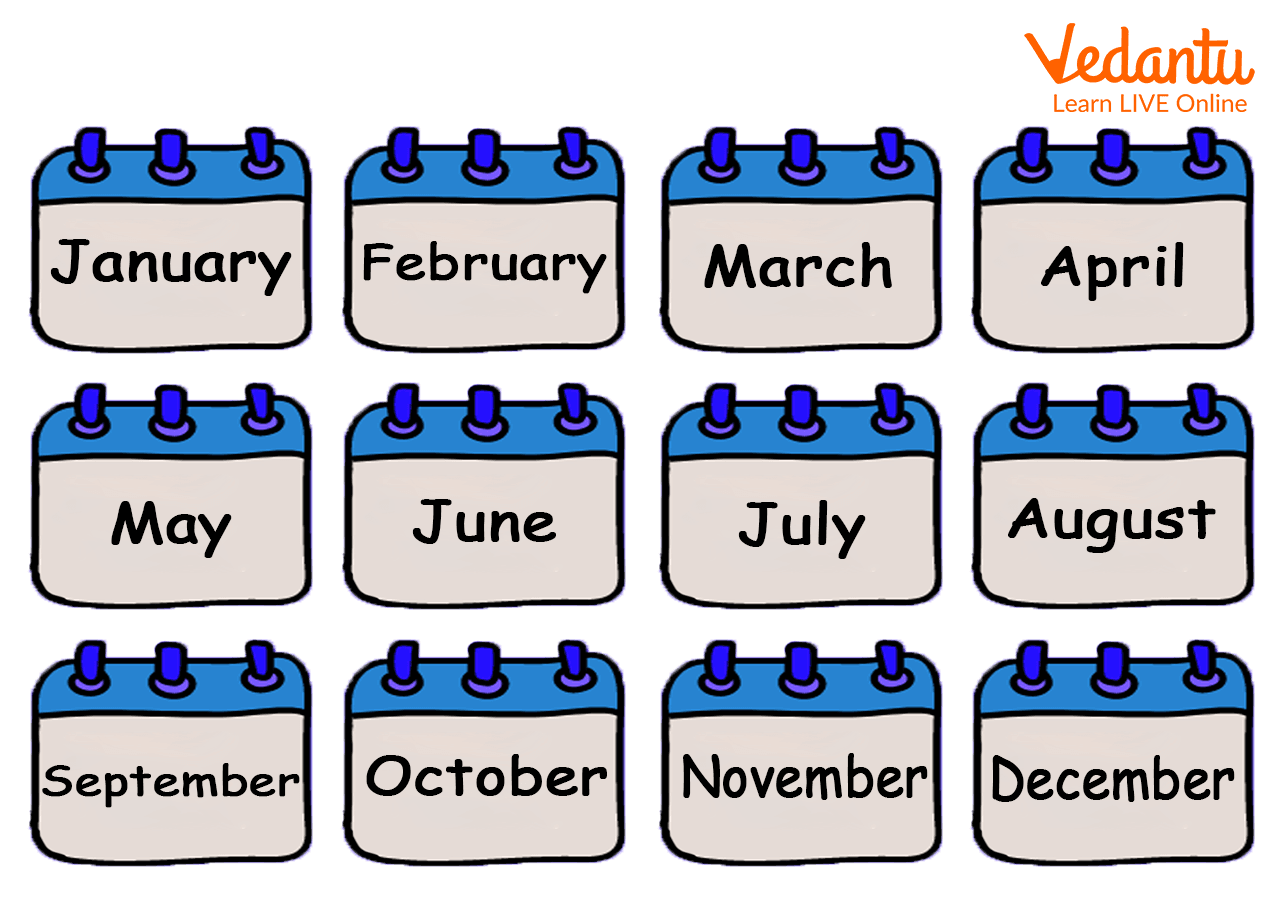
Illustrating the names of the month
Activity to Teach Months of the Year
As kids are promoted to pre-school, they must learn the names of months to develop an understanding of time. Mentioned below are some of the activities that can be planned to teach the kids the names of months.
Using a Calendar
Teachers and parents can teach their kids the names of the month with the help of a calendar. Even if the kids are not very proficient at reading, teachers can use a bright and colourful calendar. Go through the different months of the year and prioritise asking questions like, when is Christmas? Or, when is diwali? Associating months with specific events can help kids to memorise the word better. This can also be done with birthdays as they will remember their birthday month and the month followed and proceed by their birthday.
Use Seasons to Associate Months
Kids tend to develop a sense of climate at an early age, so you can engage the kids by asking what is their favourite weather, or whether they like summer holidays and winter vacations. Associating the months with the weather can help kids to memorise the months in sequence. Parents and teachers can also discuss the four seasons and how they occur in the months each year while teaching the names of months.
Playing Games
Games like putting the months in order and touching the walls can be played to teach the names of months in a fun way. In the ‘put the months in order’ game, the students can play in pairs and arrange the names of the months written in cards in a sequential manner.

Illustrating kids playing games
Singing Songs
Parents and teachers can recite the name of months in a rhythmic manner to create interest in children in learning the names of the month. Reciting songs with names of months is a fun activity and it also develops a sense of harmony among kids. Rhymes are an enjoyable approach to emphasise teachings, while also aiding memorization because they repeat the phrases.

Illustrating Kids singing the names of months
In conclusion of the article, we hope to have helped to provide some insights in creating months of the year activity for kids. One of the keys to motivating kids to learn the names of months is to maintain the fun in the activity. Parents who are trying to teach names of months must participate in such games.
FAQs on Months of the Year Activities for Fun Learning
1. What are the 12 months of the year in English?
The 12 months of the year in English are January, February, March, April, May, June, July, August, September, October, November, and December.
- They are proper nouns and always begin with a capital letter.
- They are used to talk about dates, seasons, birthdays, and events.
- Example: My birthday is in July.
2. How do you teach months of the year in a fun activity?
You can teach the months of the year through songs, games, and calendar-based activities that encourage repetition and ordering.
- Sing a months of the year song to improve memorization.
- Use a calendar sequencing activity where students arrange months in order.
- Play "What comes next?" to practice month order.
3. What is the correct order of the months of the year?
The correct order of the months starts with January and ends with December.
- January
- February
- March
- April
- May
- June
- July
- August
- September
- October
- November
- December
4. Why are months of the year capitalized in English?
Months of the year are capitalized because they are proper nouns in English grammar.
- Proper nouns name specific things.
- All proper nouns begin with a capital letter.
- Example: We travel in December.
5. How do you use months of the year in a sentence?
You use months of the year with the preposition in when speaking generally about time.
- Structure: in + month
- Example: School starts in September.
- For specific dates: on 5th May or on May 5th.
6. How many days are in each month?
Most months have 30 or 31 days, while February has 28 days or 29 in a leap year.
- 31 days: January, March, May, July, August, October, December
- 30 days: April, June, September, November
- February: 28 days (29 in leap year)
7. What is a leap year and how does it affect February?
A leap year is a year with 366 days, when February has 29 days instead of 28.
- It happens every 4 years.
- The extra day is added to February.
- Example: 2024 was a leap year.
8. What are common mistakes students make with months of the year?
Common mistakes include not capitalizing months and spelling them incorrectly.
- Writing january instead of January.
- Misspelling February or Wednesday-like patterns.
- Using the wrong preposition (saying "on July" instead of "in July").
9. How can students remember the spelling of difficult months like February?
Students can remember difficult month spellings by breaking the word into syllables and practicing repetition.
- Example: Feb-ru-ar-y.
- Use spelling chants or tracing worksheets.
- Create a mnemonic or visual memory trick.
10. What is the difference between months and seasons in English?
Months are specific divisions of the calendar year, while seasons are climate-based periods within the year.
- There are 12 months in a year.
- There are 4 seasons: spring, summer, autumn (fall), and winter.
- Example: June is a month, but summer is a season.
