







Printable Personal Hygiene Worksheets for Kindergarten with Activities and Examples
Personal hygiene refers to the cleanliness of one's personal body and clothing. At an early age, we must learn to pay attention to detail when it comes to our hygiene. When it comes to hygiene, most kids are "straight-up" filthy. They haven't been taught why it's important to keep our bodies and appearances in good shape. When it comes to cleanliness, the benefits to our well-being and the expected perception by others are beyond estimation. These worksheets will assist students to become more familiar with general good hygiene themes that they should think about and create on their own.
Let us look at the importance of hygiene and the important hygiene worksheets for kids from this article.
Why Does Hygiene Matter?
Following a basic hygiene regimen has a significant impact on many aspects of our lives. First and foremost, it reduces our risk of becoming ill. Hand washing is one of the most effective strategies to avoid getting a cold or passing it on to someone else. While we cannot absorb disease through our skin, you would be surprised how often we touch our mouths and eyes, which are the entry points for all of these. Brushing and flossing your teeth helps to keep your smile looking nice.
People notice when we take care of ourselves. Our self-esteem and confidence levels improve as a result of the extra attention. This may cause your friends to take notice of you. People don't accept poor hygiene practices in social situations, and those who do are frequently punished.
When it comes to the workplace, good hygiene can help you land that job or deal with that sale you've been working on. Do you want to buy a car from someone who hasn't showered in a week and stinks? Almost certainly not!
Teachers should assist students in developing their own hygiene routines and discuss many issues with them. This could have a significant impact on their health.
A few of the personal hygiene representatives are as follows:
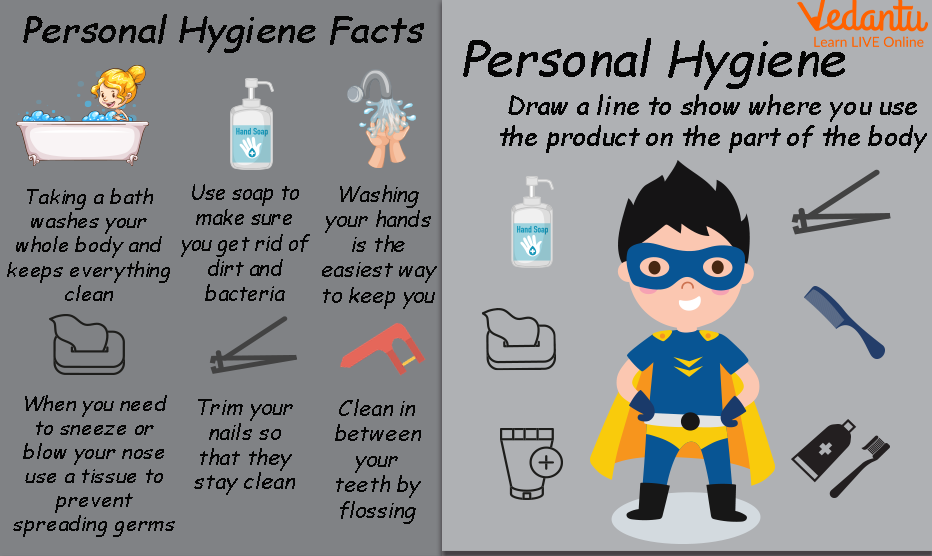
Personal Hygiene Representatives
Personal Hygiene Worksheets for Kids
Good Habits, Healthy Body
One of the ways to stay healthy is to keep your body clean. Many contagious infections can be prevented by washing your hands on a frequent basis. You should wash your hands before or after each activity. Once you complete it, check the box next to it:
Before and after you eat.
After using the restroom.
After interacting with animals.
Following the gardening.
After getting rid of the garbage.
After coughing.
After dressing a wound.
After a diaper change.
How to Wash Your Hands?
Soap and clean water should be used.
Hands should be washed all the way up to your wrists.
Scrub under unclean nails with a brush.
Dry your hands with a paper towel or a hot air dryer.
Use an alcohol-based sanitizer if soap and water aren't accessible. Place roughly a half teaspoon of sanitizer in the palm of your hand, then rub your hands together until dry.
Answer the Following Personal Care Checklist
How often do I regularly:
Brush my teeth?
Take a bath or shower?
Change my underwear?
Change my socks?
Change my clothes?
Wash my hair?
Cut my hair?
Cut my nails?
Conclusion
It is important to be clean and maintain personal hygiene in order to be healthy and make the body fresh and cool. It will not only help to get rid of small diseases but also boost your mental ability and improve your thinking capabilities.
FAQs on Cleanliness and Personal Hygiene Worksheets for Kindergarten
1. What are cleanliness personal hygiene worksheets for kindergarten?
Cleanliness personal hygiene worksheets for kindergarten are printable learning sheets that teach young children about personal hygiene habits through simple activities and vocabulary practice.
These worksheets usually include:
- Matching pictures of hygiene items like soap and toothbrush
- Coloring activities about handwashing
- Tracing words such as clean, bath, and brush
- Simple sentences about daily hygiene routines
2. Why is personal hygiene important for kindergarten students?
Personal hygiene is important for kindergarten students because it helps prevent germs and teaches healthy daily habits.
In early education, hygiene lessons help children:
- Understand the meaning of clean and healthy
- Learn basic routines like washing hands before eating
- Build responsibility and self-care skills
- Develop related vocabulary in English
3. What topics are included in hygiene worksheets for kindergarten?
Hygiene worksheets for kindergarten usually include topics related to daily cleanliness habits and self-care routines.
Common topics are:
- Handwashing steps
- Brushing teeth
- Taking a bath
- Keeping nails clean
- Wearing clean clothes
- Using a tissue when sneezing
4. How do you teach handwashing to kindergarten students using worksheets?
You teach handwashing to kindergarten students by using step-by-step worksheets that explain the correct handwashing process in simple language.
Effective worksheet activities include:
- Sequencing pictures: wet hands → add soap → scrub → rinse → dry
- Tracing the sentence: “I wash my hands with soap.”
- Coloring germs being washed away
- Circle the clean hands picture
5. What are some examples of personal hygiene sentences for kindergarten worksheets?
Personal hygiene sentences for kindergarten worksheets are short, simple sentences that teach basic habits and vocabulary.
Examples include:
- “I brush my teeth every day.”
- “I wash my hands before eating.”
- “I take a bath at night.”
- “Clean hands keep me healthy.”
6. How can hygiene worksheets improve vocabulary in kindergarten?
Hygiene worksheets improve vocabulary in kindergarten by introducing and reinforcing health-related words through repetition and visuals.
They help children:
- Match words to pictures like soap and towel
- Trace and write new words
- Use hygiene words in simple sentences
- Recognize action verbs like wash, brush, and clean
7. What activities can be included in a personal hygiene worksheet?
A personal hygiene worksheet can include interactive activities that teach children about clean habits in a fun way.
Popular activities are:
- Coloring hygiene tools
- Matching items to actions (toothbrush → brush teeth)
- Cut and paste sequencing tasks
- Tick the correct hygiene behavior
- Fill in the blank with simple words
8. How do you explain personal hygiene to a kindergarten child?
You explain personal hygiene to a kindergarten child by saying that personal hygiene means keeping our body clean and healthy.
Use simple explanations such as:
- “We wash our hands to remove germs.”
- “We brush our teeth to keep them strong.”
- “We take a bath to stay clean.”
Visual worksheets and pictures make the concept easier to understand.
9. What are the benefits of using printable hygiene worksheets in kindergarten?
Printable hygiene worksheets help reinforce healthy routines while supporting early reading and writing skills.
Key benefits include:
- Building awareness of daily hygiene habits
- Improving fine motor skills through tracing and coloring
- Encouraging independent learning
- Strengthening basic English vocabulary related to cleanliness
10. How often should personal hygiene lessons be taught in kindergarten?
Personal hygiene lessons should be taught regularly as part of daily classroom routines in kindergarten.
Teachers can reinforce hygiene by:
- Reviewing handwashing steps every day
- Using weekly hygiene worksheets
- Singing songs about brushing teeth
- Practicing real-life hygiene habits at school
Regular practice helps children form lifelong clean and healthy habits.
