



Common Physics and Chemistry Topics for JEE 2027 and NEET 2027
To prepare for Physics & Chemistry for JEE and NEET, build a common foundation through NCERT, clear concepts and chapter-wise practice, then solve questions suited to each exam. The subjects overlap substantially, but the preparation is not completely interchangeable. For NEET 2027, prioritise accurate MCQ solving, regular NCERT revision and timed practice without reducing your Biology study time. If you are also targeting JEE Main 2027, add its previous-year questions and numerical-answer practice; JEE Advanced requires a separate layer of deeper problem-solving.
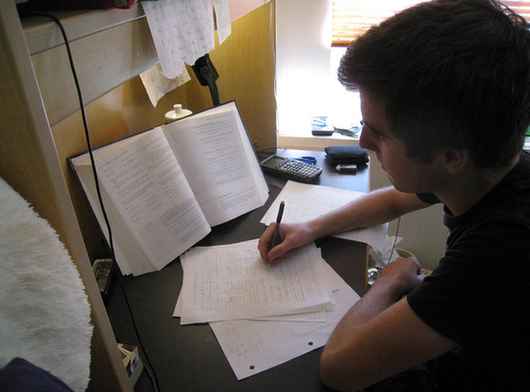
JEE and NEET Physics and Chemistry Preparation Compared
You can study many concepts together, but you should not use one exam’s practice material as a complete substitute for the other. Question difficulty varies across years and papers, so avoid assuming that every NEET question is straightforward or every JEE Main question is harder.
| Preparation Area | NEET Focus | JEE Main Focus |
|---|---|---|
| Conceptual foundation | NCERT-aligned understanding and accurate application | The same foundations with exam-specific applications |
| Physics practice | Conceptual MCQs, calculations, graphs and quick method selection | MCQs, numerical-answer problems and varied mathematical applications |
| Chemistry practice | NCERT detail, reaction understanding and numerical accuracy | NCERT foundations plus varied conceptual and numerical problems |
| Test preparation | Physics and Chemistry within a full paper that includes Biology | Physics and Chemistry within a full paper that includes Mathematics |
| Additional subject | Protect daily Biology preparation | Maintain separate Mathematics preparation |
For 2027 planning: use the latest available official syllabi as your starting point, then check the official NEET and JEE Main 2027 syllabi and information bulletins when released. Confirm chapter coverage, question formats and marking rules rather than relying on older comparison articles.
Map the Common Syllabus Before Making Your Timetable
Create one chapter tracker with separate columns for NEET and JEE Main coverage. Mark each chapter as “not started”, “concepts complete”, “practice complete” or “revision needed”. Compare individual subtopics, including practical and experimental components, rather than matching chapter names alone.
- Physics foundations: units and measurements, kinematics, laws of motion, work and energy, rotational motion and gravitation.
- Other major Physics areas: thermal physics, oscillations and waves, electrostatics, current electricity, magnetism, electromagnetic induction, optics and modern physics.
- Physical Chemistry: mole concept, atomic structure, thermodynamics, equilibrium, solutions, electrochemistry and chemical kinetics.
- Inorganic Chemistry: periodicity, chemical bonding, coordination compounds and relevant p-block, d-block and f-block content.
- Organic Chemistry: basic principles, isomerism, hydrocarbons, functional-group chemistry and biomolecules.
These are broad areas for planning, not a verified chapter-by-chapter 2027 syllabus. Older lists may include standalone chapters that are no longer listed in recent syllabi, or miss practical components. The official syllabus—not the contents page of an old textbook—should decide your exam checklist.
How to Prepare Physics for NEET and JEE
Strengthen the Mathematics You Actually Need
Begin with algebra, ratios, powers, scientific notation, trigonometry, vectors and graph interpretation. Learn the meaning of slope and area under a graph, along with basic differentiation and integration where they help explain Physics. NEET students do not need to complete the JEE Mathematics syllabus to become confident in Physics.
Use a Concept-to-Practice Routine
- Understand the situation: read the concept and draw a diagram where useful. Identify the quantities given and what must be found.
- Select the principle: decide whether the problem needs Newton’s laws, conservation of energy, a circuit rule or another relation before substituting numbers.
- Study a worked example: explain why each step is valid, then solve it again without looking.
- Attempt questions independently: move from basic applications to NEET previous-year questions. Add JEE Main questions if you are preparing for both.
- Check and record: verify units, signs and whether the result is physically reasonable. Note the cause of any mistake.
For example, in current electricity, first practise identifying series and parallel connections and applying Ohm’s law. Then attempt circuit questions that require several steps. Simply memorising V = IR will not help if you misidentify which components share the same potential difference.
Match the Practice Level to Your Main Exam
NEET Physics preparation gives you a useful foundation for JEE Main, but it is not a guarantee of complete readiness. Test yourself using JEE Main papers to identify gaps in unfamiliar applications and numerical-answer questions. For NEET-focused students, selected JEE Main problems can strengthen understanding, but they should not replace NEET papers or Biology revision.
Keep formula notes short, with each formula’s conditions and a typical mistake beside it. For a more detailed subject routine, use Vedantu’s guide on How to Prepare for NEET Physics.
How to Prepare Chemistry for NEET and JEE
Chemistry needs three slightly different study methods. Physical Chemistry improves through numerical practice, Organic Chemistry through linked concepts and reactions, and Inorganic Chemistry through careful reading and repeated recall.
Physical Chemistry: Understand Before Calculating
Build confidence in mole calculations, concentration terms, atomic structure and thermodynamics before tackling topics that depend on them. For each question, write the given data, convert units, choose the equation and only then calculate. Avoid substituting values into the first familiar formula.
- Keep a formula sheet that includes assumptions, units and sign conventions.
- Practise logarithms, exponents and arithmetic without depending on a calculator.
- Mix related question types after learning them separately so that you practise choosing the correct method.
- Review whether an error came from chemistry, equation selection, unit conversion or calculation.
For instance, molarity uses the volume of the solution in litres: 0.2 mol of solute in 500 mL of solution gives 0.4 mol L−1. Writing the conversion explicitly helps prevent avoidable mistakes under time pressure.
Organic Chemistry: Connect Reactions to Concepts
Start with nomenclature, isomerism, electronic effects, acidity and basicity, and reaction intermediates. These concepts help explain product formation instead of leaving you with disconnected reactions to memorise. Build reaction maps that show the starting compound, reagent, conditions and product.
After revising a reaction family, close your notes and predict products independently. For NEET, revisit prescribed NCERT reactions and details regularly. For JEE, add application-based problems that test the reasoning behind transformations.
Inorganic Chemistry: Read, Recall and Revisit
Study chemical bonding and periodic trends carefully because they support many later topics. Read syllabus-relevant NCERT text, tables and examples, then test yourself without looking. Use compact comparison sheets for trends, oxidation states and exceptions rather than repeatedly copying entire paragraphs.
If you need help organising these three branches, Vedantu’s How to Study Chemistry for NEET offers further subject-specific guidance.
Build a Realistic Study and Revision Routine for NEET 2027
Choose a timetable you can repeat alongside school, coaching or self-study. A sample Physics and Chemistry block could include 60 minutes of Physics learning and practice, 60 minutes of Chemistry, and 30 minutes of revision and error correction. This is only part of your daily plan; reserve separate time for Biology, breaks and other commitments.
- During syllabus completion: pair new chapters with short revision sessions for older topics. Do not postpone all testing until the syllabus is finished.
- Each week: attempt a timed mixed-topic test and use the results to choose the next week’s repair tasks.
- After substantial coverage: introduce full-length NEET mocks following the applicable official pattern. Dual aspirants should also practise JEE Main papers separately.
- During the final revision phase: prioritise NCERT recall, formula application, reaction maps, previous-year questions and recurring errors rather than collecting new resources.
Revisit a new topic the next day, about a week later and again after a few weeks, adjusting the intervals to your recall. Class 11 students should protect prerequisite learning; Class 12 students should include regular Class 11 revision. Droppers can use a diagnostic test to identify which chapters need relearning and which mainly need timed practice.
Use Previous-Year Questions and Mocks to Fix Weaknesses
Solve chapter-wise previous-year questions after learning each topic, filtering older questions against the applicable syllabus. Move gradually to mixed sets and full papers. A test is useful only when its analysis changes what you study next.
- Classify incorrect and skipped questions as concept gaps, recall gaps, calculation errors, misreading or time-management problems.
- Reattempt them without the solution before deciding what needs revision.
- Repair the specific weakness and solve a few fresh questions that test it.
- Retest later to check whether the improvement lasts.
Track accuracy alongside attempts and time taken. If your Physics performance stays inconsistent, Vedantu’s guide on How to Increase the Physics Score in NEET can help you refine your practice approach.
Preparation Mistakes to Avoid
- Treating the syllabi as identical: maintain separate exam checklists even when learning common chapters together.
- Collecting too many books: use NCERT, one reliable practice source per subject and relevant previous-year papers consistently.
- Memorising Physics formulas without conditions: understand when a relation applies and when it does not.
- Reading Chemistry passively: add closed-book recall, reaction prediction and independent numerical solving.
- Prioritising difficult JEE problems over NEET needs: secure syllabus coverage and exam-relevant accuracy first.
- Ignoring Biology or Mathematics: shared Physics and Chemistry preparation does not replace the third subject or establish eligibility for both pathways.
The most effective approach is to learn shared concepts once and practise for each exam deliberately. For NEET 2027, keep NCERT revision, independent problem-solving, Biology preparation and mock-test analysis at the centre of your plan. Add JEE-specific work only in line with your goals and available time. Consistent practice followed by targeted correction is more useful than an overloaded timetable.
FAQs on Is JEE and NEET Physics & Chemistry Preparation the Same?
1. How can I prepare for the JEE and the NEET Chemistry & Physics exams?
To prepare effectively for both JEE 2027 and NEET 2027 Chemistry & Physics exams, follow these essential strategies:
- Refer to the latest official syllabus for JEE and NEET to identify overlapping and unique topics.
- Build your concepts using NCERT textbooks and recommended reference materials for in-depth understanding.
- Make concise notes highlighting key formulas, equations, and concepts for each chapter.
- Practice solving previous years’ question papers and mock tests to improve speed, accuracy, and exam temperament.
- Regularly revise important topics and focus on clearing conceptual doubts.
2. Can I simultaneously study for both IIT JEE and NEET?
Yes, students who opt for PCMB (Physics, Chemistry, Maths, Biology) can prepare for both JEE 2027 and NEET 2027. However, it requires careful planning:
- Allocate time wisely between Biology and Mathematics.
- Identify overlapping topics in Physics and Chemistry to streamline preparation.
- Follow a consistent study schedule with periodic self-assessment.
- Focus on practicing both numerical problem-solving and theoretical concepts.
3. Which books should I refer to while preparing for the JEE and NEET entrance exams?
The following books are highly recommended for effective preparation for JEE 2027 and NEET 2027:
- NCERT textbooks for Physics and Chemistry (Class 11 & 12) as the primary resource.
- 'Concepts of Physics' by HC Verma for Physics fundamentals.
- 'Objective Physics' by DC Pandey for practice.
- 'Organic Chemistry' by OP Tandon.
- 'Modern Approach to Chemical Calculations' by RC Mukherjee for Physical Chemistry.
4. Is the syllabus for Chemistry and Physics the same for JEE and NEET?
The syllabus for Physics and Chemistry in JEE 2027 and NEET 2027 has significant overlap, especially in fundamental topics. However:
- JEE tends to include more mathematical problem-solving, especially in Physics.
- NEET places a stronger emphasis on theoretical understanding and application, particularly in Chemistry.
- Certain advanced topics may be exclusive to JEE Main or Advanced, so always cross-check each exam's official syllabus before starting preparation.
5. Is NEET Physics enough for JEE Mains?
NEET Physics covers many foundational topics also found in JEE Main Physics. However:
- JEE Main has a higher proportion of calculation-based and complex numerical questions.
- Some topics require a deeper mathematical approach, including calculus and coordinate systems.
- It is advisable to consult the JEE 2027 Physics syllabus and practice additional questions for JEE standards.
6. What are the common topics in Chemistry for JEE and NEET?
The following Chemistry topics are common in both JEE 2027 and NEET 2027 syllabi:
- Chemical bonding and molecular structure
- Thermodynamics
- Equilibrium
- States of matter
- Hydrocarbons
- Coordination compounds
- Classification of elements and periodicity
- Organic chemistry fundamentals
- S-block, P-block, D&F block elements
7. What is the right way to make notes for Physics & Chemistry preparation?
Effective note-making for Physics and Chemistry involves:
- Summarizing each chapter’s core concepts and formulas in easy-to-understand language.
- Highlighting important exceptions, diagrams, and reaction mechanisms.
- Organizing notes topic-wise for quick revision before the exam.
- Including solved examples for reference and practice.
8. How important are previous years' question papers in JEE and NEET preparation?
Solving previous years’ question papers is crucial for both JEE 2027 and NEET 2027 preparation because:
- It familiarizes you with the exam pattern and question trends.
- Helps identify frequently tested topics and concepts.
- Improves time management and accuracy during real exams.
- Provides an opportunity to self-assess strengths and weaknesses.
9. What are the major differences in Physics questions between JEE and NEET?
The primary differences in Physics questions between JEE 2027 and NEET 2027 are:
- JEE questions are generally more numerically intensive and involve advanced problem-solving skills.
- NEET emphasizes theoretical clarity, conceptual understanding, and application-based MCQs.
- JEE covers topics like rotational motion, thermodynamics, and electromagnetism in greater mathematical depth.
10. Can NCERT books alone help me crack JEE or NEET?
NCERT books form the foundation for both JEE 2027 and NEET 2027. However:
- For NEET, NCERT is sufficient for most theory and basics but supplement with question banks for practice.
- For JEE, use NCERT for concepts; refer to additional standard books for advanced numerical practice and application-based questions.
- Always enhance NCERT knowledge with regular problem-solving and revision of challenging questions.
11. How can I manage time effectively while preparing for both JEE and NEET?
To manage time efficiently for JEE 2027 and NEET 2027 dual preparation:
- Create a balanced timetable allocating dedicated slots for Biology and Mathematics.
- Focus on common topics first to optimize learning.
- Set weekly/monthly targets and track your progress.
- Take short breaks and maintain consistency in daily study routines.
12. Should I attempt mock tests for both exams separately?
Yes, attempting separate mock tests for JEE 2027 and NEET 2027 is essential because:
- Each exam has a distinct paper pattern, marking scheme, and question types.
- Practicing both boosts confidence, speed, and familiarity with each exam’s unique format.
- It helps you adapt your strategy for time management as per each exam’s requirements.



