







Early Life Training Career Achievements and Legacy of Yip Man
Yip Man was a legendary Chinese martial artist best known for popularising the martial art of Wing Chun across the world. He is widely remembered as the teacher of the famous martial artist and actor Bruce Lee. The Yip Man biography is important for students and martial arts enthusiasts because it shows how dedication, discipline, and tradition can shape global culture. His life history reflects resilience during political changes in China and his commitment to preserving and spreading a unique martial art form that continues to influence millions today.
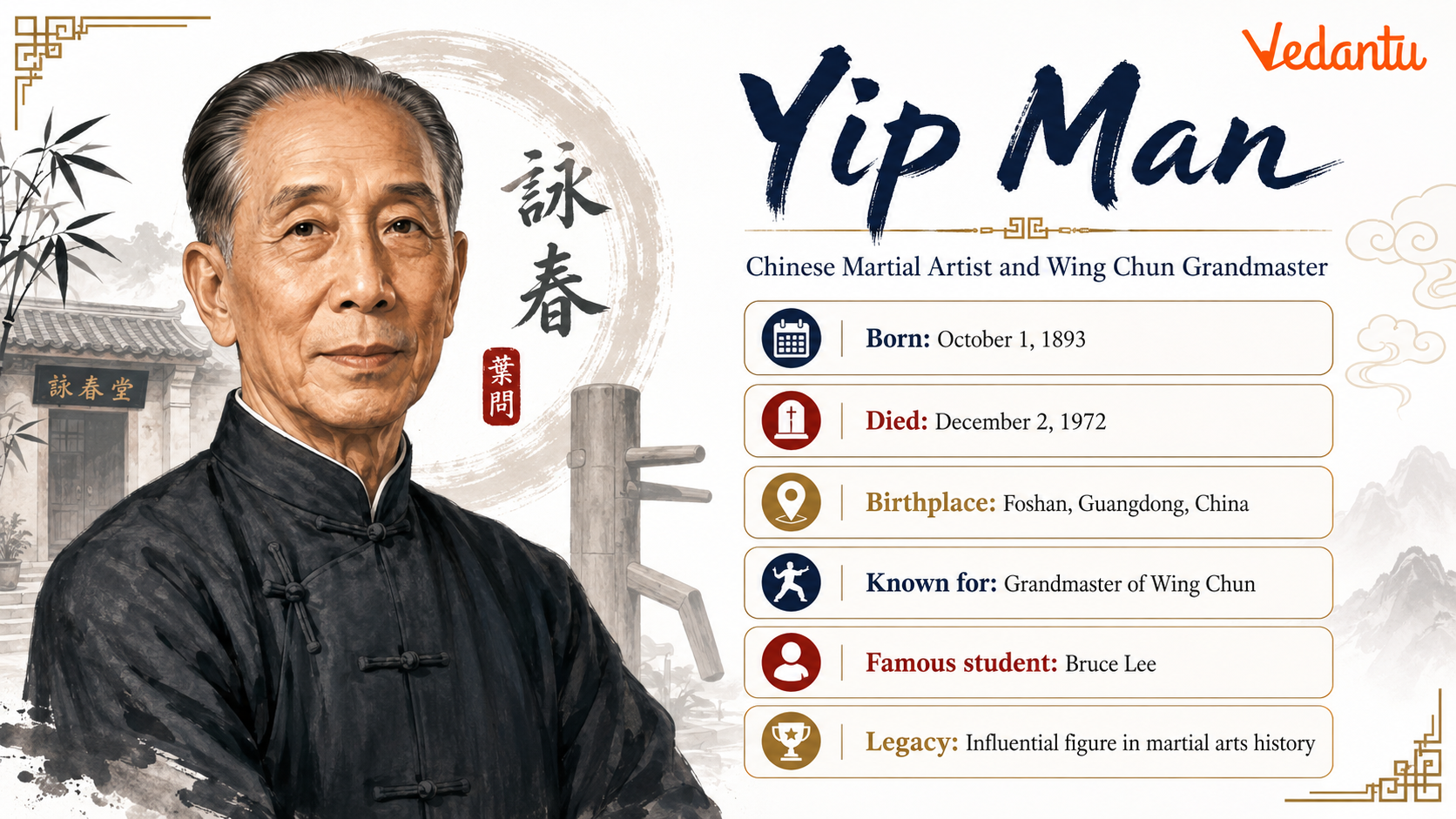
Who is Yip Man?
Yip Man, also spelled Ip Man, was a Chinese martial artist and a grandmaster of the Wing Chun style of Kung Fu. He was born in China and later moved to Hong Kong, where he began teaching openly. He is most famous as the mentor of Bruce Lee, who later became an international martial arts icon. Yip Man played a crucial role in transforming Wing Chun from a relatively secretive traditional art into a widely practiced martial discipline. His life history is studied for its cultural impact, discipline, and contribution to martial arts education.
Early Life and Family Background
Yip Man early life was shaped by traditional Chinese culture and martial arts training from a young age.
- Born on 1 October 1893 in Foshan, Guangdong Province, China.
- Came from a relatively wealthy and respected family.
- His birth name was Yip Kai-man.
- He began learning Wing Chun at the age of seven under the guidance of master Chan Wah-shun.
- After his first teacher passed away, he continued training under senior disciple Ng Chung-sok.
From childhood, Yip Man showed dedication and discipline, qualities that later defined his martial arts journey.
Education and Early Interests
Yip Man education combined formal schooling with intense martial arts training.
- He moved to Hong Kong as a teenager for further studies.
- Attended St. Stephen's College, a well-known educational institution.
- Continued practicing Wing Chun and deepened his understanding of martial arts theory.
- Met another Wing Chun master, Leung Bik, who further refined his skills.
During his youth, Yip Man developed a strong interest in martial arts philosophy, self-defense techniques, and discipline. These early experiences helped him become a skilled practitioner and later a respected teacher.
Career Journey and Major Life Events
Return to Foshan and Teaching
After completing his studies, Yip Man returned to Foshan. He worked as a police officer for some time and taught Wing Chun privately. At this stage, martial arts were usually taught within families or small circles.
Impact of Political Changes
The political changes in China during the late 1940s deeply affected his life. After the establishment of the People's Republic of China in 1949, Yip Man moved to Hong Kong. This move became a turning point in the Yip Man life history.
Teaching in Hong Kong
In Hong Kong, Yip Man began teaching Wing Chun openly to the public. This was a major change because earlier the art was taught secretly.
- He established his own martial arts school.
- Trained several students who later became masters.
- One of his most famous students was Bruce Lee.
Through structured teaching methods, he helped standardise and spread Wing Chun globally.
Timeline of Important Events
| Year / Date | Event |
|---|---|
| 1 October 1893 | Born in Foshan, China |
| Early 1900s | Began Wing Chun training under Chan Wah-shun |
| Teenage Years | Studied at St. Stephen's College in Hong Kong |
| 1949 | Moved to Hong Kong |
| 1950s | Started teaching Wing Chun publicly |
| 2 December 1972 | Passed away in Hong Kong |
Major Achievements of Yip Man
- Grandmaster of the Wing Chun martial art.
- Successfully spread Wing Chun beyond Foshan to Hong Kong and internationally.
- Mentored globally recognised martial artists such as Bruce Lee.
- Helped systematise and modernise Wing Chun teaching methods.
- Inspired several films and biographical portrayals based on his life.
Contributions of Yip Man
Contribution to Martial Arts
- Preserved and promoted the traditional art of Wing Chun.
- Opened martial arts training to common people rather than limiting it to select families.
- Encouraged practical self-defense techniques and close-range combat methods.
Global Cultural Influence
- Indirectly influenced global martial arts culture through his students.
- Helped make Chinese Kung Fu internationally recognised.
Ideology, Thoughts, and Values
Yip Man believed in discipline, respect, and simplicity in martial arts practice.
- Emphasised efficiency and directness in combat techniques.
- Encouraged humility and respect among students.
- Believed martial arts should build character and self-control.
- Focused on mental discipline along with physical training.
Challenges and Struggles
- Faced financial difficulties after moving to Hong Kong.
- Had to rebuild his career from the beginning in a new city.
- Experienced social and political instability during major changes in China.
- Worked hard to maintain the authenticity of Wing Chun amid growing popularity.
Later Life and Death
In his later years, Yip Man continued teaching and guiding his students in Hong Kong. Despite health issues in his final years, he remained dedicated to martial arts instruction.
- Passed away on 2 December 1972 in Hong Kong.
- His death marked the end of an era, but his teachings continued through his students.
Legacy and Historical Significance
- Remembered as one of the greatest Wing Chun masters in history.
- His life inspired several films, especially the popular Ip Man movie series.
- Wing Chun schools around the world trace their roots to his teachings.
- Played a key role in shaping modern martial arts education.
Lessons Students Can Learn from Yip Man
- Importance of discipline and regular practice.
- Staying committed to tradition while adapting to change.
- Facing hardships with patience and resilience.
- Sharing knowledge to create a lasting impact.
Quick Facts About Yip Man
| Detail | Information |
|---|---|
| Full Name | Yip Kai-man |
| Popular Name | Yip Man / Ip Man |
| Date of Birth | 1 October 1893 |
| Place of Birth | Foshan, Guangdong, China |
| Nationality | Chinese |
| Profession | Martial Artist and Teacher |
| Known For | Grandmaster of Wing Chun, Teacher of Bruce Lee |
| Death | 2 December 1972, Hong Kong |
Interesting Facts About Yip Man
- Yip Man started learning Wing Chun at just seven years old.
- He was among the first masters to teach Wing Chun publicly in Hong Kong.
- Bruce Lee trained under him during his teenage years.
- His life story has been portrayed in several successful films.
- He helped transform Wing Chun into one of the most popular Kung Fu styles worldwide.
- Many modern Wing Chun schools trace their lineage back to him.
Conclusion
The Yip Man biography highlights the journey of a dedicated martial artist who transformed a traditional Chinese art into a global discipline. His life history reflects perseverance, discipline, and commitment to teaching. Through his achievements and contributions, especially as the mentor of Bruce Lee, Yip Man left a lasting impact on martial arts culture worldwide. His legacy continues to inspire students to value hard work, respect, and continuous self-improvement.
FAQs on Yip Man Biography and Life History of the Legendary Wing Chun Grandmaster
Yip Man was a famous Chinese martial artist and the grandmaster of the Wing Chun style of Kung Fu. Born on 1 October 1893 in Foshan, Guangdong, China, he is best known for popularizing Wing Chun worldwide and for being the teacher of legendary martial artist Bruce Lee. His biography highlights his role as a respected martial arts master whose life history greatly influenced modern martial arts culture.
Yip Man is famous for spreading Wing Chun Kung Fu internationally and mentoring Bruce Lee. His career in martial arts helped transform Wing Chun from a traditional Chinese system into a globally practiced discipline. His life and achievements are often studied in martial arts history and exam-oriented general knowledge topics.
Yip Man was born into a wealthy family in Foshan, China, and began learning martial arts at a young age. He started training in Wing Chun under Chan Wah-shun when he was about 12 years old. His early life and family background provided him the opportunity to receive structured martial arts training, shaping his future career as a martial arts master.
Yip Man received traditional schooling in China and later continued his studies in Hong Kong. During his time in Hong Kong, he further refined his Wing Chun skills under senior practitioners. His education combined formal learning with intensive martial arts training, which played an important role in his biography and professional journey.
The major achievements of Yip Man include systematizing and globally promoting Wing Chun as a respected martial art.
- Founded the first public Wing Chun school in Hong Kong in the 1950s
- Trained many notable students, including Bruce Lee
- Helped establish Wing Chun associations that continue today
Yip Man faced political and financial struggles during his lifetime. After the Chinese Civil War, he moved to Hong Kong in 1949, where he initially struggled to establish his career. Despite hardships, his dedication to teaching Wing Chun helped him rebuild his life and leave a lasting legacy in martial arts history.
Yip Man’s main contribution was transforming Wing Chun from a private family art into a widely accessible martial arts system.
- Opened martial arts training to the public
- Standardized teaching methods and forms
- Influenced modern combat philosophy through his students
While Yip Man did not receive many formal awards during his lifetime, he earned immense respect as a grandmaster of Wing Chun. After his death on 2 December 1972 in Hong Kong, numerous martial arts associations honored his contributions, and his life story inspired several films and biographies.
The legacy of Yip Man lies in the global spread of Wing Chun Kung Fu and his influence on modern martial arts culture. Through his students, especially Bruce Lee, his teachings reached international audiences. Today, Wing Chun schools around the world trace their lineage back to him, reflecting his lasting historical significance.
Several interesting facts make Yip Man’s biography inspiring for students and martial arts enthusiasts.
- He is often called the "Grandmaster" of modern Wing Chun
- His life inspired the popular "Ip Man" film series starring Donnie Yen
- He played a key role in making traditional Chinese martial arts globally recognized
