






Where Do Cockroaches Live and How Do They Survive in Any Environment?
Cockroaches are one of the oldest and most adaptable insects on Earth. They have lived for more than 300 million years! Found almost everywhere, these insects are known for their strong survival skills. In this page, you will explore important cockroach facts, cockroach habitat, cockroach diet, cockroach characteristics, cockroach life cycle, and their importance in nature in a fun and easy way.
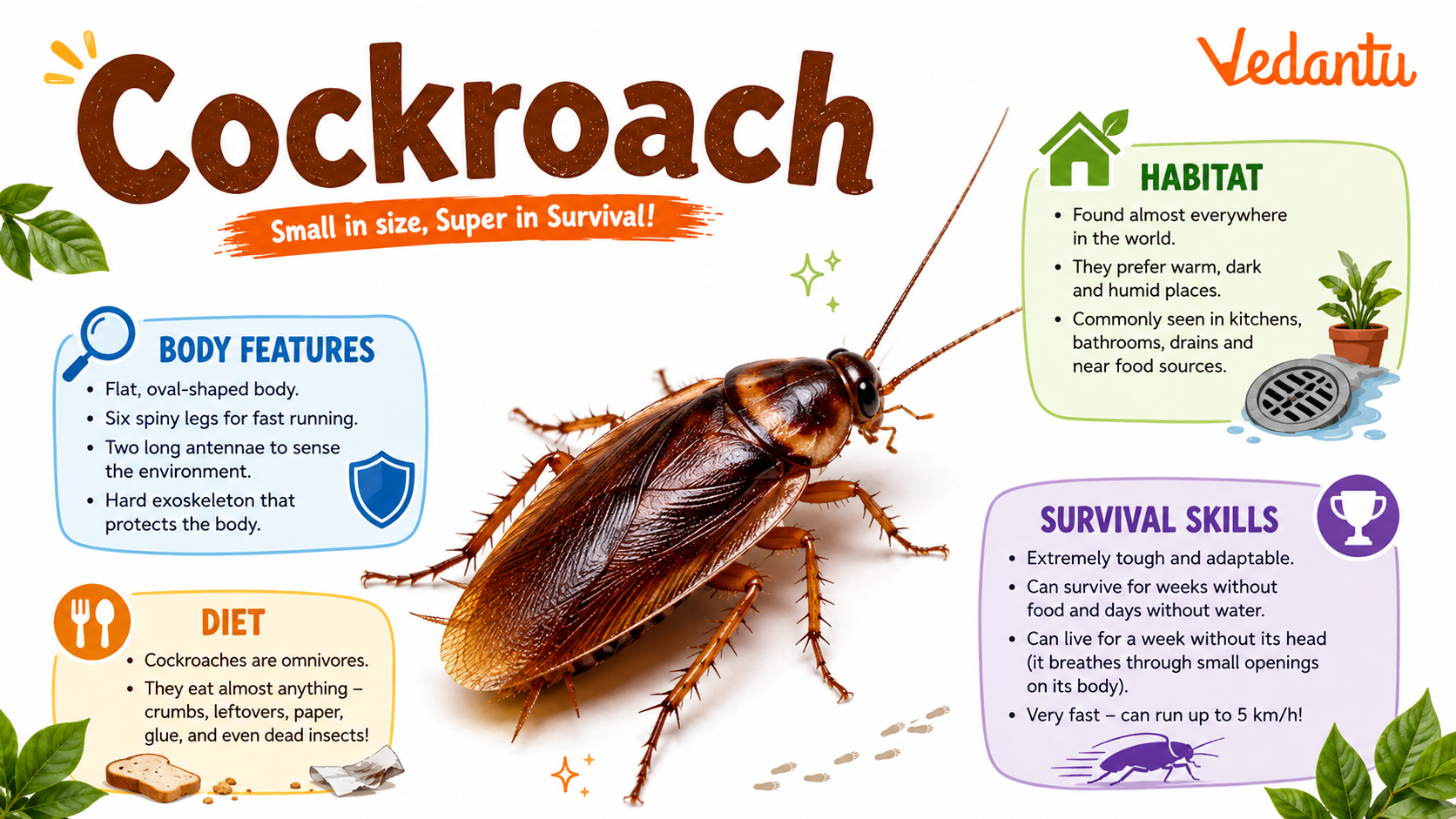
Quick Facts About Cockroach
| Feature | Details |
|---|---|
| Common Name | Cockroach |
| Scientific Order | Blattodea |
| Animal Group | Insect |
| Size | 1.5 cm to 7.5 cm (varies by species) |
| Lifespan | 6 months to 2 years |
| Habitat | Homes, forests, sewers, warm regions |
| Diet | Plants, food scraps, paper, decaying matter |
| Activity | Mainly active at night |
Appearance and Physical Characteristics
- Flat, oval-shaped body
- Usually brown or black in colour
- Six long legs for fast running
- Long antennae to sense surroundings
- Hard outer covering called exoskeleton
- Two pairs of wings (some species can fly)
Cockroach Habitat and Distribution
The cockroach habitat is very wide. These insects can survive in many environments.
- Found on every continent except Antarctica
- Prefer warm and humid climates
- Live in forests, grasslands, and caves
- Common in human homes, kitchens, and bathrooms
- Hide in dark, narrow spaces during the day
Cockroach Diet and Feeding Habits
- Leftover food and crumbs
- Fruits and vegetables
- Paper and cardboard
- Glue and soap
- Dead plants and animals
Their strong mouthparts help them chew many types of materials. This flexible cockroach diet helps them survive almost anywhere.
Behaviour and Lifestyle
- Mostly active at night (nocturnal)
- Prefer dark and moist places
- Move very quickly when disturbed
- Use antennae to detect food and danger
- Communicate using chemical signals
Cockroach Life Cycle
- Egg: Eggs are kept inside a capsule called an ootheca.
- Nymph: Young cockroach that looks like a small adult but without wings.
- Adult: Fully grown with wings (in many species) and able to reproduce.
What Makes Cockroaches Special?
Types of Cockroaches
Importance and Role in Nature
Amazing Cockroach Facts
- Cockroaches are over 300 million years old.
- There are more than 4,000 species worldwide.
- Only a few species live in homes.
- They can hold their breath for up to 40 minutes.
- They can survive underwater for 30 minutes.
- They have existed since the time of dinosaurs.
Fun Facts for Kids
FAQs on Cockroach: Fascinating Facts, Behavior, and Life Cycle Explained
1. What is a cockroach?
A cockroach is a small, brown or black insect known for its strong survival skills and fast movement.
- It belongs to the insect order Blattodea.
- It has a flat body, six legs, and long antennae.
- Cockroaches are often called roaches.
- They are one of the oldest insects on Earth.
- They can live in homes, forests, and even deserts.
2. Where do cockroaches live?
Cockroaches live in warm, dark, and moist places where food and water are easy to find.
- Inside houses (kitchens, bathrooms, basements).
- Under sinks, behind appliances, and in cracks.
- In forests, caves, and gardens.
- Common species include the American cockroach and German cockroach.
- They hide during the day and come out at night.
3. What do cockroaches eat?
Cockroaches are omnivores, which means they eat almost anything.
- Leftover food crumbs and sweets.
- Fruits, vegetables, and grains.
- Paper, glue, and cardboard.
- Pet food and garbage.
- They can survive weeks without food but need water often.
4. Are cockroaches dangerous to humans?
Cockroaches are not usually harmful, but they can spread germs and trigger allergies.
- They may carry bacteria and pathogens.
- They can contaminate food surfaces.
- Some people develop asthma or allergy symptoms.
- They do not usually bite humans.
- Keeping homes clean helps prevent problems.
5. Why are cockroaches hard to kill?
Cockroaches are hard to kill because they have strong survival abilities and quick reflexes.
- They can run very fast.
- Their flat bodies help them hide in tiny cracks.
- They can survive with little food.
- They have tough outer shells called exoskeletons.
- Some species develop resistance to insect sprays.
6. How long do cockroaches live?
Most cockroaches live between a few months to one year depending on the species.
- The German cockroach lives about 6 months.
- The American cockroach can live up to 1 year.
- They go through stages: egg, nymph, and adult.
- Warm temperatures help them grow faster.
- They reproduce quickly in safe environments.
7. Can cockroaches fly?
Some cockroaches can fly, but most prefer to run.
- Species like the American cockroach have wings.
- They usually glide instead of long flying.
- Many household roaches rarely use their wings.
- They run faster than they fly.
- Young cockroaches (nymphs) do not have wings.
8. How do cockroaches reproduce?
Cockroaches reproduce by laying eggs inside protective cases called oothecae.
- A female lays multiple egg cases.
- Each case contains many eggs.
- Eggs hatch into young cockroaches called nymphs.
- Nymphs look like small adults without wings.
- They grow by shedding their skin.
9. Why do cockroaches come out at night?
Cockroaches are nocturnal insects, meaning they are active at night.
- They avoid bright light.
- Nighttime is safer from predators.
- They search for food quietly in the dark.
- Seeing them in the day may mean a big infestation.
- They hide in cracks and crevices during daytime.
10. How can you prevent cockroaches at home?
You can prevent cockroaches by keeping your home clean and dry.
- Store food in sealed containers.
- Clean crumbs and spills quickly.
- Take out garbage regularly.
- Fix water leaks and remove moisture.
- Seal cracks and holes in walls.
