



Exercise-wise Answers for NCERT Class 7 English: Paper Boats
NCERT Solutions Class 7 English Chapter 8 Paper Boats (2026-27)
Paper Boats Question Answer – Let Us Do These Activities Before We Read. (Page 109)
I. Read the questions given below. Share your answers with your classmates and the teacher.
Question 1. What comes to mind when you think about ‘paper boats’?
Answer: When I think of paper boats, I imagine folding sheets of paper into little boats and letting them float on water, like in a stream or a puddle during the rain. It brings back memories of childhood games and simple happiness.
Question 2. What do you think someone might hope for when they send a paper boat down a stream?
Answer: They may hope the boat goes a long way, reaches a stranger, or carries a message or wish to a far-off place.
Question 3. Read the title of the poem ‘Paper Boats’ and predict what the poem might be about.
Answer: The poem may describe a child making paper boats, setting them afloat in a stream, and imagining where they might travel or who might discover them.
II. Read the given paragraph and match the highlighted words with their meanings given in the box below.
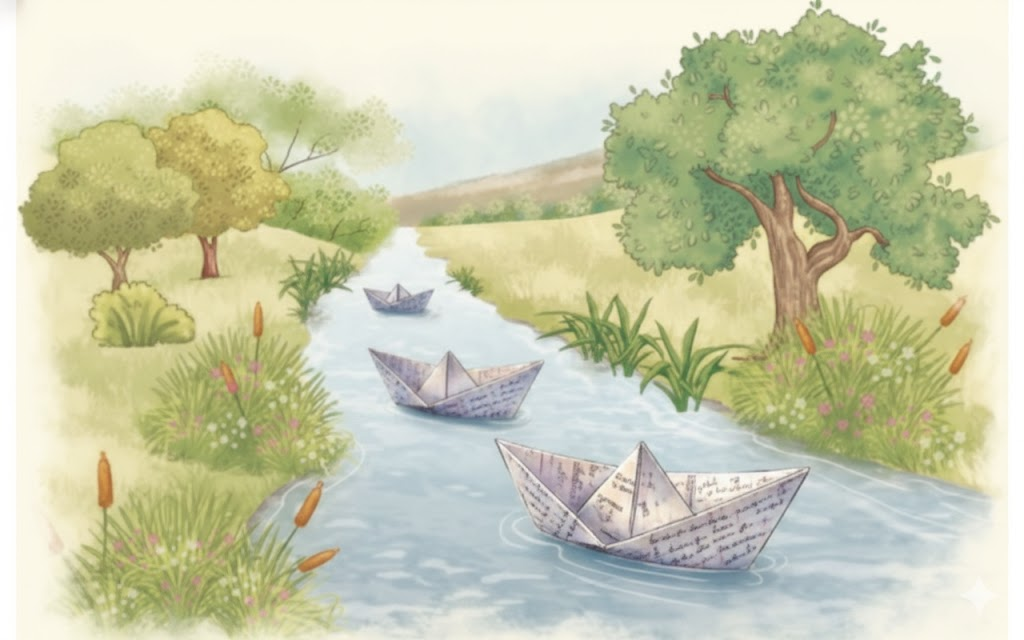
I love to play beside a 1. running stream at a short distance from my grandparent’s house. I love to see it 2. skipping along to join a river. On the river, I can see boats with 3. bulging sails moving swiftly. Some of them take the people from one shore to the other while in some of them people can be seen 4. lading things too. I can spend hours watching the busy river and dreaming about them, 5. burying my head in my pillow at night.
Answer:
1. running – speedily flowing
2. skipping – bouncing
3. bulging – swelling
4. lading – loading
5. burying – putting
Paper Boats Class 7 Question Answer – Let us discuss (Pages 111-112)
I. Choose the correct words from the brackets to complete the summary of the poem given below.
The poet sends paper boats down a 1. __________ (stream/river) each day, writing his name and the name of his 2. __________ (school/ village) on them. He hopes that someone in a 3. __________ (strange/familiar) land will find them and know who he is. The poet fils his boats with 4. __________ (rose/shiuli) flwers from his garden, hoping they will be safely carried to another land at 5. __________ (night/morning). As he launches his boats, he imagines that the 6. __________ (clouds/birds) in the sky are like friends, racing with his boats. At night, he dreams that his paper boats continue to 7. __________ (swim/flat) under the midnight stars, with the fairies of sleep sailing in them, their baskets full of 8. __________ (dreams/fruits).
Answer: The poet sends paper boats down a 1. stream (stream/river) each day, writing his name and the name of his 2. village (school/ village) on them. He hopes that someone in a 3. strange (strange/familiar) land will find them and know who he is. The poet fills his boats with 4. shiuli (rose/shiuli) flowers from his garden, hoping they will be safely carried to another land at 5. night (night/morning). As he launches his boats, he imagines that the 6. clouds (clouds/birds) in the sky are like friends, racing with his boats. At night, he dreams that his paper boats continue to 7. float (swim/float) under the midnight stars, with the fairies of sleep sailing in them, their baskets full of 8. dreams (dreams/fruits).
II. Choose the correct option for the following.
The theme of the poem is __________.
1. innocence
2. imagination
3. ignorance
4. playfulness
5. travel
(i) 1,2 and 3
(ii) 3, 4 and 5
(iii) 1, 4 and 5
(iv) 1, 2 and 4
Answer:
(iv) 1, 2 and 4 (innocence, imagination, and playfulness)
III. Identify whether the following statement is true or false.
The setting of the poem is a natural, outdoor environment.
Answer: True (The poem happens outside with a stream, flowers, clouds, and stars, showing a natural setting.)
IV. Complete the following sentence by choosing the correct word given within the brackets.
The tone is __________ (sad and serious/gentle and wishful) and the mood is __________ (thoughtful / boring).
Answer: The tone is gentle and wishful and the mood is thoughtful.
V. Identify the examples of alliteration from the poem.
Answer: Examples of alliteration from the poem are:
1. “Day by day”
2. “Big black”
3. “Strange land”
4.4’ “Shiuli flowers”
5. “Baskets full of dreams”
VI. Fill in the blanks with suitable words from the poem.
1. The repetition of words ___________ and ___________ emphasises the passage of time.
2. The poet uses imagery like ___________ and ___________ to create a clear picture in the minds of the readers.
Answer:
1. “day by day”, “one by one”
2. “little clouds setting the white bulging sails”, “midnight stars”
VII. Match the descriptions in Column 1 with what they symbolise in Column 2.
Answer:
Class 7 English Paper Boats Question Answer – Let us think and reflect (Pages 112-113)
I. Read the extract given below and answer the questions that follow.
Question 1. When night comes, I bury my face in my arms and dream that my paper boats float on and on under the midnight stars. The fairies of sleep are sailing in them, and the lading is their baskets full of dreams.
(i) Select the option that is most likely to be the speaker as per the extract.
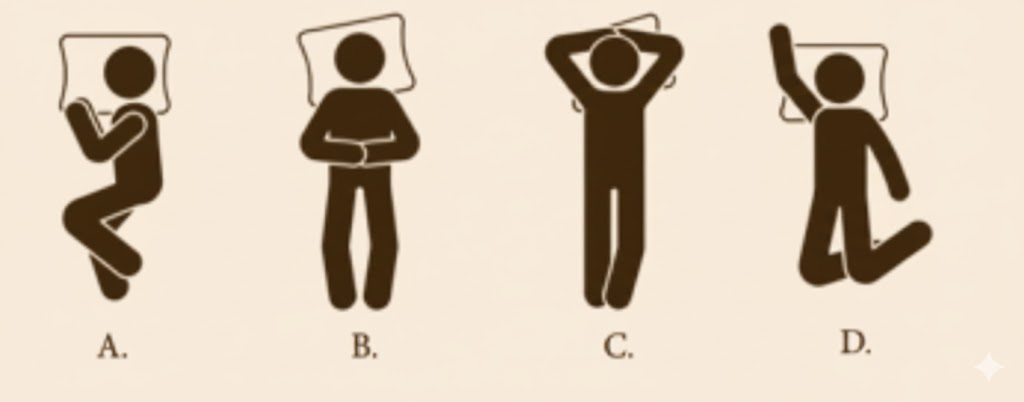
Answer: Option C is correct because the line “bury my face in my arms” supports it.
(ii) What can be inferred about the speaker’s feelings when night comes?
Answer: The speaker feels calm, dreamy, and full of imagination.
(iii) What kind of beings are the ‘fairies of sleep’ imagined as? Select the most appropriate option.
A. Mischievous
B. Gentle
C. Fearsome
D. Playful
Answer: B. Gentle
(iv) Fill in the blank by selecting the correct option from those given in the brackets.
The phrase “lading is their baskets full of dreams’ suggests that the speaker imagines the fairies of sleep carefully __________
(carrying his dreams/collecting his wishes) in their baskets.
Answer: carrying his dreams
II. Answer the following questions.
Question 1. Why do you think the poet writes his personal details on the paper boats?
Answer: The poet writes his name and his village’s name to send a part of himself into the world, hoping someone far away will discover them and feel connected to him. This shows a child’s desire for connection, curiosity, and the wish to be known outside their small world.
Question 2. The poet talks about the imagination of a child. Support this view with examples from the poem.
Answer: The poet beautifully captures a child’s imagination by describing wishes such as the boats reaching a stranger, clouds acting as playmates racing alongside them, and fairies of sleep sailing in the boats with baskets full of dreams.
“I wish that someone in a distant land will discover them and learn who I am.”
“I wonder which playmate in the sky sends the clouds to race with my boats.”
“The fairies of sleep ride in them, carrying baskets filled with dreams.”
Question 3. How does the poet bring together imagination and reality to make the poem more interesting?
Answer: The poet combines the real act of making and floating paper boats with imaginative ideas—like the boats reaching distant lands, clouds racing alongside them, and fairies sailing in them—creating a magical narrative that enhances the poem’s beauty and depth.
Paper Boats Class 7 Questions and Answers – Let us learn (Pages 113-114)
I. The poet has used phrases like ‘blooms of the dawn’ and ‘fairies of sleep’ in the poem. In the same way we can create phrases. Now, select words from Column 1 and Column 2 and combine them with ‘of. Write as many phrases as possible in Column 3. An example has been done for you.
Answer:
II. The poet uses words like ‘dawn’, ‘night’ and ‘midnight’ to show different parts of the day. The box given below has some more words.
Write the words in the appropriate columns.
Answer:
III. Match the words from the text given in Column 1 with their opposites in Column 2.
Answer:
Paper Boats Question Answer Class 7 – Let us listen (Pages 114—115)
You will listen to a conversation be¬tween a girl and her father about the art of paper folding called origami. As you listen, select the true statements from 1-7. (Transcript for the teacher on page 137 of the NCERT Textbook)
1. Sai was trying to make an origami boat.
Answer: False
Reason: Sai says she is trying to make an origami crane, not a boat. The idea of making a boat comes only after her father suggests it.
2. Sai’s father used to do origami as a child.
Answer: True
Reason: Her father says, “I remember doing that when I was your age,” which shows he practiced origami when he was a child.
3. Paper was very expensive so it was used only for special occasions.
Answer: True
Reason: The father says, “Back then, paper was really expensive, so it was only used for special occasions, like religious ceremonies,” which supports this statement.
4. People have been making paper cranes for’ thousands of years.
Answer: False
Reason: The father explains that origami began over a thousand years ago, but people only started making fun designs like cranes in the seventeenth century—hundreds of years ago, not thousands. Sai’s question, “So, people have been making paper cranes for hundreds of years?” matches this timeline.
5. There is a belief that if you make a thousand paper cranes, your wish will come true.
Answer: True
Reason: The father says, “There’s even a belief that if you fold a thousand paper cranes, you can make a wish and it will come true,” which directly supports this statement.
6. The art of origami is about enjoying the process.
Answer: True
Reason: The father explains, “Origami isn’t just about the final shape—it’s about the process, the patience, and the creativity involved,” showing that the focus is on enjoying the process.
7. Sai’s father suggests making a paper bookmark next time.
Answer: False
Reason: The father proposes, “How about we make an origami paper boat next?” and does not mention a bookmark anywhere in the conversation.
True Statements (Selected from 1-7):
2. Sai’s father used to do origami as a child.
3. Paper was very expensive so it was used only for special occasions.
5. There is a belief that if you make a thousand paper cranes, your wish will come true.
6. The art of origami is about enjoying the process.
Class 7 English Chapter 8 Question Answer – Let us speak (Page 115)
Create any craft item using eco-friendly materials. Make a presentation in front of your classmates and teacher about the craft item you have made.
Your presentation should include the following information:
Introduction of the item
Description of how you made it
Reason why you like the craft
Conclusion
Use the phrases given below to make your presentation.
Today, I’m going to show you a… I made.
This… is made of… (materials)
It’s… (describe colour, shape, size)
It can be used to…
First, I started by…
Then, I used… (tool or material) to…
The most difficult part was to…
This… is special to me because…
I hope you enjoyed seeing my craft and learning about it.
Thank you for your attention.
Answer:
“Today, I want to show you a paper boat that I made. It is crafted from recycled paper taken from an old notebook. The boat is small, white, and shaped like a triangle with neat, sharp edges. It can be used to float on water or simply kept as a decoration. I began by cutting a square sheet of paper and then carefully folded it step by step into the shape of a boat. The trickiest part was forming the sharp edges so it would float properly. This boat is special to me because it reminds me of the poem ‘Paper Boats’ and of my childhood. I hope you enjoyed seeing my craft and learning about it. Thank you for listening.”
NCERT Class 7 English Poorvi Chapter 8 Question Answer – Let us write (Page 116)
A diary entry is a personal document. It records an individual’s account of a day of her or his life expressing the thoughts, feelings and opinions in the individual’s mind.
The guidelines to compose a diary entry include:
mentioning day, date and time of writing it
beginning with a general sentence describing the day or feelings towards an event or experience
giving details
concluding with a fial remark
Now, write a diary entry expressing your joy experiencing a rainy day. You may begin as given below:
Answer:
Friday, 15 July 2025
6:30 pm
Dear Diary,
Today was quite humid, and on my way home from school, I kept hoping it would rain. And it did! The sky grew dark, and soon raindrops began tapping on my umbrella. I couldn’t resist the excitement—I rushed home, took some old paper, and made paper boats just like the ones from the poem we read. I floated them in a puddle outside and watched them glide along with the water. The cool breeze, the sound of the rain, and the little boats drifting away filled me with joy. It felt like a tiny adventure! I hope it rains again tomorrow.
Good night,
Shaana
Class 7th English Chapter 8 Paper Boats Question Answer – Let us explore (Pages 116-117)
I. Shiuli flowers often find a mention in Rabindranath Tagore’s poems. These flowers are found in many parts of our country.
Look at the pictures of shiuli flowers and recall what you call them in your language.
Answer: In Hindi, shiuli flowers are known as “Parijat” or “Harsingar.”
Question 1. Find out names of some more trees or plants in your locality which have fragrant flowers. Write their names in your language and English language. Draw any two flowers and colour them.
Answer:
In our neighbourhood, some fragrant flowering plants include:
Jasmine (Chameli in Hindi),
Rose (Gulab in Hindi),
Marigold (Gainda in Hindi).
In our area, we have several fragrant flower plants such as Jasmine (Chameli), Rose (Gulab), and Marigold (Gainda).
Around our locality, fragrant flowers like Jasmine (Chameli), Rose (Gulab), and Marigold (Gainda) can be found.
II. Solve the riddles given below. Share your answers with your classmates and the teacher.
Question 1. I have water that you cannot drink,
People come to see how in me the Sun sinks.
I can be rough, I can be calm,
I hold within myself plenty of charm.
My depths tell a never-ending tale.
Who am I with dolphins and the whale?
Answer: Ocean
Question 2. I sit in stillness, but move with the wind,
My surface mirrors the world you are in.
The trees around me live happily,
In me, you can take a dip daily.
Home to ducks, frogs, fish, and all,
Can you guess what I am, after all?
Answer: Lake
Question 3. I gently travel through valleys deep,
My soft murmur can make you sleep.
Little paper boats float on me in rain,
The merry laughter of the kids I gain.
You may sit beside me without any fear,
Who am I who skips along, crystal clear?
Answer: Stream
Question 4. I have a bed, but I do not sleep.
I have a bank, but no money I keep.
I carry stories, old and new,
High mountains to the oceans blue.
I journey far to meet the sea,
Can you guess, who I can be?
Answer: River
Understand Poetic Imagination in NCERT Class 7 English Chapter 8
The poem Paper Boats by Rabindranath Tagore sparks creative thinking in students. By reading NCERT Solutions Class 7 English Chapter 8, you can experience how imagination turns simple activities into meaningful adventures. Understanding the depth of poetic imagery helps in scoring well in English.
With stepwise answers, NCERT Solutions for Class 7 English Paper Boats (2026-27) make poetry appreciation easy. Emphasizing keywords and poetic devices enhances your exam performance. Regular practice will strengthen your command over summary and theme-based questions.
Review the important ideas and symbolism in this poem for quick revision before exams. Focus on keywords like “imagination”, “dreams”, and “nature” to write high-scoring answers. Stay confident and keep revising for the best results!
FAQs on NCERT Solutions For Class 7 English Chapter 8 Paper Boats - 2026-27 Free PDF Download (Login Required)
1. What are the NCERT Solutions for Class 7 English Chapter 8 Paper Boats?
The NCERT Solutions for Class 7 English Chapter 8 Paper Boats are detailed stepwise answers to all textbook questions from the chapter 'Paper Boats.' These solutions are structured to help students score full marks in exams and understand key themes.
- Provide answers for every question in the chapter.
- Align with the latest CBSE 2026–27 syllabus and marking scheme.
- Available as free PDF downloads for easy revision.
- Include extra questions, important definitions, and exam-focused content.
2. How can I score full marks using NCERT Solutions for Class 7 English Chapter 8 Paper Boats?
Students can score full marks by writing stepwise, clear answers and following the CBSE marking scheme using these solutions.
- Follow the step-by-step format provided in the solutions.
- Include key points, definitions, and examples where required.
- Structure long answers with an introduction, body, and conclusion.
- Revise using provided quick notes and revision planners.
- Practice extra and exemplar questions from the solutions PDF.
3. Where can I download the Paper Boats Class 7 question answers PDF?
You can download the Paper Boats Chapter 8 Class 7 PDF from trusted educational websites that provide NCERT Solutions.
- Free PDF downloads available for offline study.
- Ensure the PDF is updated for CBSE 2026–27.
- Includes exercise-wise solutions, extra questions, and key definitions.
4. Are diagrams or definitions required in Class 7 English Chapter 8 answers?
Including clear definitions and neat diagrams, if mentioned in the question, helps in scoring more marks.
- Write short, exam-ready definitions for all key terms.
- Diagrams are usually not required in poetry chapters but add value in prose or map-based exercises if mentioned.
- Neatness and accuracy are rewarded in the CBSE marking scheme.
5. What are the most important topics and themes from Paper Boats Class 7?
The most important topics from Paper Boats include the poem's theme, symbolism, and the poet's imagination.
- Themes of innocence, childhood dreams, and imagination.
- Explanation of the paper boats as a symbol in the poem.
- Understanding poetic devices used by the poet.
- Summary and central idea of the poem.
6. Which questions from Paper Boats are likely in CBSE school exams?
Likely exam questions from Class 7 English Chapter 8 Paper Boats focus on main ideas and poetic devices.
- Short answer questions about the poem's message or summary.
- Long answer questions about the central idea and imagination in the poem.
- Identifying figures of speech or symbolism in specific lines.
7. How should I write long answers for Class 7 English Chapter 8 Paper Boats to get high marks?
To score high marks, structure your answers with clear points, headings, and examples.
- Start with a brief introduction mentioning the poet and poem.
- Write key points in paragraphs or bullet lists.
- Use CBSE marking scheme keywords and relevant quotes where possible.
- Conclude with the overall message or lesson from the poem.
8. Are NCERT Solutions enough for Class 7 English exams?
NCERT Solutions for Class 7 English are sufficient for scoring well in exams when combined with revision and sample papers.
- Cover all textbook questions and important topics.
- Extra practice with exemplar and previous year questions is recommended.
- Use revision notes and practice tests for complete preparation.
9. How do I create an effective revision plan for Class 7 English Chapter 8 Paper Boats?
An effective revision plan includes regular revision, practice tests, and summary notes based on NCERT Solutions.
- Use quick revision notes and key definitions tables.
- Follow a 1-day, 3-day, and 7-day revision schedule.
- Practice both short and long answer questions regularly.
10. What is the central idea of the poem 'Paper Boats' in Class 7 English Chapter 8?
The central idea of 'Paper Boats' is the innocent dreams and imagination of a child who believes his paper boats will reach distant lands.
- Represents childhood curiosity and hope.
- Uses paper boats as a symbol of dreams and connection with the unknown.
- Highlights themes of friendship and imagination.
