




Stepwise Answers for Animals, Birds, and Dr. Dolittle: Class 7 English Exam Guide
NCERT Solutions Class 7 English Chapter 4 Animals, Birds, and Dr. Dolittle (2026-27)
Let Us Do These Activities Before We Read (Page 43)
I. Do you have a pet or a domestic animal? If yes, why? If not, why not? How do people usually spend time with a pet or domestic animal? Share your thoughts with your classmates and the teacher.
Answer: Students should do it by themselves.
II. You must have read stories where animals and birds talk. If you had a chance to communicate with an animal or a bird, who would you like to speak to and why? Share your thoughts with your classmates and the teacher.
Answer: Students should do it by themselves.
III. If we closely observe the body language of animals and birds, we can understand what they want to tell us. Work in pairs and study the pictures given below. Find out what emotions these animals and birds are trying to convey. Share your observations with your classmates and the teacher.
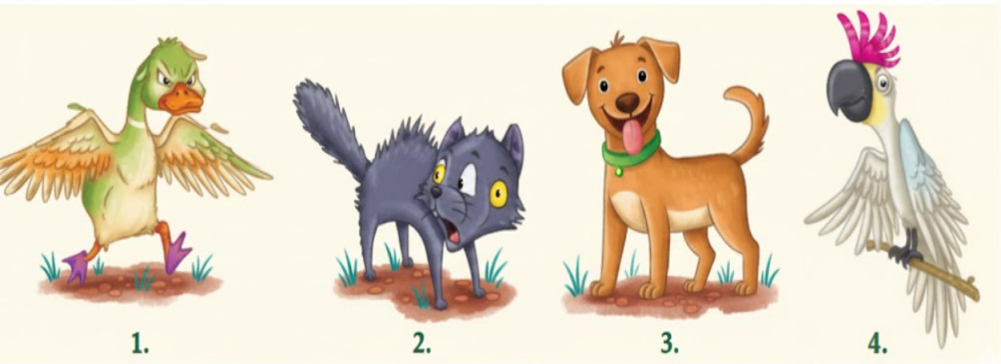
Answer:
1. Angry
2. Scared
3. Happy
4. Cool
Animals Birds and Dr Dolittle Class 7 Question Answer – Let us discuss (Page 46)
I. Complete the following sentence by selecting a suitable reason.
The Cat’s-food-Man suggests to Doctor Dolittle that he should become an animal doctor because he believes that Dolittle ________.
1. earns less fee by treating human patients
2. enjoys the company of animals as they speak less
3. dislikes spending time with human patients
4. knows more about animals than the local veterinarians
Answer: 4. knows more about animals than the local veterinarians.
II. Fill in the blanks by choosing the suitable option given in the brackets.
Doctor Dolittle reacts to Polynesia’s information about animal languages with both excitement and ________ (certainty/curiosity). He rushes to ________ (write/ memorise) the bird words she provides and is interested in learning more.
Answer: Curiosity, write
III. Do you think Doctor Dolittle would be famous as an animal doctor?
If yes, why? If not, why not?
Answer: Yes, Dr. Dolittle would become very famous as an animal doctor. He could understand animals perfectly, and after learning their language, treating them would become much easier. Since birds travel across the world, they would quickly spread news of his abilities everywhere.
Class 7 English Animals Birds and Dr Dolittle Question Answer – Let us discuss (Pages 49-50)
I. What became a common sight in Puddleby after Doctor Dolittle started treating animals?
1. Humans talking to farm animals
2. Farm animals wearing glasses
3. Farm animals learning bird language
4. Birds riding atop farm animals
Answer: 2. Farm animals wearing glasses.
II. What challenges do you think Doctor Dolittle might face if more and more animals come to him for help?
Answer: Dr. Dolittle would certainly face several challenges if more animals started coming to him. He would need to spend much more time examining each animal, and he would have to learn many additional animal languages to treat them properly. He might also struggle with space issues as more and more animals arrive for treatment.
Question 1. How might he overcome these challenges to ensure that he provides good treatment?
Answer: He can handle these challenges by appointing more doctors and teaching them how to understand animal languages. He could also build a proper hospital equipped with the necessary machines and tools for treating animals. In addition, creating a timetable for different animals would help him manage his patients more efficiently.
III. Arrange the following events in correct order according to the story.
Two have been done for you. Share your answers with your classmates and the teacher.
Answer:
(iv)
(viii)
(i)
(iii)
(vi)
(ii)
(ix)
(vii)
(x)
(v)
Animals Birds and Dr Dolittle Class 7 Questions and Answers – Let us think and reflect (Pages 50-52)
I. Read the extracts given below and answer the questions that follow.
Question 1.
“If I say, ‘Polly wants a cracker’, you understand me. But hear this: Ka-ka oi-ee, fee-fee?”
“Good Gracious!” cried the Doctor. “What does that mean?” “That means, ‘Is the porridge hot yet?’—in bird language.”
“My! You don’t say so!” said the Doctor. “You never talked that way to me before.”
“What would have been the good?” said Polynesia, dusting some cracker crumbs off her left wing. “You wouldn’t have understood me if I had.”
(i) Complete the sentence by choosing the correct option.
In the line, “Good Gracious!” cried the Doctor, the expression ‘Good Gracious’ can be replaced by ________!
A. bravo
B. gosh
C. alas
D. hurray
Answer: B. gosh
(ii) Why had Polynesia never used bird language with the Doctor earlier?
Answer: Polynesia had never used bird language with the Doctor because she knew he would not understand it.
(iii) Identify whether the following statement is true or false.
Polynesia had been munching on a food item while talking to Doctor Dolittle.
Answer: False
(iv) How did Doctor Dolittle feel according: to the extract?
A. anxious
B. surprised
C. angry
D. relaxed
Answer: B. surprised
Question 2. “I would like a pair like your: said the horse—“only green. They keep the Sun out of my eyes while I ploughing the field.”
“Certainly,” sa the Doctor. “Green ones you shall have”
“You know, the trouble is, Sir,” said the plough horse as the Doctor opened the front door to let him out—“the trouble is that anybody thinks he can doctor animals—just because the animals don’t complain. As a matter of fact, it takes a much cleverer man to be a really good animal doctor than it does to be a good people’s doctor.”
(i) Choose a word from the extract to complete the analogy.
digging: flower bed:: ______________: field
Answer: Ploughing
(ii) Choose the correct word to complete the sentence.
Doctor Dolittle’s attitude in the extract is ______________.
A. respectful
B. sentimental
C. understanding
D. careful
Answer: C. understanding
(iii) Complete the sentence with an appropriate reason.
Based on the extract, we can conclude that doctors take animals for granted because ______________.
Answer: They cannot understand an animal’s real pain because they do not know its language.
As a result, they sometimes give medicines that do not actually cure the animal.
(iv) Do you agree with the concluding sentence of the extract?
Why/why not?
Answer: Yes, I agree that “it takes a much cleverer man to be a really good animal doctor than to be a good people’s doctor.” Only someone intelligent and compassionate, like Dr. Dolittle, can understand animal language. He also has deep love and affection for animals, which makes him truly exceptional.
II. Answer the following questions.
Question 1. How can we say that Polynesia was a good trainer of animal language?
Answer: We can say that Polynesia was an excellent trainer because she patiently taught the Doctor the different animal languages, step by step. For example, she explained that parrots speak two languages. Later that afternoon, while it rained outside, she sat with him at the kitchen table and taught him the A, B, C of the birds’ language.
Question 2. Explain how Doctor Dolittle gave equal and individual attention to each animal who came to him for treatment.
Answer: Doctor Dolittle was a kind and understanding doctor. He carefully listened to the animals who came to him for treatment. When they explained their problems and pointed out where they were hurting, he heard them out patiently. He spent enough time with each animal and treated them according to their illness. As a result, every animal recovered and went away happily.
Question 3. How does Doctor Dolittle’s readiness to follow the parrot’s advice highlight the importance of listening to different viewpoints?
Answer: After the cat-food-man suggested that Dr. Dolittle should become an animal doctor, his pet parrot, Polynesia, gave him the same advice. She told him that the people who didn’t value him earlier would soon realise that he was the best doctor for animals. She also explained that other animal doctors were not as skilled. Dr. Dolittle listened to her and learned animal languages from her, which eventually helped him become a famous animal doctor. This shows that listening to different viewpoints can be very beneficial.
Question 4. Which qualities of Doctor Dolittle made him famous among the animals? Explain with evidence from the text.
Answer: Doctor Dolittle became famous among the animals because he was caring, patient, and able to understand their language. He listened attentively when animals explained their problems and described where they felt pain. He gave each one enough time and treated them according to their specific needs. For example, when the plough horse said he had trouble seeing and needed green glasses to protect his eyes from the sun, the doctor immediately provided him with spectacles.
Moreover, his ability to speak to animals in their own language made them feel comfortable and understood. Because of these qualities, Doctor Dolittle soon became well-known and greatly loved by all the animals.
Question 5. What changes do you think would happen in the world if people suddenly gained the ability like Doctor Dolittle, to understand and communicate with animals?
Answer: The world would become a better place for animals, as they could receive the exact treatment they need for their problems. This would save both time and lives. In addition, animals would be able to perform more tasks given by humans because they would be healthier and better understood.
Animals Birds and Dr Dolittle Question Answer Class 7 – Let us learn (Pages 52-55)
I Read the following words from the text.
Cat’s-food-Man, bird language, flowerpots
Are all the words that are combined to form another word written the same way?
Compound words are formed by combining two words of different parts of speech to create a new word that has an entirely new meaning. They are of three types─hyphenated (Cat’s-food-Man), open compound words (bird language) and closed compound words (flwerpots).
Complete the following table correctly by choosing words from the box given below. An example has been done for you.
Answer:
II. Create compound words from the table given below.
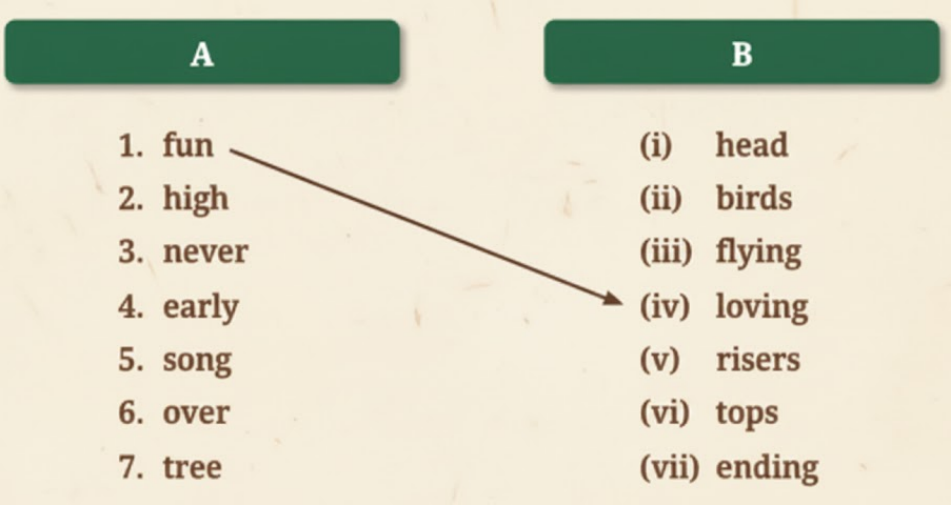
Now, complete the paragraph with suitable compound words from the table. An example has been done for you.
After being treated by Doctor Dolittle, the A. fun-loving dolphins danced playfully in his sanctuary. The B. _______________ chatter of monkeys echoed through the C. _______________, their ailments cured. D. ______________ eagles soared gracefully E. _______________ their health restored. F. _______________ among the G. _______________ chirped joyfully from the branches. All creatures were happy with Doctor Dolittle’s care.
Answer: table-2
After being treated by Doctor Dolittle, the A. fun-loving dolphins danced playfully in his sanctuary. The B. Song birds chatter of monkeys echoed through the C. tree-tops, their ailments cured. D. High flying eagles soared gracefully E. never ending their health restored. F. Early risers among the G. overhead chirped joyfully from the branches. All creatures were happy with Doctor Dolittle’s care.
III. Underline the names of animals that are hidden in the sentences given below. Clues are given within the brackets.
An example has been done for you.
1. Dr. Dolittle was eating oatmeal for his breakfast, (a farm animal)
2. Old ladies began to bring him their pets, (an insect)
3. The author sees the connection between humans and animals, (a farm animal)
4. The three baby dinosaurs are from ice age. (field animal)
5. The patients who came late didn’t know1 where to go. (ship of the desert)
Answer:
1. goat
2. ant
3. horse
4. mice
5. camel
IV. Read the following sentence from the text. Study the highlighted words.
But that stupid man over the hill never even looked at my eyes.
The highlighted words spell and read the same backwards too.
A word, phrase, or sequence that reads the same backwards as forwards is a palindrome.
Some of the common palindromes include ‘Was it a car or a cat
I saw?’, ‘Madam, I’m Adam’ and ‘A man, a plan, a canal—Panama’.
Read the sentences below and identify the palindrome words and sentences.
1. Step on no pets.
2. Naman saw a race car at the show.
3. Nitin speaks in Malayalam.
4. The engineer used a rotator to check the surface level.
5. The pilot relied on the radar to navigate safely.
6. Eva can I see bees in a cave?
Now, create your own palindrome and share it with your classmates and the teacher.
Answer:
1. Mr. Owl ate my metal worm.
2. Yo, banana boy!
3. Do geese see God?
4. 22/02/2022
5. eye
6. did
7. nun
V. Underline the verbs and identify the tense form in the following sentences from the text.
1. He is asking you a question.
2. Oh, there are plenty of animal doctors.
3. I am going blind in one eye.
4. … the trouble is that anybody thinks he can doctor animals.
Answer: The verbs in 1. and 3 are in present continuous form. The verbs in 2. and 4. are in simple present.
VI. Read the following sentences from the text.
That man’s (man has) got sense.
Can’t you see that it has stopped raining?
In the first sentence the verbs, ‘has got’ denote an action that is relevant at the time of speaking.
In the second sentence, the verbs ‘has stopped’ denote an action that is recently completed.
GOLDEN GRAMMAR TIPS
Present Perfect Tense: The present perfect tense is used to show that an action has happened at some point in the past and has relevance to the present.
Structure: has/have + past participle Examples:
She has finished her homework.
I have visited the museum before.
Fill in the blanks using the correct form of verbs (present perfect) given within brackets.
Since becoming an animal doctor, Doctor Dolittle 1. _________ (learn) to communicate with all animals and birds. He 2. _________ (treat) countless farm animals and pets with care. The parrot, Polynesia, 3. _________ (teach) him bird-language, and he 4. _________ (write) books about his adventures. Many people 5. _________ (bring) their sick animals to his door. Over the years, Dolittle 6. _________ (become) renowned worldwide for his unique abilities.
Answer: Since becoming an animal doctor, Doctor Dolittle 1. has learnt (learn) to communicate with all animals and birds. He 2. has treated (treat) countless farm animals and pets with care. The parrot, Polynesia, 3. has taught (teach) him bird- language, and he 4. has written (write) books about his adventures. Many people 5. have brought (bring) their sick animals to his door. Over the years, Dolittle 6. has become (become) renowned worldwide for his unique abilities.
Class 7 English Chapter 4 Question Answer – Let us listen (Page 55)
I. You will listen to an announcement. As you listen, state whether the following statement is true or false. (Transcript for the teacher on NCERT pg. 88)
Dr. Dolittle’s new clinic presents an offer of free medicines.
Answer: False (It is not mentioned in the transcript).
II. You will listen to the announcement again. As you listen, complete the details given below with one or two exact words you hear.
1. The new clinic is located in the town of ______________.
2. The address is 12, ______________ Lane.
3. The clinic is open Monday to Friday from ______________ a.m. to 5 p.m.
4. Special timings for ______________ are on Saturdays from 11 a.m. to 2 p.m.
5. Dr. Dolittle will ensure that animals get the ______________.
6. All animals—horses, cows, ______________, wild animals, and others are welcome.
Answer:
1. The new clinic is located in the town of Woodstock.
2. The address is 12, Rose Lane.
3. The clinic is open Monday to Friday from 9 a.m. to 5 p.m.
4. Special timings for birds are on Saturdays from 11 a.m. to 2 p.m.
5. Dr. Dolittle will ensure that animals get the best care.
6. All animals—horses, cows, to pets, wild animals, and others are welcome.
NCERT Class 7 English Poorvi Chapter 4 Question Answer – Let us write (Page 57)
A notice is a short and clear message that gives important information to a group of people. It is usually written to announce events, rules, competitions, holidays, or any important updates in schools.
Write a notice in about 50 words about the Annual Health Check-up for students of Grades 6-8. Remind students to collect tneir health check-up cards from the class teacher. Include all other necessary details about date, time, and venue.
Complete the draft of the notice by using the words and phrases given in the box below.
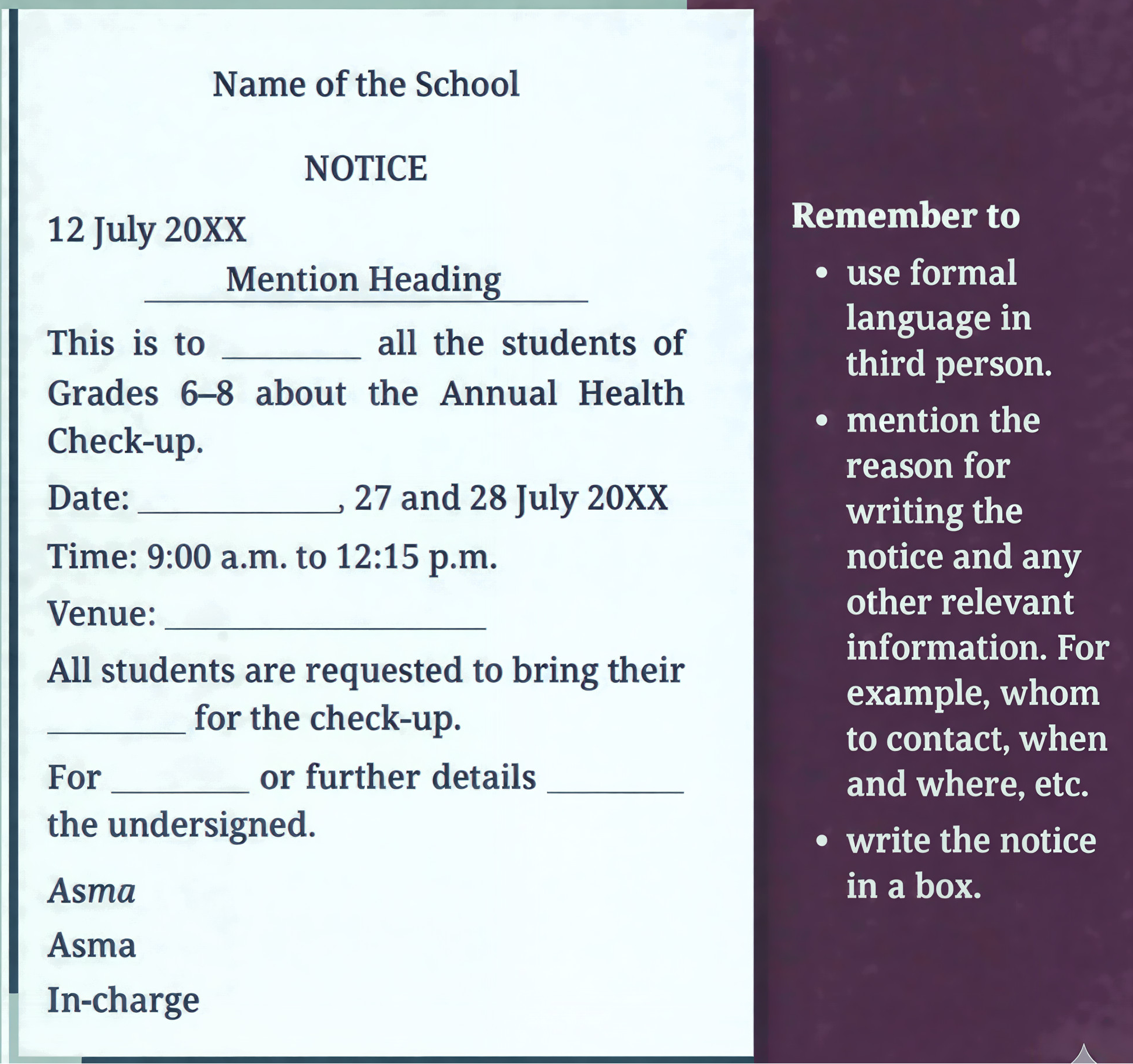
Answer:
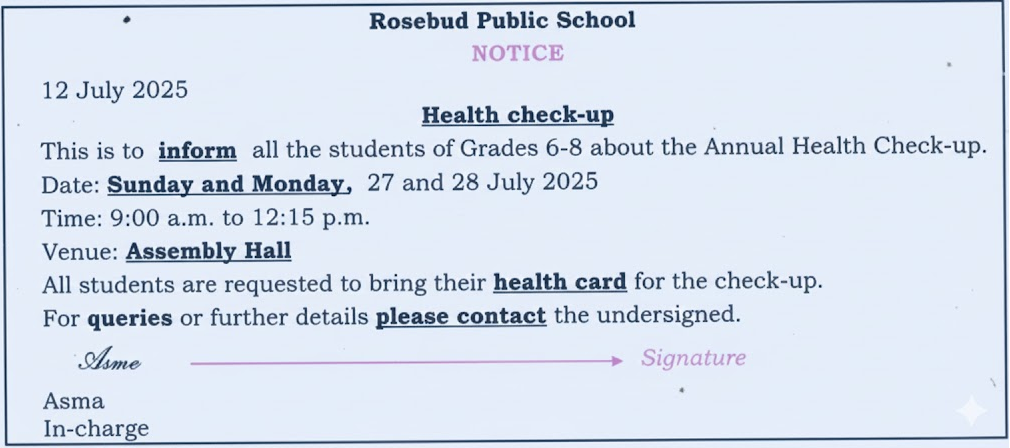
Class 7th English Chapter 4 Day the River Spoke Question Answer – Let us explore (Page 58)
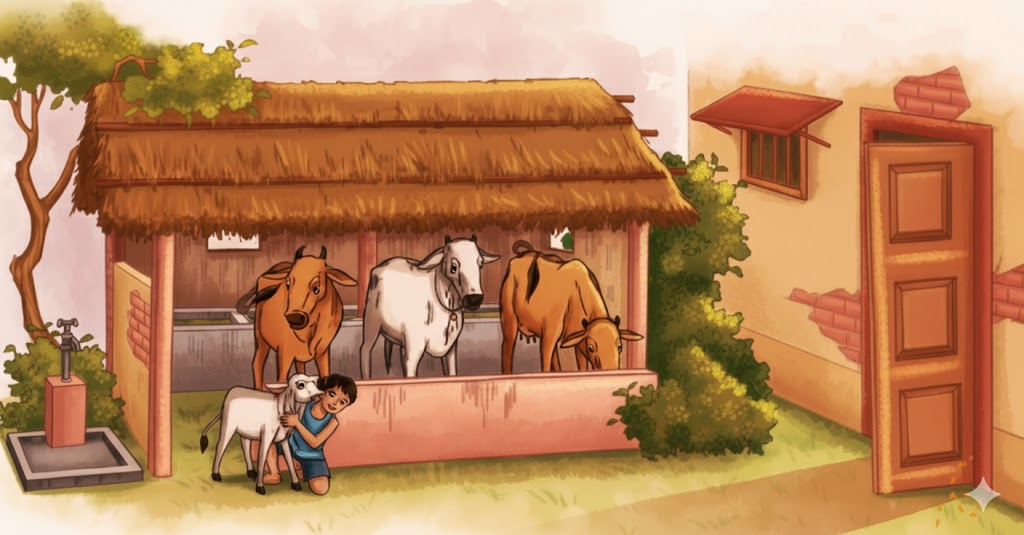
I. The word ‘goshala’ translates to ‘cowshed’ in English. It is a Sanskrit word that is made up of the words ‘go’, which means ‘cow’, and śālā, which means ‘shed’ or ‘hall’. Plan a visit with the teacher to a ‘goshala’ and fid out how the cows are looked after.
II. Ayurveda is the oldest existing medical system in India. Animals received good medicinal care in ancient India. Indian medical treatises like Charaka Samhita, Sushruta Samhita, and Harita Samhita contain references of care of animals. Find out names of different organisations that work for the welfare of animals with the help of the teacher.
III. What is the best way to take care of stray and abandoned animals?
1. Provide food and water for the animal
2. Take them to an animal shelter
3. Adopt them by taking them home
Give reasons for your responses.
Answer: Students should do it by themselves.
Mastering NCERT Class 7 English Chapter 4: Animals, Birds, and Dr. Dolittle
With NCERT Solutions Class 7 English Chapter 4 Animals, Birds, and Dr. Dolittle, you can deepen your understanding of animal communication and literary storytelling. These solutions make it easier to revise key topics and clarify your concepts for exams.
Practicing the chapter-wise NCERT exercises helps you understand how animals express emotions and the importance of empathy. This chapter also develops your reading and critical thinking skills, making it essential for scoring well in English.
Remember to revise the important events and work on all activities for the 2026-27 session. Focusing on these will help you answer all questions confidently and perform your best in the final exam.
FAQs on NCERT Solutions For Class 7 English Chapter 4 Animals, Birds, And Dr. Dolittle - 2026-27 Free PDF Download (Login Required)
1. What are the NCERT Solutions for Class 7 English Chapter 4 Animals, Birds, and Dr. Dolittle?
The NCERT Solutions for Class 7 English Chapter 4 Animals, Birds, and Dr. Dolittle are comprehensive, step-by-step answers to every exercise and question in this chapter, tailored for the CBSE 2026–27 syllabus. These solutions help students understand main ideas, master long and short answers, and include:
- Intext and back exercise answers
- Key definitions and explanations
- Exam-format responses and structuring tips
- Diagram/labeling guidelines if needed for the chapter
2. How can I score full marks using stepwise NCERT Solutions for Class 7 English Chapter 4?
To score full marks, use stepwise NCERT Solutions by following a structured answer format as per the CBSE marking scheme:
- Start with a clear introduction (main idea)
- Break the answer into logical steps or points
- Include relevant keywords from the chapter
- Use clear, grammatically correct sentences
- Add definitions or diagrams if required
- Conclude with a brief summary if answering a long question
3. Which questions from Animals, Birds, and Dr. Dolittle are most likely to appear in the exam?
The most likely exam questions from this chapter cover:
- Main summary and theme-based short answers
- Long answer questions about Dr. Dolittle's character, key animals or events
- Word meanings, definitions, and MCQs
- Reference-to-context and chapter vocabulary
- Intext exercises and important back exercise questions
4. How should I structure long answers in Class 7 English Chapter 4 to match CBSE evaluation?
For better marks, structure long answers as follows:
- Begin with an introduction that mentions the chapter and main idea
- Divide the body into 2-3 short paragraphs with clear points
- Use evidence or examples from the story (Dr. Dolittle, the animals, or birds)
- Conclude by restating the key point or lesson
- Maintain neat handwriting and check for grammar/spelling
5. Is it necessary to include diagrams or definitions in Class 7 English Chapter 4 answers?
While diagrams are usually not required in English Chapter 4, you must include definitions for important words if the question asks. Always:
- Add definitions or meanings if part of the question
- Label diagrams neatly if they occur in exercises
- Follow CBSE guidelines for structure and clarity
6. Where can I download Animals, Birds, and Dr. Dolittle Class 7 English Solutions PDF?
You can download the NCERT Solutions PDF for Animals, Birds, and Dr. Dolittle directly from educational websites offering free CBSE study materials. Look for a prominent PDF download button or section marked "Free PDF download for offline study" on the solutions page.
7. Are NCERT Solutions enough for Class 7 English exam preparation?
NCERT Solutions are usually enough for scoring well in the Class 7 English exam because:
- They cover all textbook exercises and expected questions
- Answers match the CBSE evaluation method
- They help develop concepts, word meanings, and writing skills
- For extra practice, review extra questions, MCQs, and exemplars
8. What are important tips to revise Animals, Birds, and Dr. Dolittle quickly before exams?
To revise this chapter effectively:
- Read the summary and main points
- Practice stepwise NCERT Solutions and extra questions
- Make quick notes on character sketches and important vocabulary
- Attempt MCQs and sample questions based on the chapter
- Use a 1-day or 3-day revision planner for last-minute prep
9. How does using official NCERT Solutions for Animals, Birds, and Dr. Dolittle help boost CBSE scores?
Using official NCERT Solutions helps boost CBSE exam scores by:
- Providing syllabus-accurate, exam-ready answers
- Reducing mistakes through stepwise solutions
- Improving understanding of key chapter concepts
- Aligning responses with CBSE marking pattern and keywords
10. Do examiners award partial marks for correct steps even if the final answer is incorrect in CBSE English?
Yes, in CBSE English exams, students can receive partial marks for correct steps or logical explanation even if the conclusion/final answer is slightly off, provided they follow the required structure and attempt all steps as per the marking scheme.
11. Can I refer to textbook page numbers in my answers or during revision?
During exam revision, it's helpful to note textbook page numbers for quick reference to definitions, examples, and key passages, though you should not mention them in your actual answer sheets.
