









How to Use Addition Flashcards for Fact Fluency Practice
One of the most fundamental ideas in mathematics is addition, which serves as the foundation for more complex ideas. As a result, using flashcards to practice addition problems can help students improve their conceptual knowledge of the subject.
Mathematics problems are prevalent in preschool, and the use of flashcards is an interesting tool to teach children addition in a fun manner and like a game that would make them appreciate the subject rather than dislike it.
What are Addition Flashcards?
An index card or flashcard is a card with information printed on both sides to help memorise. Each flashcard features a question and an answer on opposite sides. The addition flashcards are a fun method for children to learn the addition mathematical process.
Use of Flashcards and Addition Flashcards for Kids
A wonderful technique to memorise your arithmetic concepts is by using flashcards. They may be used in spare five minutes each day until your youngster knows their facts by memory. They can be brought on a trip, used in a game, or carried along. For each set of facts, there are two sets of cards: the first contains only the facts, while the second includes both the facts and the solutions. The two-sided printing of the flashcards with the answers' responses and factual information on opposite sides makes this possible.
Some images of addition flashcards for kids are given below:
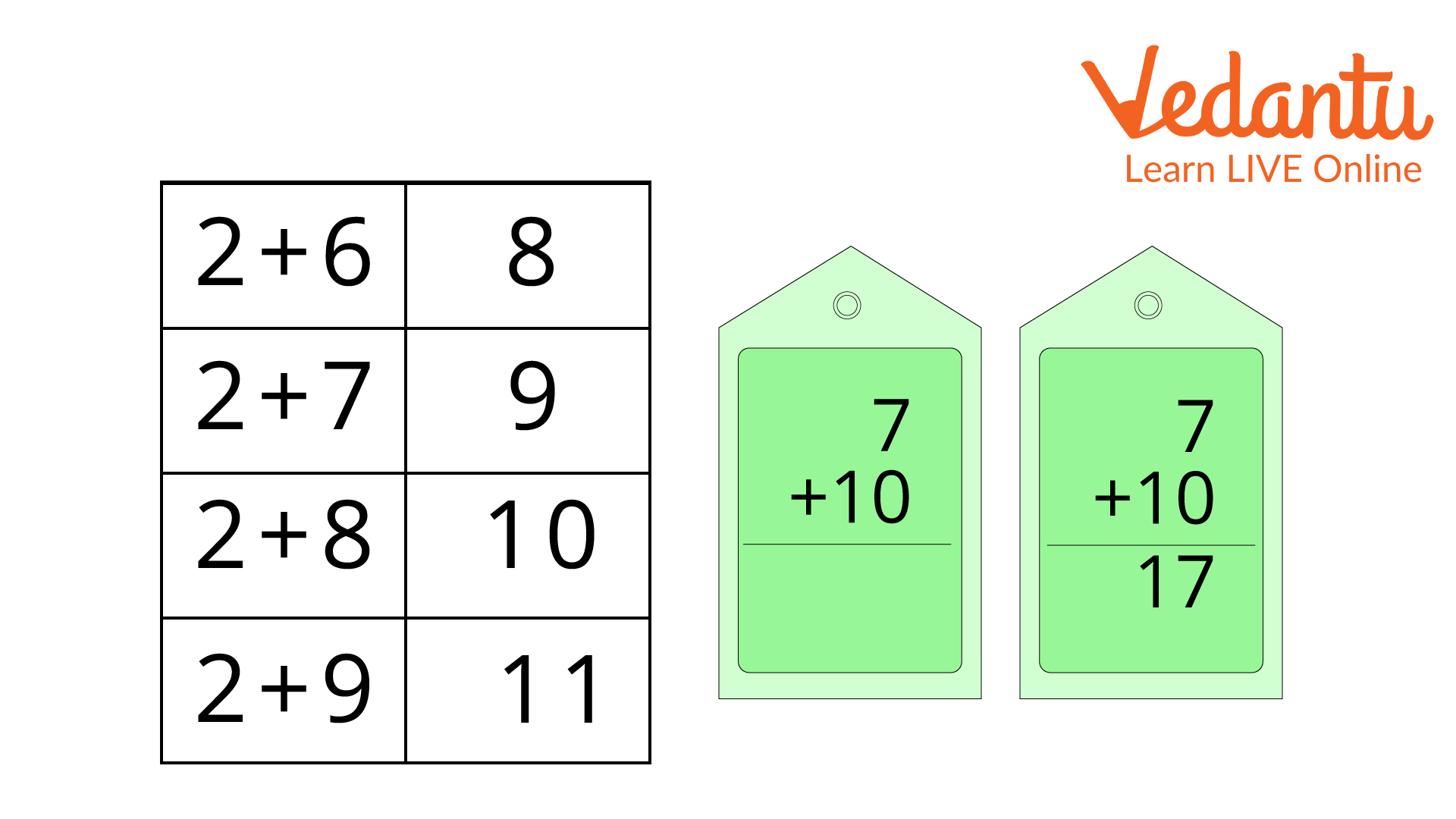
Addition Flashcard
Addition Facts of 10 Flashcards
These flashcards on addition facts to 10 are perfect for teaching younger children the numbers that add up to 10. Children are more likely to absorb knowledge and learn from it when they work together and test one another in a group setting while learning.
Children learn which pairs of numbers add up to 10 and begin to connect these numbers by using these addition facts to 10 flashcards. These facts are crucial to master so that children can automatically think "7 + 3 = 10," making it the perfect activity for younger kids as it begins to develop their grasp of mental math. Making learning this information enjoyable is an excellent way to interest kids in the subject and help them comprehend it.
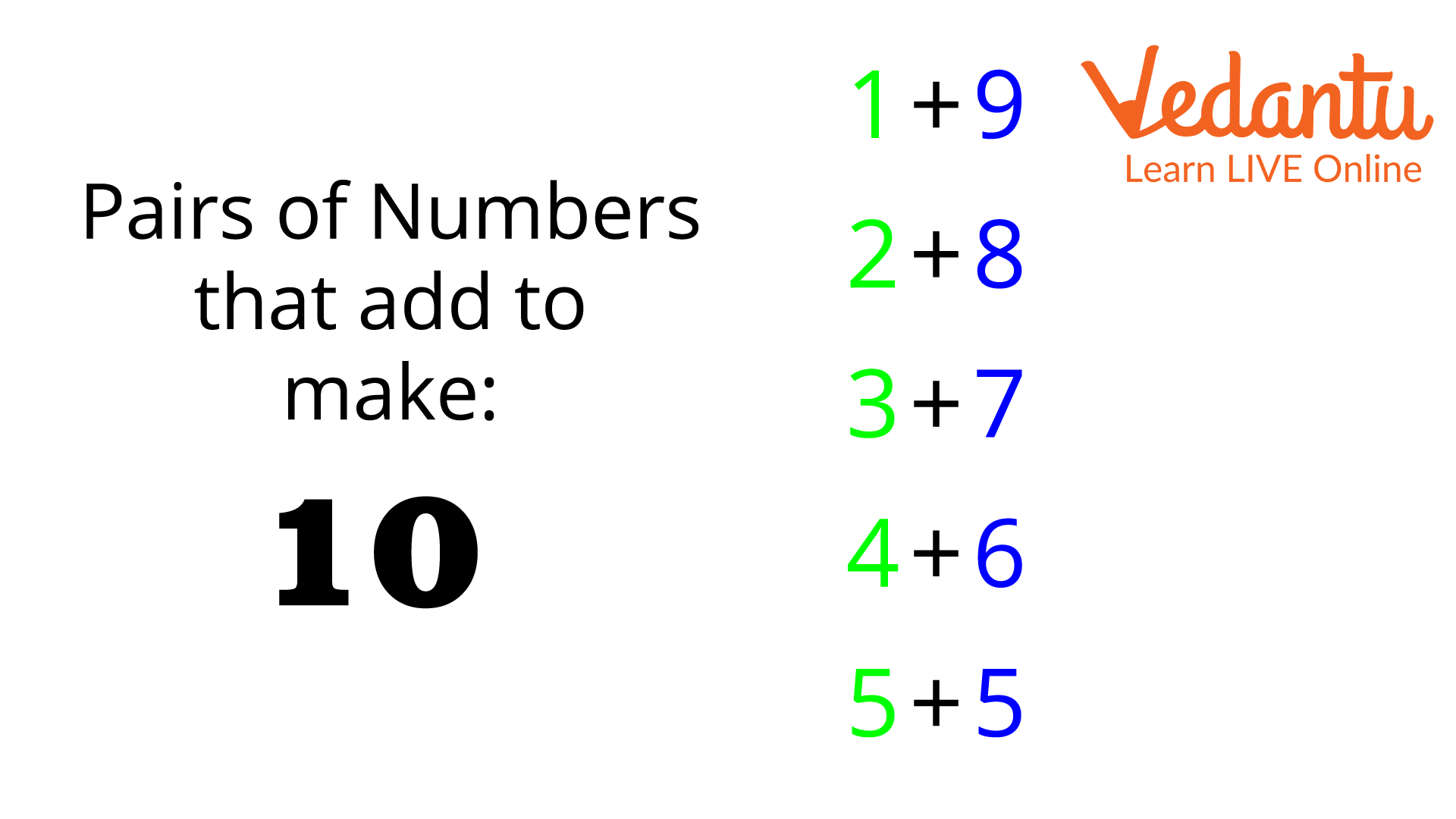
Pairs of Numbers That Add to Make 10
Right Brain Addition Flashcards
Flashcards are simply flashcards, but right-brain flashcards have a picture for each number and a tale to go with each math concept. When one relates something with an image or a story, it makes it easier to recall that thing and improves memory. The brain's right hemisphere is intended to be trained and activated by the right brain training materials.
The creative brain is another name for the right brain is also known as the creative brain. Simple right brain training materials can help this side of the brain activate and increase overall brain function in children and adults.
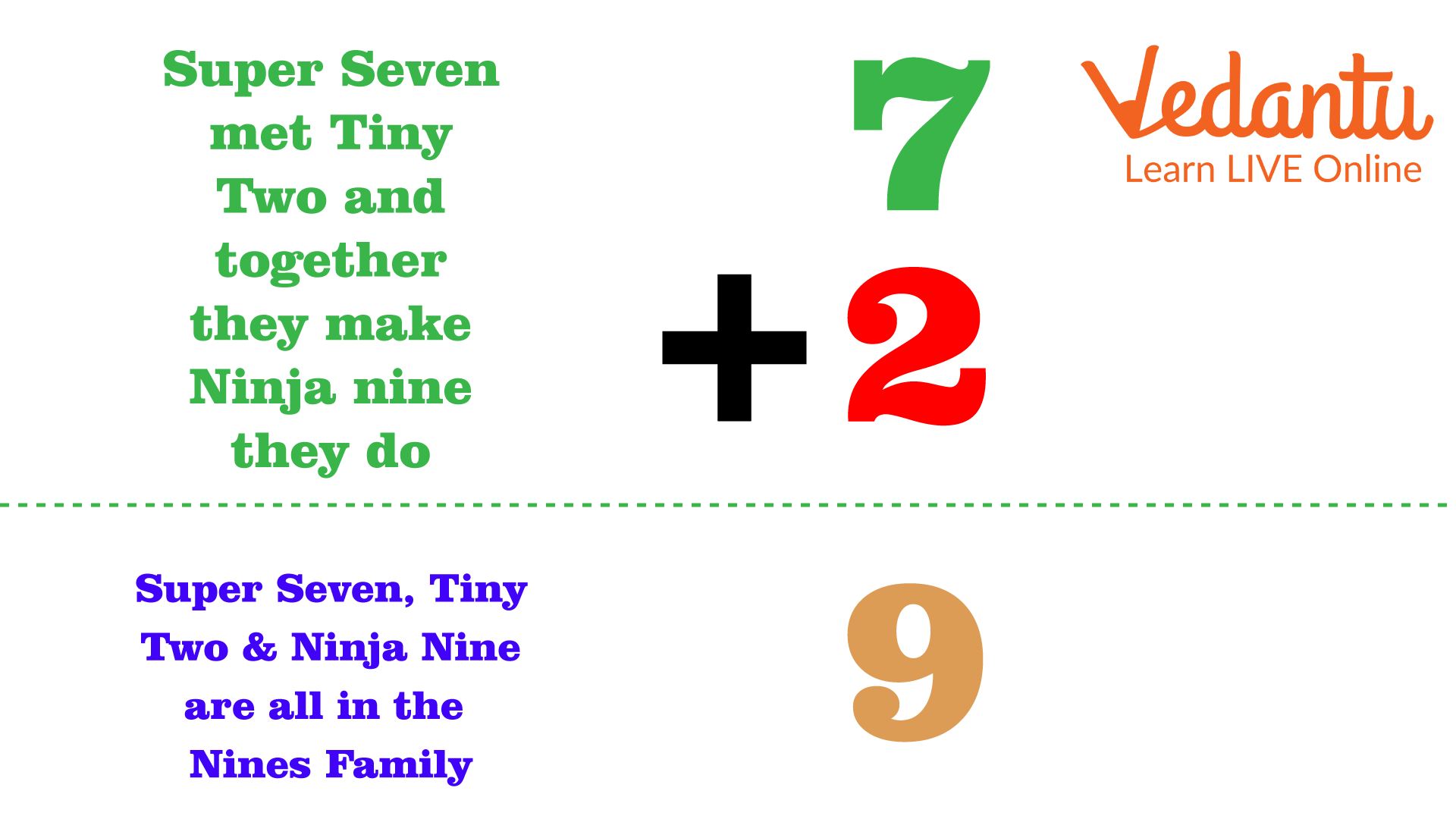
Right Brain Flashcards Addition
Addition Flashcard with Pictures
Here are some pictures of additional flashcards.
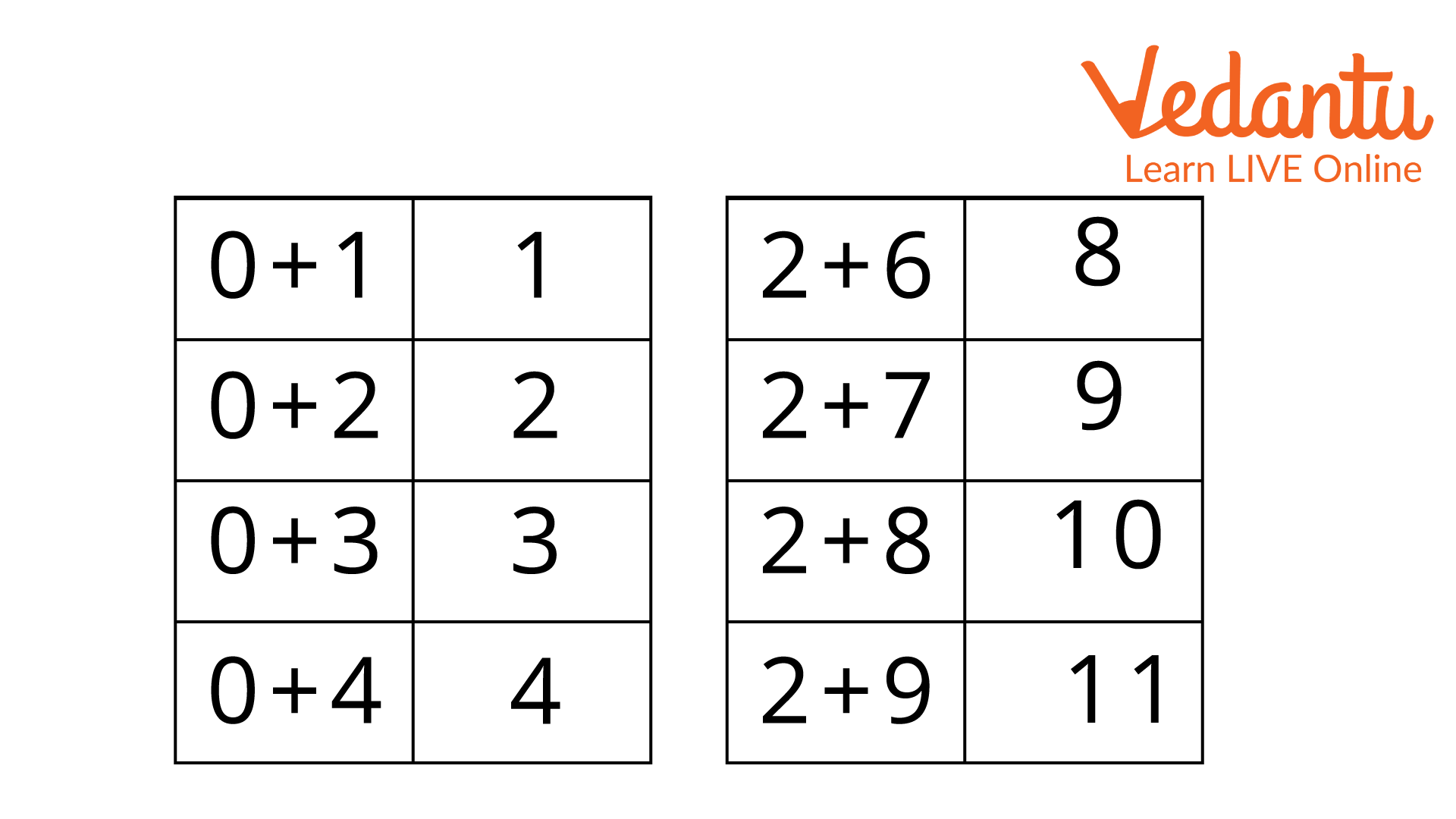
Addition Flashcards
Examples:
Example 1: Emma had 6 shells, and Peter had 4 shells. How many shells did they have in total?
Solution:
Number of shells Emma had = 6
Number of shells Peter had = 4
Total number of shells = 6+4 = 10
Example 2: Rama, Katie, and Raj had 4,6,10 apples, respectively. What is the total number of apples?
Solution:
Number of apples Rama had = 4
Number of apples Katie had = 6
Number of apples Raj had = 10
Total number of apples = 4+6+10 = 20
Example 3: On a library shelf, there are 4 books. The librarian adds 3 more books to the shelf. How many books are there on the shelf?
Solution:
Number of books on shelf = 4
Number of books added on shelf = 3
Total number of books on shelf = 4+3 = 7
Conclusion
Both the purpose of addition flashcards and addition example studies are covered. Children are taught the fundamentals of addition using flashcards with fun activities. It gets boring and sometimes difficult for children to learn basic mathematical concepts like addition, subtraction, multiplication, etc.
So flashcards are introduced, and it helps the students learn the concepts quickly and in a fun way. Because the children enjoy learning, the concept becomes easier.
FAQs on Addition Flashcards for Fast Fact Mastery
1. What are addition flashcards?
Addition flashcards are learning cards that display simple addition problems on one side and the correct sum on the other side. They are used to practise basic addition facts quickly and repeatedly.
- Front side: Example – 7 + 5
- Back side: 12
- Help build mental maths skills and number fluency
- Commonly used in early years and primary maths
2. How do you use addition flashcards effectively?
To use addition flashcards effectively, show the problem, answer within a few seconds, and check the correct sum immediately. Follow these steps:
- Step 1: Look at the addition problem (e.g., 8 + 6).
- Step 2: Solve mentally and say the answer (14).
- Step 3: Flip the card to confirm the correct answer.
- Step 4: Repeat regularly for spaced practice.
3. Why are addition flashcards important for learning maths?
Addition flashcards are important because they help students memorise basic addition facts and improve calculation speed. Quick recall of sums like 4 + 9 = 13 supports:
- Faster problem-solving in arithmetic
- Confidence in mental maths
- Better understanding of subtraction, multiplication, and division
4. What is an example of an addition flashcard problem?
An example of an addition flashcard problem is 9 + 7 = 16. Here is how it works:
- Problem shown: 9 + 7
- Add the numbers: 9 + 7 = 16
- Check the back of the card for the sum: 16
5. What addition facts should children memorise?
Children should memorise addition facts up to 20, especially combinations that total 10 and 20. Key sets include:
- Facts to 10: 3 + 7 = 10, 6 + 4 = 10
- Doubles: 5 + 5 = 10, 8 + 8 = 16
- Near doubles: 6 + 7 = 13
- Facts to 20: 12 + 8 = 20
6. How do addition flashcards help with mental maths?
Addition flashcards improve mental maths by training the brain to recall addition sums instantly without counting. Regular practice:
- Reduces reliance on fingers or written methods
- Builds automatic recall of facts like 7 + 8 = 15
- Strengthens number sense and estimation skills
7. What is the commutative property of addition in flashcards?
The commutative property of addition states that a + b = b + a. This means the order of numbers does not change the sum.
- Example: 4 + 9 = 13
- Reversed: 9 + 4 = 13
8. At what age should children start using addition flashcards?
Children typically start using addition flashcards around ages 5 to 7, when they begin learning basic addition. At this stage, learners:
- Understand numbers up to 10 or 20
- Can combine small groups of objects
- Are developing early arithmetic skills
9. How can I make addition flashcards at home?
You can make addition flashcards at home using paper or index cards by writing a problem on one side and the sum on the other. Follow these steps:
- Step 1: Write an addition question (e.g., 6 + 8).
- Step 2: Write the answer 14 on the back.
- Step 3: Create sets (to 10, to 20, doubles).
- Step 4: Shuffle and practise daily.
10. What are common mistakes when practising addition flashcards?
A common mistake when practising addition flashcards is focusing on speed without ensuring accuracy. Other mistakes include:
- Not reviewing incorrect answers
- Practising too many new facts at once
- Skipping foundational sums like facts to 10
