






How the Wealthiest Women Across the Globe Built Their Fortunes
The richest women in the world are influential business leaders, entrepreneurs, investors, and heirs who have built or inherited massive fortunes. Their wealth comes from diverse sectors such as retail, technology, cosmetics, pharmaceuticals, mining, and food industries. Studying the richest women in the world is important for General Knowledge because it highlights global economic trends, women entrepreneurship, leadership roles, and wealth distribution patterns. This topic is frequently asked in competitive exams, interviews, and quizzes related to current affairs and business awareness.
Who Are the Richest Women in the World?
The richest women in the world are ranked based on their net worth, which is calculated from their assets such as company shares, investments, properties, and other business holdings. Most rankings are published annually by financial magazines like Forbes and Bloomberg. The list changes every year depending on stock market performance, business growth, and global economic conditions.
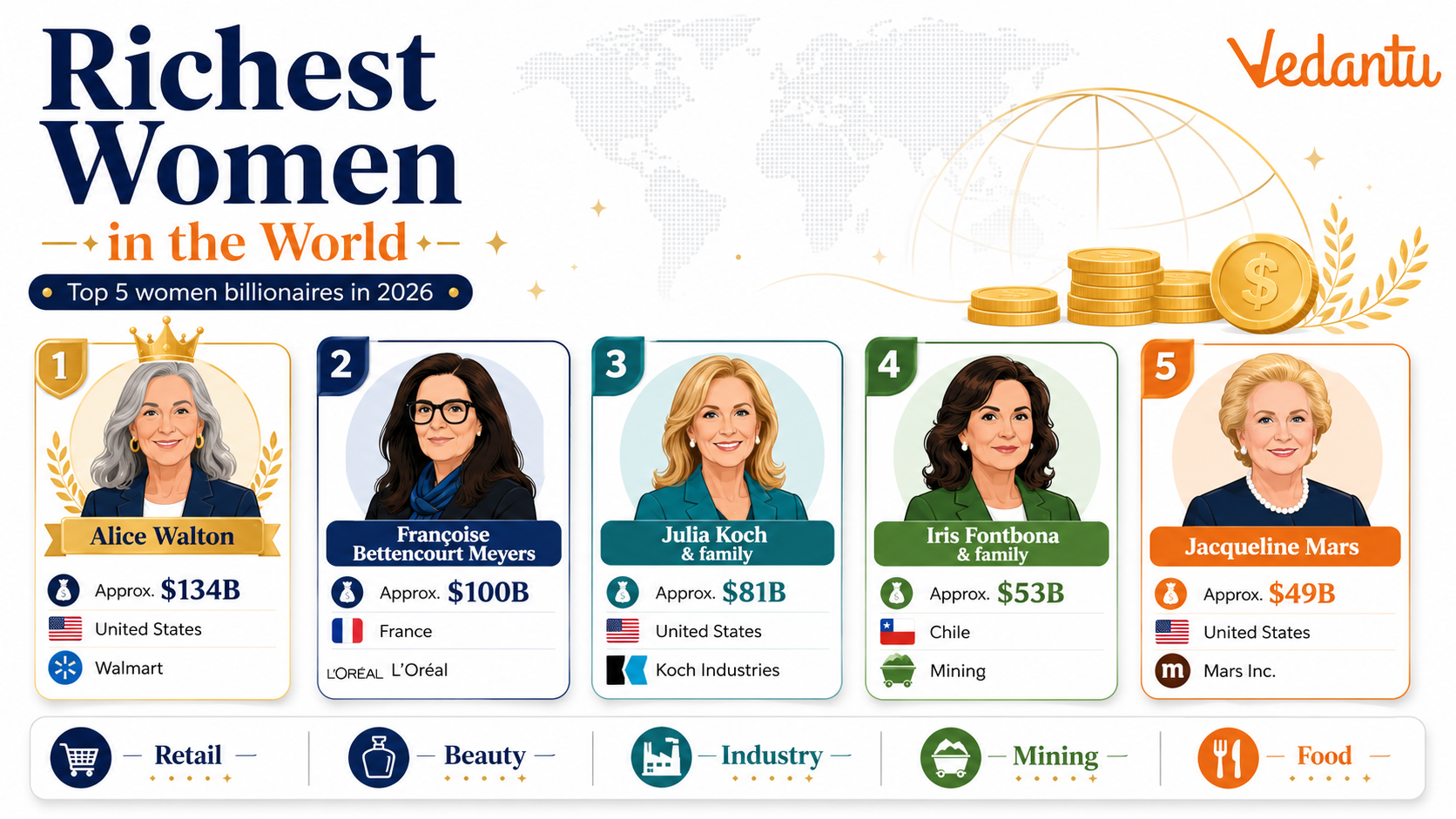
Top Richest Women in the World 2026
| Rank | Name | Source of Wealth |
|---|---|---|
| 1 | Françoise Bettencourt Meyers | L Oreal Cosmetics |
| 2 | Alice Walton | Walmart Retail |
| 3 | Julia Koch | Koch Industries |
| 4 | Jacqueline Mars | Mars Inc Food Company |
| 5 | MacKenzie Scott | Amazon and Investments |
These rankings are approximate and may vary depending on market conditions. Most of these women inherited stakes in family businesses, while some expanded their wealth through strategic investments and leadership roles.
Brief Profiles of the Richest Women
Françoise Bettencourt Meyers
She is the granddaughter of the founder of L Oreal. She and her family own a major share in the cosmetics giant. She is also known for her philanthropic activities and contributions to education and culture in France.
Alice Walton
Alice Walton is the daughter of Walmart founder Sam Walton. She focuses on art curation and philanthropy rather than direct involvement in retail operations.
Julia Koch
Julia Koch inherited her stake in Koch Industries after the death of her husband, David Koch. The company operates in energy, chemicals, and manufacturing sectors.
Jacqueline Mars
Jacqueline Mars owns a significant share in Mars Inc, a global food and confectionery company known for brands like M and M and Snickers.
MacKenzie Scott
MacKenzie Scott gained wealth through her stake in Amazon. She is widely recognized for her large scale philanthropic donations supporting education, equality, and public health.
Sources of Wealth
The richest women in the world generate wealth from different sectors. The major sources include:
- Retail chains and supermarkets
- Cosmetics and beauty industries
- Energy and manufacturing companies
- Food and confectionery businesses
- Technology and e commerce platforms
Inherited Wealth vs Self Made Wealth
Many of the richest women inherited their wealth from family businesses. However, several women globally have built their fortunes independently through entrepreneurship and innovation. Understanding this difference is important in exams and discussions about gender equality and economic empowerment.
- Inherited Wealth: Wealth passed down from family businesses or assets.
- Self Made Wealth: Wealth created through personal entrepreneurship, investments, or professional achievements.
Importance in Competitive Exams
Questions about the richest women in the world are commonly asked in:
- Banking and SSC examinations
- UPSC and State PCS interviews
- MBA entrance exams
- General awareness quizzes
Candidates should remember the top names, their countries, and their primary sources of wealth for quick revision.
Key Takeaways
- Françoise Bettencourt Meyers frequently ranks as the richest woman in the world.
- Most wealth comes from retail, cosmetics, food, and industrial sectors.
- Many top positions are held by heirs of global business empires.
- Philanthropy is a major focus for several of these women.
Conclusion
The richest women in the world represent economic influence, leadership, and financial power across industries. Their wealth reflects global business trends and the role of women in shaping modern economies. For students and competitive exam aspirants, keeping updated with the latest rankings and understanding their sources of wealth is essential for strong general awareness preparation.
FAQs on Richest Women in the World: Leading Female Billionaires and Their Success Stories
1. Who is the richest woman in the world?
The richest woman in the world is currently Françoise Bettencourt Meyers, heir to the L’Oréal cosmetics empire.
Key facts about her wealth:
• She is the granddaughter of Eugène Schueller, founder of L’Oréal.
• Her net worth often exceeds $90 billion (varies by stock market value).
• She is among the top global billionaires listed by Forbes and Bloomberg Billionaires Index.
She frequently ranks high in searches like "Who is the wealthiest woman?" and "Top female billionaires in the world."
2. How do the richest women in the world earn their wealth?
Most of the richest women in the world earn their wealth through inheritance, business leadership, or entrepreneurship.
Main sources of wealth include:
• Inheritance from family-owned corporations (e.g., L’Oréal, Walmart).
• Self-made businesses in cosmetics, technology, or retail.
• Investments and stock ownership in multinational companies.
Search queries like "self-made vs inherited billionaires" and "female business tycoons" often relate to this topic.
3. Who are the top 5 richest women in the world?
The top 5 richest women globally usually include billionaires from retail, cosmetics, and luxury industries.
Common names in recent rankings:
• Françoise Bettencourt Meyers – L’Oréal
• Alice Walton – Walmart
• Julia Koch – Koch Industries
• Jacqueline Mars – Mars Inc.
• Miriam Adelson – Casino and business investments
These rankings change annually based on global stock markets and company valuations.
4. Is the richest woman in the world self-made?
The richest woman, Françoise Bettencourt Meyers, is not fully self-made as she inherited wealth from her family business.
However:
• She actively manages her family’s stake in L’Oréal.
• Some wealthy women like Rihanna and Oprah Winfrey are considered self-made billionaires.
Many users search for "self-made richest woman" or "female entrepreneurs vs heirs" in this context.
5. Which country has the most richest women billionaires?
The United States has the highest number of richest women billionaires.
Reasons include:
• Large multinational corporations like Walmart and Mars Inc.
• Strong stock market and private enterprise growth
• Presence of luxury, retail, and tech industries
Countries like France, Germany, and China also have prominent female billionaires.
6. What industries dominate the richest women’s wealth rankings?
The wealth of the richest women is mainly concentrated in retail, cosmetics, food, and luxury goods industries.
Top industries include:
• Cosmetics and beauty – L’Oréal
• Retail – Walmart
• Food and confectionery – Mars Inc.
• Luxury fashion and investments
Search terms like "female billionaires by industry" and "top sectors for women billionaires" are commonly related.
7. How is net worth calculated for the richest women in the world?
The net worth of the richest women is calculated based on assets minus liabilities.
It includes:
• Stock holdings in public companies
• Private business ownership
• Real estate and investments
• Subtraction of debts and liabilities
Financial rankings by Forbes and Bloomberg update this data regularly due to stock market fluctuations.
8. Who was the first woman to become a billionaire?
The first recognized female billionaire was Yoshiaki Tsutsumi’s sister, Taeko Tsutsumi, in early billionaire rankings, though Madame C.J. Walker is often cited as the first self-made female millionaire.
Important distinctions:
• Self-made wealth vs inherited wealth
• Billionaire status achieved through corporate ownership
This topic often appears in searches like "first female billionaire in history."
9. How do richest women influence the global economy?
The richest women influence the global economy through investments, philanthropy, and corporate decision-making.
Their impact includes:
• Driving growth in retail and beauty industries
• Funding charitable foundations and social causes
• Influencing global stock markets through large shareholdings
They are often discussed in topics like "women in business leadership" and "economic impact of female billionaires."
10. Why are many richest women heirs to large fortunes?
Many richest women are heirs because large family-owned corporations pass ownership through generations.
Common reasons:
• Family-controlled businesses like Walmart and L’Oréal
• Equal inheritance rights in modern corporate families
• Long-term stock value appreciation
This explains why searches such as "why are most female billionaires heirs" and "inherited wealth vs entrepreneurship" are frequently asked in GK and competitive exams.
