






How Concussion Replacement Works in International Cricket Matches
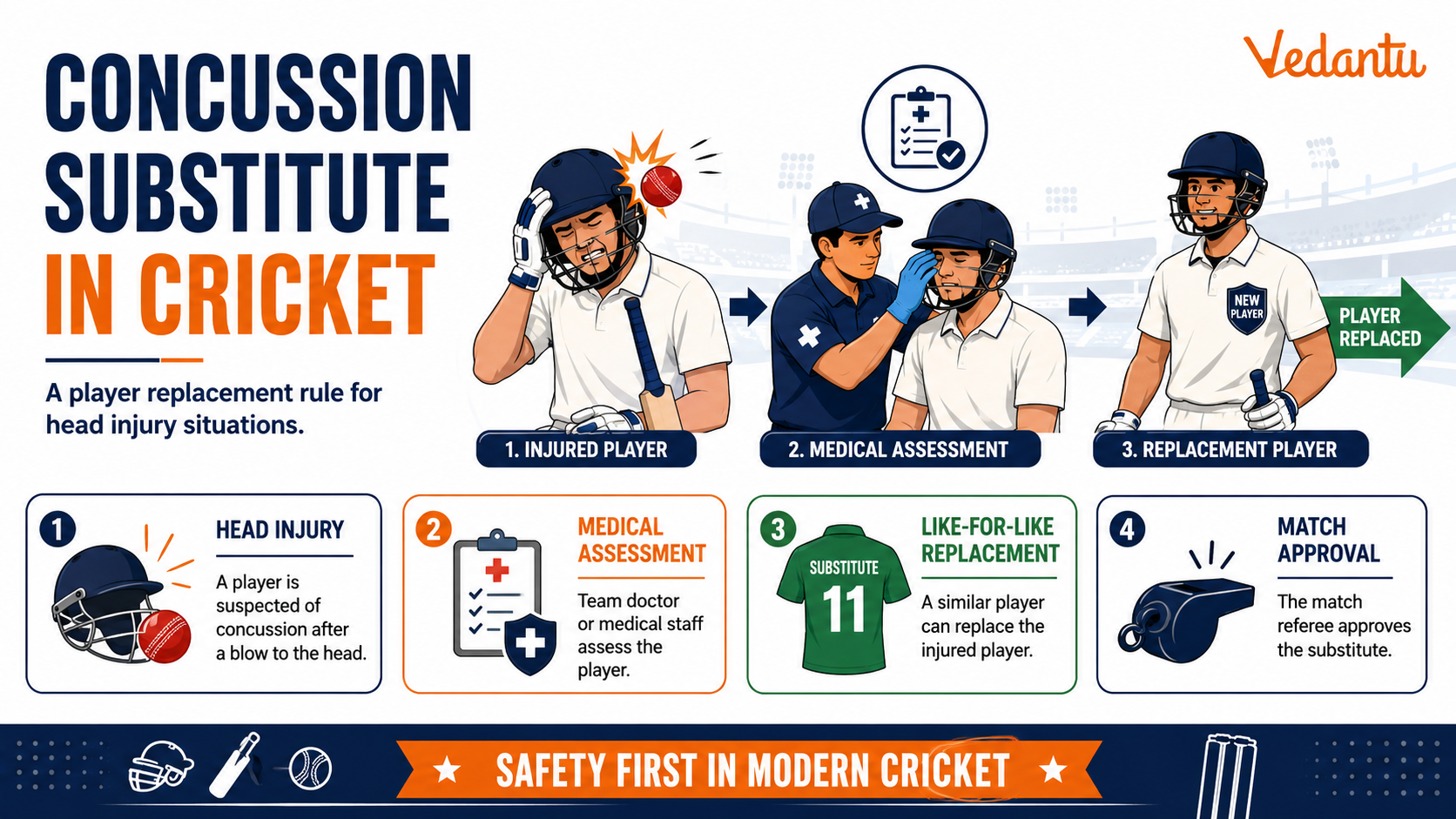
A Concussion Substitute in Cricket is a player who replaces another player suffering from a concussion during a match. This rule was introduced to prioritize player safety and ensure fair competition. Concussions are serious head injuries that can occur due to impact from the ball, collision with another player, or a fall on the field. The International Cricket Council - ICC officially approved the concussion substitute rule in 2019. It allows a like-for-like replacement so that the injured player does not continue playing at risk, while the balance of the team remains unaffected.
What is a Concussion Substitute?
A concussion substitute is a fully participating replacement player who takes the place of a cricketer diagnosed with concussion during a match. Unlike traditional substitutes who can only field, a concussion substitute can bat, bowl, and field just like the replaced player.
- Applicable in international cricket and many domestic tournaments
- Replacement must be approved by the match referee
- Must be a like-for-like replacement
- Allowed in Test matches, ODIs, and T20 Internationals
Why Was the Rule Introduced?
Cricket involves high-speed deliveries that can exceed 140 km per hour. A direct blow to the head can cause serious injury. Earlier, teams had to continue with 10 players if someone was injured. This created an unfair disadvantage and pressured injured players to continue playing.
The rule was introduced to protect players' health and maintain competitive balance in matches.
Objectives of the Rule
- Ensure player safety
- Encourage proper medical assessment
- Prevent teams from suffering due to unavoidable injuries
- Maintain fairness in competitive cricket
ICC Guidelines for Concussion Substitute
The ICC has laid down specific guidelines to regulate the use of concussion substitutes. These guidelines ensure that teams do not misuse the rule for tactical advantage.
Key Conditions
- The injury must be confirmed as a concussion by the team doctor
- The replacement must be approved by the match referee
- The substitute must be like-for-like in role
- The replacement becomes a permanent part of the playing XI
Comparison - Regular Substitute vs Concussion Substitute
| Feature | Regular Substitute | Concussion Substitute |
|---|---|---|
| Participation | Fielding only | Bat, bowl, and field |
| Reason for Replacement | Minor injury or temporary absence | Confirmed concussion |
| Approval Required | Umpire | Match referee |
This comparison highlights how the concussion substitute rule is a significant advancement in cricket laws, ensuring both safety and fairness.
First Use of Concussion Substitute
The first official use of a concussion substitute in international cricket took place during the 2019 Ashes Test series between England and Australia. This marked a historic moment in cricket law implementation.
Impact on Modern Cricket
The introduction of concussion substitutes has positively impacted the game. Players now report symptoms more openly, knowing they can be replaced without disadvantaging their team. Medical protocols have also become stricter.
- Improved player welfare standards
- Reduced risk of long-term brain injury
- Greater awareness about sports-related concussions
- Enhanced credibility of cricket governance
Important Points for Competitive Exams
The topic of concussion substitute in cricket is frequently asked in general knowledge and sports awareness sections of competitive examinations.
- Introduced by ICC in 2019
- Applies to international formats - Test, ODI, and T20I
- Replacement must be like-for-like
- Approved by match referee
- Allows full participation in the match
Conclusion
The Concussion Substitute in Cricket is a progressive rule aimed at safeguarding players while maintaining fairness in competition. Introduced by the ICC in 2019, it allows a like-for-like replacement for a player diagnosed with concussion. This rule reflects the growing importance of player health in modern sports and ensures that no team suffers due to genuine medical emergencies. Understanding this concept is important for sports enthusiasts, students, and competitive exam aspirants alike.
FAQs on Concussion Substitute in Cricket Rules Explained Clearly
1. What is a Concussion Substitute in cricket?
A Concussion Substitute in cricket is a player who replaces another player suffering from a concussion (head injury) during a match under ICC rules.
• Introduced by the International Cricket Council (ICC) in 2019
• Allows a like-for-like replacement in international cricket
• The substitute can bat, bowl, and field
• Applicable in all formats: Test, ODI, and T20I
This rule enhances player safety and is often searched under terms like "What is concussion substitute?", "ICC concussion rule", and "head injury replacement in cricket".
2. When was the Concussion Substitute rule introduced in cricket?
The Concussion Substitute rule was officially introduced by the ICC in July 2019.
• First implemented during the 2019 Ashes series
• Aimed to reduce risks of head injuries
• Part of updated ICC Playing Conditions
This rule is frequently associated with searches like "When did ICC allow concussion substitute?" and "History of concussion rule in cricket".
3. What are the conditions for allowing a Concussion Substitute?
A Concussion Substitute is allowed only when a player suffers a confirmed head or neck injury during the match.
• The team must submit a request to the match referee
• The replacement must be a like-for-like substitute
• The injury must be verified by the team doctor
• Approval is mandatory before substitution
Common queries include "Rules for concussion substitute in cricket" and "Who approves concussion replacement?".
4. What does ‘like-for-like replacement’ mean in Concussion Substitute?
A like-for-like replacement means the substitute must have similar playing skills as the injured player.
• A batsman is replaced by a batsman
• A bowler by a bowler
• An all-rounder by an all-rounder
• Decision taken by the match referee
This ensures fairness and prevents teams from gaining an unfair advantage, often searched as "What is like-for-like rule in cricket?".
5. Can a Concussion Substitute bat and bowl in cricket?
Yes, a Concussion Substitute can fully participate by batting, bowling, and fielding after approval.
• Has the same rights as a regular player
• Can score runs and take wickets
• Performance counts in official records
This is different from a normal substitute fielder and is commonly searched under "Can concussion substitute bat?" and "ICC substitute rules explained".
6. How is a Concussion Substitute different from a normal substitute fielder?
A Concussion Substitute can bat, bowl, and field, while a normal substitute fielder can only field.
• Normal substitute cannot bat or bowl
• Concussion substitute requires medical approval
• Introduced specifically for head injury safety
This distinction is important for exams and is often searched as "Difference between substitute and concussion substitute in cricket".
7. Who was the first Concussion Substitute in international cricket?
The first official Concussion Substitute in international cricket was Marnus Labuschagne for Australia.
• Occurred during the 2019 Ashes Test series
• Replaced Steve Smith after a head injury
• Marked the first use of the ICC’s new rule
This event is widely searched under "First concussion substitute in cricket history".
8. Why was the Concussion Substitute rule introduced?
The Concussion Substitute rule was introduced to prioritize player safety and medical protection.
• Reduces risk of serious brain injuries
• Prevents injured players from continuing unsafely
• Aligns cricket with global sports safety standards
It is commonly linked to searches like "Why did ICC introduce concussion rule?" and "Importance of concussion policy in cricket".
9. Does the Concussion Substitute rule apply in domestic cricket?
Yes, many domestic cricket boards have adopted the Concussion Substitute rule following ICC guidelines.
• Used in major tournaments like the IPL and other leagues
• Subject to respective cricket board regulations
• Based on ICC playing conditions
Frequently searched as "Is concussion substitute allowed in IPL?" and "Domestic cricket concussion rules".
10. Can a team refuse a Concussion Substitute request?
A team cannot directly refuse, but the match referee has the final authority to approve or reject a Concussion Substitute.
• Medical evidence must be provided
• Must meet like-for-like criteria
• Decision is final and binding
This process ensures fairness and transparency, often searched under "Who decides concussion substitute in cricket?" and "ICC match referee powers".
