






District-wise Population of Bihar According to 2011 Census Data
Bihar is one of the most populous states in India. According to the Census 2011, Bihar witnessed significant demographic changes in terms of total population, growth rate, literacy, sex ratio, and population density. Understanding the population statistics of Bihar is important for students preparing for competitive exams such as UPSC, SSC, Banking, State PCS, Railways, and other government exams. This article presents complete and structured information about Bihar Population as per Census 2011 in an easy-to-understand format.
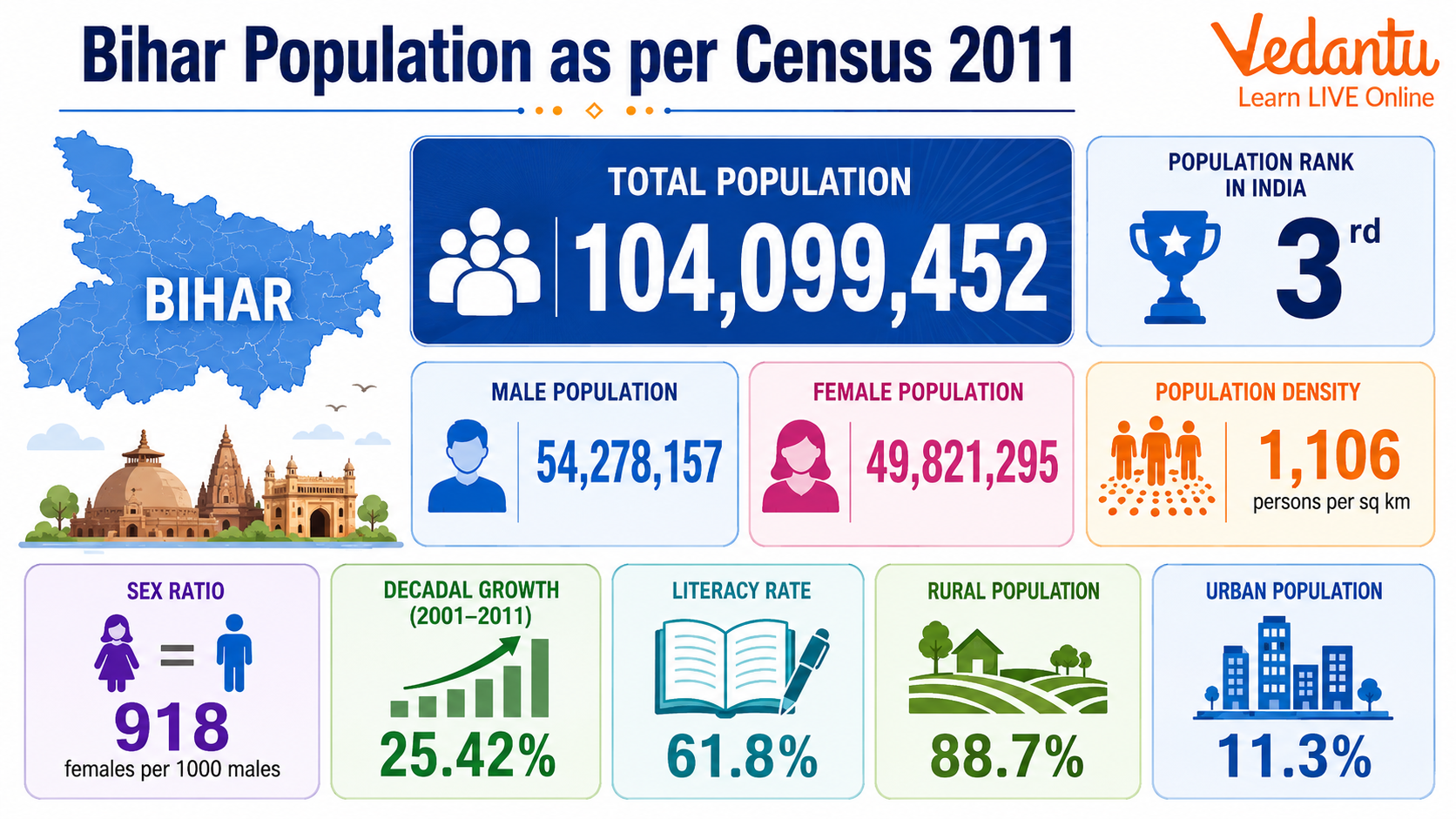
Overview of Bihar Population Census 2011
The Census of India 2011 is the 15th national census conducted in India and the 7th after independence. Bihar emerged as the third most populous state in India after Uttar Pradesh and Maharashtra. The census data highlights rapid population growth, high population density, and improving literacy trends in the state.
Bihar Population Highlights - Census 2011
| Parameter | Data (Census 2011) | Remarks |
|---|---|---|
| Total Population | 10,40,99,452 | 3rd Most Populous State in India |
| Male Population | 5,42,78,157 | Approx 52.1 percent |
| Female Population | 4,98,21,295 | Approx 47.9 percent |
| Population Growth Rate (2001-2011) | 25.42 percent | Higher than National Average |
| Population Density | 1,106 persons per sq km | One of the highest in India |
| Sex Ratio | 918 females per 1000 males | Below National Average |
| Literacy Rate | 61.80 percent | Improved from 47 percent in 2001 |
The above table provides a quick summary of Bihar’s demographic structure as recorded in the 2011 Census. These figures are frequently asked in competitive examinations.
District-wise Population Insight
Bihar consists of 38 districts. Population distribution varies significantly across districts.
Most Populous District
- Patna is the most populous district of Bihar.
- It serves as the state capital and administrative hub.
Least Populous District
- Sheohar is the least populous district of Bihar.
- It has a relatively small geographical and demographic size.
Urban and Rural Population
Bihar is predominantly a rural state with a large percentage of its population living in villages.
- Rural Population - Approximately 88.7 percent
- Urban Population - Approximately 11.3 percent
- Urbanization rate is lower than the national average.
The high rural population influences the state’s economy, employment pattern, and development indicators.
Literacy Rate in Bihar - Census 2011
Literacy is a key indicator of social development. Bihar showed improvement in literacy between 2001 and 2011.
- Overall Literacy Rate - 61.80 percent
- Male Literacy Rate - 71.20 percent
- Female Literacy Rate - 51.50 percent
Although literacy improved significantly, gender disparity in education remained noticeable in 2011.
Sex Ratio and Child Sex Ratio
Sex ratio represents the number of females per 1000 males in the population. It reflects gender balance in society.
- Overall Sex Ratio - 918 females per 1000 males
- Child Sex Ratio (0-6 years) - 935 females per 1000 males
The sex ratio of Bihar was below the national average in 2011, indicating the need for gender-focused welfare policies.
Population Growth Rate (2001-2011)
Bihar recorded a population growth rate of 25.42 percent during the decade 2001 to 2011. This growth rate was higher than the national average of 17.64 percent.
High growth rate impacts infrastructure, employment, healthcare, education, and resource distribution in the state.
Why Bihar Population Data is Important for Exams
- Frequently asked in state-level competitive exams.
- Important for Indian Geography and Polity sections.
- Helps in understanding demographic trends and development indicators.
- Useful for essay and interview preparation.
Key Takeaways
- Bihar is the 3rd most populous state of India as per Census 2011.
- Total population exceeded 10.4 crore.
- Population density is among the highest in India.
- Literacy improved but gender gap remained significant.
- Majority of population resides in rural areas.
Bihar Population as per Census 2011 provides crucial insight into the demographic structure of the state. These statistics not only help in academic preparation but also enhance understanding of socio-economic challenges and development planning in Bihar. Students should remember the key figures and trends for competitive examinations and general awareness.
FAQs on Bihar Population in Census 2011: Complete Overview for Students
1. What was the total population of Bihar as per Census 2011?
The total population of Bihar as per Census 2011 was 10.41 crore (104,099,452), making it the third most populous state in India.
• Male Population: 54,278,157
• Female Population: 49,821,295
• Census Year: 2011
• Conducted by: Registrar General of India
This data is important for competitive exams, Bihar GK, and demographic studies.
2. What was the population growth rate of Bihar between 2001 and 2011?
The population growth rate of Bihar (2001–2011) was 25.42%, which was higher than the national average.
• 2001 Population: 8.29 crore
• 2011 Population: 10.41 crore
• Increase: Around 2.12 crore
This high growth rate is often discussed in UPSC, BPSC, and state-level exams under Bihar demographics.
3. What was the literacy rate of Bihar according to Census 2011?
The overall literacy rate of Bihar in 2011 was 61.80%, which was below the national average.
• Male Literacy Rate: 71.20%
• Female Literacy Rate: 51.50%
• Literacy Gap: Significant gender difference
This data is crucial for understanding education levels, gender disparity, and social development in Bihar.
4. What was the sex ratio of Bihar as per Census 2011?
The sex ratio of Bihar in Census 2011 was 918 females per 1000 males.
• National Average Sex Ratio (2011): 943
• Indicates gender imbalance
• Important for topics like women empowerment, social structure, and demographic trends
This figure is frequently asked in General Knowledge and Bihar state exams.
5. Which district of Bihar had the highest population in 2011?
The most populous district of Bihar as per Census 2011 was Patna.
• Population of Patna: Around 58 lakh
• It is also the capital city of Bihar
• Major administrative and economic center
This is a commonly searched query under Bihar district population 2011.
6. Which district had the lowest population in Bihar in 2011?
The district with the lowest population in Bihar Census 2011 was Sheohar.
• Population: Around 6.56 lakh
• Smallest district by population
• Located in northern Bihar
This question is important for Bihar GK, district-wise population data, and competitive exams.
7. What was the population density of Bihar as per Census 2011?
The population density of Bihar in 2011 was 1106 persons per square kilometer, making it one of the most densely populated states in India.
• National Average Density (2011): 382 persons per sq km
• Indicates high population pressure
• Important for geography and demographic analysis
This data is widely used in UPSC, SSC, and state-level examinations.
8. What percentage of Bihar’s population lives in rural areas according to Census 2011?
As per Census 2011, about 88.7% of Bihar’s population lives in rural areas.
• Rural Population: Majority of total population
• Urban Population: Around 11.3%
• Reflects agrarian economy and village-based society
This is relevant for topics like rural development, urbanization, and Bihar socio-economic structure.
9. What was the child population (0-6 years) of Bihar in Census 2011?
The child population (0–6 years) in Bihar was approximately 1.91 crore as per Census 2011.
• Percentage of total population: Around 18%
• Indicates high birth rate
• Important for planning education and health services
This data is frequently asked in Bihar GK and demographic statistics questions.
10. What rank did Bihar hold in terms of population in India in 2011?
In Census 2011, Bihar ranked 3rd among Indian states in terms of population.
• First: Uttar Pradesh
• Second: Maharashtra
• Third: Bihar
This ranking is important for understanding India population distribution, state-wise population comparison, and competitive exam preparation.
