









What is a Computer Definition Components and How It Works
A computer is one of the most important inventions in modern technology. It is an electronic device that processes data and converts it into meaningful information. From schools and offices to hospitals and homes, computers are used everywhere to perform calculations, store data, communicate, and automate tasks. Understanding the Introduction to Computer in computer science helps students learn how computers work, what components they include, and how they support daily activities. This basic knowledge forms the foundation for advanced topics such as programming, networking, databases, and artificial intelligence.
Definition and Meaning
Introduction to Computer definition: A computer is an electronic machine that accepts input, processes it according to instructions, stores data, and produces output as information.
- Input - Data or instructions given to the computer.
- Processing - Performing calculations or operations on data.
- Output - The result produced after processing.
- Storage - Saving data for future use.
- Hardware - Physical parts of a computer.
- Software - Programs and instructions that control hardware.
How It Works - Working Principle
The basic Introduction to Computer working follows the IPO cycle - Input, Process, and Output. A computer performs tasks in a systematic manner using hardware and software together.
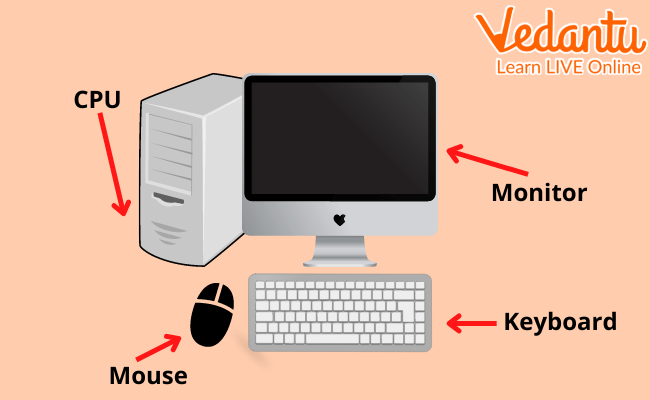
- The user provides input using devices like keyboard or mouse.
- The CPU processes the data according to given instructions.
- The result is displayed through output devices such as monitor or printer.
- The processed data can be stored in memory for future use.
Types and Classification
Computers can be classified based on size, functionality, and data handling methods.
Types of Computers
| Type | Description | Examples |
|---|---|---|
| Analog Computer | Processes continuous data | Speedometer |
| Digital Computer | Processes discrete data | Desktop, Laptop |
| Hybrid Computer | Combination of analog and digital | Medical monitoring systems |
Digital computers are the most commonly used type in daily life.
Components and Structure
A computer system consists of hardware and software components that work together.
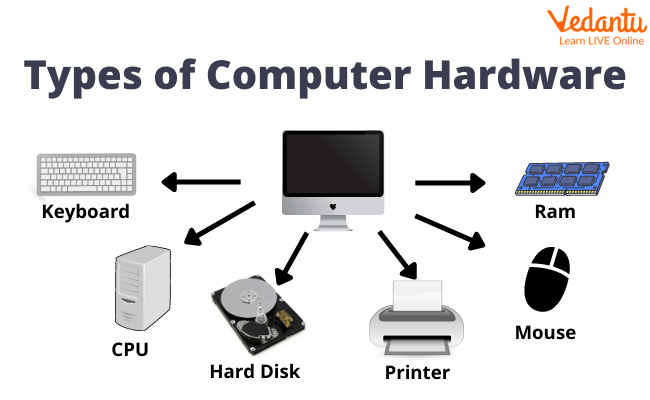
- Input Devices - Keyboard, mouse, scanner.
- Output Devices - Monitor, printer, speakers.
- Central Processing Unit (CPU) - Brain of the computer.
- Memory - RAM and ROM for data storage.
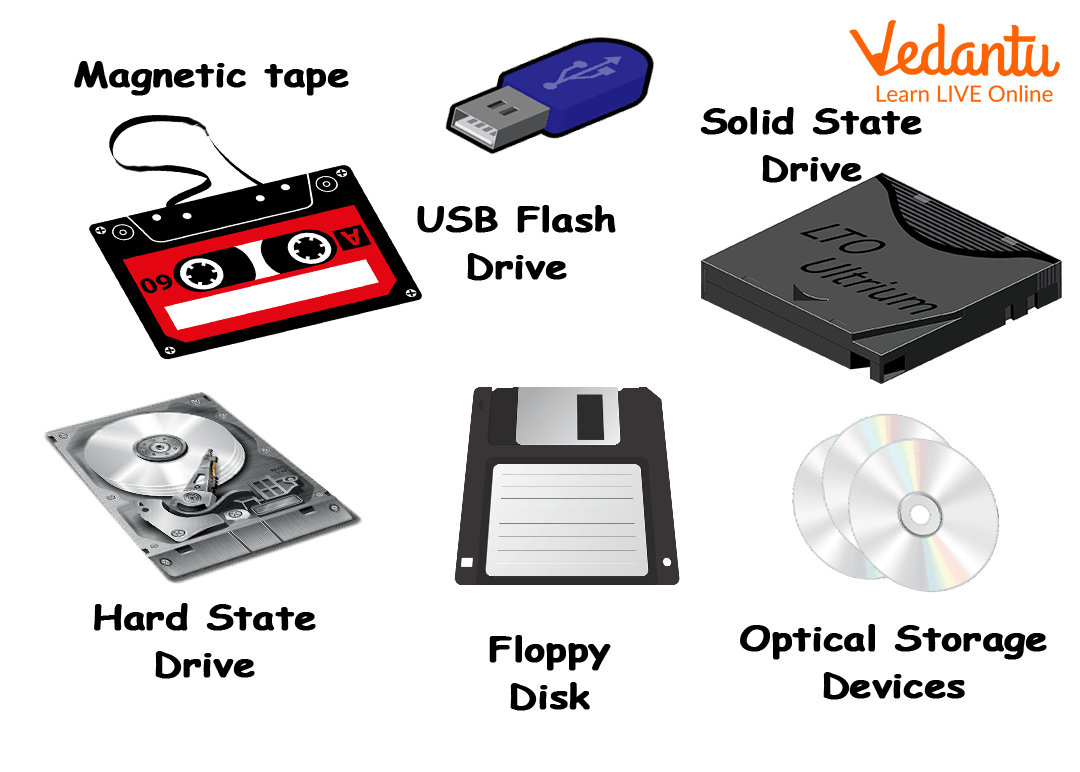
- Storage Devices - Hard disk, SSD.
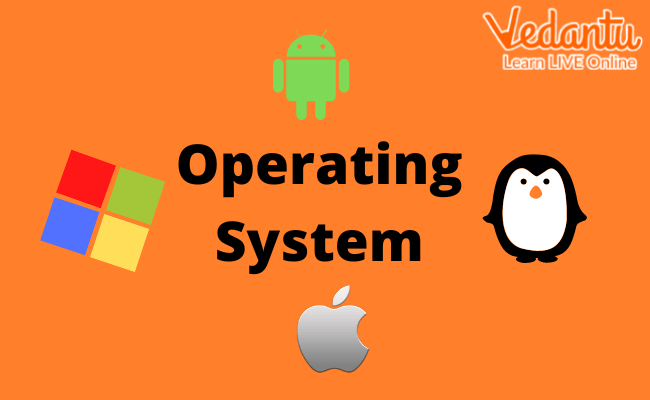
The Operating System manages hardware and software resources.
Features and Characteristics
- Speed - Performs millions of calculations per second.

- Accuracy - Produces correct results if input is correct.
- Diligence - Does not get tired.
- Storage Capacity - Stores large amounts of data.
- Automation - Performs tasks automatically once programmed.
Advantages
- High speed processing.
- Accurate results.
- Large storage capacity.
- Multitasking capability.
- Supports communication and internet access.
Disadvantages / Limitations
- Depends on electricity.
- Cannot think or make decisions on its own.
- Security and privacy risks.
- Health issues due to excessive use.
Applications and Use Cases
- Education - Online learning and research.
- Healthcare - Patient records and diagnosis.
- Banking - Online transactions and account management.
- Entertainment - Movies, games, and music.
- Communication - Emails and video calls.

Quick Facts About Computer
| Category | Details |
|---|---|
| Inventor | Charles Babbage |
| Main Unit | Central Processing Unit |
| Primary Function | Data Processing |
| Common Types | Desktop, Laptop, Mobile Device |
These quick facts help understand the basics covered in the Introduction to Computer in computer science.
Interesting Facts About Computer
- The first mechanical computer was designed by Charles Babbage.
- The term bug was first used when an insect caused a computer malfunction.
- Modern computers can perform billions of operations per second.
- Supercomputers are used for weather forecasting and space research.
- Smartphones are also powerful computers.
- Computers work using binary numbers 0 and 1.
Conclusion
The Introduction to Computer provides a strong foundation for understanding modern technology. A computer is a powerful electronic device that processes data, stores information, and supports automation across industries. Learning about computer types, components, features, advantages, and applications helps students build essential digital knowledge. This basic concept in computer science is the first step toward mastering programming, networking, cybersecurity, and other advanced technological fields.
FAQs on Introduction to Computer Concepts and Fundamentals
1. What is a Computer in Computer Science?
A computer is an electronic device that accepts input, processes data using programmed instructions, and produces output as meaningful information.
- Works on the Input-Process-Output (IPO) cycle
- Uses hardware and software together
- Performs arithmetic and logical operations
- Stores data in memory for future use
2. What are the basic components of a computer system?
A computer system consists of hardware components that work together to execute programs and process data.
- Input Devices such as keyboard and mouse
- Central Processing Unit (CPU) for processing
- Memory like RAM and ROM
- Storage Devices such as HDD and SSD
- Output Devices like monitor and printer
3. How does a computer work?
A computer works by following the Input-Process-Output cycle where it takes input, processes it using the CPU, and generates output.
- Input is given through input devices
- CPU processes instructions using ALU and Control Unit
- Data is temporarily stored in RAM
- Output is displayed through output devices
4. What are the different types of computers?
Computers are classified based on size, performance, and purpose.
- Supercomputers for scientific simulations and AI
- Mainframe Computers for large-scale business operations
- Minicomputers for mid-sized organizations
- Microcomputers such as desktops and laptops
- Embedded Systems used in smart devices
5. What is the difference between hardware and software?
Hardware refers to physical components of a computer, while software refers to programs and applications that run on it.
- Hardware includes CPU, monitor, keyboard
- Software includes Operating Systems like Windows and Linux
- Software controls hardware operations
- Both are essential for system functionality
6. What is the role of the CPU in a computer?
The CPU (Central Processing Unit) is the brain of the computer that executes instructions and processes data.
- Contains Arithmetic Logic Unit (ALU)
- Includes Control Unit (CU)
- Performs arithmetic and logical operations
- Coordinates between memory and input/output devices
7. What is an Operating System in a computer?
An Operating System (OS) is system software that manages hardware resources and provides an interface for users and applications.
- Examples include Windows, Linux, and macOS
- Manages CPU, memory, and storage
- Handles file systems and security
- Enables application software to run
8. What are the main characteristics and features of a computer?
A computer is known for its speed, accuracy, automation, and storage capabilities.
- High Speed processing
- Accuracy in calculations
- Automation through programming
- Large Storage Capacity
- Versatility across applications
9. What are the advantages and disadvantages of computers?
Computers offer significant benefits in productivity and data processing but also have certain limitations.
- Advantages include speed, accuracy, automation, and connectivity
- Disadvantages include security risks, job displacement, and dependency
- Requires proper cybersecurity measures
- Needs electricity and technical maintenance
10. What are the real-world applications of computers?
Computers are widely used in education, business, healthcare, science, and modern technologies.
- Used in web development and software engineering
- Applied in artificial intelligence and machine learning
- Essential for database management and cloud computing
- Support online banking, e-commerce, and communication networks
