








What Are Processing Devices Their Functions Types and Real World Applications in Computer Systems
Processing devices are the core hardware components that perform calculations and control operations inside a computer system. They are responsible for executing instructions, processing data, and producing meaningful results. Without processing devices, a computer cannot function effectively. From running software applications to displaying graphics and managing system tasks, these devices play a central role in modern computing. Understanding the importance and uses of processing devices in computer science helps students learn how computers operate internally and how different hardware components work together to deliver speed, accuracy, and efficiency.
Definition and Meaning
Processing devices are hardware components in a computer system that process input data according to given instructions and produce output. They form the brain of the computer and handle logical, arithmetic, and control operations.
- Processing devices in computer science refer mainly to components like CPU, GPU, and other processing units.
- They execute programs stored in memory.
- They control data flow between input, memory, and output devices.
- They perform arithmetic and logical calculations.
How It Works - Working Principle
The working of processing devices is based on the fetch - decode - execute cycle. This cycle allows the processor to execute instructions one by one.
- Fetch - The processor retrieves an instruction from the main memory.
- Decode - The instruction is interpreted to understand what action is required.
- Execute - The processor performs the required operation such as addition, comparison, or data transfer.
- Store - The result is stored back in memory or sent to an output device.
Different processing devices may specialize in different tasks. For example, CPUs handle general tasks, while GPUs handle graphics and parallel computations.
Types and Classification
Types of Processing Devices
| Type | Full Form | Main Function |
|---|---|---|
| CPU | Central Processing Unit | Performs general purpose processing and controls system operations |
| GPU | Graphics Processing Unit | Handles graphics rendering and parallel processing tasks |
| Sound Card | Audio Processing Unit | Processes audio signals |
Each type of processing device is designed for specific tasks, improving overall system performance and efficiency.
Components and Structure
CPU (Central Processing Unit)
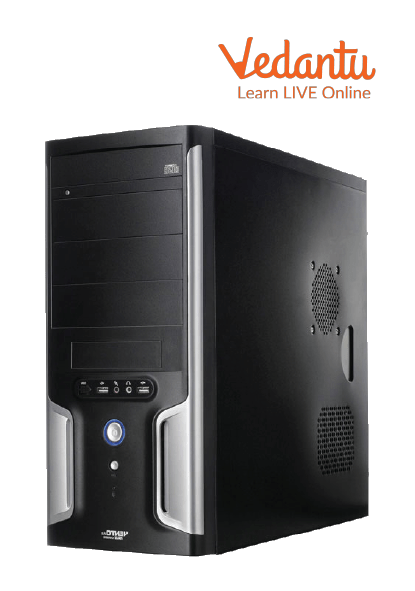
- ALU - Performs arithmetic and logical operations.
- Control Unit - Directs operations of the processor.
- Registers - Temporary storage locations for data.
GPU (Graphics Processing Unit)
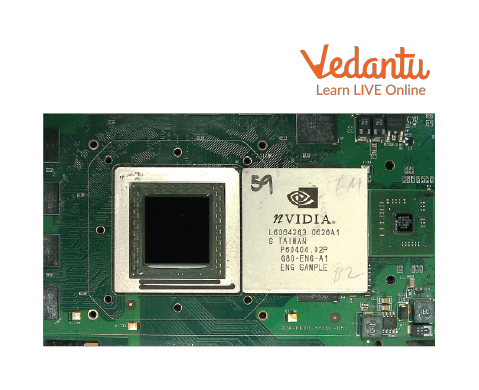
The GPU is specialized for rendering images, videos, and 3D graphics. It contains thousands of smaller cores for parallel processing.
Graphics Card
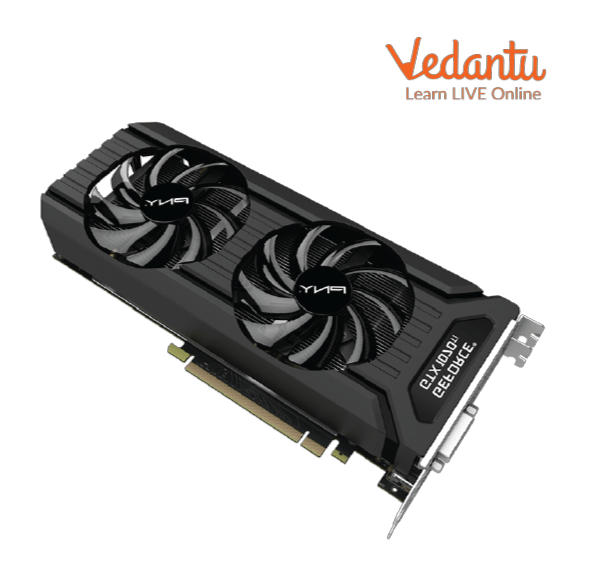
A graphics card contains the GPU and memory. It connects to the motherboard and improves visual performance.
Motherboard
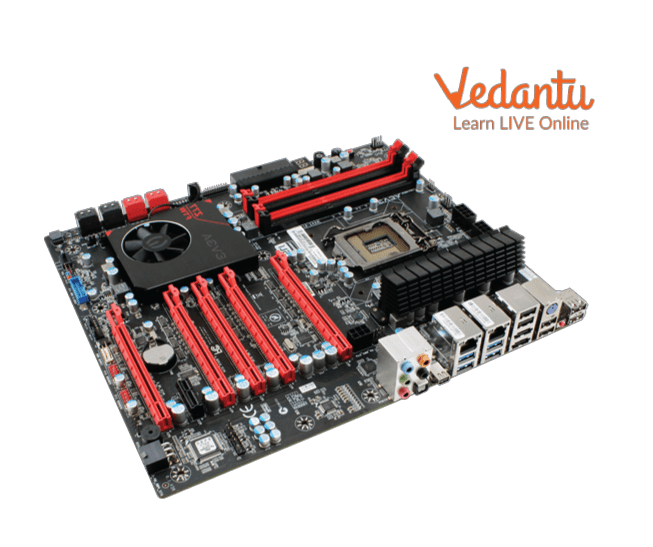
The motherboard connects all processing devices and allows communication between CPU, memory, storage, and other hardware.
Sound Card
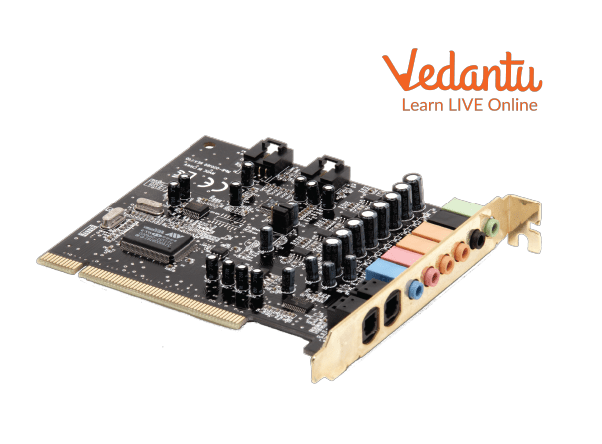
A sound card processes audio signals for playback and recording in multimedia applications.
Features and Characteristics
- High speed data processing capability.
- Ability to perform millions or billions of instructions per second.
- Support for multitasking and parallel processing.
- Efficient control and coordination of hardware components.
Advantages
- Faster execution of programs.
- Improved system performance and responsiveness.
- Efficient handling of complex computations.
- Enhanced multimedia and gaming experience.
Disadvantages and Limitations
- High power consumption in advanced processors.
- Heat generation requiring cooling systems.
- Cost can be high for high performance devices.
Applications and Use Cases
- Running operating systems and software applications.
- Gaming and graphics rendering.
- Scientific simulations and research computations.
- Artificial Intelligence and Machine Learning tasks.
- Audio and video editing.
Quick Facts About Processing Devices
| Category | Details |
|---|---|
| Main Device | CPU |
| Specialized Processor | GPU |
| Primary Function | Data processing and instruction execution |
| Used In | Computers, Smartphones, Servers, Embedded Systems |
These quick facts summarize the importance and uses of processing devices in modern computing systems.
Interesting Facts About Processing Devices
- Modern CPUs can execute billions of instructions per second.
- GPUs are widely used in cryptocurrency mining.
- Early processors occupied entire rooms in the 1940s.
- Multi core processors allow simultaneous execution of tasks.
- Processing speed is measured in gigahertz GHz.
- AI systems rely heavily on powerful processing devices.
Conclusion
The importance and uses of processing devices in computer science cannot be overstated. They form the core of every computing system and enable data processing, program execution, and system control. From CPUs to GPUs and specialized cards, each processing device contributes to performance and efficiency. Understanding their working, types, and applications helps students grasp how modern computers function and how technological advancements continue to improve computing power.
FAQs on Importance and Uses of Processing Devices in Computer Systems Explained
1. What are processing devices in a computer?
Processing devices are hardware components that perform calculations, execute instructions, and control operations in a computer system. They convert input data into meaningful output by running programs and algorithms.
- Main example: CPU (Central Processing Unit)
- Also includes GPU, microprocessors, and embedded processors
- Essential for executing software, operating systems, and applications
2. Why are processing devices important in Computer Science?
Processing devices are important because they enable the execution of programs, algorithms, and system operations in computer systems. Without them, hardware and software cannot function.
- Execute instructions from the operating system
- Run applications, databases, and programming code
- Support fields like artificial intelligence, machine learning, and cybersecurity
3. How does a processing device work?
A processing device works using the fetch-decode-execute cycle to process instructions stored in memory. It continuously reads instructions, interprets them, and performs operations.
- Fetch: Retrieve instruction from memory
- Decode: Interpret the instruction
- Execute: Perform arithmetic, logic, or control operation
4. What are the main components of a CPU as a processing device?
The CPU consists of key components that help in processing data and controlling system operations efficiently.
- ALU (Arithmetic Logic Unit): Performs arithmetic and logical operations
- Control Unit (CU): Directs the execution of instructions
- Registers: Store temporary data during processing
5. What are the different types of processing devices?
Processing devices are classified based on their functionality and application in computing systems.
- CPU: General-purpose processing
- GPU: Graphics and parallel processing
- Microcontroller: Used in embedded systems
- DSP (Digital Signal Processor): Handles signal processing tasks
6. What are the common uses of processing devices?
Processing devices are used in almost all digital systems to perform computations and control tasks.
- Running software applications and operating systems
- Managing databases and networks
- Supporting cloud computing and web development
- Powering smartphones, IoT, and embedded systems
7. What are the advantages of advanced processing devices?
Advanced processing devices improve system performance by increasing speed, efficiency, and multitasking capability.
- Higher clock speed and multi-core architecture
- Better support for parallel processing
- Efficient handling of AI and big data workloads
8. What are the limitations or disadvantages of processing devices?
Processing devices have certain limitations related to power consumption, heat generation, and cost.
- High energy consumption in powerful processors
- Heat generation requiring cooling systems
- Performance depends on supporting hardware like RAM and storage
9. What is the difference between CPU and GPU as processing devices?
CPU and GPU differ in architecture and purpose, where the CPU handles general tasks and the GPU focuses on parallel processing.
- CPU: Few cores, optimized for sequential tasks and system control
- GPU: Many cores, optimized for graphics, AI, and parallel algorithms
- Used together in gaming, machine learning, and data science
10. How are processing devices relevant for exams and interviews?
Processing devices are a fundamental topic in Computer Science exams and technical interviews. Understanding their working and components is essential for academic and competitive preparation.
- Common questions on CPU architecture and functions
- Concepts like clock speed, cores, cache memory
- Important for careers in software development, hardware engineering, and system design
