









How to Insert a Style Sheet in HTML Using Link and Style Tags
In web development, the appearance of a webpage is controlled using Cascading Style Sheets or CSS. Inserting a style sheet is the process of adding CSS to an HTML document to define how elements such as text, images, and layouts should look. Understanding how to insert a style sheet is essential for designing attractive, structured, and responsive web pages. Inserting A Style Sheet in computer science is a fundamental concept in web technologies, as it separates content from presentation and allows developers to maintain consistent styling across websites.
Definition and Meaning
Inserting A Style Sheet refers to the method of adding CSS rules to an HTML document so that the browser can apply styles to web elements.
- Style Sheet - A file or section that contains CSS rules.
- CSS - Cascading Style Sheets used to control layout, colors, fonts, and spacing.
- HTML - HyperText Markup Language used to structure webpage content.
- Selector - Identifies which HTML element the style applies to.
- Property and Value - Define how the selected element should appear.
How It Works / Working Principle
The working of inserting a style sheet is based on linking CSS rules with HTML elements. When a webpage loads, the browser reads the HTML and applies the corresponding CSS styles.
- The browser reads the HTML document.
- It identifies the CSS insertion method - inline, internal, or external.
- CSS rules are processed based on priority and cascading order.
- The styles are applied to the selected HTML elements.
- The final styled webpage is displayed to the user.
The principle behind CSS insertion follows the cascade rule, where styles can override each other based on specificity and order.
Types and Classification
There are three main types of inserting a style sheet in computer science:
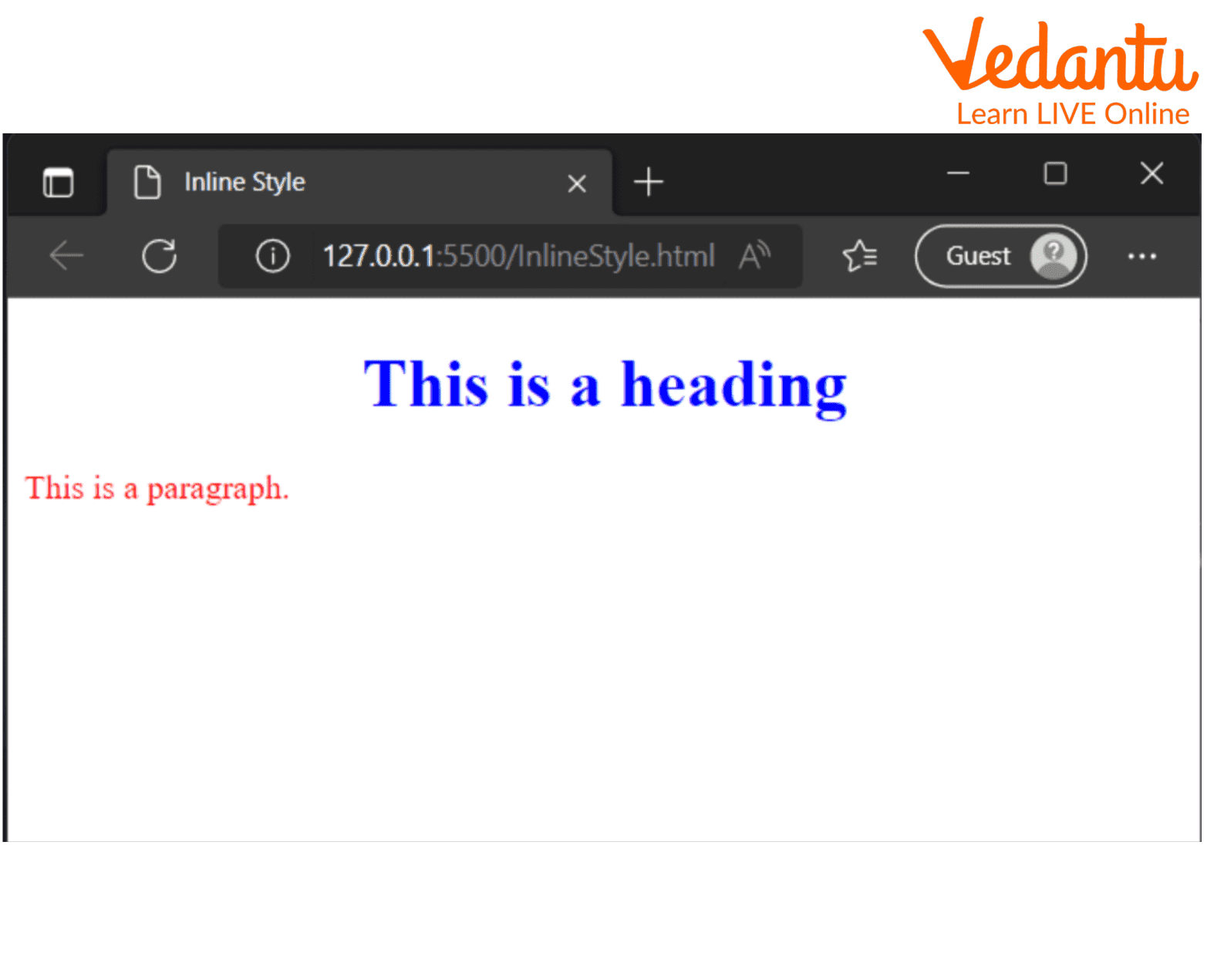
- Inline Style Sheet - CSS is written directly inside the HTML element using the style attribute.
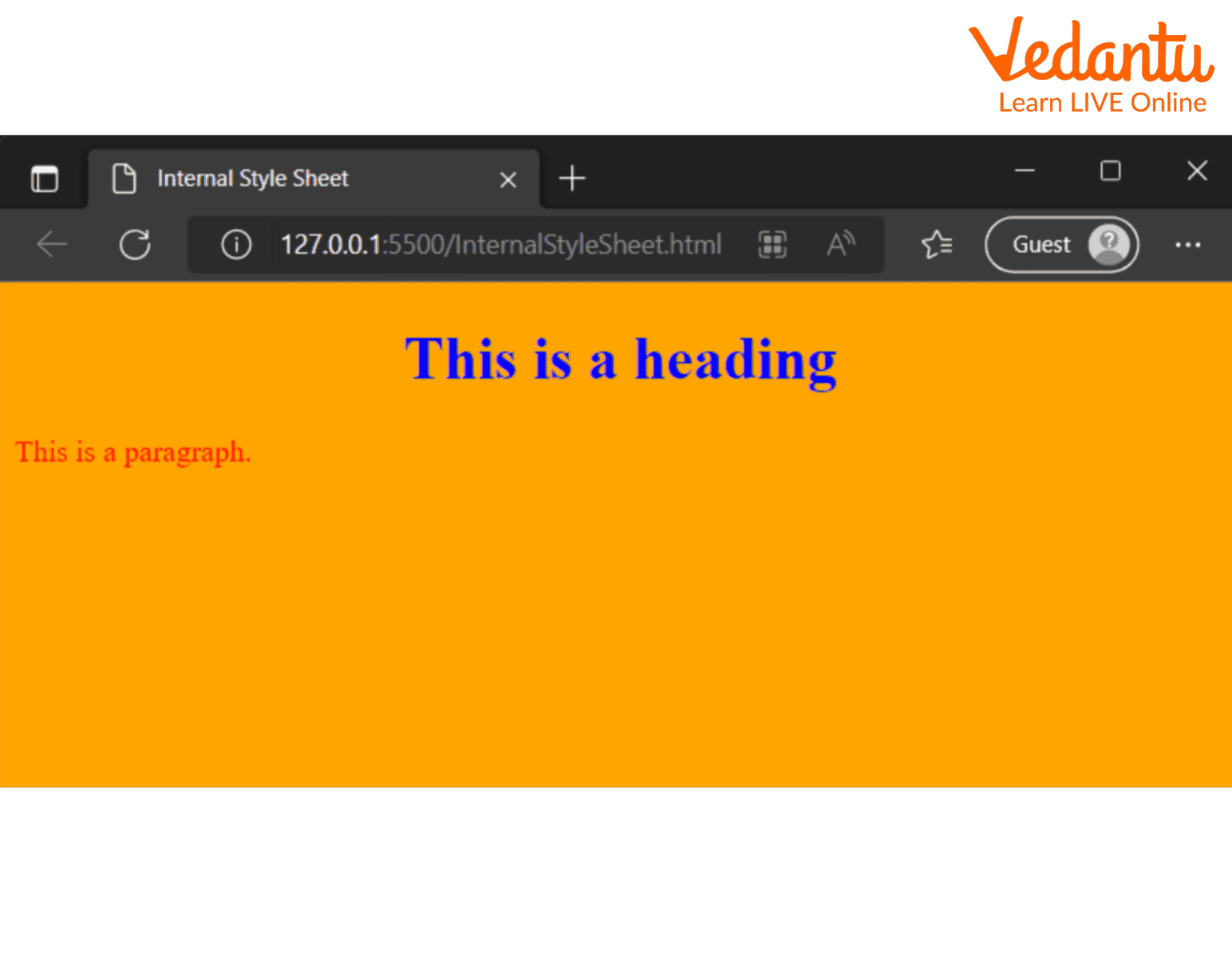
- Internal Style Sheet - CSS is written inside the <style> tag within the <head> section of the HTML document.
- External Style Sheet - CSS is written in a separate .css file and linked to the HTML document using the <link> tag.
Syntax and Example
1. Inline Style Sheet
<p style="color:blue; font-size:18px;">
This is a paragraph with inline style.
</p>
Here, the style is applied directly to the paragraph element using the style attribute.
2. Internal Style Sheet
<head>
  <style>
    p {
      color: green;
      font-size: 20px;
    }
  </style>
</head>
<body>
  <p>This is a paragraph using internal CSS.</p>
</body>
In this example, styles are defined inside the <style> tag and applied to all paragraph elements.
3. External Style Sheet
<head>
  <link rel="stylesheet" href="styles.css">
</head>
The CSS rules are written in a separate file named styles.css, which improves reusability and maintainability.
Features and Characteristics
- Allows separation of content and presentation.
- Supports multiple insertion methods.
- Follows cascading and specificity rules.
- Improves website consistency.
- Enables reusable styling across multiple pages.
Advantages
- Improves design flexibility.
- Reduces code repetition when using external CSS.
- Enhances website maintainability.
- Enables consistent styling across pages.
- Speeds up page loading with cached external files.
Disadvantages / Limitations
- Inline styles are not reusable.
- Internal CSS is limited to one HTML page.
- External CSS requires additional file management.
- Improper use may cause style conflicts.
Applications and Use Cases
- Designing responsive websites.
- Styling educational portals and blogs.
- Creating consistent corporate website layouts.
- Customizing user interfaces of web applications.
- Enhancing readability and user experience.
Quick Facts About Inserting A Style Sheet
| Category | Details |
|---|---|
| Type | Web Technology Concept |
| Used In | HTML and CSS |
| File Extension | .css (for external style sheet) |
| Main Purpose | Control presentation and layout of webpages |
| Common Methods | Inline, Internal, External |
These quick facts summarise the essential details of inserting a style sheet in computer science and highlight its importance in web development.
Interesting Facts About Inserting A Style Sheet
- External style sheets can style multiple webpages using a single file.
- CSS follows the cascade rule to determine which style has priority.
- Inline styles have higher priority than internal and external styles.
- Using external CSS improves website performance through caching.
- Modern frameworks like Bootstrap rely heavily on external style sheets.
- Separation of style and content improves accessibility and maintainability.
Conclusion
Inserting A Style Sheet is a core concept in web development that defines how webpages appear to users. By understanding the different methods such as inline, internal, and external CSS, developers can design structured, attractive, and efficient websites. Mastering the working, types, and features of style sheet insertion is essential for building modern web applications and maintaining consistent user experiences across digital platforms.


FAQs on Inserting a Style Sheet in HTML with Methods and Examples
1. What is inserting a style sheet in web development?
Inserting a style sheet means adding CSS (Cascading Style Sheets) to an HTML document to control its design and layout.
- Defines colors, fonts, spacing, and positioning
- Separates content (HTML) from presentation (CSS)
- Improves maintainability and readability of web pages
2. What are the different ways to insert a style sheet in HTML?
There are three main methods to insert a style sheet in an HTML document: inline, internal, and external CSS.
- Inline CSS using the style attribute inside HTML tags
- Internal CSS using the <style> tag in the <head> section
- External CSS using the <link> tag to connect a .css file
3. How do you insert an external style sheet in HTML?
An external style sheet is inserted using the <link> tag inside the HTML <head> section to connect a separate .css file.
- Syntax example: <link rel="stylesheet" href="styles.css">
- Promotes code reuse across multiple web pages
- Commonly used in professional web development
4. What is internal style sheet and when is it used?
An internal style sheet is CSS written inside the <style> tag within the same HTML file.
- Placed inside the <head> section
- Useful for single-page websites or testing
- Example: <style> body { background-color: lightblue; } </style>
5. What is inline CSS and how does it work?
Inline CSS applies styling directly to an HTML element using the style attribute.
- Example: <p style="color: red;">Text</p>
- Has high priority in the CSS cascade
- Not recommended for large projects due to poor maintainability
6. What are the advantages of using an external style sheet?
An external style sheet improves scalability, performance, and code management in web applications.
- Enables reuse across multiple HTML pages
- Reduces code duplication
- Improves website loading speed through caching
- Separates structure and presentation clearly
7. What is the difference between inline, internal, and external style sheets?
The difference between inline, internal, and external style sheets lies in their location, scope, and maintainability.
- Inline: Written inside HTML elements, affects only one element
- Internal: Written inside <style> tag, affects one page
- External: Stored in separate .css file, affects multiple pages
8. How does CSS precedence work when inserting multiple style sheets?
CSS precedence follows the Cascading Order where inline styles override internal and external styles unless specificity rules apply.
- Inline CSS has highest priority
- Internal CSS overrides external CSS if defined later
- Specificity and !important affect final style
9. Why is inserting a style sheet important in modern web development?
Inserting a style sheet is essential for designing responsive, user-friendly, and maintainable websites.
- Enables responsive design using media queries
- Improves UI/UX design consistency
- Works with frameworks like Bootstrap and Tailwind CSS
- Important for frontend development interviews and exams
10. Which method of inserting a style sheet is best for exam and interview purposes?
For exams and interviews, understanding all three methods is important, but external style sheets are considered best practice in real-world projects.
- Common theory question in school and competitive exams
- Frequently asked in frontend developer interviews
- Demonstrates understanding of separation of concerns
