






What to Know About Yorkshire Terrier Temperament, Size, and Grooming Needs
The Yorkshire Terrier is one of the most popular toy dog breeds in the world. Known for its silky coat and confident nature, this small dog has a bold and energetic personality. Originally bred in England to catch rats in textile mills, the Yorkshire Terrier is now a loving companion animal. Let’s explore Yorkshire Terrier facts, habitat, diet, characteristics, life cycle, and why this tiny dog is so special.
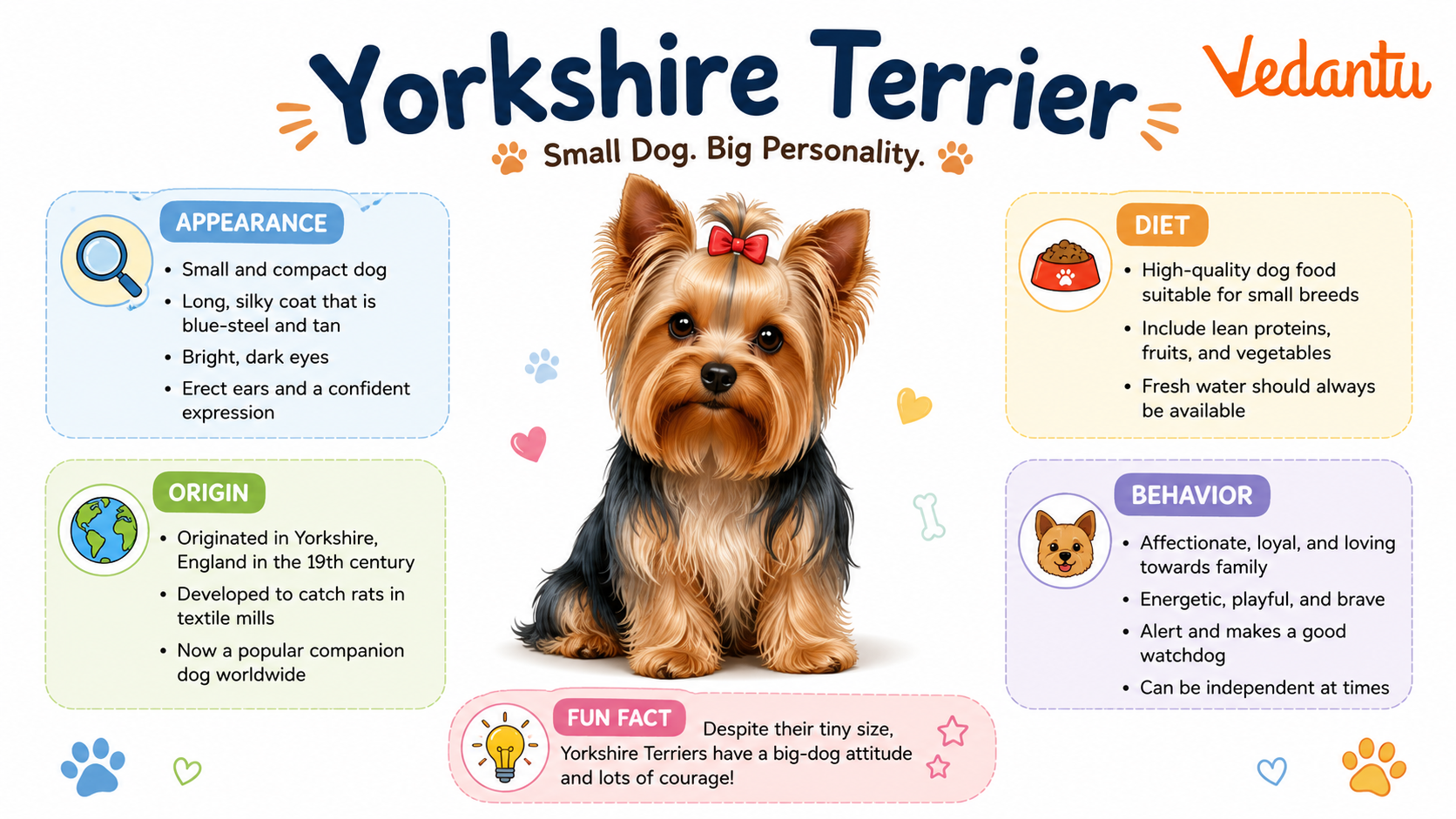
Quick Facts About Yorkshire Terrier
| Feature | Details |
|---|---|
| Common Name | Yorkshire Terrier (Yorkie) |
| Scientific Name | Canis lupus familiaris |
| Animal Group | Mammal |
| Breed Type | Toy Dog |
| Height | 15–23 cm |
| Weight | 2–3.5 kg |
| Lifespan | 11–15 years |
| Habitat | Homes and apartments (domestic) |
| Diet | Omnivore (dog food, meat, vegetables) |
| Young One | Puppy |
Appearance and Physical Characteristics
- Very small and compact body.
- Long, silky, straight coat.
- Coat colour: Blue and tan (most common).
- Small head with bright, alert eyes.
- Ears are small and usually stand upright.
Habitat and Distribution
The original Yorkshire Terrier habitat was in Yorkshire, England, during the 19th century. They were used to catch rats in mills and mines.
- Now found worldwide.
- Live comfortably in houses and apartments.
- Prefer warm indoor environments.
- Not suited for extreme cold without protection.
Diet and Feeding Habits
The Yorkshire Terrier diet is carefully planned to maintain its small but energetic body.
- High-quality dog food.
- Small portions given 2–3 times daily.
- Lean meats like chicken.
- Occasional vegetables and fruits (safe for dogs).
Behaviour and Lifestyle
- Very active and playful.
- Brave and confident.
- Can be protective of owners.
- Loves attention and companionship.
- May bark to alert owners.
Life Cycle and Reproduction
- Birth: Female gives birth to 2–5 puppies.
- Puppy Stage: Eyes open after about 2 weeks.
- Growth: Puppies grow quickly in the first year.
- Adult Stage: Fully grown by 1 year.
- Lifespan: Can live up to 15 years with proper care.
What Makes Yorkshire Terrier Special?
Temperament and Domestic Life
- Friendly but can be stubborn.
- Good for families with older children.
- Needs regular grooming.
- Requires mental stimulation.
- Prefers being indoors with family.
Importance and Role with Humans
Amazing Facts About Yorkshire Terrier
- One of the smallest dog breeds in the world.
- Originally bred to catch rats.
- Nickname: “Yorkie”.
- Very popular in dog shows.
- Can have very long show-quality coats.
- Despite size, they have a terrier hunting instinct.
Interesting Facts About Yorkshire Terrier
- Puppies are born black and tan.
- Coat colour changes as they grow.
- They need regular brushing.
- They enjoy interactive toys.
Fun Facts for Kids
FAQs on Yorkshire Terrier: Personality, Care, and Fun Facts
1. What is a Yorkshire Terrier?
A Yorkshire Terrier (or Yorkie) is a small, energetic toy dog breed known for its long, silky coat and brave personality.
- Belongs to the Toy Group of dogs
- Originally bred in England
- Famous for its shiny blue and tan coat
- Small in size but very confident and bold
- Popular family companion and lap dog
2. How big do Yorkshire Terriers get?
A Yorkshire Terrier is a very small dog that usually weighs under 7 pounds (3 kg).
- Height: about 7–8 inches tall
- Weight: typically 4–7 pounds
- Classified as a toy breed
- Perfect size for apartments and small homes
3. Are Yorkshire Terriers good family pets?
Yes, Yorkshire Terriers can be loving and loyal family pets when treated gently and kindly.
- Very affectionate with their owners
- Good for families with older children
- Need supervision around toddlers due to small size
- Love attention and being part of the family
4. Do Yorkshire Terriers bark a lot?
Yes, Yorkies are known to bark often because they are alert and protective.
- Excellent little watchdogs
- Bark at strangers or unusual sounds
- Can be trained to reduce excessive barking
- Very aware of their surroundings
5. How long do Yorkshire Terriers live?
A healthy Yorkshire Terrier can live a long life of about 11–15 years.
- Considered a long-living small dog breed
- Needs proper diet and regular vet care
- Daily exercise helps maintain health
- Good dental care is very important
6. Are Yorkshire Terriers easy to train?
Yes, Yorkshire Terriers are smart dogs, but they can sometimes be stubborn.
- Quick learners with positive reinforcement
- Respond well to treats and praise
- Need patience during house training
- Benefit from early puppy training and socialization
7. Do Yorkshire Terriers shed a lot?
No, Yorkshire Terriers shed very little compared to many other dog breeds.
- Have hair similar to human hair
- Considered a low-shedding dog
- May be suitable for some people with allergies
- Require regular brushing to prevent tangles
8. What do Yorkshire Terriers eat?
A Yorkshire Terrier needs high-quality dog food made for small breeds.
- Small kibble for tiny mouths
- Balanced diet with protein, vitamins, and minerals
- Fresh water available at all times
- Avoid too many treats to prevent weight gain
9. Where did the Yorkshire Terrier come from?
The Yorkshire Terrier originated in Yorkshire, England during the 19th century.
- Bred to catch rats in textile mills
- Developed from small terrier breeds
- Became popular as a fashionable companion dog
- Recognized by major kennel clubs worldwide
10. How much exercise does a Yorkshire Terrier need?
A Yorkshire Terrier needs daily light exercise to stay healthy and happy.
- Short daily walks
- Indoor playtime and games
- Mental stimulation with toys
- Not suited for very rough or long activities
