






Types of Seabirds and How They Adapt to Marine Environments
Seabirds are amazing birds that spend most of their lives near oceans and seas. From soaring high above the waves to diving deep underwater for food, seabirds show some of the most fascinating adaptations in the animal world. There are more than 300 species of seabirds, and they play a very important role in marine ecosystems. Let’s explore seabirds facts, habitat, diet, characteristics, life cycle, and why these ocean travelers are so special.
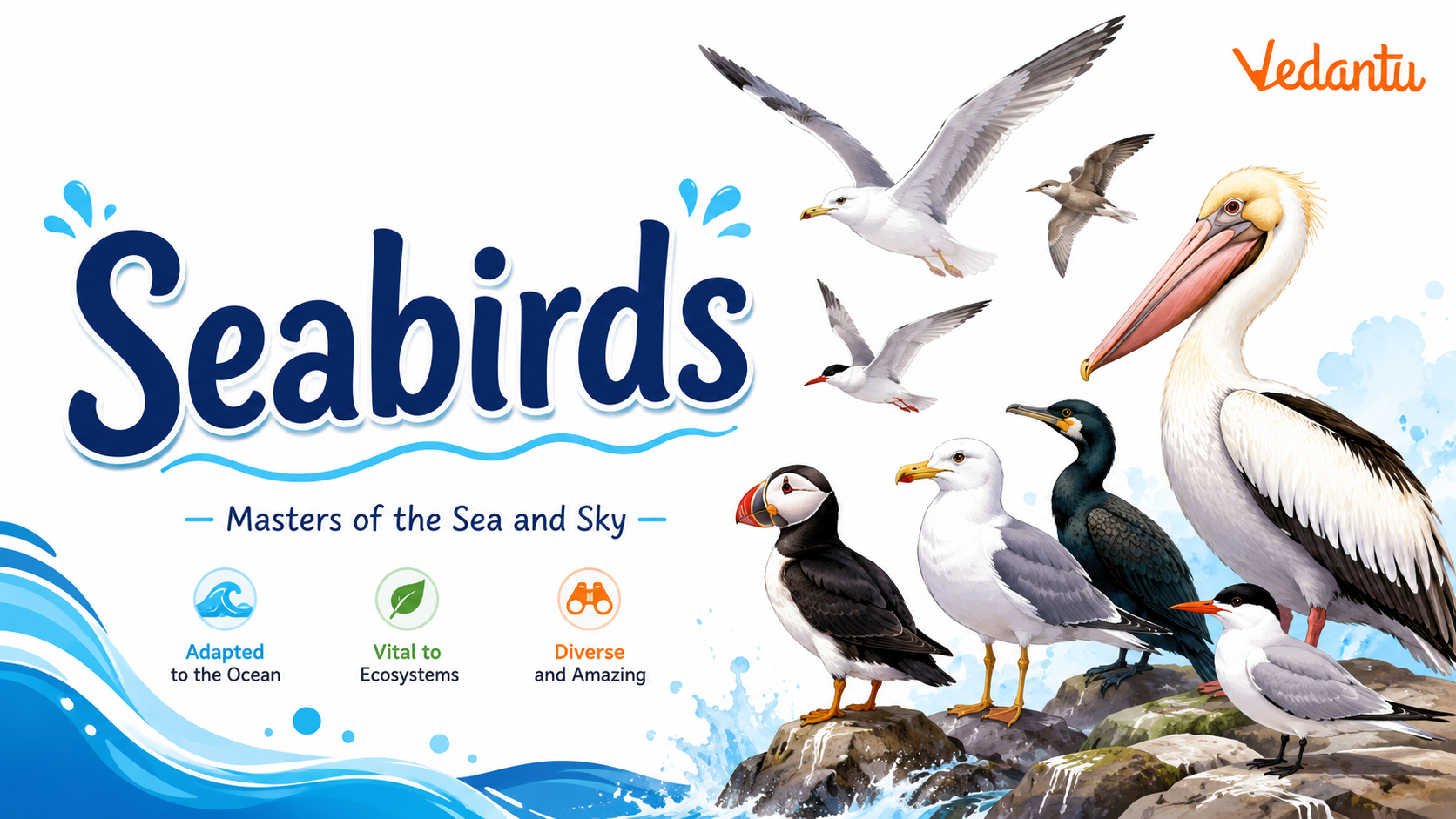
Quick Facts About Seabirds
| Feature | Details |
|---|---|
| Animal Group | Birds (Aves) |
| Number of Species | 300+ species |
| Habitat | Oceans, coastal areas, islands |
| Diet | Fish, squid, crustaceans |
| Wingspan | Up to 3.5 meters (Albatross) |
| Lifespan | 10–60+ years (varies by species) |
| Examples | Albatross, Penguin, Seagull, Puffin, Pelican |
Appearance and Physical Characteristics
- Streamlined bodies to reduce air and water resistance.
- Long, narrow wings for gliding over ocean winds.
- Waterproof feathers coated with oil.
- Webbed feet for swimming.
- Strong, hooked or pointed beaks for catching fish.
Seabirds Habitat and Distribution
- Found on every continent, including Antarctica.
- Live near oceans, seas, cliffs, rocky shores, and islands.
- Some species spend months at sea without touching land.
- Nesting usually happens on isolated islands or coastal cliffs.
Diet and Feeding Habits
- Mainly carnivorous.
- Eat fish, squid, crabs, shrimp, and other marine animals.
- Some dive deep underwater (like penguins and cormorants).
- Some skim the water surface (like gulls).
- Pelicans use large throat pouches to scoop fish.
Behaviour and Lifestyle
- Many species are highly social and nest in large colonies.
- Some migrate thousands of kilometres every year.
- Strong sense of direction helps them return to the same nesting site.
- Communicate using calls, body movements, and displays.
Sound or Call
- Seagulls make loud squawking sounds.
- Penguins use braying or trumpeting calls.
- Calls help identify mates and chicks in crowded colonies.
Life Cycle of Seabirds
- Egg Stage: Females lay 1–3 eggs in nests built on cliffs, burrows, or open ground.
- Chick Stage: Both parents usually care for and feed the chick.
- Fledgling: Young birds learn to fly or swim.
- Adult: Mature birds return to breed, often at the same place every year.
Flight Adaptations
- Long wings for gliding over ocean winds.
- Lightweight bones reduce body weight.
- Strong chest muscles power long flights.
- Ability to use wind currents to save energy.
Types and Diversity of Seabirds
Importance of Seabirds in Nature
Amazing Seabirds Facts
- Some seabirds can stay in the air for hours without flapping.
- Arctic terns migrate from the Arctic to Antarctica each year.
- Penguins can swim faster than most humans can run.
- Many seabirds return to the exact same nesting spot yearly.
- Some species can dive over 100 meters deep.
- Seabirds can live for several decades.
Interesting Facts About Seabirds
Fun Facts for Kids
- Baby seabirds are called chicks.
- Puffins are sometimes called “sea parrots.”
- Penguins cannot fly but are super swimmers.
- Some seabirds sneeze out extra salt!
- Large colonies can have thousands of birds together.
FAQs on Seabirds and Their Amazing Life Over the Ocean
1. What are seabirds?
Seabirds are birds that live near the ocean and depend on the sea for most of their food and survival.
- They are also called marine birds or ocean birds.
- They spend much of their life flying over or swimming in the sea.
- Examples include gulls, penguins, albatrosses, and pelicans.
- Many seabirds only come to land to breed and lay eggs.
2. Where do seabirds live?
Seabirds live in coastal areas and open oceans around the world.
- They are found on beaches, cliffs, and islands.
- Some species travel across entire oceans during migration.
- Polar seabirds live in Antarctica, while others prefer tropical coasts.
- Many nest in large groups called colonies.
3. What do seabirds eat?
Seabirds mainly eat fish and other sea animals.
- Common foods include fish, krill, squid, and crabs.
- Some seabirds dive deep underwater to catch prey.
- Others, like gulls, also eat shellfish and scraps.
- Their diet depends on their habitat and hunting skills.
4. How are seabirds adapted to ocean life?
Seabirds have special adaptations that help them survive in marine environments.
- Webbed feet help them swim.
- Waterproof feathers keep them dry and warm.
- Strong wings allow long-distance flight over oceans.
- Some have salt glands to remove extra salt from seawater.
5. Can seabirds swim and dive?
Yes, many seabirds are excellent swimmers and divers.
- Penguins use their flippers to "fly" underwater.
- Cormorants and gannets dive to catch fish.
- Some species can dive over 100 meters deep.
- Others float on the water surface to rest.
6. Why do seabirds migrate?
Seabirds migrate to find food and safe breeding places.
- Migration helps them follow seasonal fish supplies.
- Some travel thousands of kilometers each year.
- The Arctic tern has one of the longest migrations in the animal world.
- They use the sun, stars, and Earth’s magnetic field to navigate.
7. How do seabirds reproduce?
Seabirds reproduce by laying eggs in safe nesting areas.
- They often nest in large colonies on cliffs or islands.
- Most lay one to three eggs at a time.
- Both parents may help with incubation and feeding chicks.
- Chicks are usually fed regurgitated fish.
8. What are some common types of seabirds?
There are many different types of seabirds found worldwide.
- Albatrosses – known for long wings and ocean gliding.
- Penguins – flightless swimmers of the Southern Hemisphere.
- Seagulls (gulls) – common along beaches.
- Pelicans – famous for their large throat pouches.
- Puffins – colorful beaks and cliff nesters.
9. Why are seabirds important to the ecosystem?
Seabirds play an important role in marine ecosystems.
- They help control fish populations.
- Their droppings, called guano, enrich soil with nutrients.
- They are indicators of ocean health and climate change.
- They connect land and sea ecosystems.
10. What threats do seabirds face?
Seabirds face many dangers caused by natural and human activities.
- Plastic pollution in oceans can be deadly.
- Oil spills damage their waterproof feathers.
- Overfishing reduces their food supply.
- Climate change affects breeding and migration patterns.
