






What Is a Spitz? Types, Characteristics, Lifespan, and Grooming Needs
The Fox-Like Beauty of the Dog World!
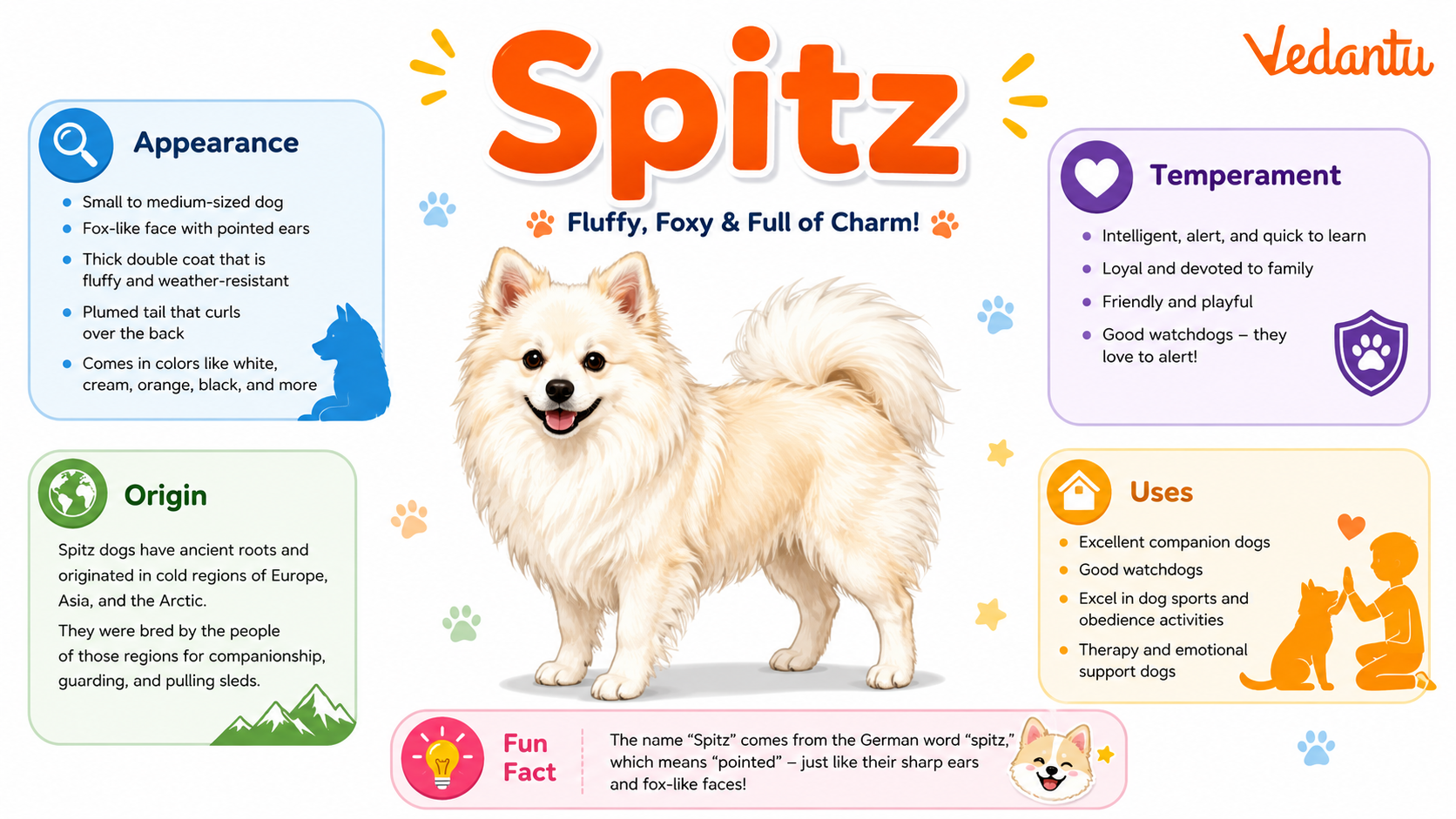
Quick Facts About Spitz
| Feature | Details |
|---|---|
| Common Name | Spitz |
| Animal Group | Mammal |
| Type | Dog Breed Group |
| Origin | Cold regions of Europe & Arctic areas |
| Lifespan | 12–16 years (varies by breed) |
| Diet | Omnivore (mainly meat-based dog food) |
| Habitat | Domestic homes; adaptable to cold climates |
| Special Feature | Thick fur and fox-like face |
Appearance and Physical Characteristics
- Pointed, upright ears
- Sharp, fox-like face
- Thick double-layered coat
- Bushy tail curled over the back
- Strong and compact body
Their double coat helps them stay warm in cold weather. The outer coat is long and straight, while the inner coat is soft and dense. Spitz dogs come in many colours such as white, black, brown, cream, and grey.
Spitz Habitat and Distribution
Originally, Spitz dogs lived in very cold regions like the Arctic and Northern Europe. Today, they are found all around the world as popular pets.
- Adapted to cold climates
- Comfortable in snowy and chilly areas
- Now commonly live in homes and apartments
- Need cool resting places in hot weather
Spitz Diet and Feeding Habits
The Spitz diet is mainly meat-based, like other dogs. They are considered omnivores because they can eat both animal and plant-based foods.
- High-quality dog food (rich in protein)
- Cooked meat like chicken or fish
- Vegetables in small amounts
- Fresh water daily
They are active dogs, so they need balanced nutrition to stay healthy and energetic.
Behaviour and Lifestyle
Sound or Call
Spitz dogs bark to alert their owners about strangers or unusual sounds. They may also bark when excited or playful.
Life Cycle of a Spitz
- Puppy Stage: Born after about 60–63 days of pregnancy. Puppies are small, blind, and fully dependent on their mother.
- Growing Stage: Puppies open their eyes in 1–2 weeks and start walking and playing.
- Adult Stage: They become fully grown in about 1 year.
- Senior Stage: After 8–10 years, they may slow down and require extra care.
Temperament and Domestic Life
- Friendly and affectionate with family
- Good with children if trained properly
- Can be slightly stubborn at times
- Need regular grooming due to heavy shedding
- Require daily exercise and mental stimulation
Because of their fluffy coat, regular brushing is important to keep their fur clean and healthy.
What Makes Spitz Special?
Types of Spitz Dogs
- Pomeranian
- Japanese Spitz
- Indian Spitz
- Siberian Husky
- Alaskan Malamute
- Samoyed
Importance of Spitz Dogs
Amazing Spitz Facts
- Spitz dogs are one of the oldest dog types in the world.
- Many Arctic working dogs belong to the Spitz group.
- Their curled tail helps keep their nose warm in cold weather.
- They shed heavily during seasonal changes.
- Spitz breeds vary in size from small Pomeranians to large Huskies.
- They are known for their bright, expressive eyes.
Fun Facts for Kids
FAQs on Spitz Dog Breed: Complete Guide to Traits, Temperament, and Care
1. What is a Spitz dog?
A Spitz is a type of dog known for its fluffy coat, pointed ears, and curled tail.
- Spitz dogs belong to a group of breeds with similar features.
- They usually have thick double fur to protect them from cold weather.
- Common examples include the Pomeranian, Japanese Spitz, and German Spitz.
- They are popular as family pets because they are alert and playful.
2. Where do Spitz dogs come from?
Spitz dogs originally come from cold regions of the world.
- They were first found in Arctic and Northern European regions.
- Their thick fur helped them survive in snowy climates.
- Some Spitz breeds were used as sled dogs and watchdogs.
- Over time, they became popular worldwide as companion animals.
3. What are the main characteristics of a Spitz?
Spitz dogs are easy to recognize because of their unique physical features.
- Pointed ears that stand upright.
- A curly tail that rests over their back.
- Thick, fluffy double-layered coat.
- Fox-like face with bright, alert eyes.
4. Are Spitz dogs good family pets?
Yes, Spitz dogs can be wonderful family pets when trained properly.
- They are loyal and protective of their families.
- Many Spitz breeds are playful and energetic with kids.
- They need early training and socialization.
- They may bark to alert their owners of strangers.
5. What do Spitz dogs eat?
Spitz dogs need a balanced diet to stay healthy and active.
- High-quality dog food rich in protein.
- Fresh water available at all times.
- Occasional healthy treats in small amounts.
- Avoid harmful foods like chocolate and onions.
6. How big do Spitz dogs grow?
The size of a Spitz dog depends on its specific breed.
- Pomeranian Spitz are small and toy-sized.
- Japanese Spitz are medium-sized.
- Some Arctic Spitz breeds can be larger and stronger.
- Weight and height vary by breed type.
7. Do Spitz dogs need a lot of grooming?
Yes, Spitz dogs require regular grooming because of their thick fur.
- Brush their double coat several times a week.
- Regular bathing keeps their fur clean.
- Trim nails and clean ears often.
- Shedding increases during seasonal changes.
8. Are Spitz dogs easy to train?
Spitz dogs are intelligent but can sometimes be stubborn.
- They respond well to positive reinforcement training.
- Short, fun training sessions work best.
- Early obedience training is important.
- Consistency helps them learn commands faster.
9. How long do Spitz dogs live?
Spitz dogs generally have a long lifespan compared to many other breeds.
- Most live between 12 to 16 years.
- Smaller Spitz breeds may live even longer.
- Healthy food and regular vet checkups increase lifespan.
- Daily exercise keeps them fit and active.
10. What are some popular Spitz breeds?
There are many popular breeds in the Spitz family around the world.
- Pomeranian
- Japanese Spitz
- German Spitz
- Siberian Husky
- Alaskan Malamute
