






Shark Facts for Kids: Habitat, Diet, Types, and Behavior
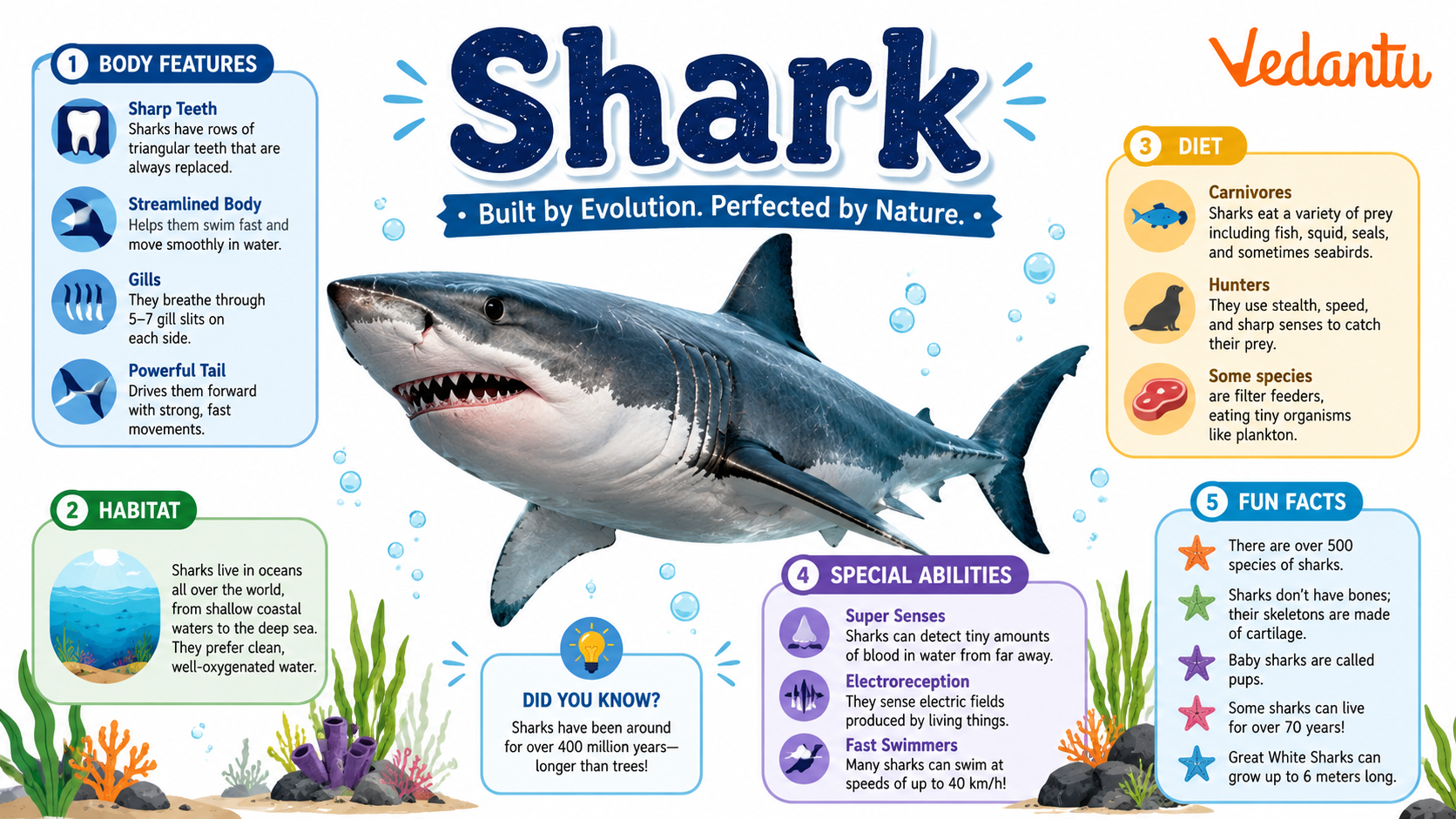
Quick Facts About Sharks
| Feature | Details |
|---|---|
| Common Name | Shark |
| Animal Group | Fish (Cartilaginous Fish) |
| Scientific Group | Selachimorpha |
| Habitat | Oceans worldwide |
| Diet | Mostly Carnivore |
| Lifespan | 20–100+ years (depends on species) |
| Number of Species | 500+ species |
| Special Feature | Skeleton made of cartilage, not bones |
Appearance and Physical Characteristics
- Long, streamlined body for fast swimming.
- Skeleton made of cartilage, which is lighter than bone.
- Rough skin covered with tiny tooth-like scales.
- Multiple rows of sharp, replaceable teeth.
- Powerful tail fin for speed and movement.
Shark Habitat and Distribution
- Found in all oceans around the world.
- Live in warm tropical seas and cold polar waters.
- Some species live in deep ocean waters.
- Others prefer shallow coastal areas.
Shark Diet and Feeding Habits
- Most sharks are carnivores.
- They eat fish, squid, seals, and sometimes smaller sharks.
- Whale sharks and basking sharks eat plankton.
- They use a strong sense of smell to find food.
Behaviour and Lifestyle
- Most sharks are solitary hunters.
- Some species migrate long distances.
- They are most active during dawn and dusk.
- Use electrical sensors to detect prey.
Shark Life Cycle
Some sharks lay eggs, while others give birth to live young.
Baby sharks are called pups. They can swim immediately after birth.
Young sharks hunt small prey and grow slowly.
Adults become powerful ocean predators and may live for decades.
Types of Sharks
Large, powerful predator known for strong jaws.
Largest fish in the world; feeds on plankton.
Unique hammer-shaped head for better vision.
Known for dark stripes and varied diet.
What Makes Sharks Special?
Importance of Sharks in Nature
- Maintain balance in marine ecosystems.
- Control population of weaker or sick animals.
- Support healthy coral reefs.
Amazing Shark Facts
Fun Facts for Kids
- Baby sharks are called pups.
- Sharks have super sharp teeth.
- They can smell a drop of blood in water.
- Some sharks are as small as your hand.
- The largest shark is gentle and eats tiny plankton.
FAQs on Shark: Fascinating Facts, Species, and Ocean Life
1. What is a shark?
A shark is a large fish that lives in the ocean and has a skeleton made of cartilage instead of bones.
- Cartilage is the same flexible material found in your nose and ears.
- Sharks are known as marine predators.
- They belong to a group called elasmobranchs.
- Sharks have existed for over 400 million years.
2. Where do sharks live?
Sharks live in oceans around the world, from warm tropical seas to cold polar waters.
- Found in the Pacific Ocean, Atlantic Ocean, and Indian Ocean.
- Some live in coral reefs.
- Others swim in the deep sea.
- A few species can even enter freshwater rivers, like the Bull Shark.
3. What do sharks eat?
Sharks are carnivores, which means they eat other animals for food.
- They eat fish, squid, and crustaceans.
- Larger sharks may eat seals or sea lions.
- The Whale Shark eats tiny plankton.
- Different shark species have different diets.
4. How many types of sharks are there?
There are more than 500 different species of sharks in the world.
- Examples include the Great White Shark.
- The Hammerhead Shark has a unique head shape.
- The Tiger Shark has striped patterns.
- The Whale Shark is the largest shark species.
5. Are sharks dangerous to humans?
Shark attacks on humans are very rare, and most sharks are not dangerous.
- Most species avoid people.
- Only a few, like the Great White Shark, are linked to attacks.
- Humans pose a bigger threat to sharks than sharks do to humans.
- Millions of sharks are affected by overfishing each year.
6. How big can sharks grow?
Sharks can range in size from very small to extremely large depending on the species.
- The Dwarf Lanternshark is about 8 inches long.
- The Whale Shark can grow over 40 feet long.
- Size depends on habitat and diet.
- Large sharks are called apex predators.
7. How do sharks breathe underwater?
Sharks breathe underwater using special organs called gills.
- Gills extract oxygen from water.
- Water enters through the mouth.
- It passes over the gill slits.
- This process allows sharks to survive in the ocean.
8. How do sharks reproduce?
Sharks reproduce in different ways depending on the species.
- Some lay eggs, called mermaid's purses.
- Some give birth to live young.
- Baby sharks are called pups.
- Shark pups can swim immediately after birth.
9. Why are sharks important to the ocean?
Sharks play a key role in keeping the marine ecosystem healthy.
- They are top predators in the food chain.
- They control populations of other marine animals.
- This helps maintain ocean balance.
- Healthy shark populations support biodiversity.
10. How long do sharks live?
Sharks can live for many years, and some species have very long lifespans.
- Many sharks live 20 to 30 years.
- The Greenland Shark can live over 200 years.
- Lifespan depends on species and environment.
- Scientists study shark age using growth rings in their bodies.
