






What Do Rabbits Eat, Where Do They Live, and How Do They Behave?
Quick Facts and Statistics
| Feature | Details |
|---|---|
| Common Name | Rabbit |
| Scientific Family | Leporidae |
| Animal Group | Mammal |
| Average Size | 20–50 cm (depending on species) |
| Weight | 1–2.5 kg (varies by type) |
| Lifespan | 8–12 years (domestic), shorter in wild |
| Habitat | Grasslands, forests, meadows, deserts |
| Diet | Grass, leaves, vegetables, bark |
| Young One | Kit or Bunny |
Appearance and Physical Characteristics
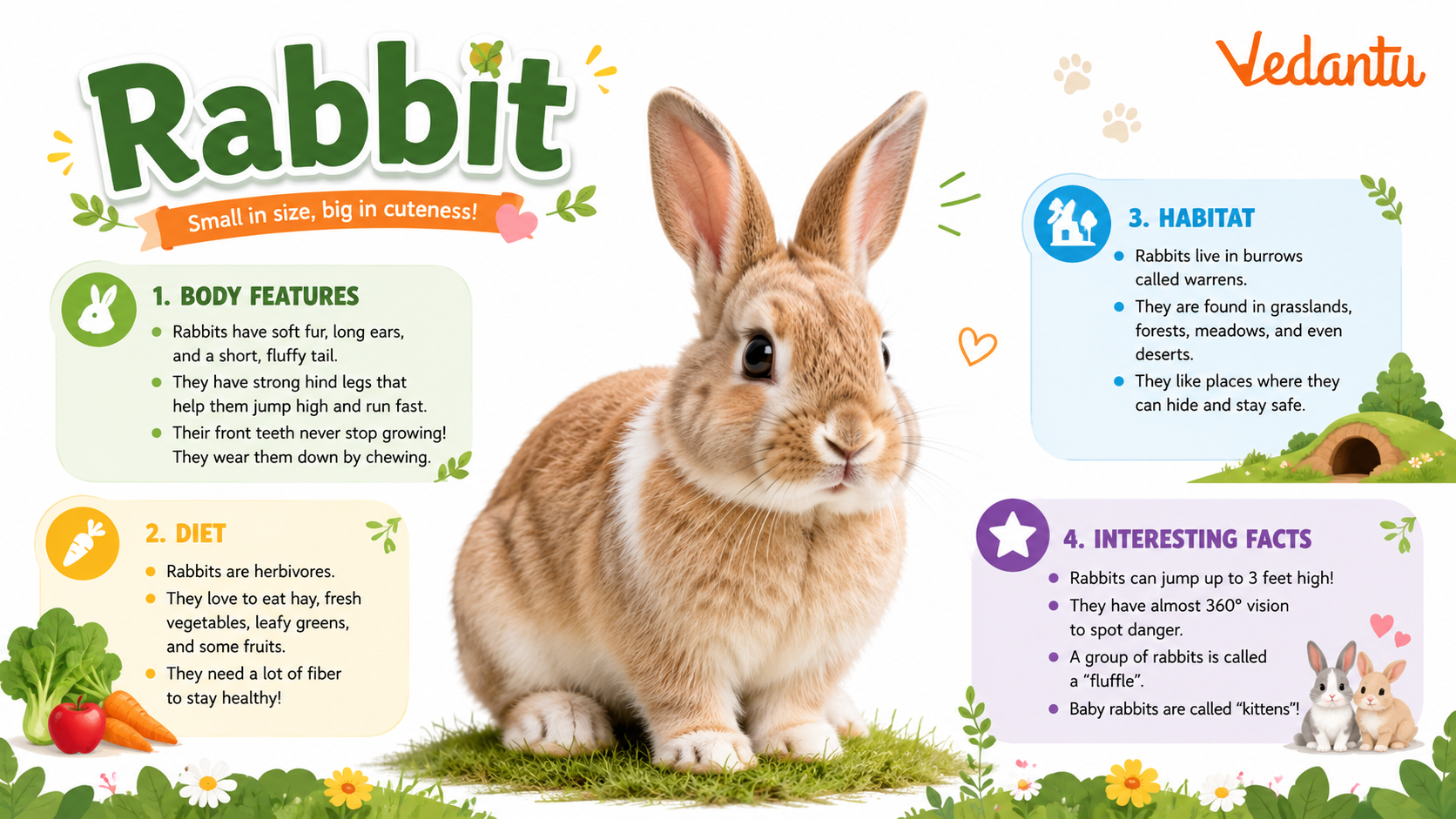
- Long ears that can rotate to detect sounds from far away.
- Large, round eyes placed on the sides of the head for wide vision.
- Short, fluffy tail often called a “cotton tail”.
- Sharp front teeth that grow continuously.
- Strong hind legs for fast hopping and quick escape.
Habitat and Distribution
Rabbit habitat varies depending on the species. They are found in many parts of the world except Antarctica.
- Live in grasslands, forests, meadows, wetlands, and even deserts.
- Wild rabbits dig underground tunnels called burrows or warrens.
- Prefer areas with plenty of grass and hiding places.
- Common in Europe, North America, Africa, and parts of Asia.
Diet and Feeding Habits
Rabbits are herbivores, which means their diet includes only plant-based food.
Grass and hay form the biggest part of a rabbit’s diet.
Leafy vegetables, herbs, bark, and roots.
They nibble small amounts many times a day.
Rabbits have a unique digestive system that helps break down tough plant fibers.
Behaviour and Lifestyle
- Mostly active during early morning and evening (crepuscular).
- Very alert and sensitive to sound and movement.
- Communicate by thumping their hind legs as a warning signal.
- Live in groups in the wild but can also live alone.
- Use speed and zig-zag running to escape predators.
Life Cycle and Reproduction
- Birth: Baby rabbits (kits) are born in nests lined with fur.
- Early Stage: Kits are born blind and without fur.
- Growth: Within 2–3 weeks, they open their eyes and begin exploring.
- Adult Stage: Rabbits grow quickly and can reproduce within a few months.
- Lifespan: Wild rabbits live shorter lives due to predators.
What Makes Rabbits Special?
Rabbits can leap up to 3 feet high and 10 feet long in a single jump.
Their wide-set eyes allow them to see almost all around them.
Long ears help detect even the faintest sounds.
Some rabbits can run up to 35–45 km per hour.
Importance and Role in Nature
Rabbits are important prey for foxes, eagles, wolves, and snakes.
Burrowing helps mix and aerate the soil.
Help spread plant seeds through their droppings.
Many rabbit breeds are kept as friendly pets.
Amazing Rabbit Facts
- Rabbits belong to the order Lagomorpha, not rodents.
- They groom themselves like cats.
- A rabbit’s ears help control body temperature.
- They can turn their ears in different directions.
- Wild rabbits live in complex tunnel systems.
- Rabbits can sleep with their eyes open.
- Their back legs are longer than their front legs.
Fun Facts for Kids
FAQs on Rabbit Guide: Facts, Habitat, Diet, and Behavior
1. What is a rabbit?
A rabbit is a small, furry mammal known for its long ears and hopping movement.
- Rabbits belong to the mammal group, meaning they have fur and feed milk to their babies.
- They are part of the lagomorph family, not rodents.
- Rabbits are famous for their long ears, short fluffy tails, and strong back legs.
- They live in many places around the world, including forests, grasslands, and farms.
2. Where do rabbits live?
Rabbits live in different habitats depending on their species and environment.
- Wild rabbits often live in underground homes called burrows or warrens.
- They are commonly found in meadows, forests, grasslands, and even deserts.
- Domestic rabbits live in hutches or homes as pets.
- Rabbits choose places that provide food and protection from predators.
3. What do rabbits eat?
Rabbits are herbivores, which means they only eat plants.
- Their main diet includes grass, hay, and leafy vegetables.
- They also eat carrots, herbs, and some fruits in small amounts.
- Rabbits need high-fiber foods to keep their digestive system healthy.
- Fresh water is important for pet and wild rabbits.
4. How long do rabbits live?
The lifespan of a rabbit depends on whether it is wild or domesticated.
- Wild rabbits usually live about 1–3 years due to predators.
- Pet rabbits can live between 8–12 years with proper care.
- Good food, shelter, and veterinary care help rabbits live longer.
- Different rabbit breeds may have slightly different lifespans.
5. Why do rabbits have long ears?
Rabbits have long ears to help them hear danger and stay cool.
- Their strong hearing helps them detect predators like foxes and hawks.
- Rabbit ears can turn in different directions to catch sounds.
- The ears help control body temperature by releasing heat.
- Long ears are one of the main features of a bunny or rabbit.
6. Are rabbits good pets for kids?
Rabbits can be good pets for kids if they are cared for properly.
- Pet rabbits are gentle and quiet animals.
- They need daily feeding, cleaning, and gentle handling.
- Adult supervision is important for younger children.
- Rabbits require space to hop and exercise to stay healthy.
7. How do rabbits move?
Rabbits move by hopping using their strong back legs.
- Their powerful hind legs help them jump and run fast.
- They can quickly change direction to escape predators.
- Rabbits also use their speed to explore their habitat.
- Hopping is a key feature of rabbit behavior.
8. What are baby rabbits called?
Baby rabbits are called kits or kittens.
- A female rabbit is called a doe.
- A male rabbit is called a buck.
- Rabbits are known for reproducing quickly.
- Kits are born small, blind, and without fur.
9. How do rabbits protect themselves from predators?
Rabbits protect themselves by staying alert and moving quickly.
- Their sharp hearing and wide-set eyes help them spot danger.
- They run fast and hide in burrows.
- Some rabbits stay very still to avoid being seen.
- Common predators include foxes, hawks, and wolves.
10. What is the difference between a rabbit and a hare?
Rabbits and hares are similar but have important differences.
- Hares are usually larger with longer ears and legs.
- Baby hares are born with fur and open eyes, unlike rabbit kits.
- Rabbits live in burrows, while hares live above ground.
- Both belong to the lagomorph family but are different species.
