






What Do Quails Eat? Habitat, Behavior, and Life Cycle Explained
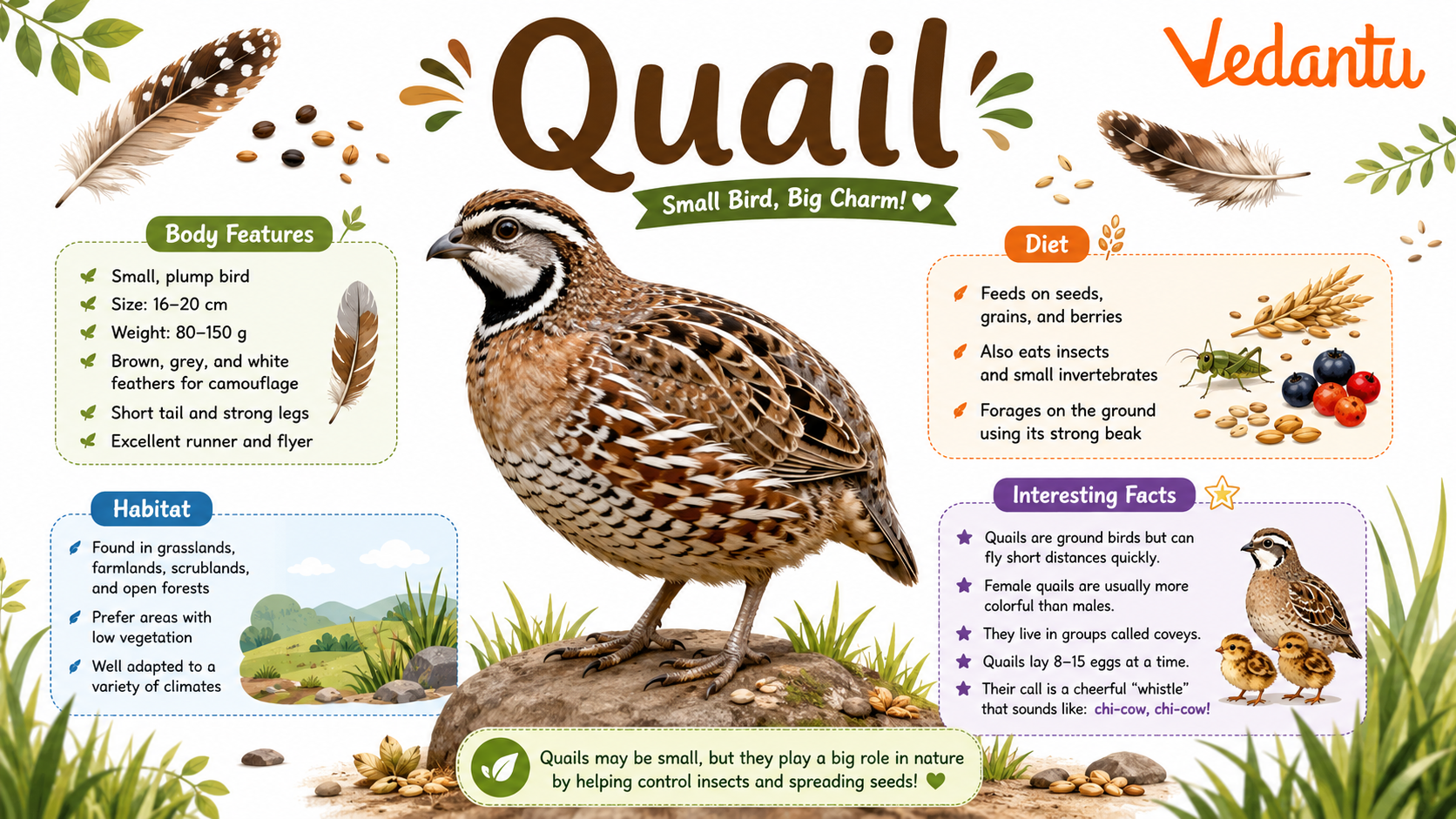
Quick Facts About Quail
| Feature | Details |
|---|---|
| Common Name | Quail |
| Scientific Family | Phasianidae |
| Animal Group | Bird |
| Size | 15–25 cm long |
| Weight | 70–140 grams |
| Lifespan | 2–5 years (wild) |
| Habitat | Grasslands, farms, forests |
| Diet | Seeds, grains, insects |
| Young One | Chick |
| Conservation Status | Mostly Least Concern (varies by species) |
Appearance and Physical Characteristics
- Colour: Brown, grey, or beige with speckled patterns for camouflage.
- Body Shape: Plump and compact.
- Wings: Short but powerful for sudden flight.
- Beak: Short and slightly curved for picking seeds and insects.
- Legs: Strong and muscular for fast running.
Habitat and Distribution
- Found in Asia, Europe, Africa, and North America.
- Some species migrate long distances.
- They build nests on the ground, hidden in tall grass.
- Prefer warm climates but can adapt to different environments.
Diet and Feeding Habits
- Seeds and grains
- Small insects
- Worms
- Leaves and berries
They search for food by scratching the ground with their feet and pecking quickly with their beaks. Quail play an important role in controlling insect populations.
Behaviour and Lifestyle
Many quail live in small groups called coveys.
Mostly active during early morning and evening.
Use camouflage and quick running to escape danger.
Make soft whistles and chirping calls.
Life Cycle of a Quail
- Egg Stage: Female lays 6–12 eggs in a ground nest.
- Incubation: Eggs hatch in about 16–18 days.
- Chick Stage: Chicks can walk and feed themselves soon after hatching.
- Adult Stage: Grow quickly and become adults within weeks.
Flight Adaptations
- Short, rounded wings for fast take-off.
- Strong chest muscles for powerful flapping.
- Lightweight body structure.
- Low, fast flight close to the ground.
Sound or Call
Quail are known for their soft whistling calls. Males call to attract females and mark their territory. Some species have very distinctive and rhythmic calls that are easy to recognize.
Types of Quail
Commonly raised for eggs and meat.
Found in North America, named after its “bob-white” call.
Recognised by the curved feather plume on its head.
A migratory species found in Europe and Asia.
Importance and Role in Nature
Amazing Quail Facts
- Quail eggs are smaller but richer in nutrients than chicken eggs.
- Some quail migrate thousands of kilometres.
- They can run faster than they can fly.
- Camouflage feathers protect them from predators.
- They prefer hiding rather than fighting.
- Quail farming is common worldwide.
Fun Facts for Kids
FAQs on Quail Bird Guide: Habitat, Diet, and Unique Traits
1. What is a quail?
A quail is a small, ground-dwelling bird known for its round body and quick movements.
- Quails belong to the pheasant family (Phasianidae).
- They are small birds with short tails and strong legs.
- Most quails live on the ground instead of in trees.
- They are known for their soft feathers and fast running.
2. Where do quails live?
Quails live in many parts of the world, especially in grassy and open areas.
- They are found in North America, Europe, Asia, and Africa.
- They prefer grasslands, farms, forests, and deserts.
- Some species migrate, while others stay in one place.
3. What do quails eat?
Quails are omnivores that eat both plants and small insects.
- They eat seeds, grains, and berries.
- They also eat insects like beetles and ants.
- Baby quails eat more insects for protein.
4. Can quails fly?
Yes, quails can fly, but only for short distances.
- They prefer to run quickly instead of flying.
- When scared, they burst into fast, low flight.
- Their wings are short and rounded.
5. How big is a quail?
A quail is a small bird, usually about the size of a small apple.
- Most quails are 6 to 10 inches long.
- They weigh between 3 to 7 ounces.
- They have plump bodies and short necks.
6. What are baby quails called?
Baby quails are called chicks.
- Quail chicks hatch from spotted eggs.
- They can walk and feed themselves soon after hatching.
- Mother quails protect their chicks carefully.
7. Are quails good pets?
Yes, some types of quails can be kept as pets or farm birds.
- Coturnix quail are popular for beginners.
- They need a safe cage and fresh food.
- They are quiet and easy to care for.
8. What are the different types of quail?
There are many species of quail found around the world.
- Bobwhite Quail (North America)
- California Quail (Western United States)
- Japanese Quail (Asia)
- King Quail (Australia and Asia)
9. How long do quails live?
Quails usually live for a few years in the wild.
- Wild quails live about 2 to 3 years.
- Pet quails may live up to 5 years with good care.
- Predators like foxes and hawks shorten their lifespan.
10. Why are quails important?
Quails are important because they help nature and provide food.
- They spread seeds and help plants grow.
- They are part of the food chain.
- People raise quails for eggs and meat.
