






Pembroke Welsh Corgi Temperament, Size, Lifespan, and Care Tips
The Pembroke Welsh Corgi is one of the most loved dog breeds in the world. Famous for its short legs, fox-like face, and cheerful personality, this small herding dog has won hearts everywhere. Originally bred in Wales to herd cattle, the Pembroke Welsh Corgi is smart, active, and very loyal. From farms to royal palaces, this adorable breed is known for its intelligence, courage, and friendly nature.
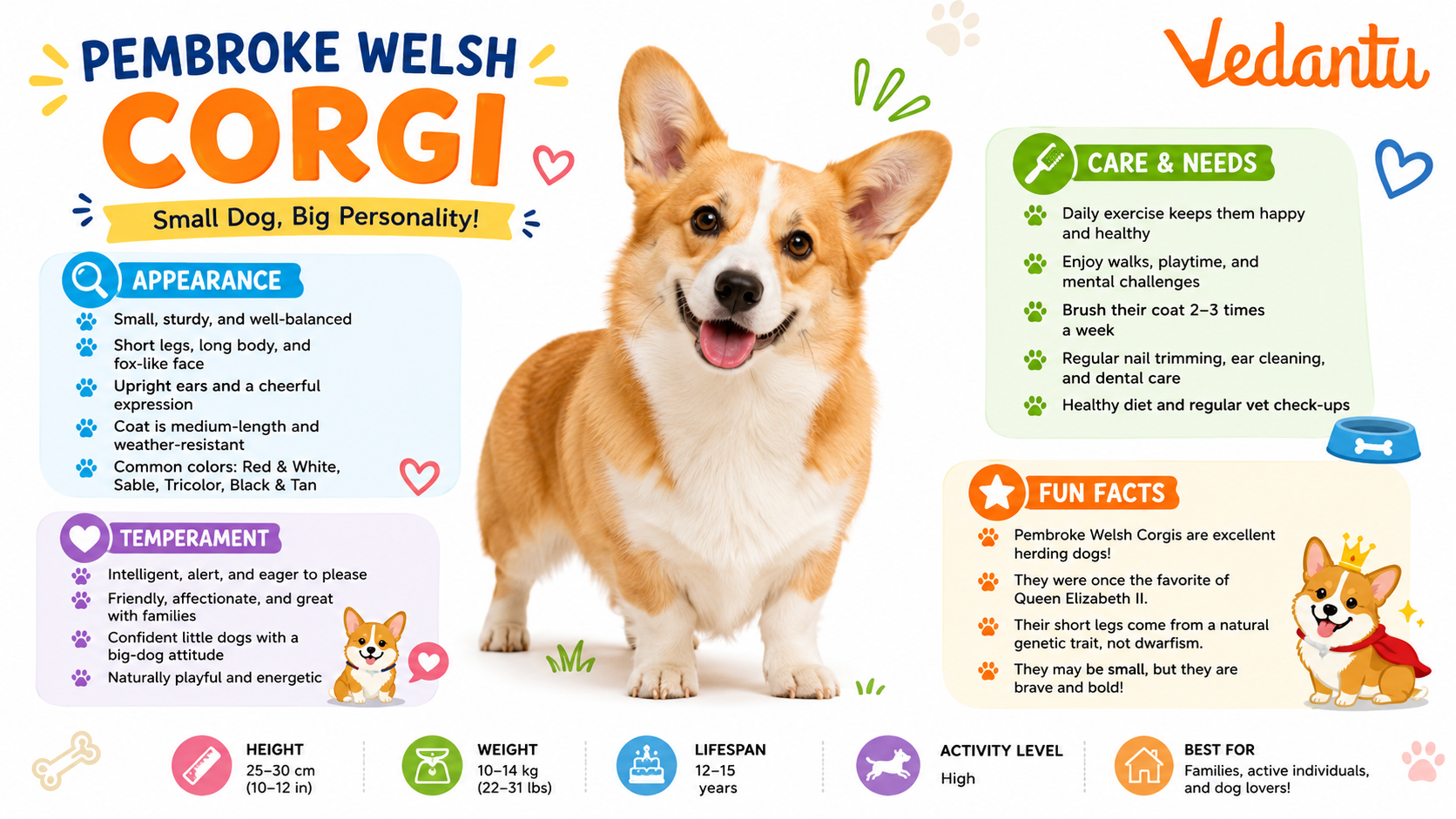
Quick Facts About Pembroke Welsh Corgi
| Feature | Details |
|---|---|
| Common Name | Pembroke Welsh Corgi |
| Scientific Name | Canis lupus familiaris |
| Animal Group | Mammal |
| Origin | Wales, United Kingdom |
| Height | 25–30 cm |
| Weight | 10–14 kg |
| Lifespan | 12–15 years |
| Diet | Omnivore (mainly dog food with meat and vegetables) |
| Original Use | Cattle herding |
| Young One | Puppy |
Appearance and Physical Characteristics
- Body Shape: Long body with very short but strong legs.
- Face: Fox-like face with alert expression.
- Ears: Large, upright ears.
- Coat: Medium-length double coat (soft inside, weather-resistant outside).
- Colours: Red, sable, fawn, or black and tan with white markings.
- Tail: Usually very short or naturally bobbed.
Habitat and Distribution
The original Pembroke Welsh Corgi habitat was the grassy farms of Wales. Today, this breed is found all over the world as a companion dog.
- Originally lived on farms and open fields.
- Adapt well to houses and apartments.
- Comfortable in moderate climates.
- Need daily outdoor exercise.
Diet and Feeding Habits
The Pembroke Welsh Corgi diet is balanced and nutritious. Though small in size, they have a big appetite!
- High-quality dog food rich in protein.
- Cooked vegetables and fruits in small amounts.
- Fresh water at all times.
- Portion control is important to prevent obesity.
Behaviour and Lifestyle
These dogs are social and enjoy being around people. Without enough activity, they may become bored.
Life Cycle of a Pembroke Welsh Corgi
- Birth: Puppies are born in litters of 4–8.
- Puppy Stage (0–1 year): Rapid growth, playful, and learning basic commands.
- Adult Stage (1–7 years): Fully grown, active, and energetic.
- Senior Stage (8+ years): Slower movement but still loving and loyal.
Temperament and Domestic Life
- Friendly and affectionate with family members.
- Good with children when trained properly.
- May try to “herd” people by gently nipping heels.
- Need regular grooming due to shedding.
- Enjoy mental challenges like puzzle toys.
What Makes Pembroke Welsh Corgi Special?
Importance of Pembroke Welsh Corgi
- Helped farmers manage cattle.
- Serve as loyal companion animals.
- Provide emotional support and reduce stress.
- Participate in dog sports and agility competitions.
Amazing Pembroke Welsh Corgi Facts
Fun Facts for Kids
- Corgis look like smiling dogs!
- They love chasing balls and toys.
- The word “Corgi” means “dwarf dog” in Welsh.
- They can run surprisingly fast.
- Many cartoons and stickers feature cute Corgis.
FAQs on Pembroke Welsh Corgi Dog Breed: Complete Guide for Owners
1. What is a Pembroke Welsh Corgi?
The Pembroke Welsh Corgi is a small but strong herding dog that comes from Wales and is famous for its short legs and big personality.
- Belongs to the herding group
- Originally bred to herd cattle and sheep
- Known for its short legs, long body, and upright ears
- One of the favorite breeds of Queen Elizabeth II
- Often searched as: “What is a Corgi dog?” or “Corgi breed facts for kids”
2. Why do Pembroke Welsh Corgis have short legs?
The short legs of a Pembroke Welsh Corgi help it herd animals by staying low to the ground and avoiding kicks.
- They have a genetic trait called dwarfism (achondroplasia)
- Low height helps them nip at cattle heels safely
- Their body is strong despite their size
- Common question: “Why are Corgis so short?”
3. Are Pembroke Welsh Corgis good family dogs?
Yes, Pembroke Welsh Corgis are friendly and loyal dogs that can be great family pets.
- Very affectionate and love attention
- Good with older children when trained properly
- Smart and easy to teach commands
- Need early socialization and training
- People also ask: “Are Corgis good with kids?”
4. How big does a Pembroke Welsh Corgi get?
A full-grown Pembroke Welsh Corgi is small in size but sturdy and strong.
- Height: about 10–12 inches tall
- Weight: around 24–30 pounds
- Compact yet muscular body
- Search term: “Pembroke Welsh Corgi size and weight”
5. What do Pembroke Welsh Corgis eat?
A Pembroke Welsh Corgi eats high-quality dog food to stay healthy and active.
- Balanced dry or wet dog food
- Portion control to prevent obesity
- Fresh water every day
- Occasional healthy treats
- People also search: “Best food for Corgis”
6. Do Pembroke Welsh Corgis shed a lot?
Yes, Pembroke Welsh Corgis shed quite a lot because they have a thick double coat.
- Have a double coat (soft undercoat and outer coat)
- Shed more during spring and fall
- Need brushing 2–3 times a week
- Common query: “Do Corgis shed a lot?”
7. How long do Pembroke Welsh Corgis live?
The average Pembroke Welsh Corgi lifespan is about 12 to 15 years with proper care.
- Regular vet check-ups help them live longer
- Healthy diet and daily exercise are important
- May face issues like hip dysplasia or back problems
- People also ask: “How long do Corgis live?”
8. Are Pembroke Welsh Corgis easy to train?
Yes, Pembroke Welsh Corgis are very intelligent and usually easy to train.
- Rank high in dog intelligence
- Respond well to positive rewards
- Can learn tricks and agility skills
- May try to herd people by nipping heels
- Search term: “Are Corgis smart dogs?”
9. What is the difference between Pembroke and Cardigan Welsh Corgi?
The main difference between Pembroke Welsh Corgi and Cardigan Welsh Corgi is their tail and body shape.
- Pembrokes often have a short or docked tail
- Cardigans have a long, fox-like tail
- Cardigans are slightly bigger with rounder ears
- Both are herding dogs from Wales
- Common query: “Pembroke vs Cardigan Corgi”
10. Do Pembroke Welsh Corgis need a lot of exercise?
Yes, Pembroke Welsh Corgis need daily exercise to stay happy and healthy.
- At least 30–60 minutes of activity per day
- Enjoy walks, fetch, and agility games
- Mental stimulation prevents boredom
- Helps control weight and behavior
- People also search: “How much exercise does a Corgi need?”
