






What Is a Gossamer Winged Butterfly? Habitat, Diet, and Life Cycle
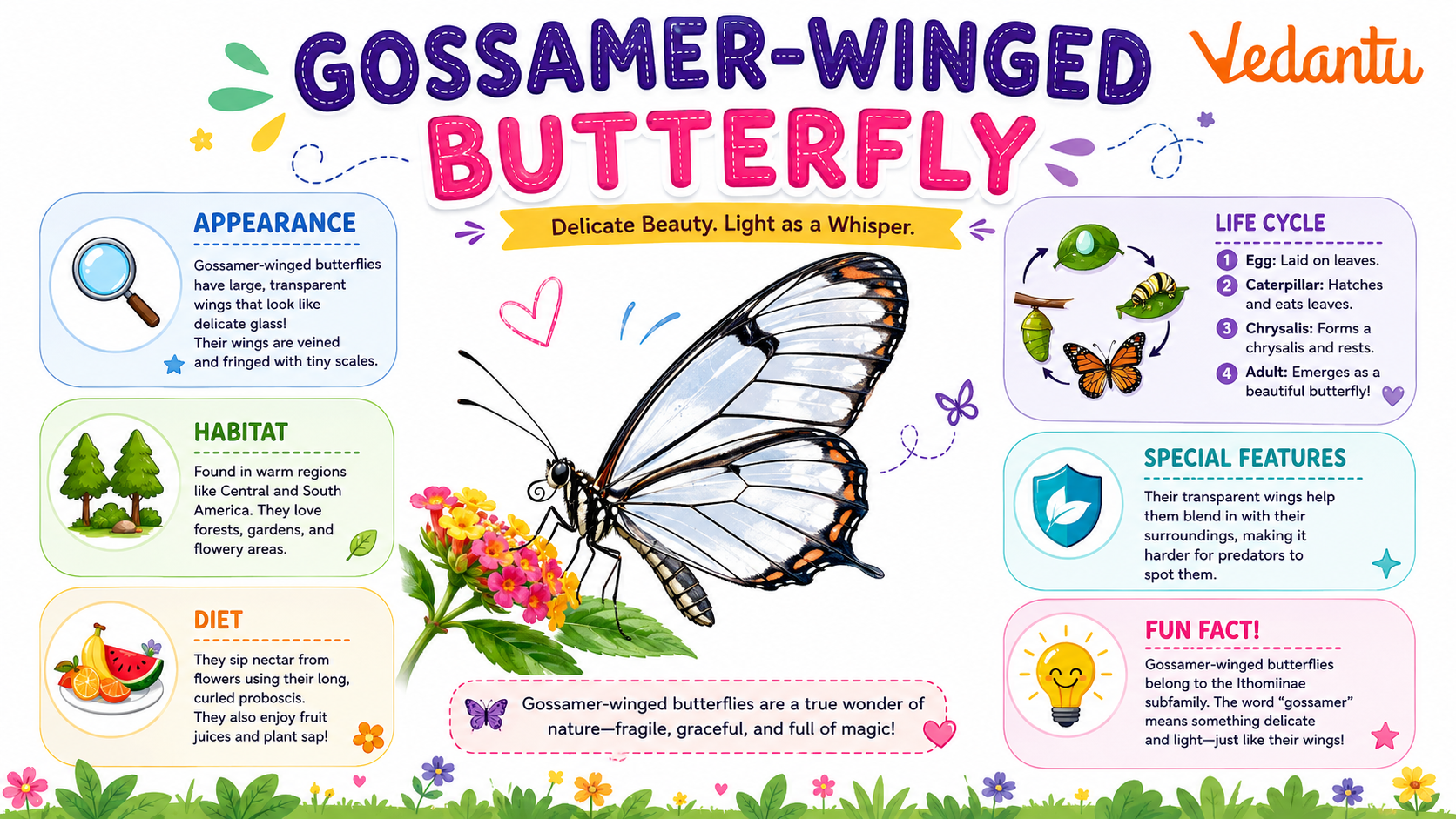
The Gossamer Winged Butterfly is one of the smallest and most delicate butterflies in the world. Known for its sparkling, colourful wings, this butterfly belongs to a large family called Lycaenidae. Despite their tiny size, these butterflies play a big role in nature as pollinators. In this page, you will explore Gossamer Winged Butterfly facts, habitat, diet, life cycle, characteristics, and why these beautiful insects are so important to our ecosystem.
Quick Facts and Statistics
| Feature | Details |
|---|---|
| Common Name | Gossamer Winged Butterfly |
| Scientific Family | Lycaenidae |
| Animal Group | Insect |
| Size | 1–5 cm wingspan (very small) |
| Habitat | Grasslands, forests, gardens, meadows |
| Diet | Nectar, plant sap, honeydew |
| Life Cycle | Complete metamorphosis (egg → larva → pupa → adult) |
| Found In | Worldwide, except Antarctica |
Appearance and Physical Characteristics
- Very small and delicate body.
- Wings often shine in blue, copper, purple, or orange colours.
- Some species have tiny tail-like extensions on their hindwings.
- Slender body with thin antennae.
- Soft, silky (gossamer-like) wing texture.
Habitat and Distribution
- Live in forests, grasslands, mountains, and gardens.
- Prefer warm and sunny climates.
- Often found near flowering plants.
- Many species live close to specific host plants.
Diet and Feeding Habits
- Adults mainly drink flower nectar.
- Some feed on tree sap and honeydew from aphids.
- Caterpillars eat leaves, buds, or flowers of host plants.
Behaviour and Lifestyle
- Active during the day (diurnal).
- Often seen flying low near plants.
- Some species form relationships with ants (mutualism).
- Rest with wings closed upright.
Life Cycle of Gossamer Winged Butterfly
- Egg: Laid on specific host plants.
- Larva (Caterpillar): Eats leaves and grows quickly.
- Pupa (Chrysalis): Transformation stage.
- Adult Butterfly: Emerges with colourful wings.
The Gossamer Winged Butterfly life cycle follows complete metamorphosis, just like other butterflies.
What Makes Gossamer Winged Butterfly Special?
Importance and Role in Nature
Amazing Facts About Gossamer Winged Butterfly
- They are also called “blues,” “coppers,” and “hairstreaks.”
- Many species are smaller than a coin.
- Their wing colours may look different in sunlight.
- Some species communicate with ants using vibrations.
- They are found almost everywhere except Antarctica.
- They rest with wings closed to show dull undersides for camouflage.
Fun Facts for Kids
FAQs on Gossamer Winged Butterfly: Tiny Jewel of Nature
1. What is a Gossamer Winged Butterfly?
A Gossamer Winged Butterfly is a small, brightly colored butterfly known for its delicate, shiny wings.
- Belongs to the family Lycaenidae
- Includes blues, coppers, hairstreaks, and harvesters
- Has thin, silky wings that look like gossamer (fine silk)
- Found in gardens, forests, and meadows worldwide
2. Why are they called Gossamer Winged Butterflies?
They are called Gossamer Winged Butterflies because their wings look light, shiny, and silky like fine threads.
- The word “gossamer” means very light and delicate
- Their wings often shimmer in sunlight
- Many species have bright blue, copper, or purple colors
- The name highlights their fragile beauty
3. Where do Gossamer Winged Butterflies live?
Gossamer Winged Butterflies live in many habitats around the world except Antarctica.
- Common in North America, Europe, Asia, and Africa
- Prefer gardens, grasslands, forests, and meadows
- Lay eggs on specific host plants
- Often seen near flowers rich in nectar
4. What do Gossamer Winged Butterflies eat?
Gossamer Winged Butterflies mainly feed on nectar and plant juices.
- Adults drink flower nectar
- Caterpillars eat leaves, buds, or flowers of host plants
- Some species feed on aphids or honeydew
- They help in pollination while feeding
5. How big are Gossamer Winged Butterflies?
Gossamer Winged Butterflies are usually very small compared to other butterflies.
- Wingspan ranges from 1 to 2 inches (2.5–5 cm)
- Some species are as tiny as a coin
- Despite their size, they have bright and bold colors
- Size helps them hide from predators
6. What is the life cycle of a Gossamer Winged Butterfly?
The life cycle of a Gossamer Winged Butterfly has four main stages like all butterflies.
- Egg – laid on a host plant
- Larva (caterpillar) – feeds and grows
- Pupa (chrysalis) – transforms inside a protective case
- Adult butterfly – emerges with delicate wings
7. Are Gossamer Winged Butterflies important for the environment?
Yes, Gossamer Winged Butterflies play an important role in healthy ecosystems.
- Act as pollinators for many plants
- Serve as food for birds and other animals
- Help scientists measure biodiversity
- Indicate a healthy natural habitat
8. How can you identify a Gossamer Winged Butterfly?
You can identify a Gossamer Winged Butterfly by its small size and shiny wing colors.
- Bright blue, copper, orange, or purple shades
- Thin and delicate wing structure
- Some have tiny tail-like extensions (hairstreaks)
- Often rest with wings closed upright
9. Do Gossamer Winged Butterflies interact with ants?
Yes, many Gossamer Winged Butterfly caterpillars have a special relationship with ants.
- This relationship is called mutualism
- Caterpillars produce a sweet liquid for ants
- Ants protect caterpillars from predators
- This behavior is common in the Lycaenidae family
10. How can kids help protect Gossamer Winged Butterflies?
Kids can help protect Gossamer Winged Butterflies by creating safe and friendly environments for them.
- Plant native flowers and host plants
- Avoid using harmful pesticides
- Learn about local butterfly species
- Support wildlife conservation efforts
