






German Shepherd Temperament, Training Tips, and Care Needs
The German Shepherd is one of the most popular and intelligent dog breeds in the world. Known for its bravery, loyalty, and sharp mind, this breed is often seen working with police, rescue teams, and families. German Shepherd facts show that they are hardworking, protective, and loving companions. With strong bodies and alert expressions, they are true working dogs that can learn quickly and adapt to many roles.
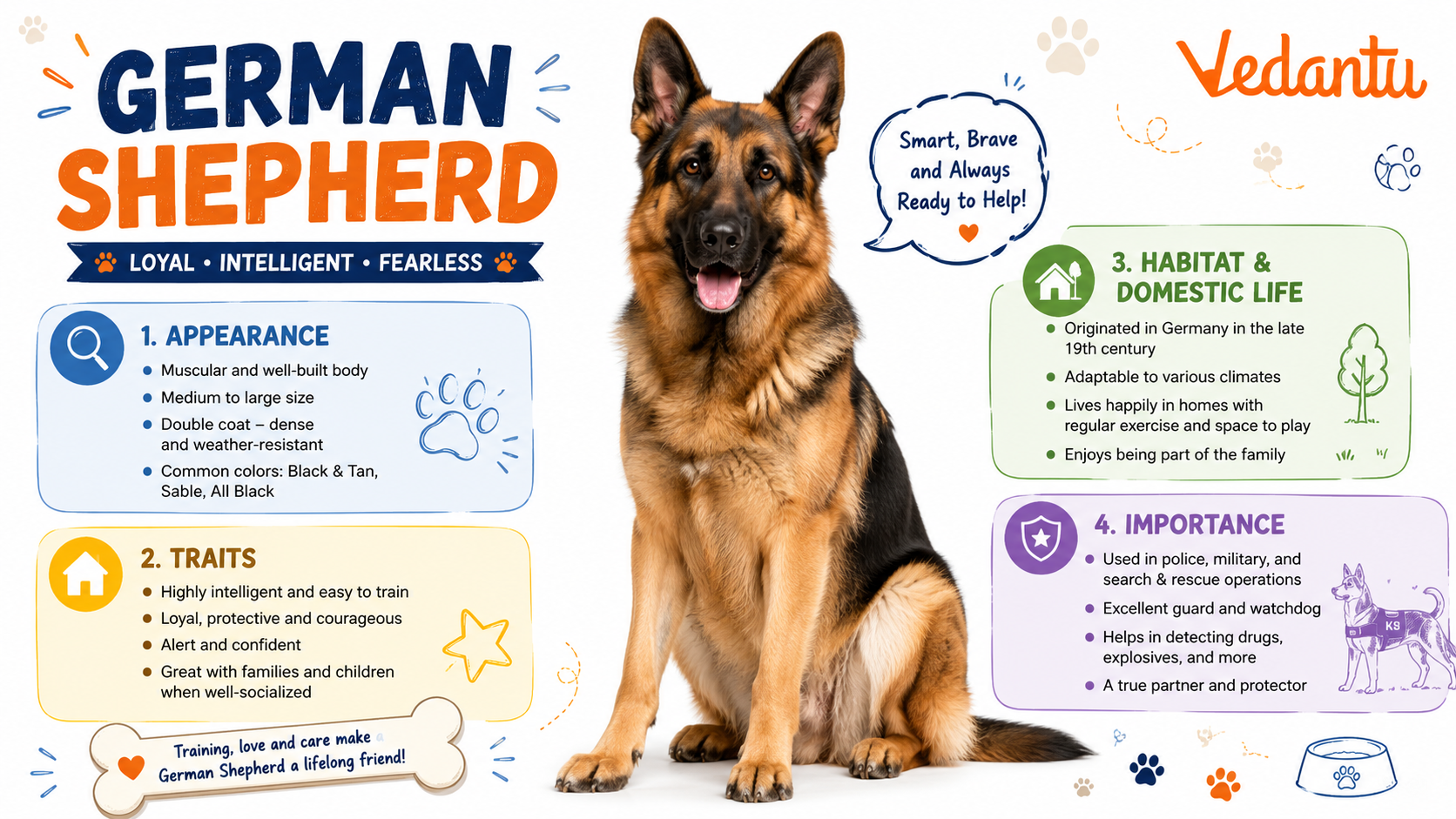
Quick Facts and Statistics
| Feature | Details |
|---|---|
| Common Name | German Shepherd |
| Scientific Name | Canis lupus familiaris |
| Animal Group | Mammal |
| Origin | Germany |
| Height | 55–65 cm (at shoulder) |
| Weight | 22–40 kg |
| Lifespan | 9–13 years |
| Diet | Omnivore (mainly meat-based diet) |
| Young One | Puppy |
Appearance and Physical Characteristics
- Medium to large-sized working dog
- Thick double coat (outer coat + soft undercoat)
- Common colours: black & tan, sable, black
- Pointed ears that stand upright
- Long bushy tail
- Sharp, intelligent eyes
Habitat and Distribution
- Originally bred in Germany for herding sheep
- Now found worldwide
- Lives comfortably in homes, farms, and training centres
- Prefers moderate climates but adapts well
- Needs open space and daily exercise
Diet and Feeding Habits
German Shepherd diet is mainly high-protein and meat-based, but they are technically omnivores.
Meat, chicken, fish, eggs, vegetables, and specially prepared dog food.
Usually fed 2 meals per day as adults. Puppies eat more frequently.
Very active breed that needs balanced nutrition for strength and stamina.
Behaviour and Lifestyle
- Very loyal and protective towards family
- Highly trainable and quick learners
- Confident and alert
- Needs regular physical and mental exercise
- Can be reserved around strangers
- Works as police, army, rescue, and guide dog
Life Cycle and Reproduction
- Birth: Female gives birth to 4–9 puppies in one litter.
- Puppy Stage: Puppies depend on mother’s milk for first few weeks.
- Growing Stage: Rapid growth in first year; training usually begins early.
- Adult Stage: Fully grown by 18–24 months.
- Lifespan: Lives around 9–13 years with proper care.
Temperament and Domestic Life
- Very loyal and protective
- Good with children when trained properly
- Needs early socialisation
- Requires daily exercise and mental challenges
- Forms strong bonds with owners
What Makes German Shepherd Special?
Amazing Facts About German Shepherd
- Ranked among the top 3 most intelligent dog breeds.
- Often used as police and military dogs worldwide.
- Can run up to 48 km/h.
- Originally bred in 1899.
- Has one of the strongest bite forces among dog breeds.
- Used as guide dogs for visually impaired people.
Interesting Facts About German Shepherd
- The breed was first developed for herding sheep.
- They are sometimes called “Alsatians” in some countries.
- They shed a lot and need regular grooming.
- Their ears stand up naturally after a few months.
Fun Facts for Kids
FAQs on German Shepherd Dog: Complete Breed Guide for Owners
1. What is a German Shepherd?
A German Shepherd is a large, intelligent, and loyal dog breed known for its courage and working ability.
- Originated in Germany in the late 1800s
- Also called Alsatian in some countries
- Belongs to the herding dog group
- Famous for being a police dog, guard dog, and family pet
- Highly valued for loyalty, intelligence, and protection skills
2. Are German Shepherds good family dogs?
Yes, German Shepherds can be wonderful family dogs when properly trained and socialized.
- Very loyal and protective of their family
- Good with children if raised together
- Need early socialization and obedience training
- Enjoy being part of family activities
- Thrive in homes with space and active owners
3. How big do German Shepherds grow?
A full-grown German Shepherd is a large and strong dog breed.
- Height: about 22–26 inches (56–66 cm)
- Weight: around 50–90 pounds (22–40 kg)
- Males are usually bigger than females
- Have a muscular build and long bushy tail
4. Why are German Shepherds used as police dogs?
German Shepherds are used as police and military dogs because they are smart, brave, and easy to train.
- Excellent sense of smell for tracking
- Strong protective instincts
- Quick learners with high obedience skills
- Physically strong and fast
- Used in search and rescue and detection work
5. What do German Shepherds eat?
A healthy German Shepherd diet includes high-quality food rich in protein and nutrients.
- Premium dry or wet dog food
- Protein from chicken, beef, or fish
- Fresh water available at all times
- Special puppy food for German Shepherd puppies
- Vet guidance for balanced nutrition
6. Are German Shepherds easy to train?
Yes, German Shepherds are one of the easiest dog breeds to train because they are very intelligent.
- Rank among the smartest dog breeds
- Respond well to positive reinforcement
- Learn commands quickly
- Need mental stimulation and daily practice
- Excel in obedience, agility, and working roles
7. How long do German Shepherds live?
The average German Shepherd lifespan is about 9 to 13 years.
- Depends on diet and exercise
- Regular vet checkups improve health
- Genetics can affect lifespan
- Proper care helps them live longer and happier
8. Do German Shepherds shed a lot?
Yes, German Shepherds shed heavily because they have a thick double coat.
- Shed year-round
- Heavy shedding during seasonal coat changes
- Need regular brushing 2–3 times a week
- Proper grooming keeps their coat healthy
9. Are German Shepherds dangerous?
German Shepherds are not dangerous if they are properly trained and cared for.
- Naturally protective and alert
- Need early socialization
- Good behavior depends on training and environment
- Can be gentle and loving family companions
10. What makes German Shepherds special?
German Shepherds are special because they combine intelligence, loyalty, and bravery in one breed.
- Strong work ethic
- Excellent guard and service dogs
- Deep bond with their owners
- Versatile in roles like therapy, rescue, and protection
- One of the most popular dog breeds worldwide
