






Dog Breeds, Lifespan, Training Tips, and Essential Care Needs
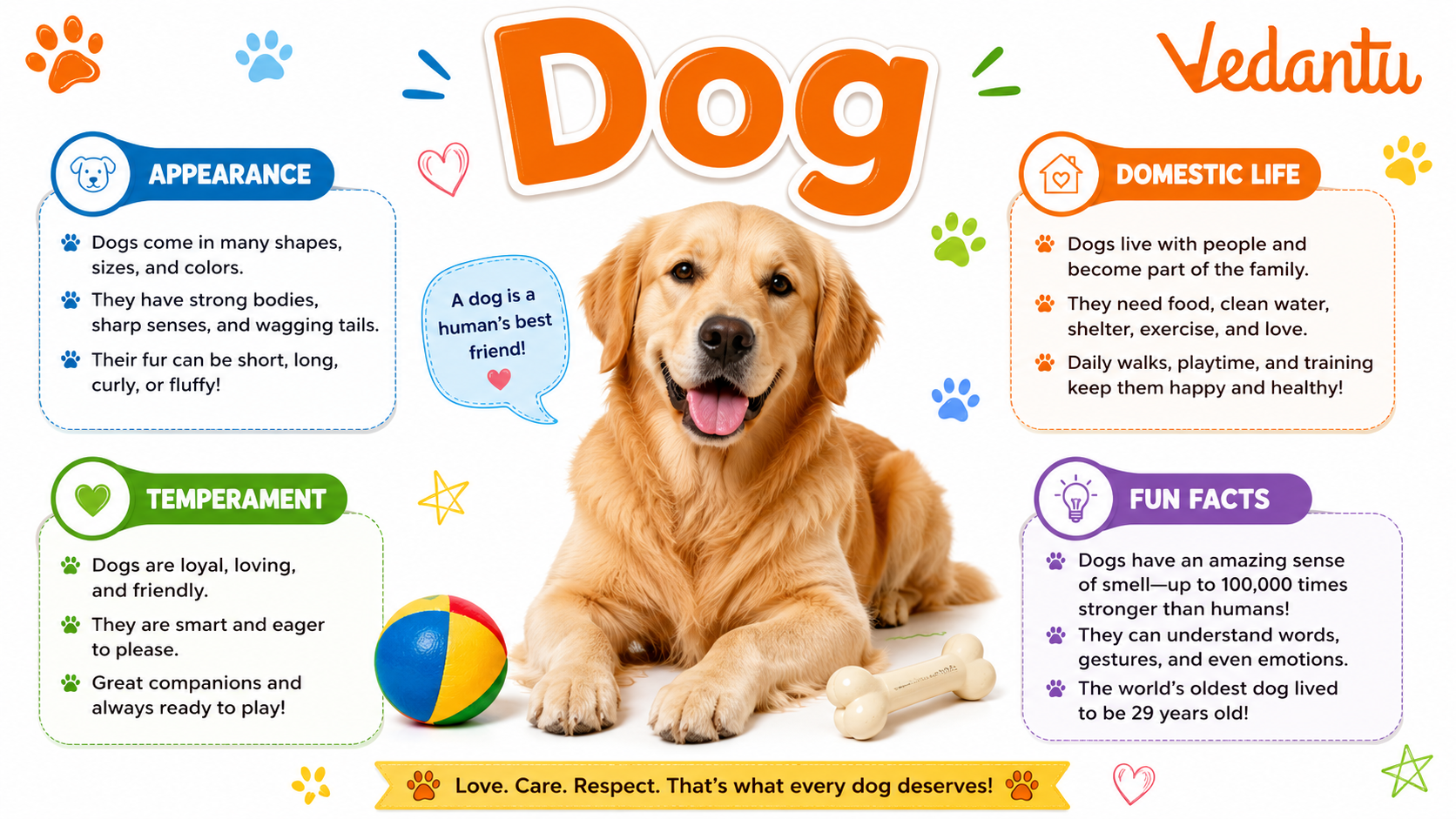
Quick Facts About Dogs
| Feature | Details |
|---|---|
| Common Name | Dog |
| Scientific Name | Canis lupus familiaris |
| Animal Group | Mammal |
| Diet | Omnivore |
| Lifespan | 10–15 years (varies by breed) |
| Habitat | Homes, farms, cities, villages |
| Young One | Puppy |
| Sound | Bark, howl, growl |
Appearance and Physical Characteristics
- Dogs come in many sizes – from tiny Chihuahuas to large Great Danes.
- They have four strong legs and a tail.
- Their bodies are covered with fur that can be short, long, curly, or straight.
- They have sharp teeth and a powerful sense of smell.
- Dogs have expressive eyes and movable ears.
Dog Habitat and Distribution
The natural ancestors of dogs were wild wolves, but today dogs live almost everywhere in the world. Their habitat mainly includes human homes and communities.
- Live in houses as pets.
- Stay on farms as guard or working animals.
- Found in cities, towns, villages, and even cold or hot regions.
- Some stray dogs live independently on streets.
Dog Diet and Feeding Habits
- Dogs are omnivores – they eat both plant and animal food.
- They eat meat, rice, vegetables, and specially prepared dog food.
- Puppies need more protein for growth.
- Clean water is very important for their health.
Behaviour and Lifestyle
- Dogs are social animals and love being around people.
- They are protective of their family and territory.
- They communicate using barking, tail wagging, and body language.
- Many dogs are active and need daily exercise.
Dog Life Cycle
- Birth: A baby dog is called a puppy.
- Puppy Stage: Puppies drink their mother’s milk and learn basic skills.
- Adolescent Stage: They grow quickly and become more active.
- Adult Stage: Fully grown dogs can work, guard, or live as pets.
- Senior Stage: Older dogs move slowly and need extra care.
What Makes Dogs Special?
Temperament and Domestic Life
- Most dogs are friendly and playful.
- They can be trained to follow commands.
- They need regular grooming and health check-ups.
- They require love, attention, food, water, and exercise.
Types and Diversity of Dogs
- Working Dogs: German Shepherd, Siberian Husky
- Sporting Dogs: Labrador Retriever, Golden Retriever
- Toy Breeds: Pug, Pomeranian
- Herding Dogs: Border Collie
Importance of Dogs
Amazing Dog Facts
- Dogs can understand up to 250 words and gestures.
- They can hear sounds four times farther away than humans.
- Some dogs can run up to 45 miles per hour.
- Dogs dream just like humans.
- They have three eyelids.
- Dogs sweat mainly through their paw pads.
Interesting Facts About Dogs
Fun Facts for Kids
- Dogs wag their tails when they are happy.
- Puppies love to chew while teething.
- Dogs can learn fun tricks like rolling over.
- Some dogs love swimming.
- Dogs can recognise their owner’s voice.
FAQs on Dog Guide: Breeds, Facts, Behavior & Daily Care
1. What is a dog?
A dog is a friendly and loyal animal that is often kept as a pet by people around the world.
- Dogs are domesticated mammals related to wolves.
- The scientific name of a dog is Canis lupus familiaris.
- They are known as man’s best friend because of their loyalty.
- Dogs come in many breeds, sizes, and colors.
2. What do dogs eat?
Dogs eat a balanced diet that helps them stay healthy and active.
- Most pet dogs eat specially made dog food (dry kibble or wet food).
- They can eat certain meats, vegetables, and grains.
- Fresh water is very important every day.
- Some human foods like chocolate and grapes are harmful to dogs.
3. How long do dogs live?
The average dog lifespan is between 10 to 15 years, depending on the breed and care.
- Small dog breeds often live longer than large breeds.
- Healthy food and regular exercise increase lifespan.
- Routine veterinary checkups keep dogs healthy.
4. What are the different types of dog breeds?
There are hundreds of dog breeds, each with unique traits and personalities.
- Labrador Retriever – friendly and great with families.
- German Shepherd – intelligent and protective.
- Bulldog – calm and strong.
- Poodle – smart and curly-haired.
5. Why do dogs bark?
Dogs bark to communicate their feelings and needs.
- They bark to alert their owners.
- They bark when they feel excited or playful.
- They may bark if they are scared or lonely.
- Barking is a natural form of dog communication.
6. How do you take care of a dog?
Taking care of a pet dog means giving it love, food, and proper health care.
- Provide healthy dog food and clean water.
- Give daily exercise and playtime.
- Keep up with vaccinations and vet visits.
- Offer grooming like bathing and brushing.
7. Are dogs good pets for kids?
Yes, dogs can be wonderful pets for kids when trained and supervised properly.
- They teach responsibility and kindness.
- Dogs provide companionship and emotional support.
- Some family-friendly breeds are Golden Retrievers and Beagles.
- Adult supervision ensures safety and care.
8. How do dogs communicate?
Dogs communicate using sounds, body language, and facial expressions.
- Barking, growling, and whining are vocal signals.
- Tail wagging often shows happiness.
- Ear and body posture show feelings.
- Dogs use eye contact to connect with humans.
9. Where do dogs come from?
Dogs were domesticated from wild wolves thousands of years ago.
- Early humans tamed wolves for help and protection.
- Over time, selective breeding created different dog breeds.
- Today, dogs live in homes all around the world.
10. What are fun facts about dogs?
Dogs have amazing abilities that make them special animals.
- Dogs have a powerful sense of smell stronger than humans.
- They can be trained as service dogs to help people.
- Some dogs can learn over 100 words.
- Dogs dream just like humans during sleep.
