






Bulldog Temperament, Health Issues, Lifespan, and Daily Care Needs
The charming face of courage!
The Bulldog is one of the most popular and easily recognised dog breeds in the world. Known for its wrinkled face, short nose, and strong build, the Bulldog is gentle, loving, and loyal. Originally bred in England, this breed has transformed from a tough working dog into a friendly family companion. Let’s explore amazing Bulldog facts, characteristics, habitat, diet, life cycle, and why this special dog is loved by so many people.
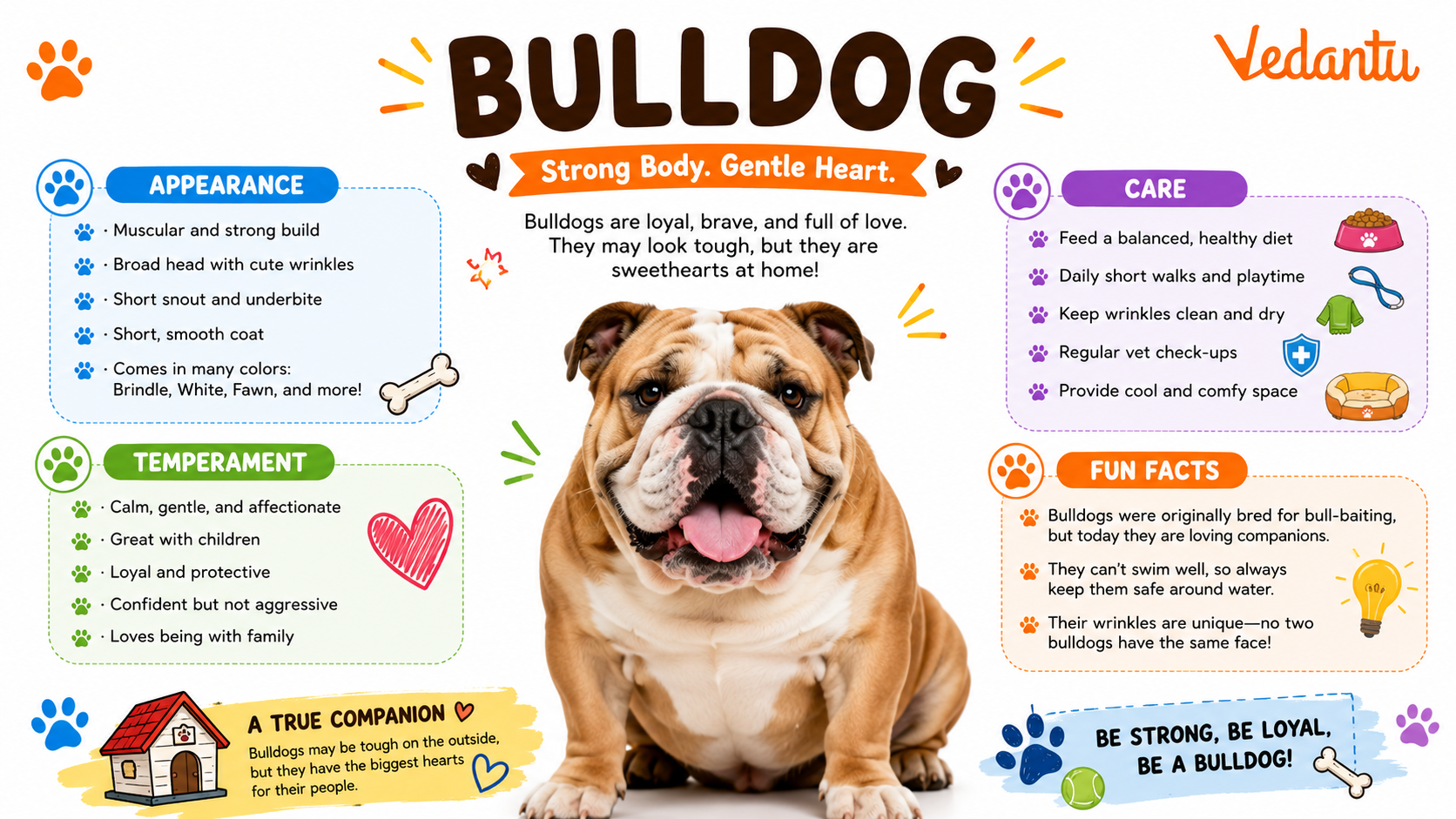
Quick Facts About Bulldog
| Feature | Details |
|---|---|
| Common Name | Bulldog (English Bulldog) |
| Scientific Name | Canis lupus familiaris |
| Animal Group | Mammal |
| Origin | England |
| Height | 31–40 cm (at shoulder) |
| Weight | 18–25 kg |
| Lifespan | 8–10 years |
| Diet | Omnivore (Dog food, meat, vegetables) |
| Habitat | Homes and urban areas |
| Young One | Puppy |
Appearance and Physical Characteristics
- Medium-sized but very muscular and heavy.
- Large head with loose, wrinkled skin.
- Short, flat nose (called a “brachycephalic” face).
- Small ears and wide shoulders.
- Short, smooth coat.
- Colours include white, fawn, brindle, red, or mixed shades.
Bulldog Habitat
Since Bulldogs are domestic animals, their habitat is very different from wild animals.
- Live in homes with families.
- Adapt well to apartments and small houses.
- Prefer cool environments because they do not tolerate heat well.
- Need soft bedding and indoor shelter.
Bulldog Diet and Feeding Habits
The Bulldog diet must be balanced to maintain their health and weight.
- High-quality dog food (dry or wet).
- Protein from meat like chicken or beef.
- Small portions of vegetables.
- Fresh water always available.
Behaviour and Lifestyle
Bulldogs are calm, loving, and great with children.
They enjoy short walks but prefer relaxing indoors.
They form strong bonds with their owners.
Despite their calm nature, they can be protective.
Life Cycle of a Bulldog
- Puppy Stage: Born in litters, puppies are playful and depend fully on their mother.
- Young Dog: Learns training, social skills, and basic commands.
- Adult Stage: Fully grown by 1–2 years; calm and steady behaviour.
- Senior Stage: After about 7 years, they may slow down and need extra care.
The average Bulldog lifespan is around 8–10 years with proper care.
Temperament and Domestic Life
- Very affectionate with family members.
- Good with children when trained properly.
- Can be stubborn but respond well to gentle training.
- Need regular cleaning of facial wrinkles.
- Require moderate exercise but not intense activity.
What Makes the Bulldog Special?
Importance of Bulldogs
- Beloved family pets.
- Emotional support and companion animals.
- Represent mascots for schools and sports teams.
- Help teach responsibility to children.
Amazing Bulldog Facts
- Bulldogs were originally bred for bull-baiting in the 13th century.
- Modern Bulldogs are gentle and friendly.
- They cannot swim well due to their heavy body.
- Their short nose can cause snoring sounds.
- They are one of the most popular dog breeds worldwide.
- Many universities use Bulldogs as mascots.
Interesting Facts About Bulldog
Fun Facts for Kids
- Bulldogs sometimes look serious but are very sweet.
- They love relaxing on sofas.
- Some Bulldogs skateboard and surf!
- Their wrinkles must be cleaned regularly.
- They may snore loudly while sleeping.
FAQs on Bulldog Dog Breed: Complete Guide to Traits, Care, and Facts
1. What is a Bulldog?
A Bulldog is a strong, friendly, and wrinkly-faced dog breed known for its gentle nature and unique appearance.
- The Bulldog dog breed is medium-sized with a muscular body.
- It has a short nose, loose skin, and a pushed-in face.
- Bulldogs are often called English Bulldogs or British Bulldogs.
- They are popular family pets because they are calm and loving.
2. Are Bulldogs good family dogs?
Bulldogs are great family dogs because they are gentle, loyal, and love being around people.
- They are patient with kids and children.
- They enjoy relaxing indoors with their family.
- Bulldogs are known for their affectionate and friendly temperament.
- They usually get along well with other pets.
3. Why do Bulldogs have wrinkly faces?
Bulldogs have wrinkly faces because of their unique breed history and body structure.
- Their loose skin was originally bred for protection.
- The wrinkles give them their famous cute and grumpy look.
- Owners must clean the folds to keep the Bulldog’s skin healthy.
4. How big do Bulldogs grow?
Bulldogs are medium-sized dogs with a strong and compact body.
- Adult English Bulldogs weigh about 40–50 pounds.
- They usually grow 12–16 inches tall.
- They may look heavy, but they are not very tall.
5. Do Bulldogs bark a lot?
Bulldogs do not bark a lot and are usually quiet dogs.
- They bark only when excited or alerting their owners.
- They are known more for snoring than barking.
- This makes them good apartment dogs.
6. What do Bulldogs eat?
Bulldogs eat balanced dog food to stay strong and healthy.
- High-quality dry or wet dog food is recommended.
- They need protein for their muscular body.
- Treats should be limited to prevent Bulldog obesity.
- Fresh water should always be available.
7. Are Bulldogs easy to train?
Bulldogs can be trained, but they may be a little stubborn.
- They respond well to positive reinforcement.
- Short and fun training sessions work best.
- They are intelligent but sometimes lazy.
8. Do Bulldogs have health problems?
Bulldogs can have some health issues because of their flat faces and body shape.
- They may have breathing problems (brachycephalic syndrome).
- Skin fold infections can happen without proper care.
- They can overheat in hot weather.
- Regular vet checkups keep your Bulldog healthy.
9. How long do Bulldogs live?
Bulldogs usually live 8 to 10 years with proper care and a healthy lifestyle.
- A balanced diet helps increase Bulldog lifespan.
- Regular exercise keeps them fit.
- Routine veterinary visits are important.
10. Do Bulldogs need a lot of exercise?
Bulldogs need moderate exercise but are not very active dogs.
- Short daily walks are enough.
- They enjoy light playtime indoors.
- Avoid heavy exercise in hot weather.
- They prefer relaxing and being couch companions.
