




Outer layer of Earth is called ________
Answer
 Verified
638.7k+ views
Hint: It is the most widely studied and understood layer that you live on.
Complete answer:
The outer layer of the Earth is called the crust. It is known to be the solid layer of the Earth. It is formed by the solidification of the molten lava, so the rocks contain silicate and aluminum.
Additional information:
Earth is made up of several layers. Each layer exhibits its own properties, composition, and characteristics that affect many of the key processes of our planet. The layers are (from the exterior to the interior) the crust, the mantle, the outer core, and the inner core.
The Earth's Crust is thin in comparison to the other three layers like the skin of an apple. Oceanic crust is only about 3-5 miles (8 kilometers) thick under the oceans and the continental crust is 25 miles (32 kilometers) thick under the continents. The temperatures of the crust vary from air temperature on top to the deepest parts of the crust to about 1600 degrees Fahrenheit (870 degrees Celsius).
So, the correct answer is crust.
Note: The crust of the Earth is broken into many pieces called plates. A soft, plastic mantle is located below the crust where these plates "float". These plates usually move along smoothly but sometimes they stick and build up pressure resulting into the bending of rocks until it snaps. When this occurs, an Earthquake is the result!
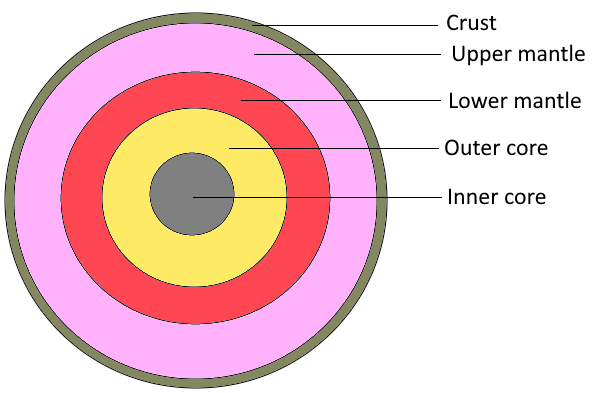
Fig: Layers of the Earth
Complete answer:
The outer layer of the Earth is called the crust. It is known to be the solid layer of the Earth. It is formed by the solidification of the molten lava, so the rocks contain silicate and aluminum.
Additional information:
Earth is made up of several layers. Each layer exhibits its own properties, composition, and characteristics that affect many of the key processes of our planet. The layers are (from the exterior to the interior) the crust, the mantle, the outer core, and the inner core.
The Earth's Crust is thin in comparison to the other three layers like the skin of an apple. Oceanic crust is only about 3-5 miles (8 kilometers) thick under the oceans and the continental crust is 25 miles (32 kilometers) thick under the continents. The temperatures of the crust vary from air temperature on top to the deepest parts of the crust to about 1600 degrees Fahrenheit (870 degrees Celsius).
So, the correct answer is crust.
Note: The crust of the Earth is broken into many pieces called plates. A soft, plastic mantle is located below the crust where these plates "float". These plates usually move along smoothly but sometimes they stick and build up pressure resulting into the bending of rocks until it snaps. When this occurs, an Earthquake is the result!
Fig: Layers of the Earth
Recently Updated Pages
Master Class 11 English: Engaging Questions & Answers for Success

Master Class 11 Social Science: Engaging Questions & Answers for Success
Master Class 11 Maths: Engaging Questions & Answers for Success
Master Class 11 Biology: Engaging Questions & Answers for Success
Master Class 11 Physics: Engaging Questions & Answers for Success
Master Class 11 Chemistry: Engaging Questions & Answers for Success
Trending doubts
Explain the Treaty of Vienna of 1815 class 10 social science CBSE
What is the Total Duration of Football Match?
First Cotton Mill of India
In which year voting age was reduced from 21 to 18?
10 examples of evaporation in daily life with explanations
What planets have no moons Which one has only one moon class 10 physics CBSE