








How Does the Human Digestive System Work in NEET Biology?
The human digestive system is a vital concept in NEET Biology, helping students understand how our body processes the food we eat into essential nutrients. A clear understanding of this topic forms a foundation for several important areas in physiology, making it a frequent subject in NEET exams. Mastering the human digestive system not only strengthens your NCERT concepts but also helps in answering a variety of application-based questions in NEET. This page will guide you through the core ideas, sub-concepts, exam relevance, and practical tips to confidently study the human digestive system for NEET.
What is the Human Digestive System?
The human digestive system is a complex group of organs and glands that work together to convert food into absorbable nutrients and energy. It breaks down large, complex food particles into simpler forms so the body can absorb and use them for growth, energy, and repair. The main structures include the alimentary canal (or digestive tract) and several accessory glands. Understanding this system helps explain how life-sustaining nutrients reach our bloodstream and cells.
Core Ideas and Fundamentals of the Human Digestive System
Main Functions
The digestive system is responsible for four major processes: ingestion, digestion, absorption, and egestion. Each process occurs in a specific sequence, ensuring efficient breakdown and assimilation of nutrients.
- Ingestion - Taking in food through the mouth
- Digestion - Breaking down complex food molecules into simpler, absorbable units (both mechanical and chemical)
- Absorption - Nutrients pass from the digestive tract into the blood or lymph
- Egestion - Removal of undigested waste from the body
Major Components of the Digestive System
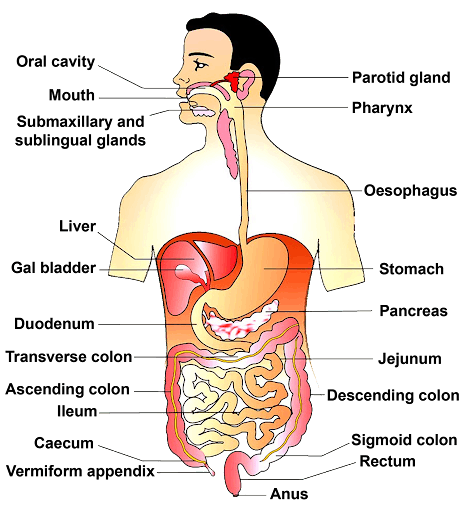
The system consists of a long tube, the alimentary canal, and important accessory glands. The main parts include:
- Mouth and buccal cavity
- Pharynx
- Oesophagus
- Stomach
- Small intestine (duodenum, jejunum, ileum)
- Large intestine (colon, rectum, anal canal)
- Accessory glands: salivary glands, liver, pancreas
Digestive Enzymes and Secretions
Enzymes play a key role in chemical digestion, breaking down carbohydrates, proteins, and fats into absorbable units. Secretions like saliva, gastric juice, bile, and pancreatic juice are involved at different stages of digestion.
Important Sub-Concepts Related to the Human Digestive System
Digestion in the Mouth
The process begins in the mouth with mastication and mixing of food with saliva containing salivary amylase, which starts breaking down carbohydrates.
Gastric Digestion
In the stomach, food mixes with gastric juices (hydrochloric acid and pepsin) leading to protein breakdown. The acidic environment also kills bacteria present in food.
Role of Small Intestine in Absorption
The small intestine is the primary site for both digestion (via enzymes from pancreas and intestinal glands) and absorption of nutrients into the bloodstream. The villi and microvilli increase the surface area for absorption.
Liver and Pancreas Functions
The liver produces bile, which emulsifies fats, aiding their digestion. The pancreas produces pancreatic enzymes that act on all three food components: carbohydrates, proteins, and fats. These accessory glands are key for smooth digestive processes.
Large Intestine and Water Absorption
The large intestine absorbs water and some vitamins from the undigested food, forming solid waste for elimination. Beneficial bacteria (gut flora) also help in some vitamin synthesis here.
Key Principles, Relationships, and Processes in Digestion
Main Digestive Enzymes and Their Actions
| Enzyme/Secretion | Source | Function |
|---|---|---|
| Salivary Amylase | Salivary glands | Breaks down starch to maltose in the mouth |
| Pepsin | Stomach (gastric glands) | Breaks down proteins into peptides |
| Bile | Liver (stored in gall bladder) | Emulsifies fats; makes fat digestion more efficient |
| Pancreatic Lipase | Pancreas | Converts emulsified fat to fatty acids and glycerol |
| Trypsin | Pancreas | Converts proteins/peptides to amino acids |
| Maltase, Sucrase, Lactase | Intestinal glands | Break disaccharides to monosaccharides |
This table summarizes major enzymes, their sources, and their specific roles in the digestive process. For NEET, knowing these points helps in both direct and conceptual application questions.
Features and Importance of the Human Digestive System
- Ensures our body gets essential nutrients and energy from the food we eat
- Plays a vital role in immunity (acidity of stomach, gut flora)
- Malfunctions can lead to common disorders (e.g., indigestion, ulcers, jaundice)
- Is fundamental to understanding human physiology in NEET and further medical studies
Why is the Human Digestive System Important for NEET?
The human digestive system is a commonly tested topic in NEET because it integrates knowledge of physiology, biochemistry, and human health. Questions often assess students' ability to apply concepts, identify parts and functions, and connect processes like enzyme action or absorption. Mastery of this system helps you tackle not only direct questions from this chapter but also integrated questions on nutrition, biomolecules, and human health. Understanding this concept supports logical thinking and prepares you for problem-solving in advanced topics within Biology.
How to Study the Human Digestive System Effectively for NEET
- Start by visualizing the entire system. Study clear diagrams and trace the journey of food through all organs.
- Understand the function and location of each digestive organ. Focus on what happens in each part, not just the definitions.
- Memorize important enzymes, their sources, and their roles using tables or flashcards for quick revision.
- Solve NEET-level MCQs, especially application-based questions that link structure and function or ask about consequences of malfunction.
- Link related sub-concepts like nutrition, disorders, and absorption mechanisms to the main topic for conceptual clarity.
- Revise regularly using flowcharts, mnemonics, or mind maps for pathways and enzyme sequences.
- Practice labeling diagrams and explaining processes aloud to reinforce memory and understanding.
Common Mistakes Students Make in the Human Digestive System
- Confusing the functions or locations of enzymes (e.g., pepsin vs. trypsin)
- Mixing up the processes of absorption and digestion
- Overlooking the importance of accessory glands like liver and pancreas
- Ignoring exceptions or unique features (e.g., bile contains no enzyme)
- Not practicing enough diagram-based questions or MCQs
Quick Revision Points for Last-Minute Preparation
- Digestive process includes ingestion, digestion, absorption, and egestion
- Main organs: mouth, pharynx, oesophagus, stomach, small intestine, large intestine
- Accessory glands: salivary glands, liver, pancreas
- Salivary amylase acts in mouth - breaks down starch
- Pepsin acts in stomach - breaks down proteins
- Bile aids fat digestion but contains no enzyme
- Most absorption occurs in small intestine via villi
- Large intestine absorbs water, prepares waste for elimination
- Diagrams are frequently asked - practice labeling and explanations
FAQs on Human Digestive System for NEET: Complete Overview
1. What is the human digestive system and its main functions?
The human digestive system is a complex network of organs responsible for breaking down food, absorbing nutrients, and eliminating waste, all essential for survival and energy in NEET Biology. Key functions include:
- Ingestion of food
- Mechanical and chemical digestion to break down complex food into simpler molecules
- Absorption of nutrients into the bloodstream
- Egestion of undigested waste
2. List the organs of the human digestive system in order.
The main organs of the human digestive system, listed in the order food passes through, help NEET aspirants remember their sequence for exams. They are:
- Mouth
- Pharynx
- Oesophagus
- Stomach
- Small intestine (duodenum, jejunum, ileum)
- Large intestine (colon, rectum)
- Anus
3. What is the process of digestion in the human body?
Digestion in the human body involves breaking down complex food substances into absorbable units, a key NEET Biology topic. Major steps include:
- Mechanical digestion (chewing, churning)
- Chemical digestion (enzymes breaking down carbohydrates, proteins, fats)
- Absorption of nutrients in the small intestine
- Assimilation into body tissues
- Egestion of waste
4. Which enzymes are involved in digestion and what are their functions?
Digestive enzymes speed up the breakdown of food, a vital NEET concept. Important enzymes and their roles include:
- Amylase: breaks down starch into sugars (mouth, pancreas)
- Pepsin: digests proteins (stomach)
- Trypsin: continues protein digestion (small intestine)
- Lipase: digests fats (pancreas, small intestine)
- Maltase, Sucrase, Lactase: break down disaccharides (small intestine)
5. What is peristalsis and why is it important in the digestive process?
Peristalsis refers to the wave-like muscle contractions in the digestive tract, essential for NEET Biology. Its importance:
- Moves food from mouth to stomach through oesophagus
- Propels digested material through intestines
- Ensures continuous movement and mixing of food with digestive juices
6. What happens to food in the stomach during digestion?
In the stomach, food undergoes both mechanical and chemical digestion, a frequent NEET exam topic. Main actions are:
- Churning mixes food with gastric juices
- Hydrochloric acid (HCl) kills bacteria and creates acidic environment
- Pepsin breaks down proteins
7. What is the role of the small intestine in digestion and absorption?
The small intestine is the main site for both enzymatic digestion and nutrient absorption, aligned with NEET syllabus. Key roles include:
- Completes chemical digestion with enzymes from pancreas and intestinal glands
- Villi and microvilli increase surface area for efficient absorption
- Transfers nutrients to the bloodstream
8. What are common disorders of the human digestive system?
Common digestive disorders frequently asked in NEET include:
- Gastritis: inflammation of the stomach lining
- Acidity
- Peptic ulcers
- Constipation
- Diarrhoea
- Jaundice
- Indigestion
9. What is the function of bile and where is it produced?
Bile is a digestive fluid that helps emulsify fats, making their digestion easier for lipase enzymes, as emphasised in NEET. It is:
- Produced in the liver
- Stored in the gallbladder
- Released into the small intestine during digestion
10. What is the difference between mechanical and chemical digestion?
Mechanical digestion involves physical breakdown of food, while chemical digestion uses digestive enzymes and acids to convert complex food into simple molecules, important for NEET concepts.
- Mechanical: Chewing, churning
- Chemical: Enzyme action (e.g., amylase, pepsin, lipase)
11. Define the term assimilation in the context of digestion.
Assimilation refers to the process where absorbed nutrients from digestion are utilised by body cells for energy, growth, and repair, a scoring topic for NEET. Key points:
- Occurs after absorption
- Nutrients enter metabolic pathways
- Supports body functions and structure
12. Explain how the human digestive system is adapted for its function.
The human digestive system has specialised adaptations for effective breakdown, absorption, and egestion—often highlighted in NEET. These include:
- Teeth for mechanical breakdown
- Enzymes for chemical digestion
- Villi in the small intestine for absorption
- Sphincters to control food passage
- Accessory glands (pancreas, liver) provide digestive juices
