








Algae Types and Their Classification in NEET Biology
Algae are simple, plant-like organisms found mainly in aquatic environments. For NEET aspirants, understanding algae is essential because it lays the foundation for topics in plant biology, ecology, and classification. Questions related to algae often test your grasp of basic biological principles and their practical applications. Mastering this topic will help you tackle both theory and applied questions with confidence.
What are Algae? - A Simple Explanation
Algae are a diverse group of photosynthetic organisms that can be unicellular or multicellular, mostly living in water. Unlike higher plants, they lack true roots, stems, and leaves. Algae are found everywhere - from fresh water and marine environments to moist soils and tree trunks. As primary producers, they play a significant role in the ecosystem by producing oxygen and serving as the base of aquatic food chains.
Core Ideas and Fundamentals of Algae
Definition and Basic Characteristics
Algae are non-vascular, mostly aquatic, photosynthetic organisms belonging to the kingdom Protista (and sometimes Plantae, depending on classification). They vary greatly in size, structure, and habitat, ranging from microscopic phytoplankton to giant kelps several meters long.
Where are Algae Found?
- Freshwater (ponds, lakes, rivers)
- Marine (seas and oceans)
- Moist soil, rocks, and even tree trunks
- Symbiotic relationships (e.g., lichens)
Photosynthetic Nature
Algae contain chlorophyll and other pigments, enabling them to trap sunlight and carry out photosynthesis. This is why algae are sometimes called "primitive plants." However, their structure is much simpler than that of higher plants.
Important Sub-Concepts Related to Algae
Classification of Algae
Algae are broadly classified based on their pigmentation, storage products, and cell wall composition. This helps NEET students understand the diversity and evolution within this group.
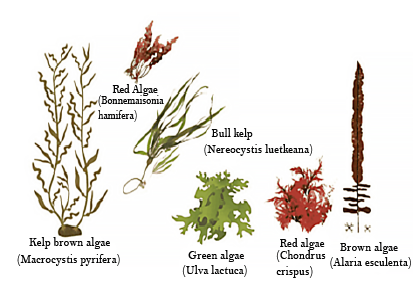
The major classes of algae include:
- Chlorophyceae (Green Algae): Contain mostly chlorophyll a and b. Found predominantly in fresh water.
- Phaeophyceae (Brown Algae): Dominated by fucoxanthin pigment. Mostly marine, include kelps.
- Rhodophyceae (Red Algae): Have phycoerythrin pigment. Mostly marine and often found in deeper waters.
Structure of Algal Cell
Algae show a wide variety of cell structures. Some are unicellular (like Chlamydomonas), while others are multicellular and may have simple or complex Thalli (body of algae). Most algal cells possess a cell wall, chloroplasts, and other eukaryotic organelles.
Reproduction in Algae
Algae can reproduce vegetatively (fragmentation), asexually (by spores), or sexually (fusion of gametes). The method of reproduction often depends on environmental conditions and species.
Principles and Biological Relationships in Algae
There are no complex formulas in algae, but understanding certain principles and relationships is crucial.
- Algae contribute significantly to global oxygen production via photosynthesis.
- Their classification is mainly based on pigment composition, type of stored food (like starch, mannitol), and cell wall composition (cellulose, algin, carrageenan).
- Reproductive cycles can be simple (haplontic) or complex (diplontic and haplodiplontic).
Importance, Advantages, and Applications of Algae
- Primary producers in aquatic ecosystems
- Produce a large portion of the world’s oxygen
- Source of food (e.g., Spirulina, Chlorella) and industrial raw materials (agar, alginates, carrageenan)
- Biofertilizers for agriculture (blue-green algae/cyanobacteria fix atmospheric nitrogen)
- Used in research, wastewater treatment, and biofuel production
Why is Algae Important for NEET?
Algae are a regular part of NEET Biology questions, especially in plant kingdom and ecology topics. Understanding algae helps students:
- Clarify basic plant biology concepts for advanced learning
- Connect the evolution of plant-like organisms and their ecological roles
- Handle application-based, conceptual, and classification questions in exams
- Understand links to topics like photosynthesis, food chains, and environmental science
How to Study Algae Effectively for NEET
- Start with a basic definition and general characteristics. Understand what makes algae unique among plant groups.
- Use diagrams (such as the classification chart) to solidify memory. Visual learning enhances recall in exams.
- Focus on key classes of algae, their pigments, and important examples. Make a table for quick comparison.
- Revise reproductive methods and noteworthy features (economic importance, ecological roles).
- Practice MCQs frequently to gauge concept clarity and application. Attempt previous years' NEET questions on algae.
- Group related facts (like pigments or storage molecules) for efficient revision.
- Regularly summarise key points and update your own revision notes.
- If possible, observe algae samples microscopically or through online videos to understand their diversity and appearance.
Common Mistakes Students Make in Algae
- Confusing algae with other plant groups or bacteria
- Misunderstanding the differences among green, brown, and red algae - especially pigment and habitat distinctions
- Ignoring the economic and ecological importance, focusing only on definitions
- Overlooking reproductive strategies and their variations among classes
- Rote memorization instead of grasping the logic behind classification
Quick Revision Points for Algae
- Algae = simple, mostly aquatic, photosynthetic organisms
- Three main groups: Green algae (Chlorophyceae), Brown algae (Phaeophyceae), Red algae (Rhodophyceae)
- Key features: No true roots, stems, or leaves; chlorophyll and other pigments; aquatic habitats
- Importance: Oxygen production, primary producers, biofertilizers, food, industry
- Reproduction: Vegetative, asexual (spores), and sexual
- NEET tips: Focus on classification, pigments, and distinguishing features
FAQs on Algae in NEET Biology: Key Concepts and Classification
1. What are algae?
Algae are simple, autotrophic organisms that perform photosynthesis and live mainly in aquatic environments.
Key features include:
- They lack true roots, stems, and leaves.
- Contain chlorophyll and other pigments for photosynthesis.
- Exist as unicellular, colonial, or multicellular forms.
- Play a crucial role in oxygen production and aquatic food chains.
2. What are the major types of algae?
Algae are classified into three main types based on their pigments and storage materials:
- Chlorophyceae (Green algae)
- Phaeophyceae (Brown algae)
- Rhodophyceae (Red algae)
3. Why are algae important in the ecosystem?
Algae serve as primary producers in aquatic ecosystems, forming the base of the food web.
Main ecological roles:
- Produce about 50% of global oxygen through photosynthesis.
- Support aquatic food chains and biodiversity.
- Help in nutrient cycling and water purification.
4. What is the economic importance of algae?
Algae provide several economic benefits across industries.
Major uses:
- Edible algae (such as Porphyra and Chlorella) as food and supplements.
- Used in agar, carrageenan, and alginate production.
- Serve as fertilizer and animal feed.
- Contribute to biofuel, pharmaceuticals, and cosmetics.
5. How do algae reproduce?
Algae reproduce by vegetative, asexual, and sexual methods.
- Vegetative: By fragmentation or cell division.
- Asexual: Through spores such as zoospores, aplanospores.
- Sexual: Through gamete fusion (isogamy, anisogamy, oogamy).
6. What pigments are present in different groups of algae?
Algal groups differ in predominant pigments.
- Green algae (Chlorophyceae): Chlorophyll a, b
- Brown algae (Phaeophyceae): Chlorophyll a, c, and fucoxanthin
- Red algae (Rhodophyceae): Chlorophyll a, d, and phycoerythrin
7. What are the main characteristics of green algae?
Green algae (Chlorophyceae) are a major group under algae with the following features:
- Primarily freshwater, sometimes marine.
- Cellulosic cell wall with high starch storage.
- Major pigments are chlorophyll a and b, giving them a green color.
- Include common NEET examples like Ulothrix and Spirogyra.
8. How are algae different from fungi?
Algae and fungi differ fundamentally in structure and nutrition.
- Algae: Autotrophic, photosynthetic, contain chlorophyll.
- Fungi: Heterotrophic, lack chlorophyll, feed on organic matter.
- Algae thrive in moist or aquatic environments; fungi prefer damp, dark habitats.
9. What role do algae play in biofertilizer production?
Certain algae act as biofertilizers by fixing nitrogen and improving soil fertility.
- Blue-green algae (Cyanobacteria) like Anabaena and Nostoc fix atmospheric nitrogen.
- Enhance crop yield and soil health in paddy fields.
- Reduce dependency on chemical fertilizers.
10. Which examples of algae are frequently asked in NEET exams?
Key examples from each group should be memorized for NEET:
- Green algae: Chlamydomonas, Volvox, Ulothrix, Spirogyra
- Brown algae: Laminaria, Sargassum, Fucus
- Red algae: Polysiphonia, Porphyra, Gelidium
11. How are algae classified?
Algae are classified based on pigment composition, cell wall structure, and reserve food material.
- Three major classes: Chlorophyceae, Phaeophyceae, Rhodophyceae.
- Further divided based on thallus organization and reproductive methods.
12. Do algae have any harmful effects?
While algae have numerous benefits, some can cause harmful algal blooms (HABs).
- Release toxins leading to fish deaths and water pollution.
- Can contaminate drinking water and disrupt aquatic life.
- Cyanobacteria are often responsible for such blooms.
