



What is IGCSE Board?
IGCSE stands for International General Certificate of Secondary Education. It is an internationally recognised qualification mainly designed for students aged 14 to 16 years, usually in Grades 9 and 10. The IGCSE board is known for its flexible curriculum, wide subject choices, international approach, and focus on concept-based learning.
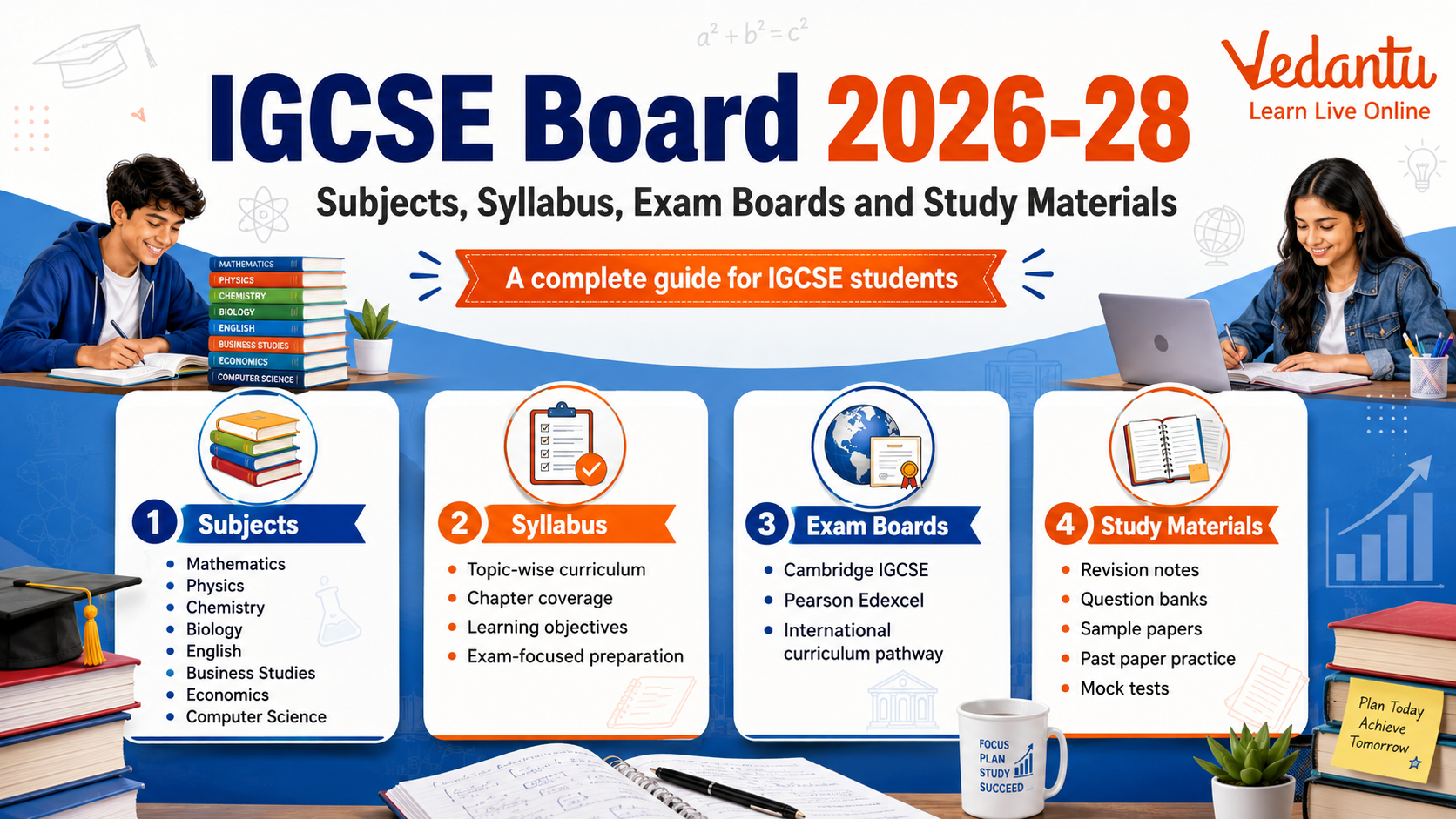
Students and parents often search what is IGCSE board to understand whether it is a school board, curriculum, or exam system. In simple words, IGCSE is an international secondary-level qualification offered by exam boards such as Cambridge International Education, Pearson Edexcel, and Oxford AQA. It helps students build strong subject knowledge along with skills like critical thinking, enquiry, problem-solving, communication, and practical application.
What is IGCSE Board?
IGCSE board refers to the international examination boards that offer the IGCSE qualification. IGCSE itself is not one single board. It is a globally accepted curriculum and examination framework offered by different international exam boards.
The main IGCSE exam boards are:
So, when students ask what is IGCSE board, the answer is that it is an international qualification offered through recognised exam boards, mainly for secondary school students.
IGCSE Board Overview 2026-28
Why Choose IGCSE?
The IGCSE board is popular because it gives students more flexibility in learning. It allows schools to create subject combinations based on student needs, interests, and future academic plans.
The IGCSE curriculum focuses on:
Understanding concepts clearly
Applying knowledge to new and familiar situations
Developing problem-solving skills
Building enquiry and reasoning ability
Improving English communication
Encouraging independent thinking
Preparing students for advanced study
This makes IGCSE useful for students who want to continue with A Levels, IB Diploma Programme, international education pathways, or other senior secondary qualifications.

FAQs on IGCSE Board 2026-28: Subjects, Syllabus, Exam Boards and Study Materials
1. What is IGCSE?
IGCSE stands for International General Certificate of Secondary Education. It is an international qualification mainly for students aged 14 to 16 years, usually in Grades 9 and 10.
2. What is IGCSE board?
IGCSE board refers to the international exam boards that offer IGCSE qualifications. Major IGCSE boards include Cambridge International Education, Pearson Edexcel, and Oxford AQA.
3. Is IGCSE a board or curriculum?
IGCSE is an international curriculum and qualification. It is commonly called the IGCSE board, but it is offered by different exam boards.
4. Which board conducts IGCSE exams?
IGCSE exams are conducted by international exam boards such as Cambridge International Education, Pearson Edexcel, and Oxford AQA.
5. What age group is IGCSE for?
IGCSE is mainly for students aged 14 to 16 years, usually studying in Grades 9 and 10.
6. How many subjects are there in IGCSE?
Cambridge IGCSE offers over 70 subjects, including around 30 languages. The exact subjects available depend on the school and exam board.
7. How many subjects should students choose in IGCSE?
Students usually choose around 5 to 9 subjects, depending on their school, exam board, and future academic plans.
8. What is the difference between Core and Extended in IGCSE?
Core covers basic subject content, while Extended includes advanced topics and is suitable for students aiming for higher grades.
9. Is IGCSE accepted worldwide?
Yes, IGCSE is recognised by many schools, universities, colleges, and employers across the world.
10. Is IGCSE valid in India?
Yes, IGCSE is offered by many international schools in India and is accepted for further education pathways, depending on school, university, and admission requirements.
11. Is IGCSE better than CBSE?
IGCSE and CBSE are different education systems. IGCSE focuses strongly on international curriculum, subject flexibility, and application-based learning, while CBSE follows the Indian national curriculum. The better option depends on the student’s goals.
12. What comes after IGCSE?
After IGCSE, students can move to A Levels, IB Diploma Programme, or other senior secondary qualifications, depending on their academic plans.
13. Is IGCSE difficult?
IGCSE can be challenging because it focuses on understanding and application. However, with regular study, past paper practice, and clear concept learning, students can prepare well.
14. What are the main benefits of IGCSE board?
The main benefits of the IGCSE board include global recognition, flexible subject choices, concept-based learning, strong communication skills, and preparation for advanced study.
15. Where can I find IGCSE study materials?
Students can use subject-wise IGCSE study materials, including syllabus pages, notes, important questions, sample papers, past papers, and topic-wise resources for better preparation.
