







What Are Animal Names Definition Types and Example List
 Table of Content
We live in a diverse country. You must see human beings which are living beings, you also see plants which are living things. But what else comes under living organisms? Have you seen different animals? They are also living organisms and there are different types of animals.
Let's Study Animals in Detail :
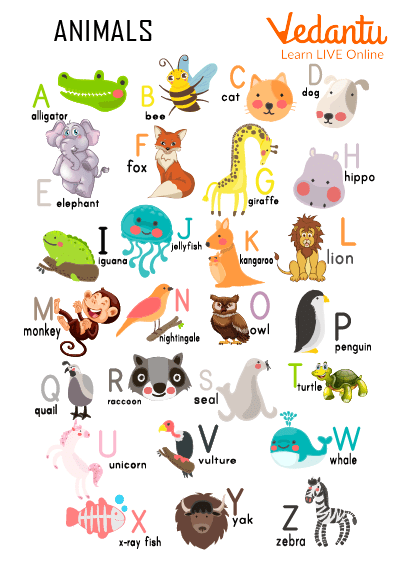
Animals
Animals are defined as living organisms that can move and eat. Animals need food and water to survive. Animals can also sense what goes around them. So we can say that as animals are living things they are also like humans, they eat, they walk, and they talk in their language.
List of 100+ Names of Animals
Here’s a table with a list of 100+ names of animals:
Different Types of Animals
There are millions of different species of animals. We can classify the types of animals into 6 main types and every category is different from the other, these are as follows:
Pet animals
Farm animals
Wild animals
Mammals
Sea animals
Birds
Insects
Let’s study them in detail
Pet Animals
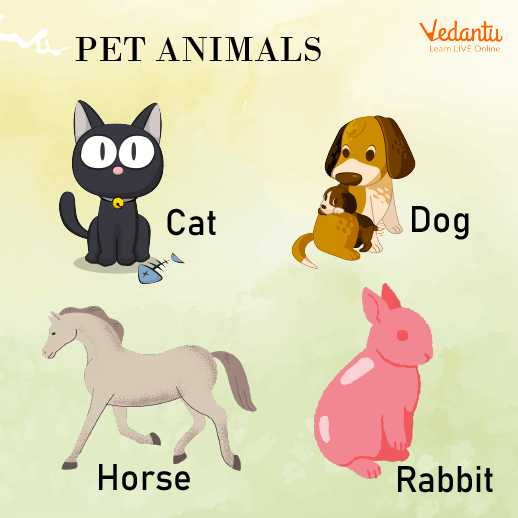
Pet Animals
The animals we like to keep in our homes are known as pet animals. They are domestic, different pet animals are:
Dog
Puppy
Turtle
Rabbit
Parrot
Cat
Goldfish
Mouse
Hamster
Farm Animals
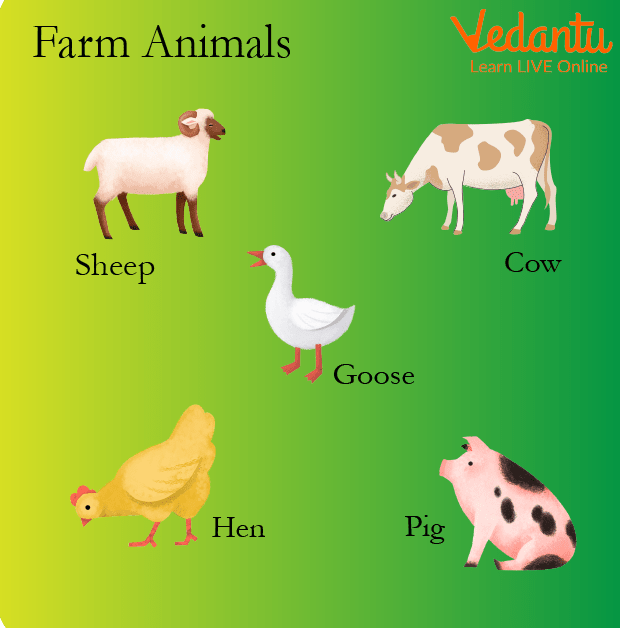
Farm Animals
There are numerous farm animals that people like to keep on the farms, these animals are a source of livelihood for the people and people earn great through keeping these animals include:
Cow
Rabbit
Dogs
Pig Goat
Fish
Chicken
Horse
Wild Animals
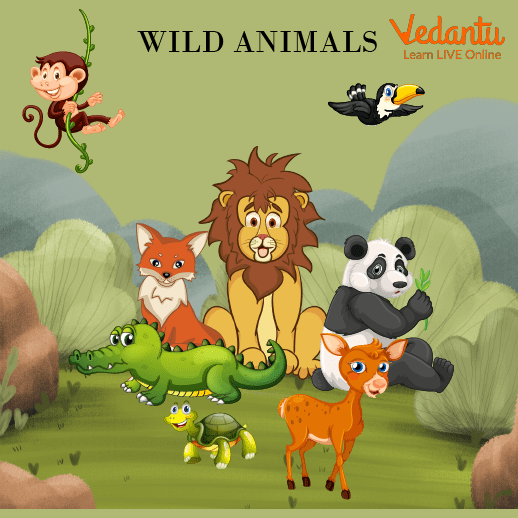
Wild Animal Names
The animals that are dangerous and that we cannot keep at home or which cannot be on roads are the wild animals these species of animals are kept separate in forests or some wildlife conservations where animals are kept these animals include;
Giraffe
Snake
Lion
Tiger
Gorilla
Fox
Kangaroo
Squirrel
Elephant
Crocodile.
Mammals
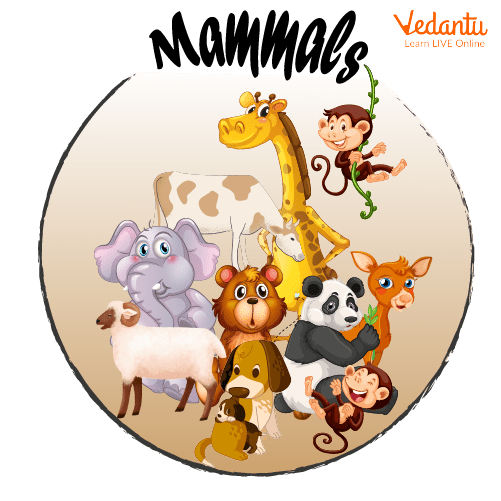
Mammals
Mammals are any vertebrates, which belong to the class Mammalia. Mammals have different features: they have hair on their body and they have mammary glands.
Different kinds of mammals are
Squirrel
Dog
Panda
Kangaroo
Horse
Monkey
Cow
Elephant
Fox
Sea Animals
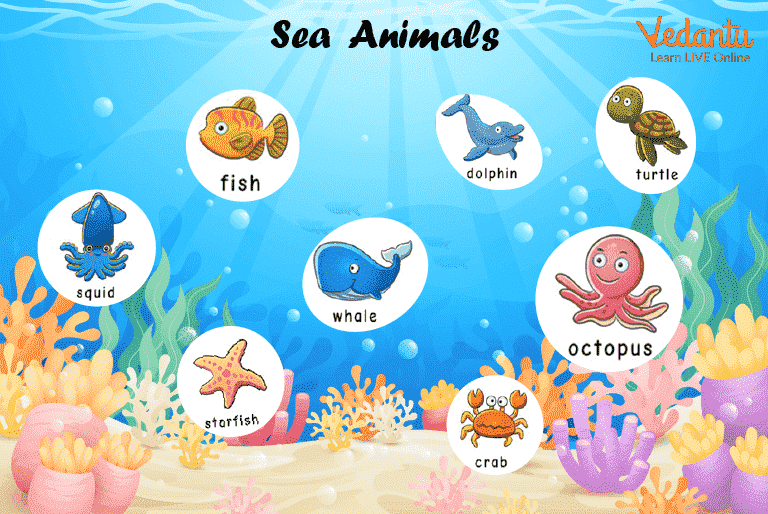
Sea Animals
Sea animals are animals that are aquatic. They survive in water only and they are found in different water bodies such as rivers, ponds, lakes, and oceans.
Different kinds of sea animals include
Fish
Crab
Seal
Octopus
Shark
Seahorse
Starfish
Whale
Penguin
Jellyfish
Lobster
Sea lion
Sea turtle
Birds
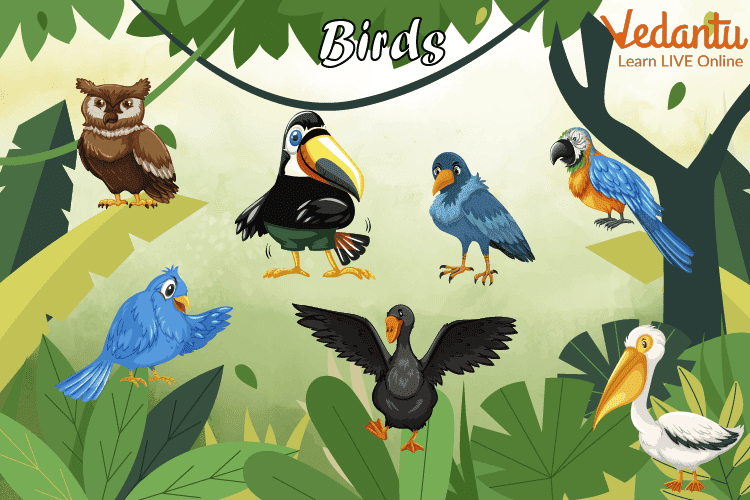
Different kinds of Birds
Birds are organisms that have feathers, they have big jaws as they are also living organisms that fly high in the sky. There are different kinds of birds. Birds have 4 chambered hearts and lightweight skeletons which help them to fly.
Different kinds of words are as follows:
Crow
Peacock
Sparrow
Pigeon
Turkey
Insects
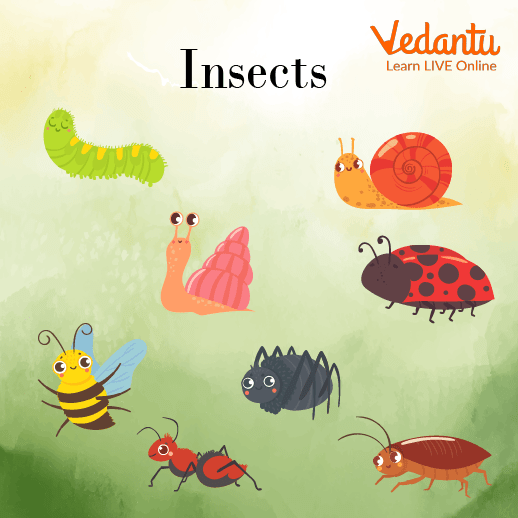
Insects
Insects are the largest group of invertebrates, insects can further be divided into Flying insects or Crawling insects. Some insects can fly up to a certain height and others only walk or crawl on the land.
Flying insects includes
Bees
Fly
Dragonfly
Moth
Butterfly
Whereas Crawling insects includes
Caterpillar
Cockroach
Spider
Warm
Ant
Other categories of includes of insects include:
Ladybird
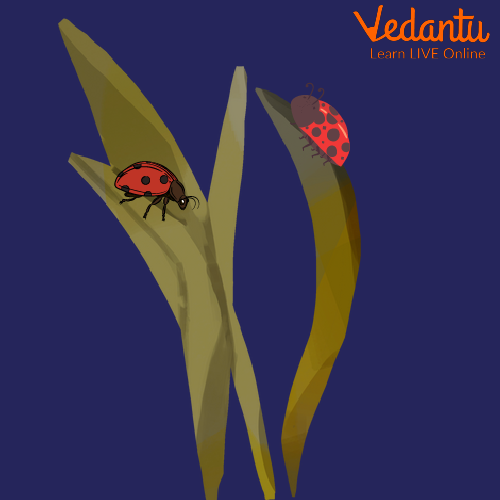
Ladybird
Beetle
Louse
Centipede
Spider
Interesting Facts
Crocodiles can't stick their tongues out.
Starfish do not have a brain.

Starfish
Only female mosquitoes bite.
Owls don’t have eyeballs. They have eye tubes.
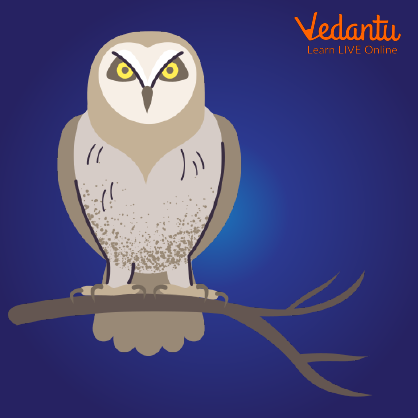
Owl
Butterflies can taste with their feet.
Summary
There are millions of different kinds of animals that live on the earth. Animals are found throughout the world, they come in huge varieties of shapes and sizes, they live on land and also they live in water. They are an important part of our ecosystem. Thus animals are beautiful creations of God.
Common Confusions about Animals
Alligator vs. Crocodile: Many people confuse alligators and crocodiles. A simple way to remember is that alligators have a U-shaped snout, while crocodiles have a V-shaped snout.
Cheetah vs. Leopard: Cheetahs have solid black spots and a streamlined body for speed, while leopards have rosette-shaped spots and are stockier.
Bison vs. Buffalo: In the United States, "buffalo" often refers to the bison, but true buffaloes (like the African buffalo) are different species.
Turtle vs. Tortoise: Turtles are usually aquatic or semi-aquatic, while tortoises are land-dwellers.
Hare vs. Rabbit: Hares are larger, with longer ears and legs, and live above ground, while rabbits are smaller and typically burrow underground.
Tips for Learning Animal Names
Learn by Characteristics: Focus on the key physical traits and habitats that differentiate similar animals.
Use Mnemonics: Create simple memory aids to distinguish between commonly confused animals (e.g., "Crocodile's V-shaped grin is vicious").
Visual Learning: Study pictures and diagrams of animals to visually reinforce the differences.
Practice with Quizzes: Regularly test yourself with quizzes or flashcards to reinforce your knowledge.
Read and Explore: Engage with books, documentaries, and articles about animals to deepen your understanding and familiarity.
Worksheet to Solve
Exercise 1: Match the Animal to Its Description
Match the animal from the list to the correct description.
This large animal with a trunk is often found in Africa and Asia.
A fast-running carnivorous mammal, known for its spots.
This small, burrowing rodent is often kept as a pet and is known for its long front teeth.
A large, horned mammal known for its thick skin and found in African savannas.
A tall, long-necked herbivore that lives in African grasslands.
This aquatic mammal is known for its tusks and massive size.
A marsupial that hops and carries its young in a pouch.
Known as "man's best friend," this domesticated carnivorous mammal is a popular pet.
This striped horse-like mammal is native to African plains.
A nocturnal mammal that can fly and uses echolocation to navigate.
Exercise 2: Fill in the Blanks
Use the animal names from the list to fill in the blanks.
The _______ is known for its black and white stripes.
The _______ is a large cat that can run at incredible speeds.
The _______ lives in Australia and is known for hopping on its hind legs.
_______ are often found in herds and are known for their long necks.
The _______ has thick skin and is one of the largest land animals.
_______ are small rodents often seen scurrying in fields or as pets.
The _______ is a desert animal known for its ability to go without water for long periods.
_______ are large, horned animals often found in the savannas of Africa.
The _______ is known for its long, bushy tail and sharp eyes.
_______ are large mammals with tusks, found in both Arctic and sub-Arctic regions.
Answer key
Exercise 1: Match the Animal to Its Description
Elephant
Cheetah
Hamster
Rhinoceros
Giraffe
Walrus
Kangaroo
Dog
Zebra
Bat
Exercise 2: Fill in the Blanks
Zebra
Cheetah
Kangaroo
Giraffes
Rhinoceros
Hamsters
Camel
Bison
Fox
Walrus
Test your Understanding of the Topic by Completing the Following Tasks
1. Which of the following has a U-shaped snout?
a) Crocodile
b) Alligator
c) Komodo Dragon
d) Gharial
2. Which animal is known for having rosette-shaped spots?
a) Cheetah
b) Leopard
c) Jaguar
d) Panther
3. Which of the following is a land-dweller with a dome-shaped shell?
a) Turtle
b) Tortoise
c) Terrapin
d) Sea Turtle
4. Which animal is often mistakenly referred to as a buffalo in the United States?
a) Yak
b) Water Buffalo
c) Bison
d) Antelope
5. Which animal has longer ears and is larger, living above ground?
a) Rabbit
b) Hare
c) Guinea Pig
Check the Answers Below
1. b) Alligator
2. b) Leopard
3. b) Tortoise
4. c) Bison
5. b) Hare
Takeaways from the Topic “Animals”
Understanding the differences between commonly confused animal names not only enhances your knowledge but also helps in accurate communication.
By mastering these distinctions, you can appreciate the diversity of the animal kingdom more deeply and share this knowledge confidently.
Regular review and practice will ensure that you remember these differences when needed.
Keep exploring the fascinating world of animals to continue learning.
FAQs on Animal Names in English with Meaning and Examples
1. What are animal names in English?
Animal names in English are nouns used to identify different kinds of animals. These names can refer to pets, wild animals, farm animals, or sea creatures.
- Examples: dog, lion, elephant, cat, dolphin
- They are usually common nouns unless part of a proper name.
- Animal names help in vocabulary building, reading, and speaking skills.
2. Are animal names common nouns or proper nouns?
Animal names are generally common nouns because they refer to general categories, not specific names.
- Common noun: tiger, horse, rabbit
- Proper noun: Simba (a specific lion), Bella (a specific dog)
- Capitalize animal names only when they are part of a proper noun.
3. How do you form the plural of animal names in English?
Most animal names form their plural by adding -s or -es to the singular form.
- dog → dogs
- cat → cats
- fox → foxes
- Some irregular forms: sheep → sheep, mouse → mice
4. What is the difference between animal names and animal species names?
An animal name is a general English word, while a species name is a scientific classification used in biology.
- Animal name: dog
- Species name: Canis lupus familiaris
- Species names are written in Latin and follow binomial nomenclature.
5. Can animal names be used as adjectives in English?
Yes, some animal names can function as adjectives to describe qualities or types.
- Cat food (food for cats)
- Chicken soup (soup made from chicken)
- Horse race (a race involving horses)
6. What are collective nouns for animals in English?
A collective noun for animals is a word that refers to a group of animals.
- A herd of cows
- A flock of birds
- A pack of wolves
- A pride of lions
7. How are male and female animal names different in English?
Some animals have different names for males and females in English.
- Lion (male) – Lioness (female)
- Rooster (male) – Hen (female)
- Bull (male) – Cow (female)
8. What are baby animal names called in English?
Baby animal names are special nouns used to describe young animals.
- Puppy – baby dog
- Kitten – baby cat
- Calf – baby cow or elephant
- Chick – baby bird
9. Why are some animal names the same in singular and plural?
Some animal names have identical singular and plural forms due to historical language patterns.
- Sheep → one sheep, two sheep
- Deer → one deer, three deer
- Fish → one fish, many fish (sometimes fishes for species)
10. How can I use animal names in sentences correctly?
You can use animal names as subjects, objects, or complements in grammatically correct sentences.
- The dog barked loudly. (subject)
- She adopted a kitten. (object)
- My favorite animal is the dolphin. (complement)
