









How Find And Replace Text Works with Syntax and Examples in Programming Languages
Find And Replace Text is a common and powerful feature available in word processors, text editors, code editors, and many software applications. It allows users to quickly search for specific words, phrases, or characters in a document and replace them with new text automatically. This feature saves time, reduces manual effort, and improves accuracy when editing large documents. In computer science, understanding how Find And Replace Text works helps users manage data efficiently, maintain consistency in documents, and perform bulk text modifications with ease.
Definition and Meaning
Find And Replace Text definition refers to a tool or command in software applications that searches for specific text patterns and substitutes them with different text as instructed by the user.
- Find - Locates specific words, phrases, or characters in a document.
- Replace - Substitutes the found text with new text.
- Search String - The text that the user wants to locate.
- Replacement String - The new text that replaces the found content.
How It Works - Working Principle
The Find And Replace Text working process follows a systematic search mechanism. The software scans the entire document or a selected portion to identify matches with the entered search string.
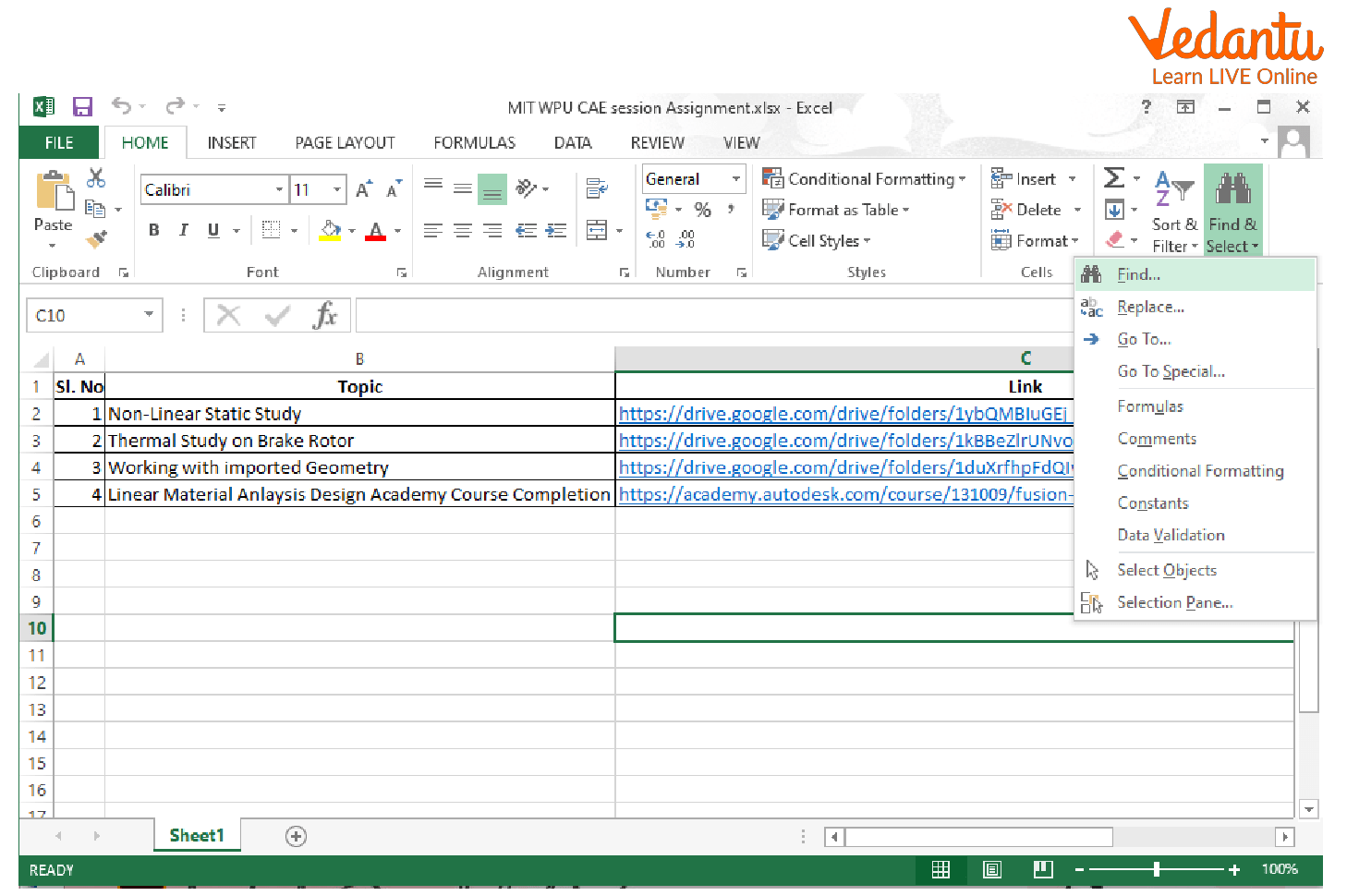
- The user opens the Find option from the menu or presses a shortcut key such as Ctrl + F.
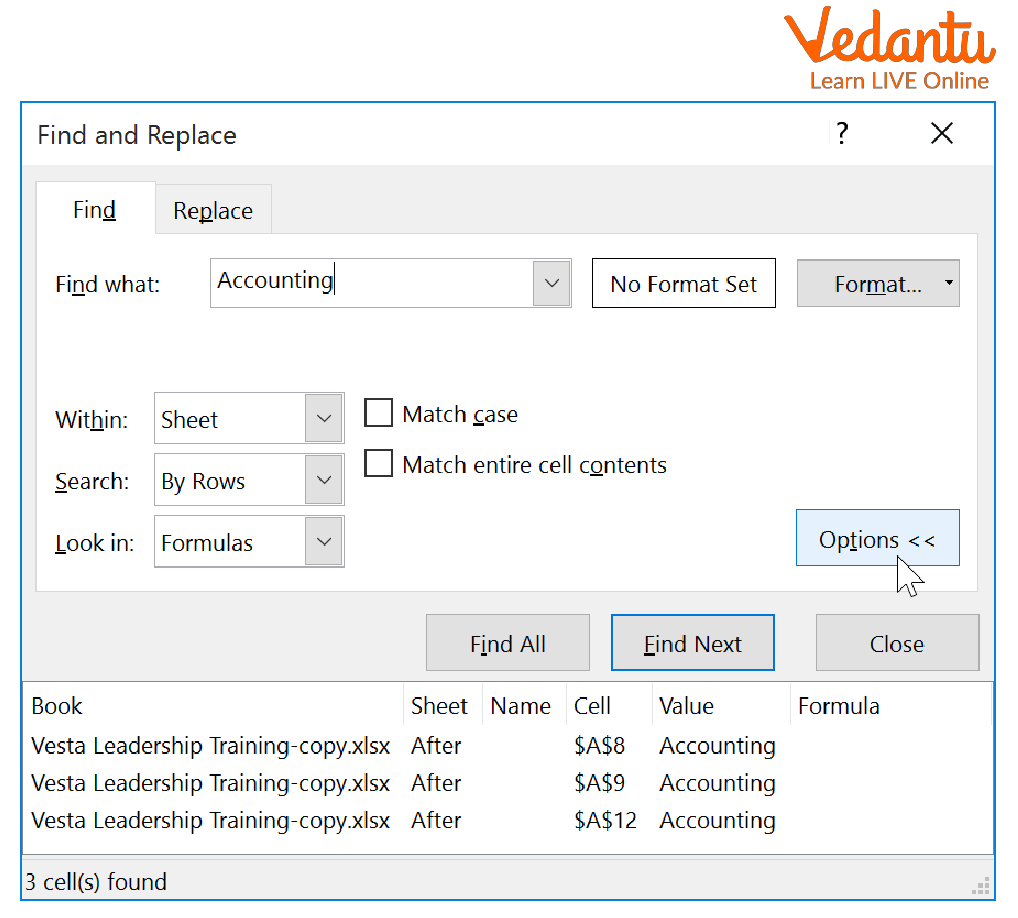
- The user enters the text to search in the Find field.
- The system scans the document from the beginning or current cursor position.
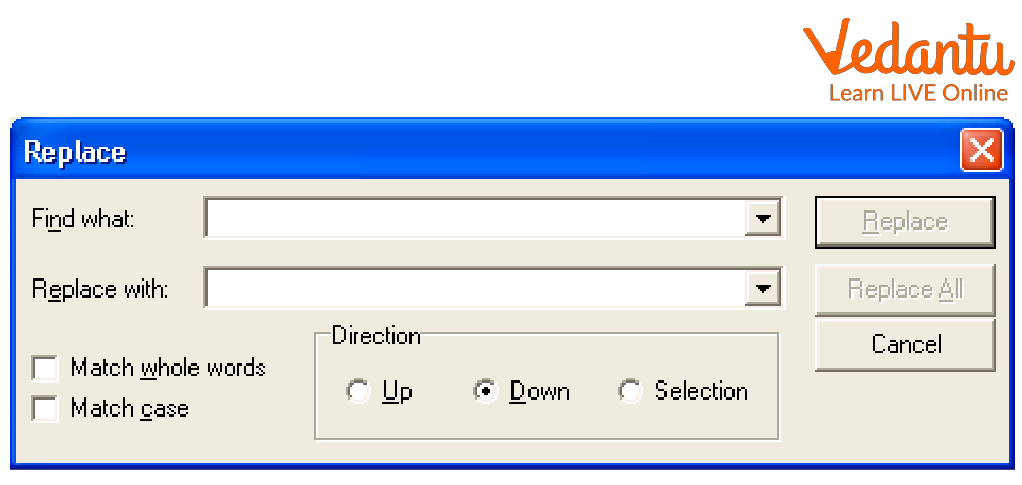
- If Replace is selected, the user enters the new text in the Replace field.
- The software either replaces one occurrence at a time or all occurrences at once.
The process may include advanced options such as case sensitivity, whole word matching, and pattern matching using regular expressions.
Types and Classification
There are different Find And Replace Text types based on the level of functionality provided by the software.
- Simple Find - Searches for a word or phrase without changing it.
- Find and Replace - Replaces matched text with new content.
- Replace All - Replaces all matching occurrences in one action.
- Advanced Find - Includes options like case match, whole word match, and formatting search.
- Regex Based Find and Replace - Uses regular expressions for pattern-based searching.
Features and Characteristics
- Fast text searching across large documents.
- Supports case-sensitive and case-insensitive search.
- Option to match whole words only.
- Ability to search within selected text.
- Bulk replacement using Replace All feature.
- Advanced pattern matching in programming editors.
Advantages
- Saves time while editing long documents.
- Ensures consistency in terminology and formatting.
- Reduces manual typing errors.
- Useful for updating repeated data quickly.
- Improves productivity in document editing and coding.
Disadvantages / Limitations
- Incorrect replacement may affect unintended text.
- Replace All can cause errors if not reviewed carefully.
- Limited functionality in basic text editors.
- Requires knowledge of patterns when using regular expressions.
Applications and Use Cases
- Editing academic documents and reports.
- Updating names, dates, or terms in business documents.
- Refactoring variable names in programming code.
- Correcting spelling errors throughout a document.
- Data cleaning in text based datasets.
Quick Facts About Find And Replace Text
| Parameter | Details |
|---|---|
| Type | Text Editing Feature |
| Used In | Word Processors, Code Editors, Browsers |
| Common Shortcut | Ctrl + F (Find), Ctrl + H (Replace) |
| Purpose | Search and Modify Text Efficiently |
These quick facts summarize essential information about Find And Replace Text in computer science and its common usage.
Interesting Facts About Find And Replace Text
- It is one of the most frequently used editing tools in word processors.
- Advanced editors allow formatting based search such as bold or italic text.
- Regular expressions make pattern based replacement highly powerful.
- It can process thousands of text changes within seconds.
- It plays an important role in code debugging and refactoring.
- Most modern applications support real time highlighting of found text.
Conclusion
Find And Replace Text is a fundamental and efficient feature in computer science that simplifies document editing and text management. It enhances productivity by allowing users to search and modify content quickly and accurately. From academic writing to software development, its applications are wide and practical. Understanding how Find And Replace Text works and using its advanced options effectively helps users maintain accuracy, consistency, and efficiency in digital documents.
FAQs on Find And Replace Text Explained for Beginners and Developers
1. What is Find and Replace Text in Computer Science?
Find and Replace Text is a feature in software applications that searches for specific words, characters, or patterns and automatically replaces them with new content.
- Commonly used in text editors, word processors, and IDE tools
- Helps in code refactoring, document editing, and data cleaning
- Supports plain text and sometimes pattern-based search like Regular Expressions
2. How does the Find and Replace feature work?
The Find and Replace algorithm scans a document or dataset to locate matching text and substitutes it with user-defined content.
- Searches using string matching techniques
- Matches exact text or patterns
- Replaces single occurrence or all occurrences globally
3. What is the syntax for Find and Replace in programming languages?
In programming, Find and Replace is usually performed using built-in string functions or Regular Expressions.
- In Python: string.replace(old, new)
- In JavaScript: str.replace(pattern, replacement)
- In Java: String.replace() or replaceAll()
4. What is the difference between Find and Replace and Search?
The main difference is that Search only locates text, while Find and Replace modifies it.
- Search highlights or lists matches
- Find and Replace updates content automatically
- Replace may affect multiple occurrences at once
5. What are Regular Expressions in Find and Replace?
Regular Expressions (Regex) are pattern-matching tools used in advanced Find and Replace operations.
- Allow complex pattern searches like emails or phone numbers
- Used in programming, data processing, and cybersecurity
- Improve flexibility over simple text matching
6. What are the advantages of using Find and Replace?
Find and Replace improves efficiency by automating repetitive text modifications.
- Saves time in code editing and documentation
- Reduces manual errors
- Useful in database updates and large datasets
7. What are the disadvantages or risks of Find and Replace?
Improper use of Find and Replace can unintentionally modify important data or code.
- May replace unintended matches
- Can introduce syntax errors in programming
- Risk increases when using global replacement without preview
8. Where is Find and Replace used in real-world applications?
Find and Replace is widely used in software development, databases, and content management systems.
- Refactoring variable names in software development
- Bulk editing in web development and HTML files
- Data cleaning in machine learning and analytics
9. What is the time complexity of Find and Replace operations?
The time complexity of a basic Find and Replace algorithm is typically linear, depending on the string matching method used.
- Simple search usually runs in O(n)
- Advanced algorithms like KMP improve pattern matching efficiency
- Regex complexity depends on pattern design
10. Why is Find and Replace important for exams and interviews?
Find and Replace is important for understanding string manipulation, algorithms, and practical coding skills.
- Common topic in data structures and algorithms
- Frequently tested in coding interviews
- Useful for competitive exam preparation in Computer Science
