









How to Use Bold Italic and Underline Tags in HTML with Examples
Formatting text is an essential skill in document creation and editing. In computer science and office applications, applying Underline, Bold, and Italic styles helps users highlight important information, improve readability, and make documents more professional. These formatting tools are commonly used in word processors like Microsoft Word and other text editing software. Understanding how to apply underline, bold, and italic formatting enables students and professionals to structure content clearly and communicate ideas effectively in reports, assignments, and digital documents.
Definition and Meaning
Apply Underline Bold And Italic refers to the process of changing the appearance of text in a document to emphasize specific words, headings, or sentences. These are basic text formatting options available in most word processing software.
- Bold makes text darker and thicker.
- Italic slants the text slightly to the right.
- Underline draws a line beneath the selected text.
- These options are part of font formatting tools in word processors.
How It Works / Working Principle
The Apply Underline Bold And Italic working is based on modifying the font style properties of selected text. When a user selects text and chooses a formatting option, the software changes the display attributes of that text without altering the actual content.
- Select the text in the document.
- Go to the Home tab in the word processor.
- Choose B for Bold, I for Italic, or U for Underline.
- The software updates the formatting style instantly.
These changes are stored as formatting metadata within the document file and can be removed or modified at any time.
Types and Classification
There are different formatting styles related to underline, bold, and italic options.
- Bold Style - Used for headings, keywords, and important terms.
- Italic Style - Used for emphasis, titles of books, or foreign words.
- Single Underline - Draws a single line below text.
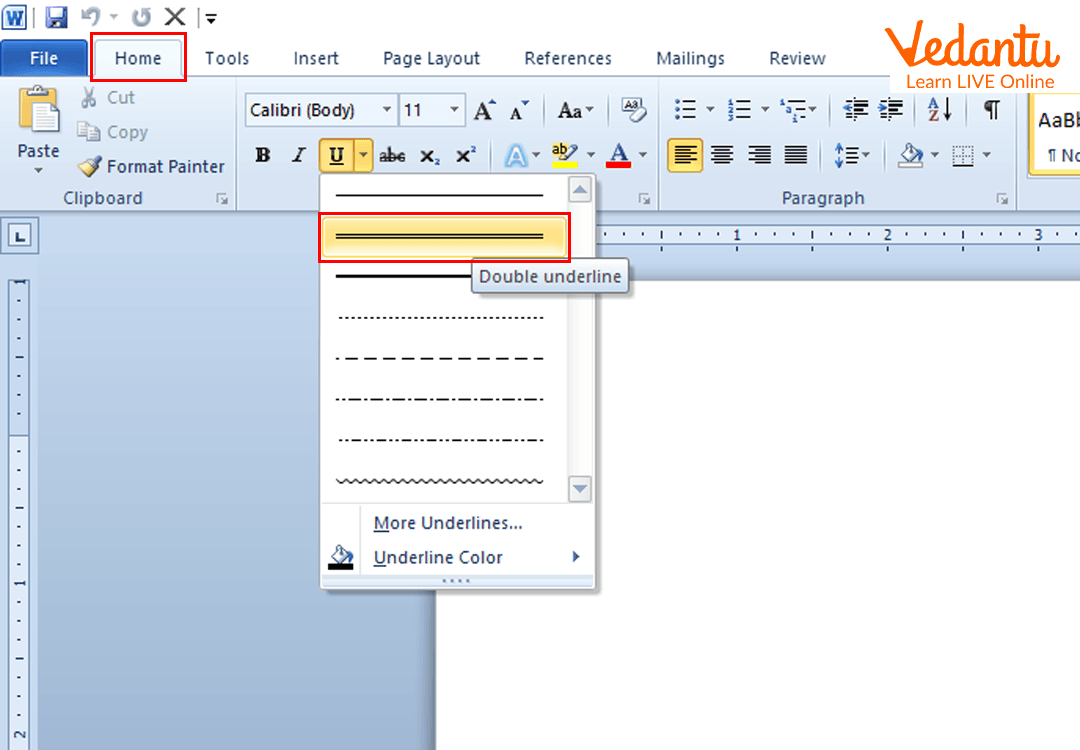
- Double Underline - Adds two lines under the text.
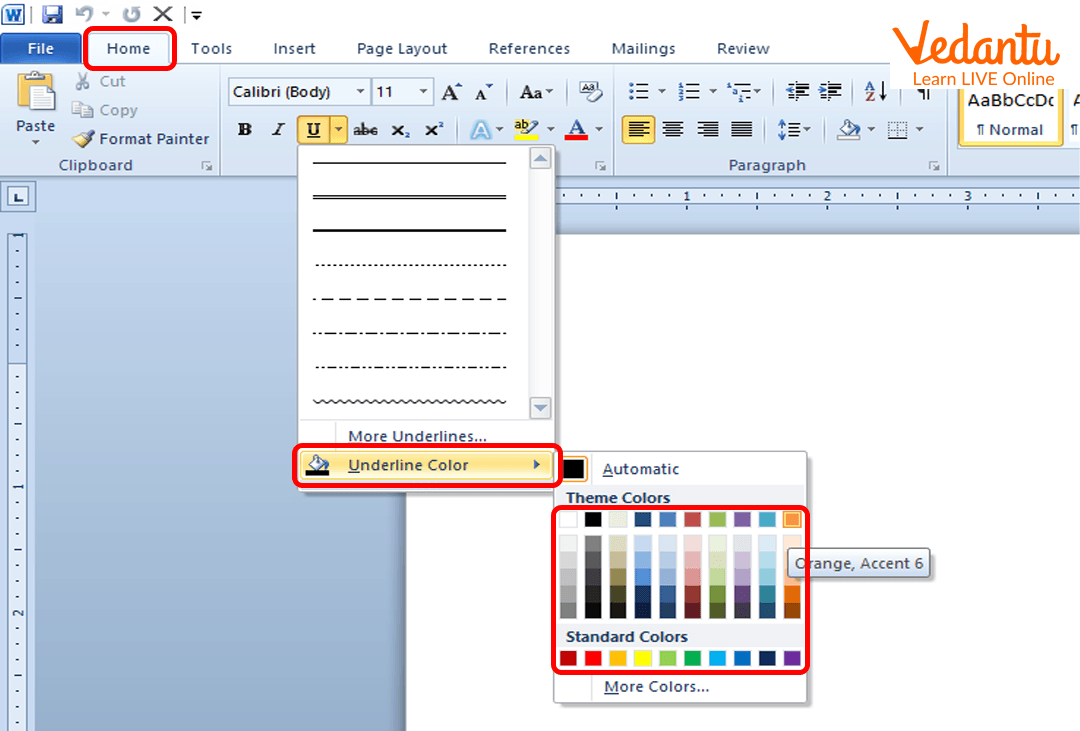
- Colored Underline - Changes underline color.
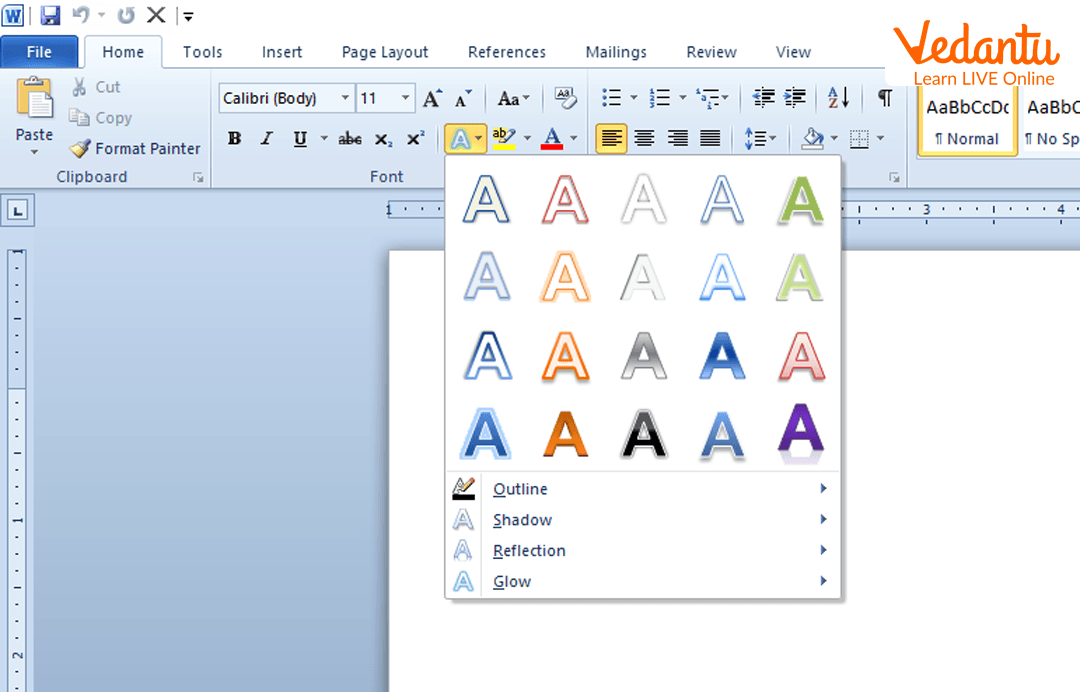
- Text Effects - Includes shadow, glow, and outline effects.
Steps to Apply Formatting in MS Word
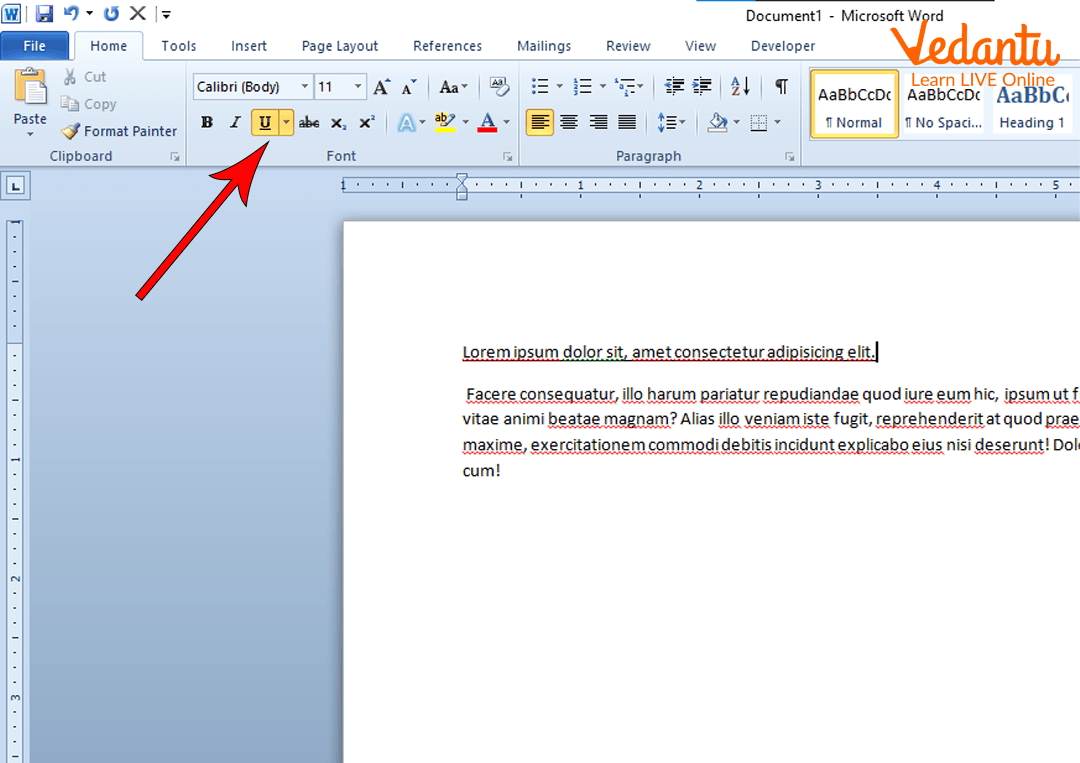
To Apply Underline
Select the text and click on the Underline (U) button in the Font group.
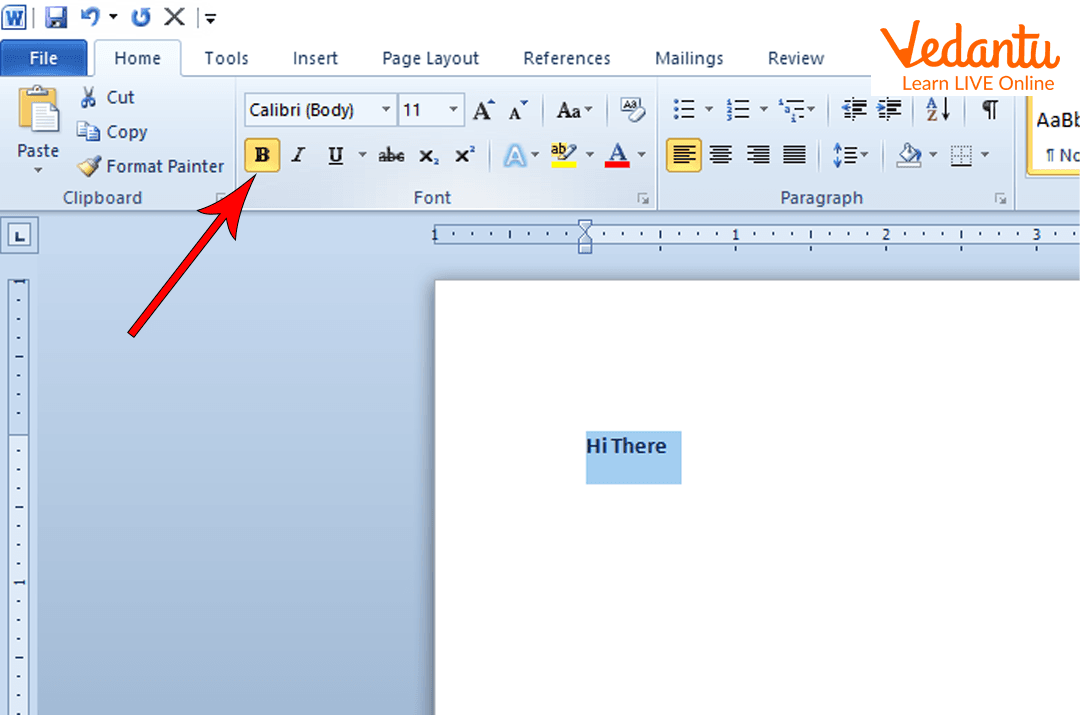
To Apply Bold
Select the text and click on the Bold (B) button.
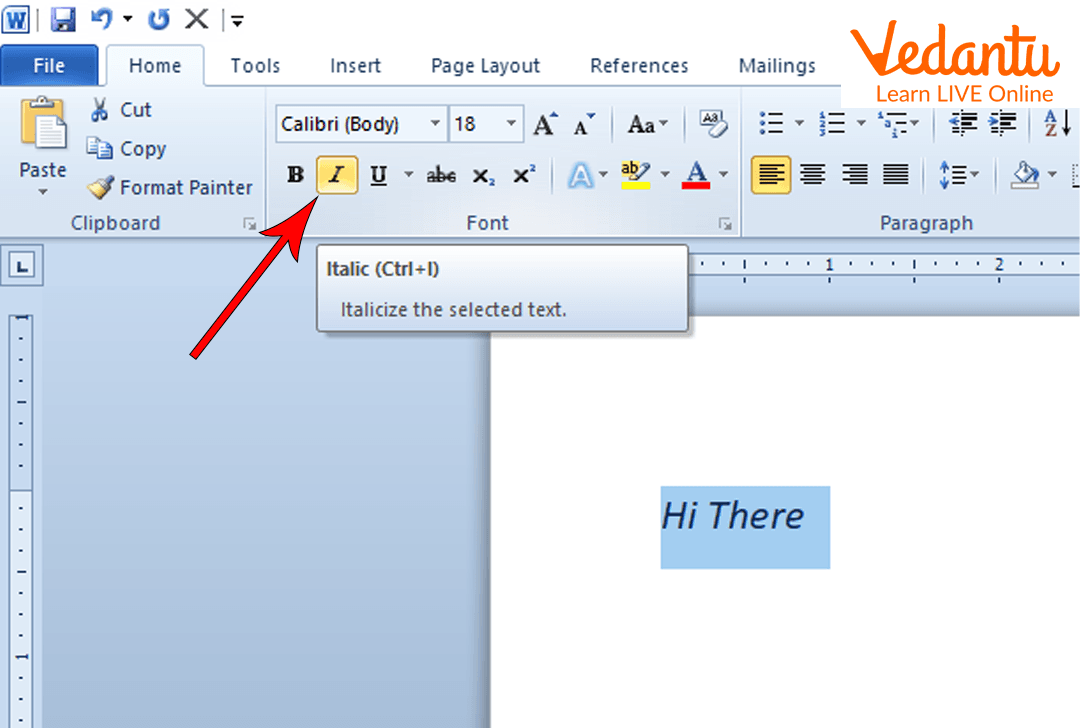
To Apply Italics
Select the text and click on the Italic (I) button.
To Set Underline Style
To Set Underline Colour
To Apply Effect on Text
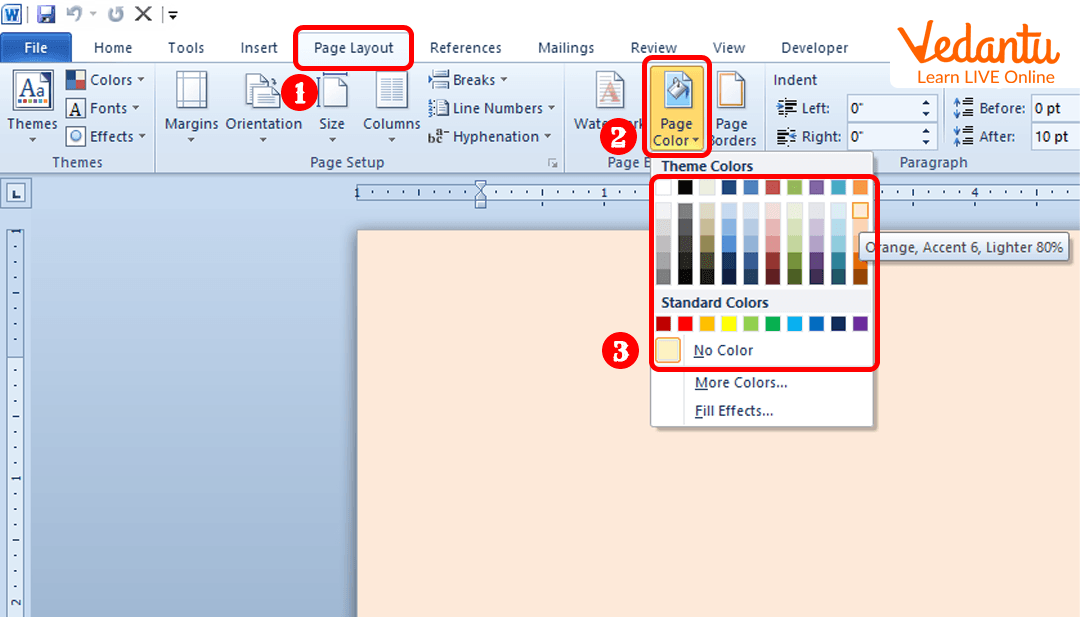
To Apply Colour in the Document
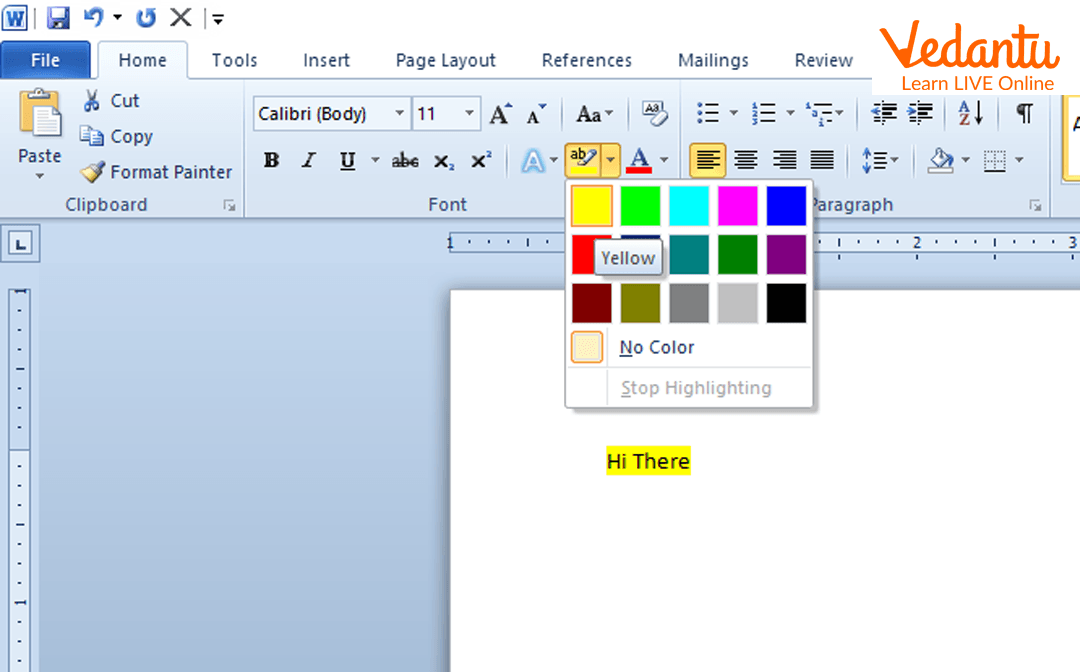
Highlight the Text with Colour
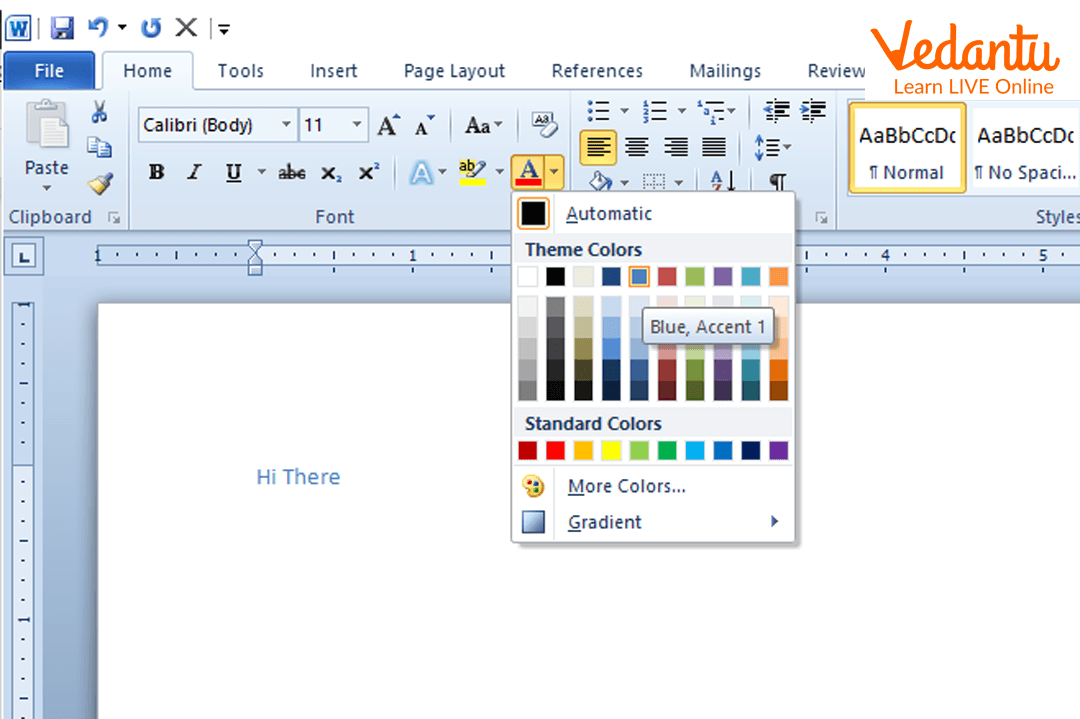
To Apply Font Colour
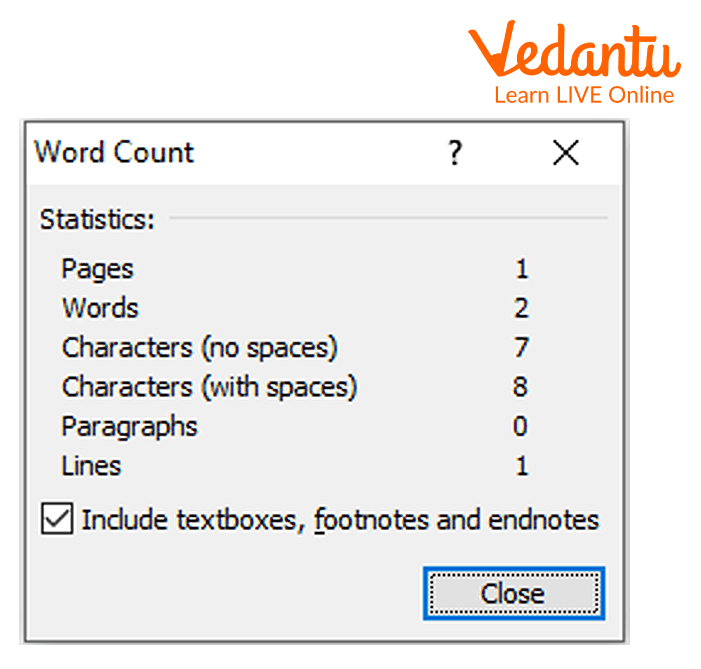
Word Count in Word
Features and Characteristics
- Easy to apply using toolbar buttons or keyboard shortcuts.
- Can be combined, such as Bold and Italic together.
- Supports different underline styles and colors.
- Does not change the actual text content.
- Available in most word processors and text editors.
Advantages
- Improves document readability.
- Highlights important information.
- Enhances visual appeal of documents.
- Helps in structuring assignments and reports.
- Saves time with shortcut keys like Ctrl + B, Ctrl + I, Ctrl + U.
Disadvantages / Limitations
- Overuse can reduce readability.
- Too much formatting may make documents look unprofessional.
- Underline can be confused with hyperlinks.
- Different systems may display fonts slightly differently.
Applications and Use Cases
- School and college assignments.
- Business reports and presentations.
- Highlighting keywords in research papers.
- Designing resumes and cover letters.
- Creating structured digital content.
Quick Facts About Apply Underline Bold And Italic
| Category | Details | Example |
|---|---|---|
| Type | Text Formatting Tool | Bold, Italic, Underline |
| Shortcut Keys | Keyboard Commands | Ctrl + B, Ctrl + I, Ctrl + U |
| Used In | Word Processing Software | MS Word, Google Docs |
These formatting tools are basic yet powerful features available in almost all modern document editing software.
Interesting Facts About Apply Underline Bold And Italic
- Bold formatting was originally used in printing presses for emphasis.
- Italic style is derived from Italian handwriting styles.
- Underline was commonly used in typewriters before italics were available.
- Most word processors allow combining all three styles together.
- Text effects can include glow, reflection, and shadow.
- Formatting can be removed using the Clear Formatting option.
Conclusion
Understanding how to Apply Underline Bold And Italic in computer science is fundamental for creating clear and professional documents. These simple formatting tools enhance readability, emphasize key information, and improve overall presentation. Whether used in academic assignments or professional reports, mastering these text formatting options ensures effective communication and structured document design. They remain essential features in modern word processing applications.
FAQs on Apply Underline Bold and Italic Formatting in HTML
1. What does Apply Underline, Bold, and Italic mean in Computer Science?
Apply Underline, Bold, and Italic refers to text formatting techniques used in documents, web pages, and applications to change the appearance and emphasis of text.
- Bold highlights important content
- Italic emphasizes specific words or phrases
- Underline marks text for attention or links
2. How do you apply Bold, Italic, and Underline in HTML?
In HTML, text formatting is applied using specific tags that control how content appears in a web browser.
- <b> or <strong> for bold text
- <i> or <em> for italic text
- <u> for underlined text
3. What is the difference between <b> and <strong> in HTML?
Both <b> and <strong> display bold text, but they differ in semantic meaning in web development.
- <b> is used for visual bold formatting
- <strong> indicates important content for SEO and accessibility
- Search engines give more importance to <strong>
4. How can you apply underline, bold, and italic using CSS?
In CSS, formatting is controlled using style properties for better design flexibility in web development.
- font-weight: bold; for bold text
- font-style: italic; for italic text
- text-decoration: underline; for underlined text
5. How are Bold, Italic, and Underline used in word processing software?
In word processors like Microsoft Word or Google Docs, these formatting options improve document readability and presentation.
- Used for headings and subheadings
- Highlighting keywords in reports
- Emphasizing definitions in academic documents
6. What are the advantages of using text formatting in web development?
Using bold, italic, and underline improves user experience, content structure, and SEO optimization in websites.
- Enhances readability
- Improves accessibility
- Helps search engines identify important keywords
7. Can Bold, Italic, and Underline affect SEO?
Yes, proper use of semantic formatting tags like <strong> and <em> can improve SEO by signaling important content to search engines.
- Highlights key terms
- Improves content structure
- Supports better indexing by search engines
8. What is the difference between Italic (<i>) and Emphasis (<em>) in HTML?
Both tags display italic text, but <em> adds semantic meaning while <i> is mainly visual formatting.
- <i> is used for styling text
- <em> indicates emphasized content
- <em> improves accessibility and SEO
9. Are there any disadvantages of overusing Bold, Italic, and Underline?
Overusing text formatting can reduce readability and negatively impact user experience.
- Makes content look cluttered
- Reduces emphasis effectiveness
- May confuse users if underlines resemble hyperlinks
10. Why is understanding text formatting important for exams and interviews?
Knowledge of Apply Underline, Bold, and Italic is essential for web development, HTML syntax questions, and practical coding exams.
- Common topic in school and college Computer Science
- Frequently asked in web development interviews
- Important for frontend development and UI design
