








Key Math Terms Definitions and Examples for Grade 2
Level up in mathematics by learning some new useful words, specifically for second grade students, with our maths vocabulary! This maths glossary lesson contains 10 common words that are often taught in 2nd grade maths classes. The words that you will study in this article will be useful for you in all the future maths lessons as you will progress through the classes.
So, let’s get started with maths vocabulary second grade lesson!
Maths Words for Second Grade
Here are some common maths words according to different maths topics:
Number System
Even Numbers - Numbers which leave remainder 0 when divided by 2. For example, 2, 4, 18, 22, etc.
Odd Numbers - Numbers which when divided by 2 always leave the remainder “1”. For example, 3, 41, 67, 85, etc.
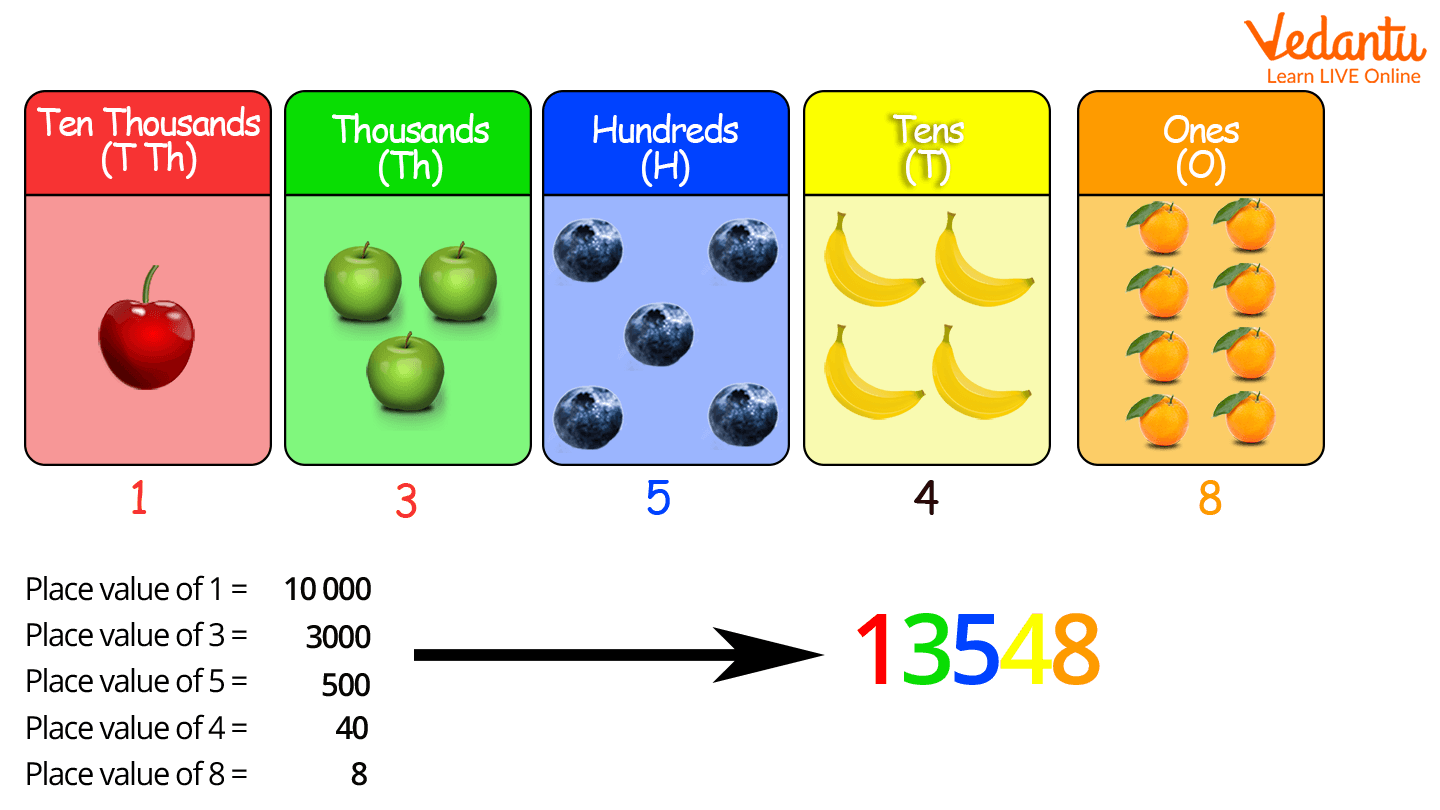
Place Value - Every digit of a number has a certain value based on its position, which is called its place value.
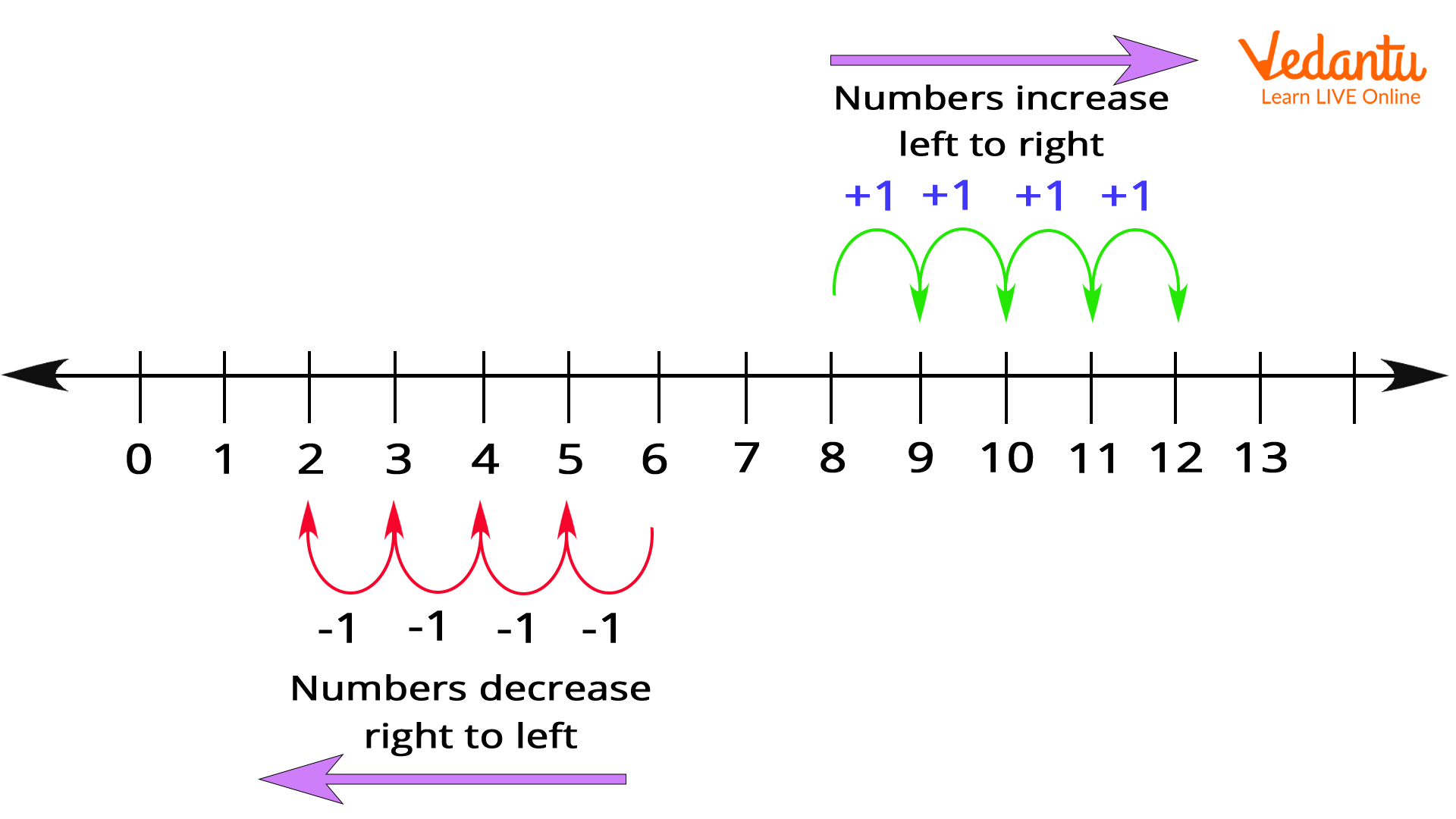
Number Line - It is a straight line used to represent numbers. The numbers are placed at equal intervals along its length. Zero is considered the origin, so the numbers increase from left to right on the number line and decrease from right to left.
Counting and Algebra
Unit - In maths, unit is used to refer to a number at the rightmost position or the one’s place. For example, in the number 9,87,635, the unit’s number is 5. While, in measurement a unit is the basic quantity used to measure different quantities. For example, the units of measuring length are millimetre, centimetre, metre, and kilometre.
Decimal Point - It is a point used to separate the whole number part from the fractional part in a number.
Geometry
Angle - It is the conical figure formed by two lines meeting at a common endpoint. It is represented by the symbol ∠ and its value is measured in degrees.

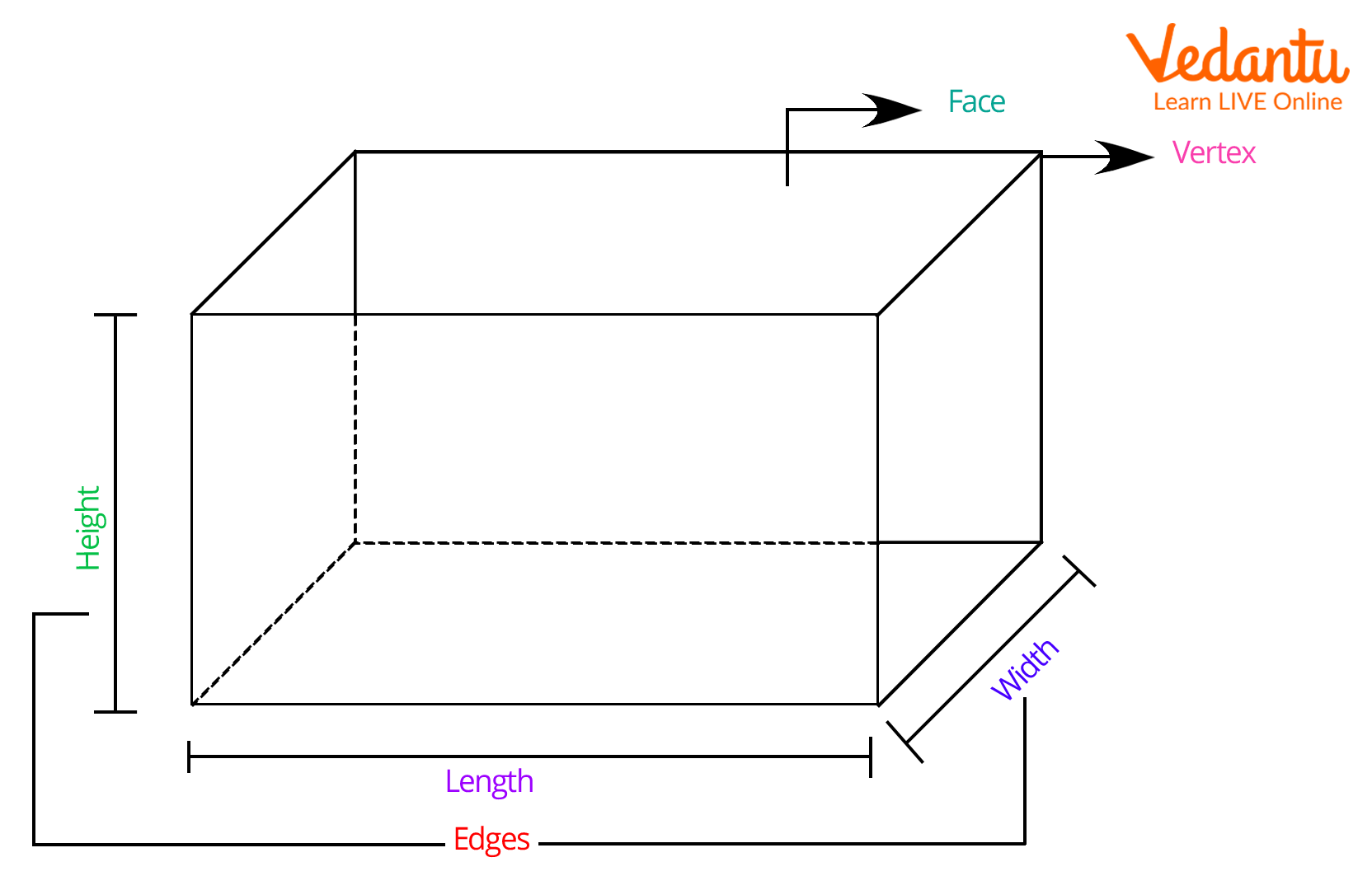
Two-Dimensional Shape (2-D) - It is a flat figure or a shape with only two dimensions – length and breadth. They do not have any thickness. For example, square, rectangle, circle, triangle, etc.
Three-Dimensional Shape (3-D)- It is a flat figure or a shape with three dimensions – length, breadth, and height. For example, cube, cuboid, sphere, cone, cylinder, etc.
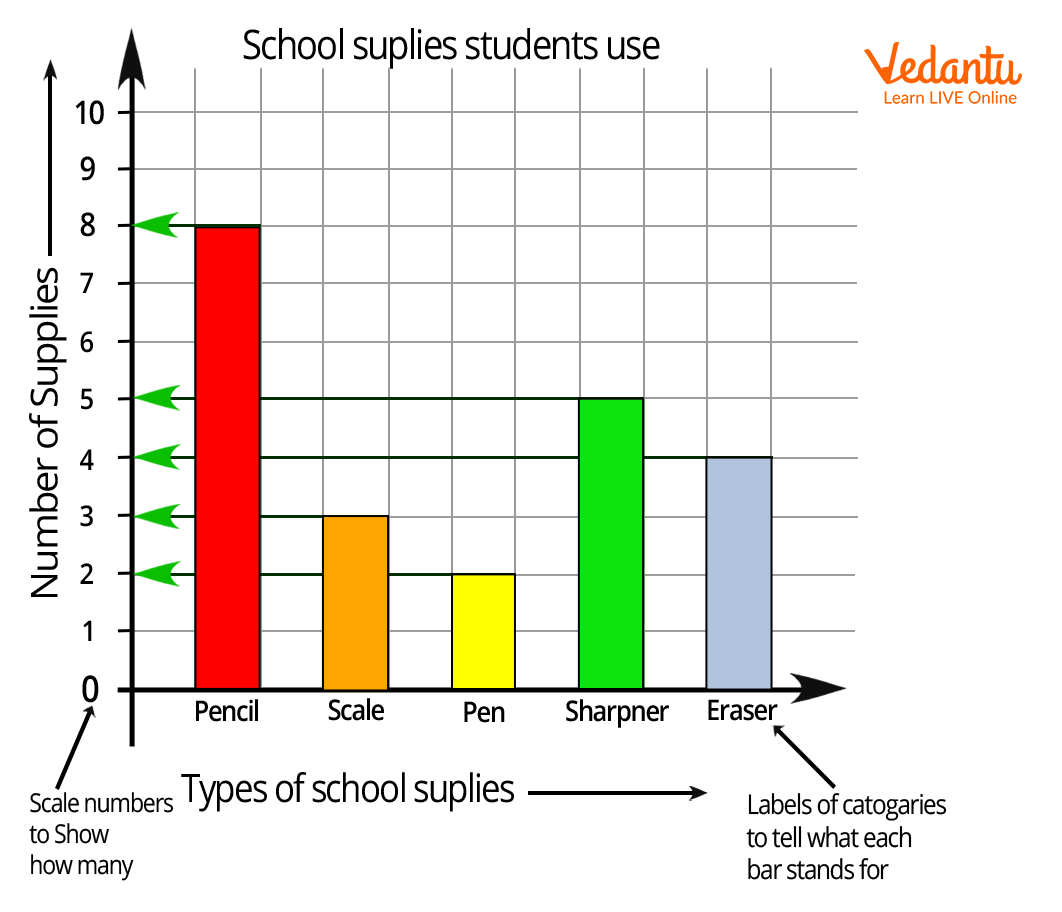
Bar Graph - It is a chart or a graphical representation of numerical data in the form of rectangular bars.
Conclusion
This maths glossary for second grade is not exhaustive. You can learn more such words starting with different letters and for different grades on our website. Learning maths vocabulary will give you an edge over your peers in the subject. So, happy learning!
FAQs on Maths Vocabulary for Second Grade Students
1. What is maths vocabulary for 2nd grade students?
Maths vocabulary for 2nd grade students includes important math words like addition, subtraction, sum, difference, and place value that help children understand math concepts clearly. These words are used in lessons about numbers, shapes, measurement, and problem-solving. Learning 2nd grade math vocabulary helps students read math problems correctly and explain their answers using proper mathematical terms.
2. What does sum mean in 2nd grade math?
In 2nd grade math, sum means the answer you get when you add two or more numbers together. It is the result of an addition problem.
- Example: 4 + 5 = 9
- Here, 9 is the sum.
3. What is the difference between addition and subtraction?
The difference between addition and subtraction is that addition combines numbers while subtraction takes one number away from another.
- Addition example: 6 + 3 = 9
- Subtraction example: 6 − 3 = 3
4. What does place value mean in 2nd grade?
Place value means the value of a digit based on its position in a number. In 2nd grade math, students mainly learn about ones, tens, and sometimes hundreds.
- Example: In 47, the 4 is in the tens place (40).
- The 7 is in the ones place (7).
5. What is a number sentence in 2nd grade math?
A number sentence is a math statement that uses numbers and symbols to show a fact or equation. It includes symbols like +, −, and =.
- Example: 8 + 2 = 10
6. What does equal mean in math?
In math, equal means two amounts have the same value. The symbol for equal is =.
- Example: 5 + 4 = 9
- This means 5 + 4 and 9 are equal.
7. What are odd and even numbers in 2nd grade?
Odd and even numbers describe whether a number can be divided into two equal groups.
- An even number can be divided by 2 with no remainder (e.g., 8).
- An odd number cannot be divided by 2 evenly (e.g., 7).
8. What is a fact family in 2nd grade math?
A fact family is a group of related addition and subtraction facts that use the same three numbers. These facts show the relationship between numbers.
- Example numbers: 3, 5, and 8
- 3 + 5 = 8
- 5 + 3 = 8
- 8 − 3 = 5
- 8 − 5 = 3
9. What does greater than and less than mean?
Greater than and less than are comparison terms used to compare numbers.
- Greater than (>) means one number is bigger.
- Less than (<) means one number is smaller.
10. What are common measurement words in 2nd grade math?
Common measurement words in 2nd grade math include terms used to describe length, time, and weight. Important vocabulary includes:
- Inches and centimeters (length)
- Hour and minute (time)
- Pound and gram (weight)
