






Angles Name Worksheet with Definitions Types and Solved Examples
An angle is a figure created by two rays, known as the angles' sides, that share a common terminus, known as the angle's vertex. Six types of angles are:
Acute Angle
Obtuse Angle
Right Angle
Straight Angle
Reflex Angle
Complete Angle
Angles created by two rays are located in the plane containing the rays. Angles are also generated when two planes intersect. These are known as dihedral angles.
Questions:
1. Write the name of the angle.

angle
2. According to the image and the angles made by the needles of the watch, which angle do they represent?
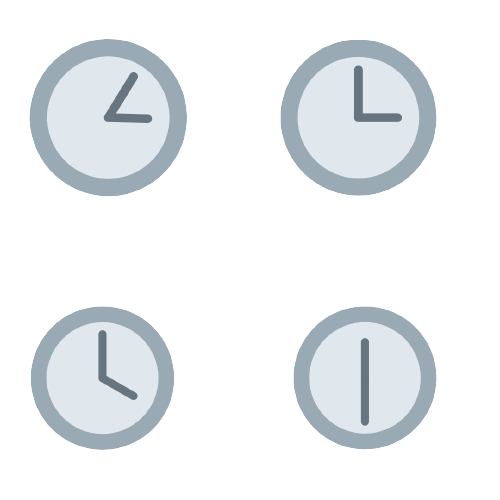
watches showing different angles
3. What do you mean by acute angle?
4. Which angle is made by a 90-degree angle?
5. An angle made in the following image shows which angle. Name the angle.
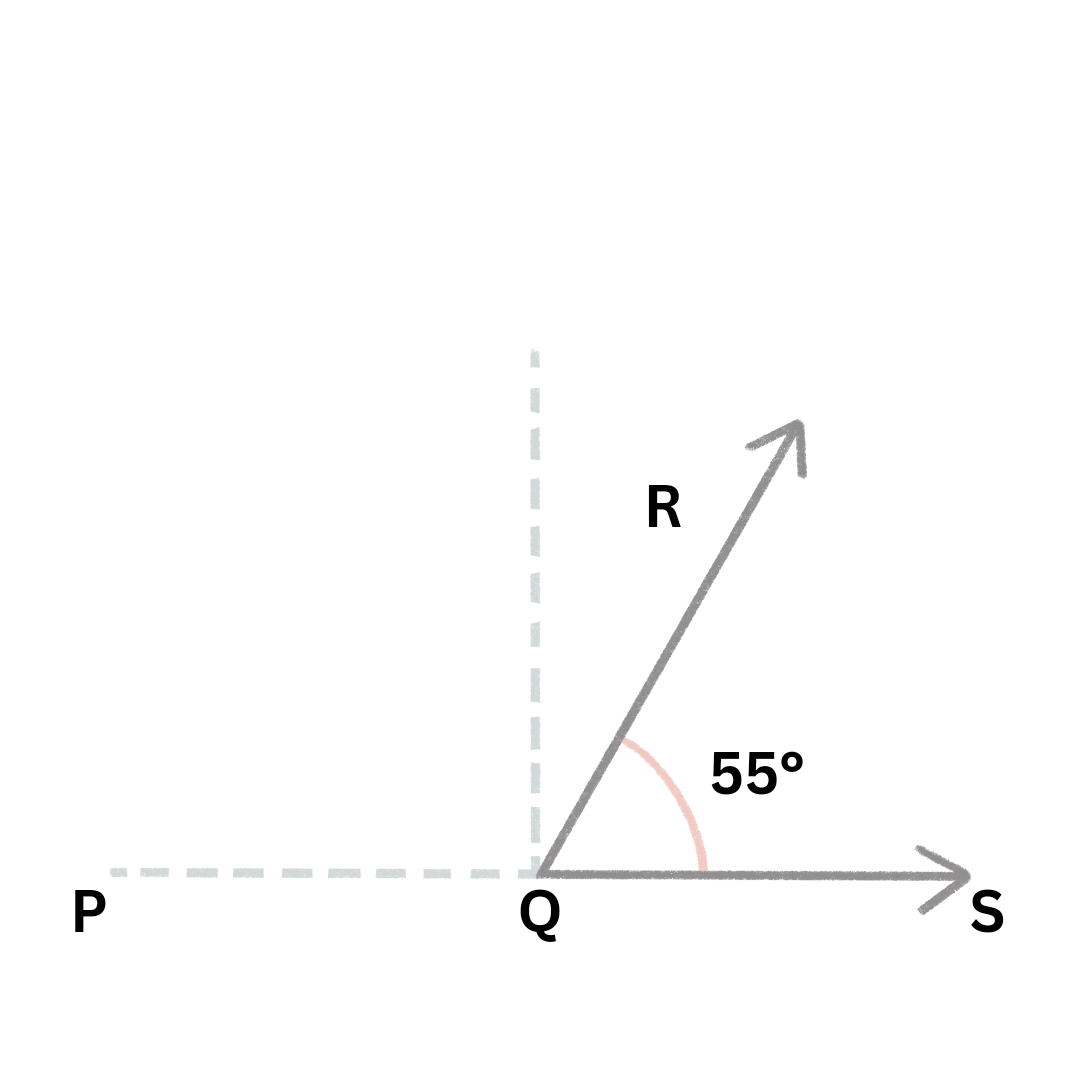
a 55- degree angle
6. What do you mean by obtuse angle?
7. Name the 6 types of angles.
8. Which type of angle is made by the image?
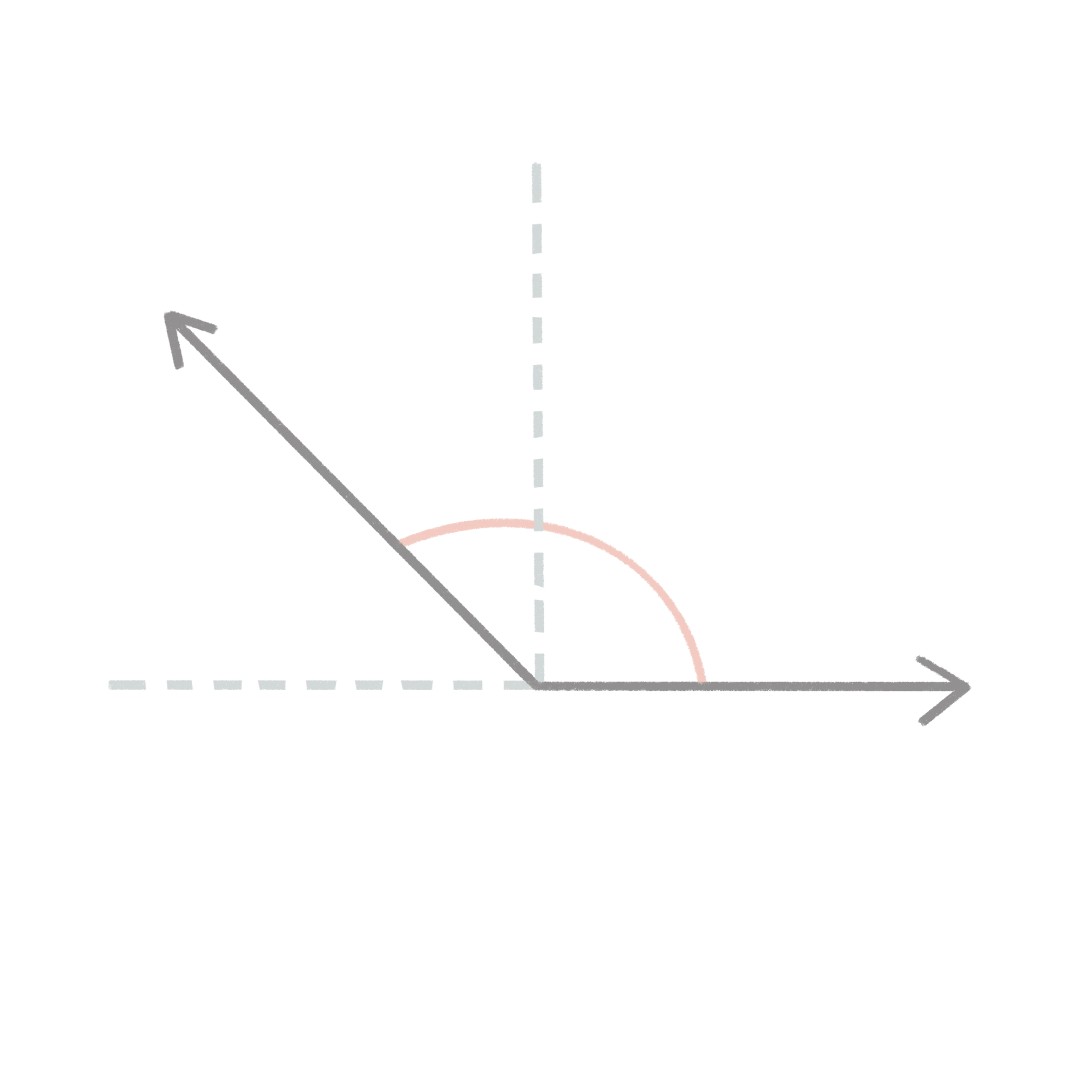
an angle made by the image
9. A 180-degree angle is known as?
10. Write the names of the angles as shown by the image.
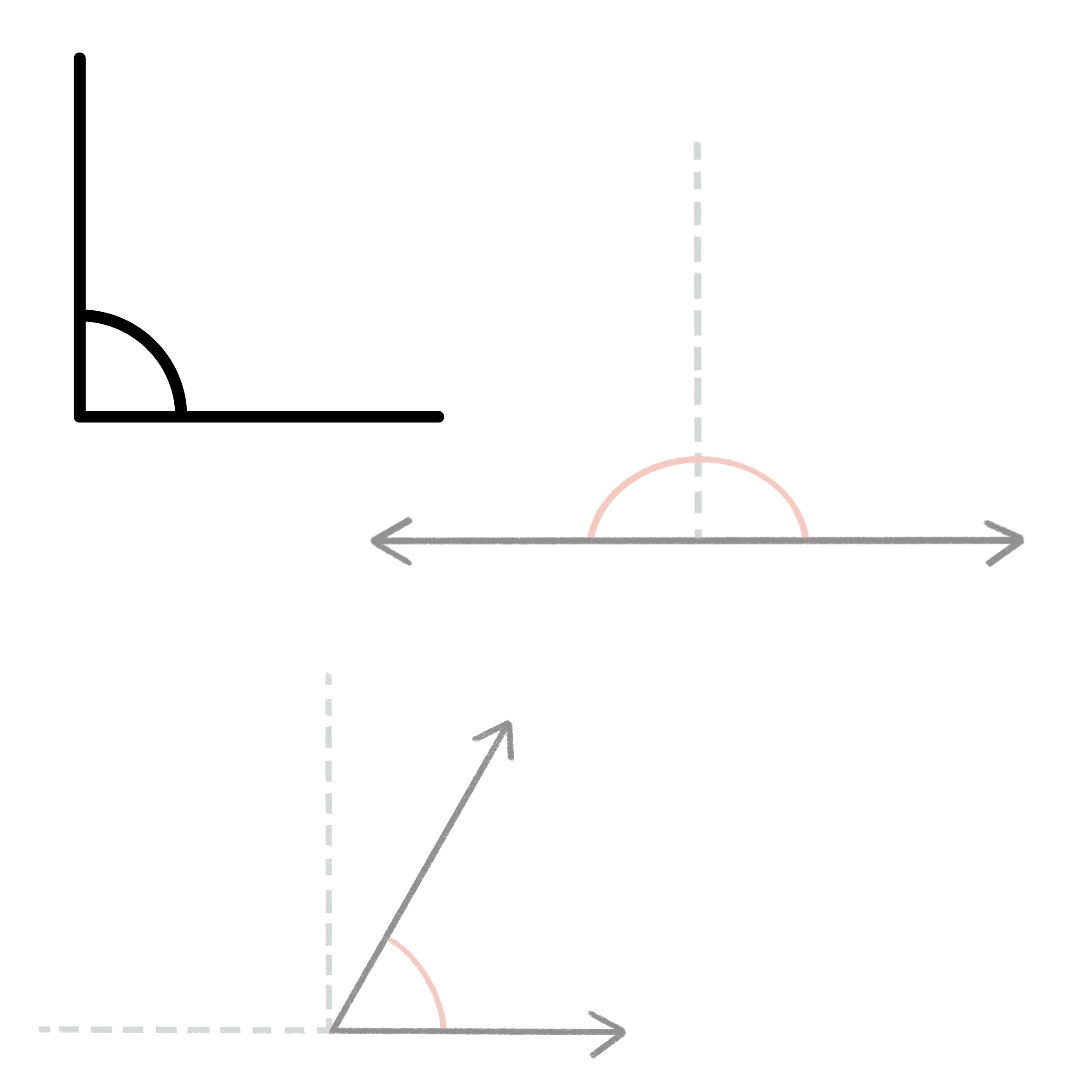
different angles
11. What do you mean by right angle?
12. What do you mean by a straight angle?
13. An angle of more than 180-degrees and less than 360- degrees is known as?
14. Write the name of the angles.
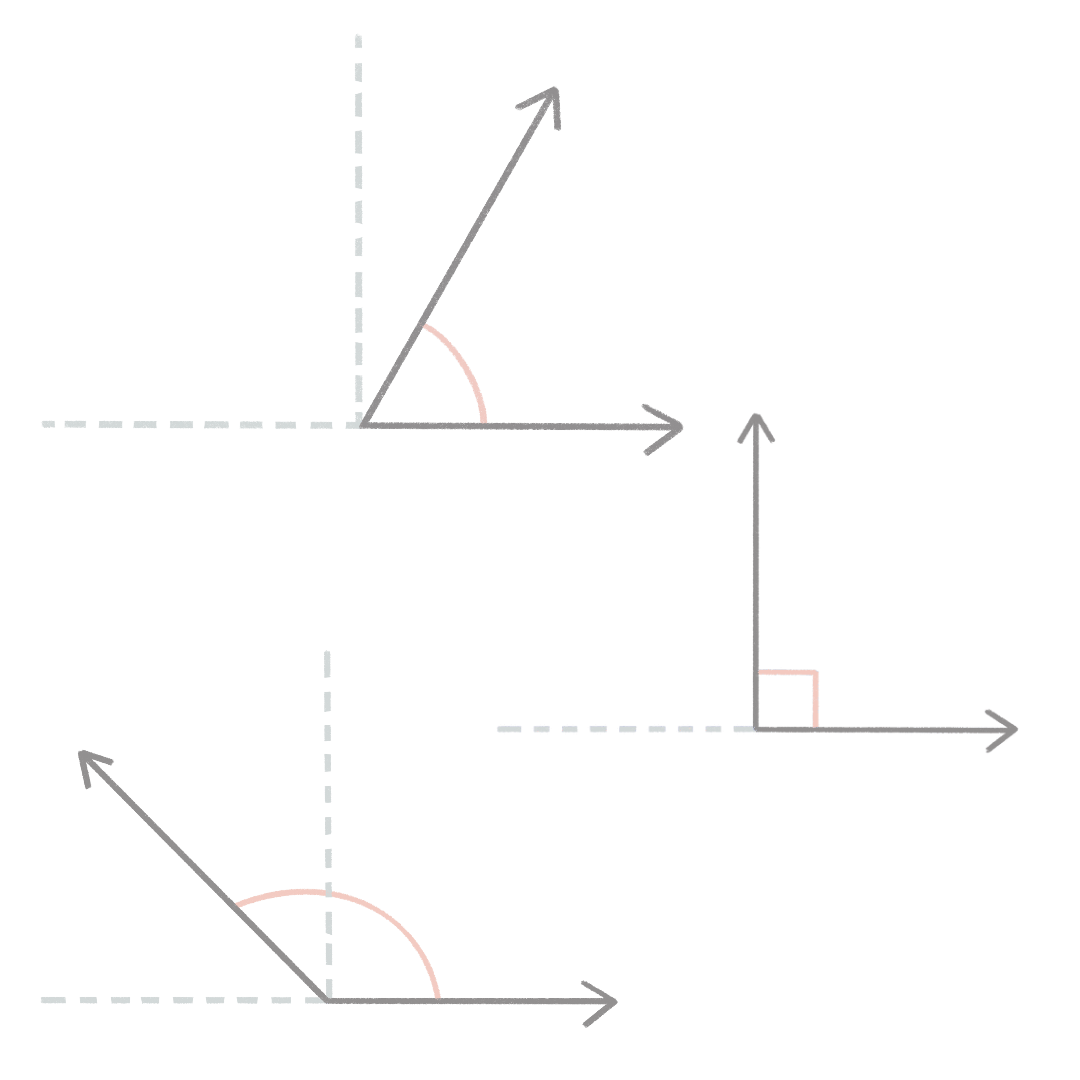
different angles
15. What do you understand by reflex angle?
Answer
1. The angle represented by the image is an “acute angle”.
angle
2. The angles represented by the image are:
i. acute angle
ii. right angle
iii. obtuse angle
iv. straight angle
watches showing different angles
3. An acute angle is one that is smaller than 90 degrees in length. This is a smaller angle than the right angle (which is equal to 90 degrees).
4. The right angle is made by a 90-degree angle.
5. The angle made in the following image shows an acute angle.
a 55- degree angle
6. Obtuse angles are those that range between 90 and 180 degrees (90° 180°).
7. The 6 types of angles are:
a. Acute angle
b. Obtuse angle
c. Right angle
d. Straight angle
e. Reflex angle
f. Full rotation (360-degree)
8. An Obtuse angle is made by the image.
an angle made by the image
9. A 180-degree angle is known as a STRAIGHT ANGLE.
10. The names of the angles as shown by the image, are:
a. Right angle
b. Straight angle
c. Acute angle
different angles
11. The angle is called a straight angle if the measure of the angle between two rays is precisely equal to 90 degrees or /2.
12. A straight angle is one that has a length of 180 degrees. It is termed a straight angle because it is a straight line.
13. An angle of more than 180-degrees and less than 360-degrees is known as a reflex angle.
14. The name of the angles are:
a. Acute angle
b. Right angle
c. Obtuse angle
different angles
15. Reflex angles are defined as angles between 180°and 360 degrees.
What do You mean by Naming Angles?
Naming an angle is a fundamental process followed universally to depict an angle created by two intersecting lines or two adjacent sides of a geometric figure. In general terms, we learn How to name an Angle in Four Ways. The ways are:
Naming an angle with three letters
We generally follow an English alphabetical order to name an angle. In this method, a capital letter is assigned to the intersecting point or vertex and the ends of two intersecting lines. For example, ∠ABC represents an angle where B is the vertex.
Reverse naming of angles with three letters
This is the same concept, but the angle is denoted in a reverse way. Here, the vertex remains the same, but the angle is called ∠CBA.
Naming an angle with a letter only
In this method, an angle is named using the letter to denote the vertex only. In the same example, the angle name will be ∠B.
Naming an angle with a number
An angle can also be denoted or named using a number written near the vertex or beside the arc that joins both intersecting lines. For example, ∠1 is an angle where 1 is written beside the arc inside the space between two intersecting lines.
Benefits of Solving Naming Angles Worksheet
The questions set in a worksheet will focus on challenging the students to recognise an angle and name it. The problems will first ask to identify the angle and name it accordingly.
Solving these worksheets will enable students to learn the method of Naming Angles using Three Points. This is the conventional method that students follow worldwide.
Resolving doubts about naming angles will be easy when you have the solution to all these worksheets.
Detect the gaps in the preparation by solving and comparing your answers to the worksheets. Take your preparation for naming angle to the next level easily.
Download the Labeling Angles worksheet PDF
Get the free PDF version of these worksheets and solve them at home. Refer to the solutions given so that you can focus on the answering methods and become better at naming angles.

FAQs on Angles Name Worksheet for Identifying and Classifying Angles
1. What is an angles name worksheet?
An angles name worksheet is a practice sheet that helps students identify, label, and classify different types of angles based on their measures. It usually includes diagrams where learners must:
- Name angles using three-letter notation (e.g., ∠ABC)
- Classify angles as acute, right, obtuse, straight, or reflex
- Measure angles using a protractor
2. How do you name an angle correctly in geometry?
An angle is correctly named using three capital letters with the vertex in the middle. For example:
- In ∠ABC, point B is the vertex.
- The sides of the angle are BA and BC.
3. What are the different types of angles?
The main types of angles are classified by their degree measure. They include:
- Acute angle: less than 90°
- Right angle: exactly 90°
- Obtuse angle: between 90° and 180°
- Straight angle: exactly 180°
- Reflex angle: between 180° and 360°
4. How do you measure an angle on a worksheet?
You measure an angle using a protractor by aligning it correctly with the angle. Follow these steps:
- Place the center of the protractor on the vertex.
- Align one side of the angle with the 0° line.
- Read the number where the other side crosses the scale.
5. What is the formula for finding a missing angle?
The formula for finding a missing angle depends on the angle relationship, such as supplementary or complementary angles. Common formulas include:
- Supplementary angles: Angle 1 + Angle 2 = 180°
- Complementary angles: Angle 1 + Angle 2 = 90°
6. What is the difference between acute and obtuse angles?
The difference between acute and obtuse angles is their degree measure. An acute angle is less than 90°, while an obtuse angle is greater than 90° but less than 180°. For example:
- 45° is an acute angle.
- 120° is an obtuse angle.
7. How do you label angles in a diagram?
You label angles in a diagram by writing three letters with the vertex in the middle. For example:
- If points A, B, and C form an angle at B, it is written as ∠ABC.
- The middle letter always represents the vertex.
8. What is a vertex in an angle?
The vertex of an angle is the common endpoint where the two rays meet. In ∠ABC:
- Point B is the vertex.
- BA and BC are the arms (sides) of the angle.
9. Can you give an example of naming and classifying an angle?
An example of naming and classifying an angle is ∠PQR measuring 75°, which is an acute angle. Explanation:
- Q is the vertex (middle letter).
- The measure is 75°.
- Since 75° is less than 90°, it is classified as acute.
10. Why is it important to learn angle names and types?
Learning angle names and types is important because it builds the foundation for geometry, triangles, polygons, and trigonometry. Understanding angle classification helps students:
- Solve missing angle problems
- Identify geometric shapes
- Work with parallel lines and angle relationships
