







About Palm Trees
Palm trees are plants that splendidly beautify gardens and patios. Of the more than 3000 species distributed worldwide, especially in tropical and temperate regions, many - if not many - have great ornamental value, even in regions where the climate is cold. But what is a palm tree? And what are the types? We are going to tell you about all this below.
What are Palm Trees?
Palm trees are great plants. They are easy to cultivate and maintain, in addition to their ornamental value, contributing to the garden an exotic touch of the tropical, One of the things that we should learn before entering and knowing what different types of palm trees exist is the characteristics of these plants in general.
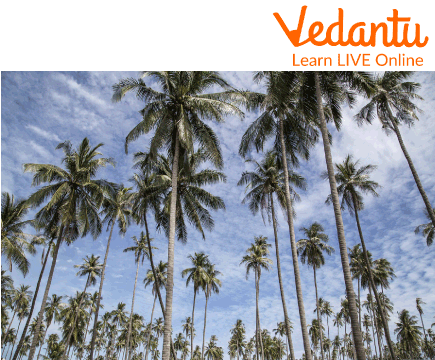
Palm Trees
Palm trees are plants that belong to the group of arachnids. Plants of this type have flowers with only three petals, and the latter also has one or more segments. Palm trees, in general, have a single stem, which is why they are considered a tree. The trunk of this tree is straight and very long. The length of the palm tree goes up to 100 feet. There are no branches on the palm, whereas twigs are found.
Compared to other types of trees that exist, palm trees do not have the water displacement that occurs outside the bark of their trunk because, in fact, displacement occurs within the fibres inside it. Something that is not there in other trees.
Since we are talking about tropical palm trees, they prefer to grow and develop in warm regions, especially in tropical climates. In addition, they also prefer places with high humidity. However, some species of these plants can grow and cope without any problems in those environments or times of cold and with slightly lower humidity.
Types of Palm Trees
There are about 2500 species of palm trees found in the world. These palm trees are found in deserts to rain forests. Due to climate, there is diversity in palm species.
1. Coconut Tree
2. Date Palm
3. Erica Pa
4. Quindio Wax Palm
5. European Fan Palm
6. Windmill Palm
7. Acai Palm
8. Foxtail Palm
9. Royal Palm
10. Oil Palm
11. Majesty Palm
12. Queen Palm
13. Pygmy Palm
14. California Palm
15. Dypsis Minuta
Quindio Wax Palm is the tallest palm tree in the world, reaching a maximum height of 200 feet. For your information, let me tell you that the Wax Palm Tree is the national tree of Colombia. The date palm tree, a species of palm, can also see a height of up to 80 feet.
It is not that palm trees go to great heights. Some of their species are less than 12 feet in height. For example, the height of a Pygmy Palm goes up to 12 feet. By the way, the world's lowest-altitude palm tree is Dypsis Minuta, which is located in Madagascar. The height of this palm is only 30 cm.
Not all palm tree species bear fruit. Only a few types of palm trees bear fruit. For example, Date Palm and Coconut trees bear sweet fruits. Apart from these, Betel Nut and Acai Fruit also grow on the palm tree. Palm oil is extracted from the seeds of the fruit of a species of palm. Palm Tree milk is also extracted from the Palm tree.
Palm Plant Images
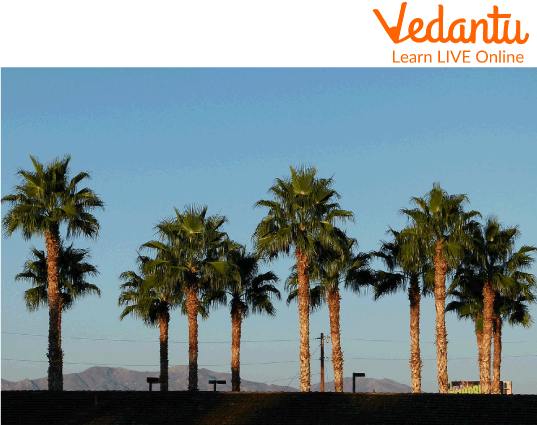
California Palm Trees
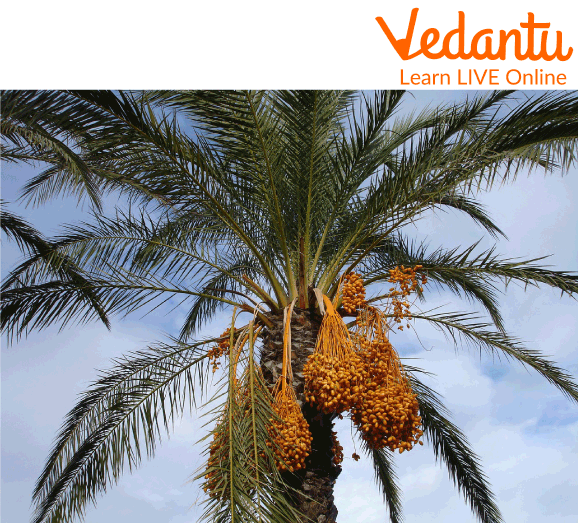
Date Palm Tree
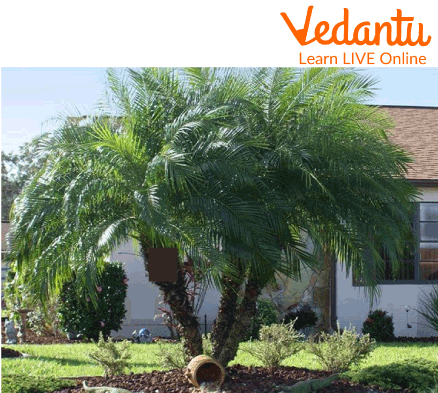
Pygmy Palm Trees
What are Palm Leaves?
There are twigs and leaves on the top of the palm tree. The cluster of leaves at the top of the tree looks like a crown. The fruit on it also seems to be on the top. The leaves of the palm tree are called "Fronds".
All palm trees have two main types of leaves.
One is of Palmate and the other is of Pinnate type.
Palmate means that the shape of the palm and the shape of the Pinnate are like a feather.
Palmate Leaves
Solved Questions
Multiple Choice Questions (MCQs)
1. Which are called fronds of a palm tree?
Fruits
Leaves
Flowers
Stem
Answer: Option(b) is correct.
2. What is the shape of the Pinnate leaves?
Palm
Feather
Oval
Linear
Answer: Option(b) is correct.
3. What is the shape of the Palmate leaves?
Elliptical
Feather
Palm
Oval
Answer: Option(c) is correct.
Learning By Doing
Write True or False.
Palm tree varieties exist.
Fronds are the flower of the palm tree.
The coconut tree is one of the species of palm tree.
Summary
Now, we know what are the palm trees and the main characteristics of all 3,000 species of palm trees that exist around the world. We have read and learned about many Palm trees and know important things about palm trees. We have also seen various images of palm trees such as the coconut palm tree and date palm tree.
FAQs on The Palm Trees
1. What are the main parts of a palm tree?
A palm tree has several distinct parts that help it grow and thrive. The main parts are:
- Roots: A fibrous root system that spreads wide and shallow to anchor the tree firmly, especially in sandy soil.
- Trunk: Also called a stipe, the trunk is typically unbranched, flexible, and covered with the scars of old leaves.
- Fronds: These are the large, feather-like or fan-like leaves at the top of the tree. They are essential for photosynthesis.
- Flowers and Fruit: Palm trees produce flowers which, when pollinated, develop into fruits like coconuts or dates.
2. What is special about palm trees compared to other trees?
Palm trees are special because they are not scientifically classified in the same way as trees like oaks or mangoes. They belong to a group of plants called monocots, similar to grasses and bamboo. This is why their trunks do not have growth rings or bark. Instead, they have a flexible, fibrous trunk that allows them to bend in strong winds without breaking, making them perfectly suited for tropical and coastal environments.
3. What are some important uses of palm trees for people?
Palm trees are incredibly useful and provide many essential products. Some of their most important uses include:
- Food: Many palm trees produce edible fruits, such as coconuts, dates, and açaí berries. Palm oil is also a major product used in cooking worldwide.
- Building Materials: The strong, light wood from the trunk is used for construction, and the large fronds are used for thatching roofs and weaving baskets.
- Other Products: The sap from some palms can be used to make sugar or beverages, and coir (fibre from coconut husks) is used to make ropes and mats.
4. How do palm trees survive in very windy places like beaches?
Palm trees have unique adaptations that help them withstand strong winds. Their trunk is not woody and rigid but is made of flexible, fibrous tissue that allows it to bend significantly without snapping. Additionally, their large leaves, or fronds, are designed to fold up or allow wind to pass through, reducing resistance. This combination of a flexible trunk and aerodynamic leaves makes them highly resilient in stormy, coastal areas.
5. What is the average lifespan of a palm tree?
The lifespan of a palm tree largely depends on its species. While some smaller, ornamental palms may only live for a few decades, many of the larger species, such as the date palm or coconut palm, can live for 70 to 100 years, producing fruit for most of their lives.
6. Is the fruit from all types of palm trees safe to eat?
No, it is very important to know that not all palm tree fruits are edible. While we enjoy famous examples like coconuts and dates, the fruits of many other palm species are inedible or even poisonous to humans. It is essential to correctly identify a palm tree before attempting to consume its fruit.
7. Why don't palm trees have branches like other trees?
Palm trees grow differently from trees like mango or neem. They grow from a single point at the top of the trunk called the apical meristem. This growth point produces the leaves (fronds) and pushes the trunk upwards. Since they only have one growth point, they do not form side branches. If this top part is damaged, the palm tree can no longer grow and may die.
