







An Overview of the Magnet
Kids, Have you ever seen the toys displayed below in the image? I am sure we all do. It's so fun to watch these balls stick to each other without any use of glue or tape. Perhaps you must be having similar toys designed in the form of alphabets, Cartoons, shapes, or even your compass box. But did you ever imagine how they stick to a surface without falling to the ground?
So it is because of the magic of a magnet. A Magnet is a hard object that has the power to attract certain metals towards itself and It produces an invisible magnetic field that is responsible for this attraction. We will also uncover some magnet fun facts that you can use to surprise your friends.

Magnetic Kids Toys
Definition of a Magnet
A magnet by easy definition is a rock or a piece of metal that has the power to pull certain kinds of metal towards itself. A magnet is something that can put a special kind of force on a specific object which can make that object either closer to the magnet or away from the magnet. Now to understand this more let's do a small experiment.
Take a piece of magnet and some iron nails.
Slowly move the magnet towards the iron nails.
Now you see the magnet attracts the iron nails toward itself until it gets completely stuck together.

Nails Being Attracted to the Magnet
You can notice that the iron nails do not move by themselves or fall from the magnet unless you apply some force and get them apart.
What does a Magnet Attract?
Curious about what else the magnet can attract? Well here's a small experiment
Take a wooden ruler, a plastic ruler, a paper clip, and a spoon.
One by one try to stick the magnet towards.
You bring the wooden ruler close to the magnet; it won't stick because the magnet does not attract wood.
When you try it with the plastic scale it will still not stick because the magnet does not attract plastic either, also the spoon will also not get attracted because it was of steel. But if you try it with the paper clips you see them getting stuck to the magnet.
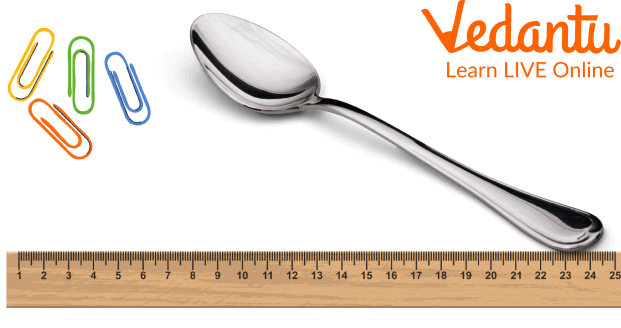
How Does a Magnet Attract
So from all the things that we have tried, we could see that the metal was only attracted to paper clips, spoons, and iron nails. There is something common in them. What do you think? So it is the metal. Magnet only attracts metals that too not all types. If you try to stick a golden ring to the magnet it won't stick even though it is metal. This is because a magnet only attracts metals made of iron. Some examples of iron are Washing machines, refrigerators, Hammer screen drivers, etc.
What are Some Different Types of Magnets?
In nature, You've probably seen a lot of magnets in your life. Most of us are familiar with bar magnets and horseshoe magnets. Apart from there also exist cylindrical magnets, ring-shaped magnets, and spherical magnets. Perhaps these aren't different types of magnets. So how do we classify magnets? One way we can classify different types of Magnets is by looking at how they occur in nature. Are the magnets that you come across naturally occurring or artificial?
Natural Magnet: Magnets that are present in nature are called natural magnets. One example of a natural magnet is a lodestone. Black in colour, lodestone was the first magnet discovered! Some other naturally occurring magnetic materials are pyrrhotite, columbite and even basalt has some magnetic properties
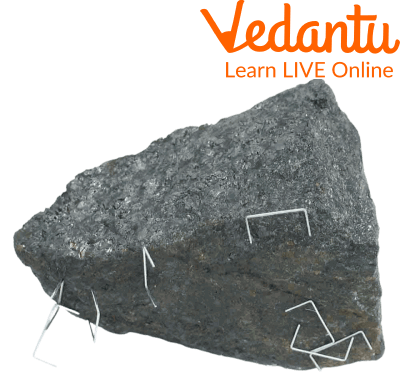
Natural Magnet Lodestone
Artificial Magnet: Artificial magnets are those magnets that were created by man using various tools and techniques. They are stronger as compared to a natural magnet. Some examples of artificial magnets are horseshoe magnets, bar magnets, and electromagnets.

Artificial Magnet
Magnets are classified as Permanent and temporary Magnets.
Permanent Magnets: Magnets that retain their magnetism in the absence of an external magnetic field are called permanent magnets in simple words permanent magnets remain magnets forever or for a very long time. Natural Magnets are always found to be Permanent Magnets.
Temporary Magnets: Magnets that cannot retain their magnetism or only retain it for a short time are called temporary magnets. Temporary magnets only act as magnets while they’re within a strong magnetic field! They lose their magnetic pull within a few seconds to a couple of hours.
Now that we know what a magnet is, its characteristics, and its types, let's further explore some of the Magnet fun Facts that would help you to have more knowledge about the Magnets and their applications.
Fun Magnet Facts for Kids
There is a small magnet in a compass. The arrow always points to the North Pole.
Planets like Earth, Saturn, Jupiter, Neptune, and Uranus are the only planets in our solar system that have magnetic fields.
Electricity is produced using Magnets.
Magnets are used in all electrical appliances like fans, ovens, air conditioners, etc.
If you beat a Magnet with a hammer it will no longer have magnetic properties.
Many roller coasters use electromagnets to push the cars along the tracks.
A magnet is used in the refrigerator to close the door.
They are used in construction to lift heavy objects.
Magnets are used in various medical equipment.
Summary
In this article, we came to know that magnet is a hard substance that has the power to attract certain metallic objects like iron towards itself. It produces Magnetism which is responsible for the primary property of a magnet which is attraction. Through the small experiment, we got to know about the working of a magnet. How it is attracted to specific metals like iron, nickel, etc we also learned how to classify a magnet, its types viz natural, artificial, permanent, and temporary Magnets, and finally, through the fun magnet facts, we discovered some of its applications. Easy definitions of magnets have been introduced for you.
FAQs on Fun Magnet Facts for Kids
1. What is the most powerful shape for a magnet?
The strongest and most iconic magnet shape is the horseshoe magnet. By bending a bar magnet into a U-shape, the two magnetic poles are brought close together, which concentrates the magnetic field and makes it very powerful.
2. Why do magnets sometimes push each other away instead of sticking together?
Every magnet has two ends: a North pole and a South pole. If you try to bring two like poles together (North to North or South to South), they will push each other away. This is called repulsion. To stick together, opposite poles must face each other (North to South).
3. Is the Earth itself a giant magnet?
Yes, it is! The Earth's core is made of molten iron, which creates a massive magnetic field around our planet. This field has its own North and South poles and is the reason why compasses work. It also protects us from harmful solar radiation.
4. What happens if you break a magnet in half? Do you get two smaller magnets?
Yes, you do! You can never have a magnet with only one pole. If you cut a magnet in half, you don't get a separate North piece and South piece. Instead, you get two new, smaller magnets, and each one will have its own North and South pole.
5. Can magnets work in outer space where there is no gravity?
Absolutely! A magnet's power comes from its own magnetic field, not from gravity or the air around it. This means magnets work perfectly fine in the vacuum of space, which is a very fun fact about their properties.
6. What common materials will a magnet stick to?
Magnets are only attracted to specific types of metals called ferromagnetic materials. The most common examples that kids encounter are things made of iron, nickel, and cobalt. This is why a magnet sticks to a refrigerator door or a paperclip, but not to plastic, wood, or glass.
7. How does a compass needle always know where North is?
A compass works because it has a tiny, lightweight magnet as its needle. This needle is balanced so it can spin freely. Since the Earth is a giant magnet, the North pole of the compass needle is always attracted to the Earth's magnetic North Pole, making it a reliable tool for finding direction.
8. Can a magnet ever lose its magnetic power?
Yes, a permanent magnet can lose its strength over time, although it usually lasts for many years. Its power can be weakened more quickly if it is:
- Dropped or hammered repeatedly.
- Heated to a very high temperature.
- Stored incorrectly next to another strong magnet with the poles repelling each other.
